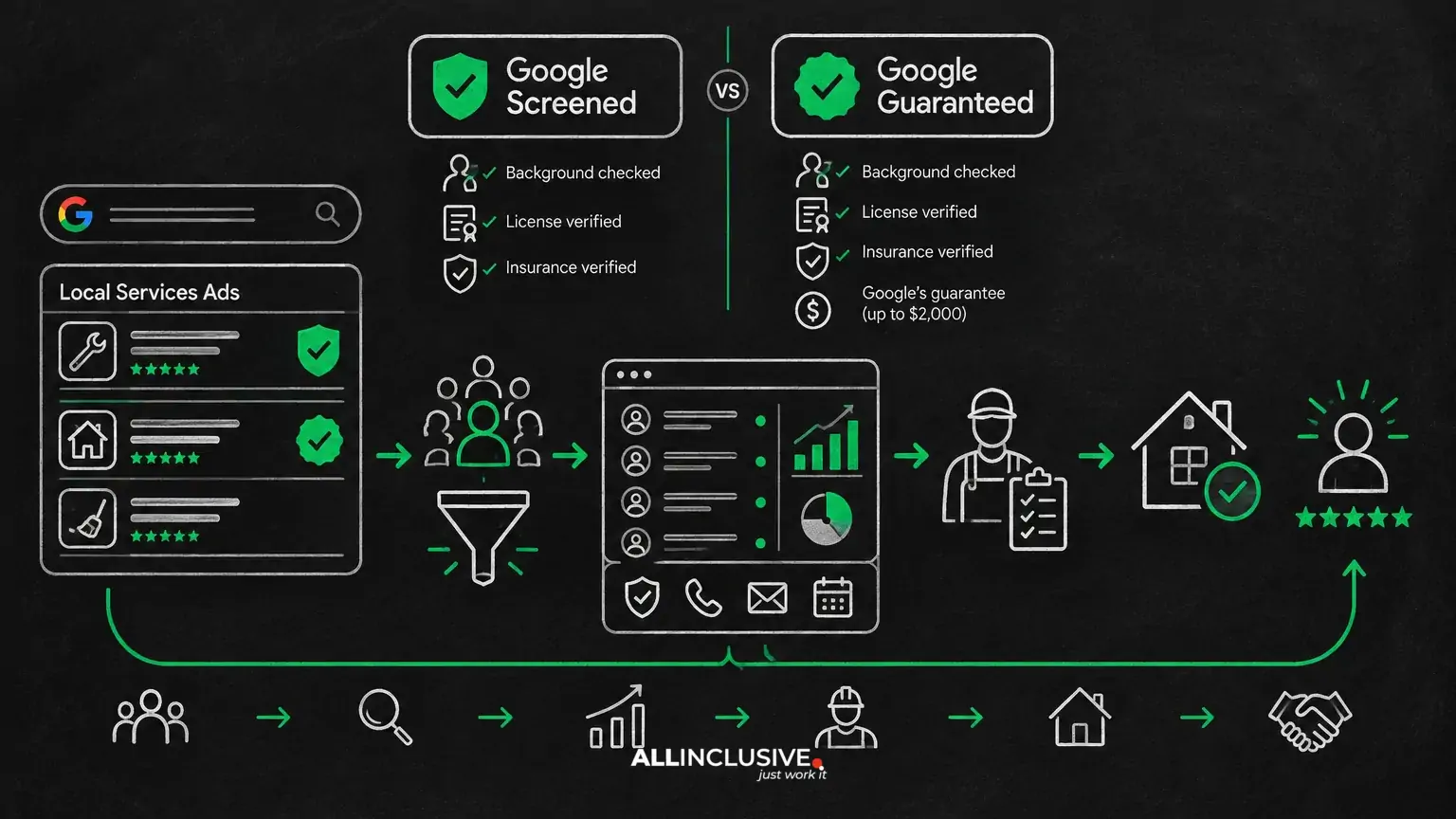
Healthcare organizations evaluating healthcare local service ads should treat the channel as both an acquisition program and an operational system. Eligibility can vary by location, healthcare category, and Google’s current requirements. Even when a profile can participate, the campaign must also fit the organization’s privacy, consent, call-handling, and clinical-governance standards.
The right question is not simply whether Local Services Ads can generate inquiries. It is whether the organization can accept those inquiries responsibly, identify qualified demand, document outcomes, and avoid exposing sensitive information in advertising workflows.
What healthcare organizations should evaluate first
Before creating or expanding a Local Services Ads profile, review four areas:
- Category and geographic eligibility: Confirm that the specific healthcare service and service area are currently supported. Availability can differ by market and may change.
- Business verification: Determine which business details, professional credentials, licenses, insurance information, or background checks may be requested for the category and region.
- Lead-handling readiness: Make sure calls and messages reach a trained team during advertised hours, with an escalation path for urgent or clinically sensitive situations.
- Privacy and compliance controls: Review what information is collected, where it is stored, who can access it, and whether tracking tools are appropriate for the data involved.
Do not assume that approval of a business profile means every campaign message, tracking method, landing-page experience, or intake process is compliant. Platform eligibility and healthcare compliance are separate reviews.
How Local Services Ads can fit healthcare demand generation
Local Services Ads are generally designed to connect people searching for a local service with providers that serve the relevant area. For healthcare, this can be useful when a prospective patient or referring party has a clear service need and is ready to contact an organization.
Potential use cases may include location-based searches for an eligible practice, consultations, home-based services, behavioral health, rehabilitation, or other categories that Google supports in a particular market. The appropriate use case depends on the organization’s category, service model, patient population, and current platform availability.
The channel is usually most defensible when the advertised service is clearly defined. A broad message such as “complete healthcare” creates ambiguity and can attract inquiries the team cannot appropriately serve. A focused profile should communicate the service, coverage area, appointment pathway, and meaningful limitations without making unsupported clinical claims.
Eligibility and verification: a practical checklist
Eligibility should be confirmed before building a forecast. Use a documented review rather than relying on assumptions from another provider or market.
1. Confirm the service category
Start with Google’s current category and market availability. A healthcare organization may have several offerings, but not all may qualify for the same advertising product. Separate eligible services from services that require another acquisition channel.
2. Validate the operating entity
The profile should accurately represent the legal or operating entity that provides the service. Check business name, address, phone number, hours, service areas, and ownership details across the organization’s public presence. Inaccurate or inconsistent information can create both verification friction and poor patient experiences.
3. Prepare professional documentation
Healthcare advertisers should maintain a current documentation set for licenses, registrations, insurance, and other category-specific requirements. The exact requirements are not universal, so confirm them in the account and market where the campaign will run.
4. Review practitioner and location structure
Decide whether the advertising identity should represent an organization, a location, or an individual practitioner. The answer affects lead routing, scheduling ownership, reporting, and the way services are described. Multiple locations should not be presented as interchangeable if hours, availability, or clinical scope differ.
Lead quality: measure more than contact volume
Healthcare lead quality cannot be judged by the number of calls or messages alone. A useful measurement framework separates the inquiry into operational stages:
- Received: The call or message entered the organization’s system.
- Reachable: Staff successfully connected with the person or responded through the approved channel.
- Relevant: The inquiry matched the advertised service, location, and patient or referral criteria.
- Qualified: The person met the organization’s intake requirements and could reasonably proceed.
- Scheduled: An appointment, consultation, evaluation, or other defined next step was booked.
- Attended or completed: The person reached the operational milestone that matters to the business.
Not every healthcare organization can or should send detailed clinical outcomes back to an advertising platform. Instead, establish a privacy-conscious internal reporting process that links ad-originated inquiries to approved operational outcomes without exposing unnecessary health information.
Lead-quality fields worth standardizing
- Source and campaign identifier, where available
- Date and time of inquiry
- Service requested
- Service area or location
- New or existing patient status, if appropriate to collect
- Disposition, such as qualified, out of area, duplicate, spam, or unable to reach
- Appointment or consultation status
- Reason for disqualification, using controlled categories and minimal sensitive detail
Use these fields to identify wasted spend, scheduling friction, and capacity constraints. Avoid asking ad platforms or analytics tools to process information they do not need for attribution.
Compliance considerations for healthcare advertisers
Local Services Ads do not remove the organization’s existing legal, regulatory, or professional obligations. The relevant requirements depend on the country, state, service type, entity structure, and data flows. In the United States, organizations may need to consider healthcare privacy rules, consumer-protection requirements, professional advertising standards, and contractual obligations with vendors.
Protect sensitive information in calls and messages
Train staff not to request unnecessary clinical details in an ad-generated message thread or in an unapproved intake environment. Call recordings, transcripts, voicemail, and message content should be reviewed under the organization’s privacy and retention policies. If a caller volunteers sensitive information, staff should follow the approved procedure rather than copying it into ad-platform notes or general marketing systems.
Use careful claims and descriptions
Descriptions should be specific, supportable, and consistent with the organization’s scope of practice. Avoid guaranteed outcomes, exaggerated superiority claims, unsupported urgency, or language that could mislead people about diagnosis, treatment, insurance coverage, or availability.
Separate advertising from clinical advice
Lead-response teams should not provide diagnosis or individualized medical advice through an advertising workflow. Create approved scripts for basic routing, scheduling, emergency guidance, and escalation. The script should make clear what the team can and cannot address.
Review tracking and consent
Attribution should be designed around data minimization. Before deploying call tracking, recording, form integrations, pixels, or CRM synchronization, confirm that the configuration aligns with applicable consent, notice, access, retention, and vendor-management requirements. Technical convenience is not a substitute for compliance review.
Building a healthcare Local Services Ads operating model
A campaign is only as effective as the process behind it. Assign ownership for five operational areas:
- Profile governance: Maintains business information, service descriptions, hours, credentials, and verification documents.
- Budget and lead controls: Reviews spend, lead volume, lead disputes or credits where applicable, and service-area performance.
- Response operations: Covers calls and messages during published hours and monitors missed inquiries.
- Quality assurance: Audits dispositions, response quality, appointment outcomes, and recurring sources of poor fit.
- Compliance oversight: Approves claims, tracking, retention practices, scripts, and changes to vendors or workflows.
Healthcare groups with multiple locations should create a shared governance standard while allowing local teams to manage genuine differences in capacity and service scope. A centralized dashboard can show volume and operational outcomes, but access should be limited to the data each role needs.
Budgeting and lead targets
Set budget expectations from capacity and economics, not from an assumed industry average. Begin with the number of additional qualified inquiries the organization can respond to and serve. Then model the maximum acceptable cost at each stage: inquiry, qualified lead, scheduled appointment, and completed service.
For example, a clinic with limited appointment capacity may intentionally use a smaller budget and tighter service area than a multi-location provider. A home-health organization may prioritize coverage and routing efficiency, while a specialist practice may prioritize qualification and appointment completion. These are different operating objectives, even if both use the same ad format.
Review budget decisions alongside missed calls, response time, appointment availability, and cancellation rates. Increasing spend when the intake team is already overloaded can reduce patient experience without creating proportional business value.
Common failure modes
Expanding before eligibility is confirmed
Teams sometimes build forecasts around categories or locations that are not currently supported. Verify availability first, then decide whether Local Services Ads belong in the channel mix.
Optimizing for cheap inquiries
A low apparent cost per inquiry can hide poor geographic fit, insurance mismatch, duplicate contacts, or low appointment completion. Use a defined disposition taxonomy and review downstream outcomes.
Publishing hours the team cannot cover
Missed calls and slow responses are especially damaging when the searcher expects a local provider to be available. Align published availability with real staffing and create a documented after-hours path.
Sending sensitive data into marketing systems
Do not treat the CRM, call platform, analytics account, or ad interface as interchangeable repositories. Map the data flow, minimize fields, restrict access, and obtain the necessary internal approvals before integration.
Using one message for every service
Broad messaging creates ambiguous expectations. Organize profiles and service descriptions around the services the team can actually deliver, while keeping claims accurate and clinically appropriate.
How to decide whether the channel is a fit
Healthcare Local Services Ads are worth testing when the organization has a supported category and market, a verifiable operating identity, sufficient appointment capacity, reliable response coverage, and an approved method for measuring outcomes. They are a weaker fit when the service is not clearly eligible, the team cannot respond promptly, or the organization cannot safely separate marketing attribution from sensitive clinical information.
For background on the product and its role in a broader acquisition program, review what Google Local Services Ads are and how they work. Teams comparing implementation options can also use the Local Services Ads management checklist to define ownership, review cadence, and reporting requirements.
Finally, place the channel within a coordinated Local Services Ads strategy, alongside the organization’s wider paid media program. The strongest plan is not the one that generates the most contacts; it is the one that turns appropriate demand into well-managed, measurable, and compliant next steps.