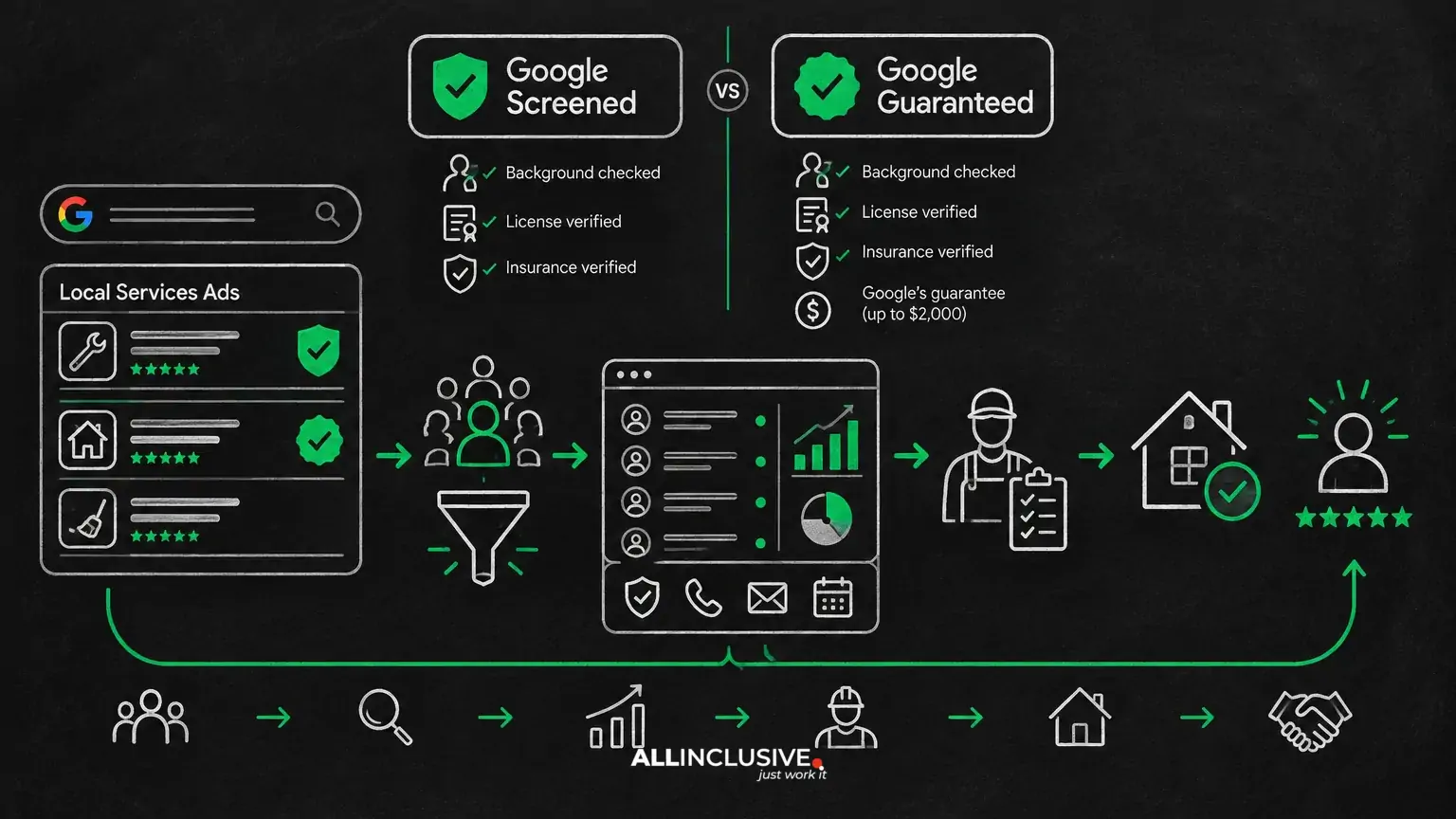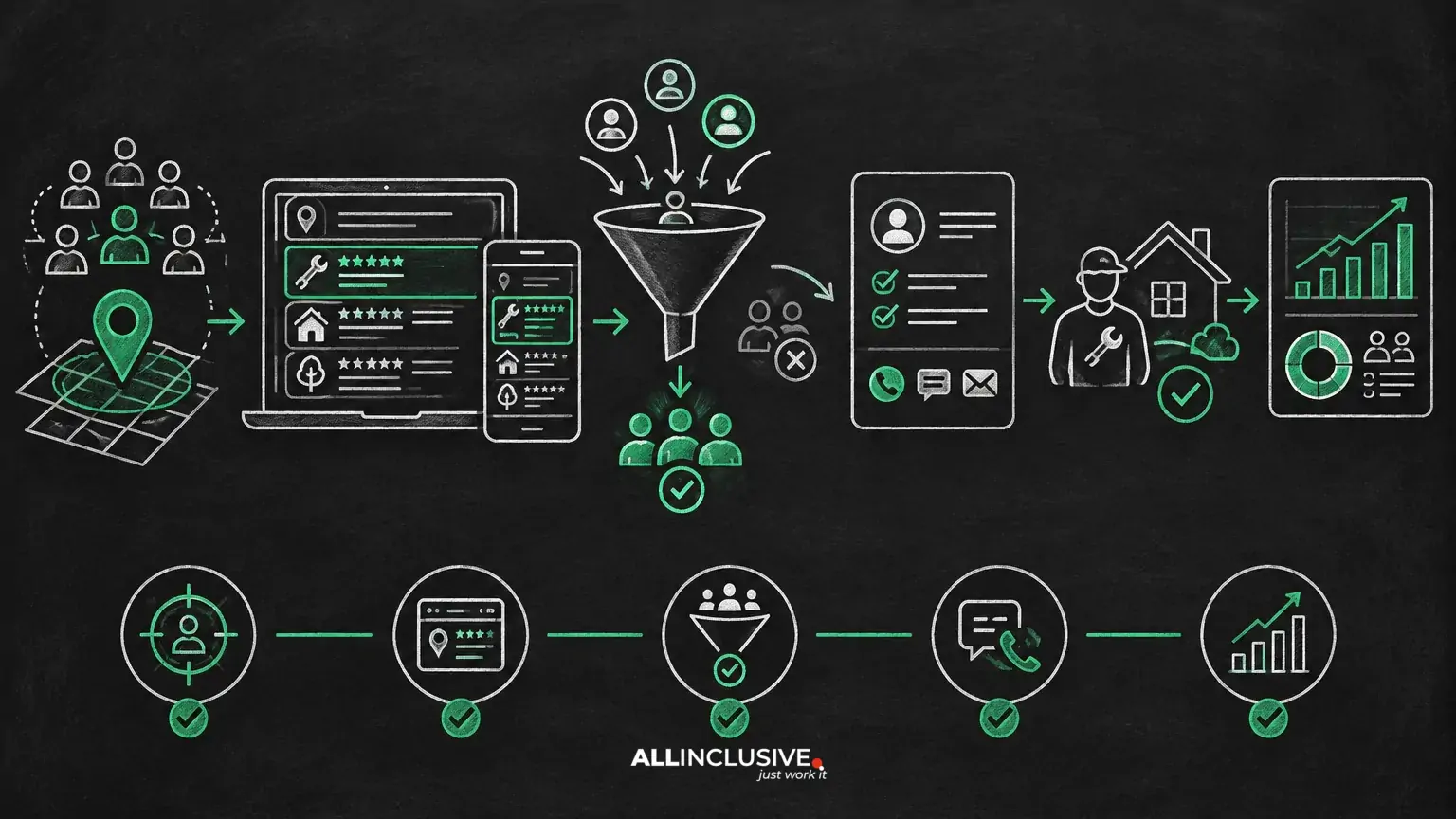
Local Services Ads lead quality is not simply a platform setting. It is the result of several connected decisions: which services and areas you advertise, how your profile sets expectations, how quickly your team responds, and how consistently you record lead outcomes.
To reduce bad leads, start by defining what “bad” means for your business. A lead may be unqualified because the service is outside your capabilities, the location is not workable, the job is too small, the caller is seeking a price rather than a booking, or the contact information is unusable. These are different problems and require different fixes.
This guide explains how to diagnose those causes and improve lead quality without treating every low-value inquiry as wasted spend.
Define lead quality before changing the campaign
Many businesses evaluate Local Services Ads using lead volume and cost per lead alone. Those measures are useful, but they cannot show whether inquiries match your commercial priorities. A lower cost per lead can be a poor outcome if the leads rarely become appointments, estimates, or profitable work.
Create a practical lead-quality definition using criteria your team can apply consistently. Depending on the business, a qualified lead may:
- Request a service you actually provide.
- Be located within a serviceable area.
- Have a problem that fits your equipment, staffing, and expertise.
- Have a realistic project scope or minimum job value.
- Provide enough information for a meaningful follow-up.
- Have a reasonable path to an appointment, estimate, or sale.
Keep “qualified” separate from “won.” A legitimate inquiry can be qualified even if the customer chooses another provider. That distinction helps you identify whether the problem is lead relevance, sales handling, pricing, availability, or close rate.
Build a simple lead-quality taxonomy
Use a small number of categories that your team can select without debate. For example:
- Qualified and contacted: the request matches your service and location criteria, and a conversation took place.
- Qualified but not booked: the opportunity was relevant, but it did not become an appointment or job.
- Out of scope: the person requested a service, property type, or project that you do not handle.
- Out of area: the address is outside the practical service territory.
- Low-value or unsuitable: the request does not meet your commercial requirements.
- Unreachable or invalid: the contact could not be verified or reached after a reasonable follow-up process.
- Duplicate, spam, or accidental: the inquiry does not represent a genuine sales opportunity.
Record the reason, not just a pass-or-fail score. “Bad lead” is too broad to guide optimization. “Outside service area” points toward coverage or profile issues, while “qualified but not booked” may point toward response time, scheduling, or sales execution.
Inspect the main sources of poor lead quality
1. Service mismatch
Broad service descriptions can attract requests that sound related but are not commercially useful. A company that handles emergency plumbing, for example, may not want every inquiry involving remodeling, appliance installation, or general maintenance.
Review the language used in your profile, service descriptions, business website, and staff scripts. Describe the work you want clearly, and avoid presenting adjacent services as if they are equally available when they are not.
Where the platform permits business-profile or service-area adjustments, make changes deliberately and verify how they affect inquiry relevance. Platform controls and availability can change, so treat the current interface and official guidance as the source of truth rather than relying on an old checklist.
2. Service-area mismatch
Location is one of the most common causes of wasted inquiry volume. A nominal service area may be technically possible but operationally unattractive because of travel time, scheduling complexity, tolls, or low job density.
Define service territory using business economics, not only distance. Ask:
- Where can a technician or professional serve customers profitably?
- Which locations create unacceptable travel or scheduling costs?
- Are there areas where licensing, building type, or service availability differs?
- Does the team have capacity to respond consistently across the full territory?
If an area repeatedly produces inquiries you cannot serve, investigate whether your profile information, operating hours, service-area configuration, or customer-facing copy is creating the expectation that you cover it.
3. Expectation mismatch
Some poor leads are caused by unclear expectations rather than incorrect targeting. Customers may assume you offer same-day service, free work, financing, a particular guarantee, or a service type that you do not provide.
Use plain language to clarify important boundaries before the inquiry. Explain the core services, the types of properties served, the typical next step, and any relevant minimum requirements without making claims you cannot support. Clear positioning may reduce some inquiry volume while increasing the usefulness of the remaining conversations.
4. Availability mismatch
An inquiry can be relevant but still have low value if the business cannot respond or schedule work within the customer’s timeframe. Keep operating hours, holiday coverage, emergency availability, and booking expectations accurate wherever they are represented.
Review lead quality by day and time. If inquiries arrive when no one can respond, the issue may be operational rather than advertising-related. Consider an after-hours process, a call-answering partner, or clear next-step messaging if those options fit your business and compliance requirements.
Improve the profile customers use to decide
Your profile is a pre-qualification asset. Customers use it to decide whether to contact you, and the information they see shapes the kind of inquiry they submit.
Audit the profile from a customer’s perspective:
- Does the business name and category accurately describe the operation?
- Are the listed services specific enough to discourage irrelevant requests?
- Is the service area realistic?
- Do photos and business information support the type of work you want?
- Are reviews relevant to the services and customer experience you are promoting?
- Are hours and contact expectations current?
Do not use profile content to imply capabilities, guarantees, or availability that the business cannot reliably deliver. Relevance and accuracy are more valuable than broad positioning.
Reviews can influence trust, but they are not a substitute for qualification. For a broader view of reputation’s role, see Local Services Ads reviews.
Use intake questions to qualify without creating friction
Qualification should make the first conversation more useful, not turn it into an interrogation. Identify the smallest set of questions needed to determine whether the inquiry fits.
Depending on the service, that may include:
- What service is needed?
- Where is the property located?
- Is the request urgent or scheduled?
- What type of property or equipment is involved?
- What outcome does the customer want?
- What is the preferred appointment window?
Use a consistent script for calls and a short form or message template for written inquiries. Ask only questions that affect routing, eligibility, pricing, scheduling, or next steps. If the request is clearly outside scope, provide a concise explanation and, where appropriate, a useful referral rather than allowing the conversation to consume sales capacity.
Connect response time to lead value
Fast response matters because a lead can lose value while the customer is still deciding whom to contact. However, speed alone does not improve lead quality. A rapid response to an irrelevant inquiry is still wasted effort.
Establish a process that covers:
- Who owns new leads during business hours.
- What happens when the primary contact is unavailable.
- How many follow-up attempts are appropriate.
- Which inquiries require urgent escalation.
- How call outcomes and disqualification reasons are recorded.
Analyze response time alongside qualification and booking outcomes. A useful pattern might be that qualified leads contacted quickly book more often, while out-of-area leads remain poor regardless of speed. That points to two separate actions: protect response capacity and correct targeting or expectations.
For a focused discussion of this operational variable, read Local Services Ads response time.
Measure lead quality beyond cost per lead
Use a reporting structure that follows the customer journey. At minimum, separate:
- Total inquiries.
- Valid and reachable inquiries.
- Qualified inquiries.
- Appointments or estimates.
- Jobs won.
- Revenue or expected value, where available.
- Disqualification reasons.
Useful calculations include qualified-lead rate, cost per qualified lead, booking rate, job-win rate, and revenue per lead. These metrics should be interpreted together. A high qualified-lead rate may still be unattractive if the service has low margins or poor close rates. Conversely, a modest qualification rate may be acceptable when a small number of jobs create substantial value.
Review performance by service, location, device or contact method where your data supports it, day and time, and lead source. Avoid overreacting to a small sample. Look for repeated patterns and validate them against call notes, CRM records, and actual job outcomes.
The companion guide to Local Services Ads reporting covers a broader framework for connecting leads, costs, booking, and revenue.
Decide whether to dispute, filter, or fix
When a lead appears poor, classify the appropriate response:
- Dispute or platform review: use the platform’s available process when the inquiry appears invalid under its current policies. Confirm the applicable rules before acting.
- Filter or clarify: adjust service descriptions, areas, profile information, or intake language when the inquiry is genuine but outside your commercial criteria.
- Fix operations: improve response ownership, scheduling, call handling, or follow-up when the lead is relevant but mishandled.
- Accept strategically: retain some lower-fit inquiries if they create referral opportunities, support route density, or have acceptable expected value.
Do not treat every unwanted inquiry as evidence of platform failure. Some are signals that your offer is unclear; others reveal a gap between advertising coverage and operational capacity.
A practical 30-day improvement plan
Week 1: establish the baseline
Review recent inquiries and label them using a consistent taxonomy. Identify the largest sources of waste: service mismatch, location, timing, unreachable contacts, or low commercial value.
Week 2: correct obvious expectation problems
Update inaccurate profile details, clarify core services, review service areas, and align hours and availability. Document any changes so later performance comparisons are meaningful.
Week 3: strengthen handling
Assign lead ownership, create a short qualification script, define follow-up steps, and ensure every outcome is recorded in the same system. Train staff on when to route, decline, or escalate an inquiry.
Week 4: evaluate quality-adjusted performance
Compare qualified-lead rate, booking rate, cost per qualified lead, and job outcomes against the baseline. Keep changes that improve commercial outcomes, not merely lead volume. If results are inconclusive, continue collecting consistent data before making another major adjustment.
Local Services Ads Lead Quality: What to Prioritize
Improving local service ads lead quality requires more than generating fewer inquiries. The goal is to create a better match between the customer’s need, your service territory, your capacity, and the value of the work.
Start with a clear definition of qualification, categorize bad leads by cause, make your profile more precise, respond consistently, and connect advertising data to booking and revenue outcomes. For the wider role of paid acquisition in a measurable growth system, explore paid media strategy. For an overview of the channel itself, visit the Local Services Ads pillar.