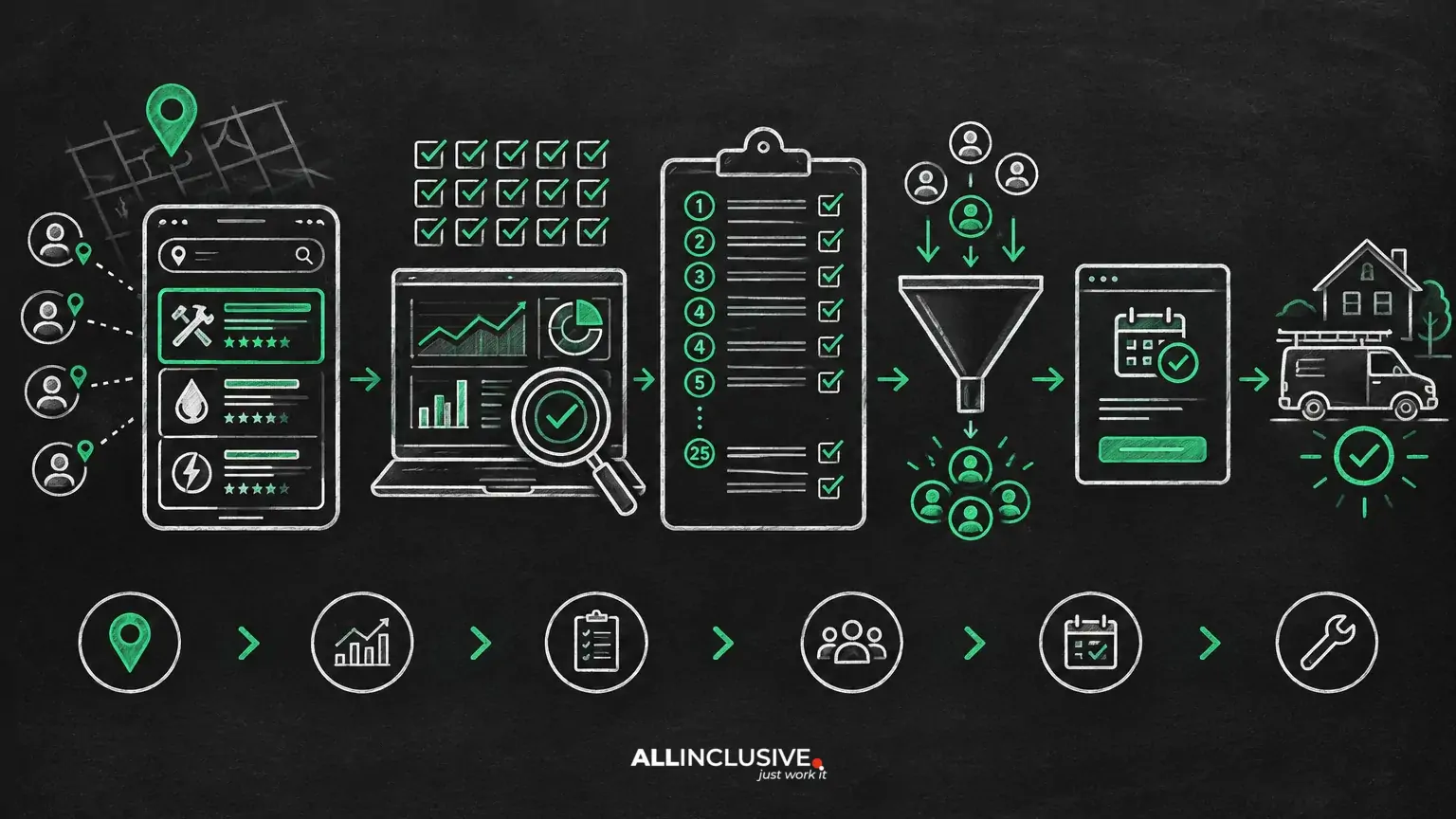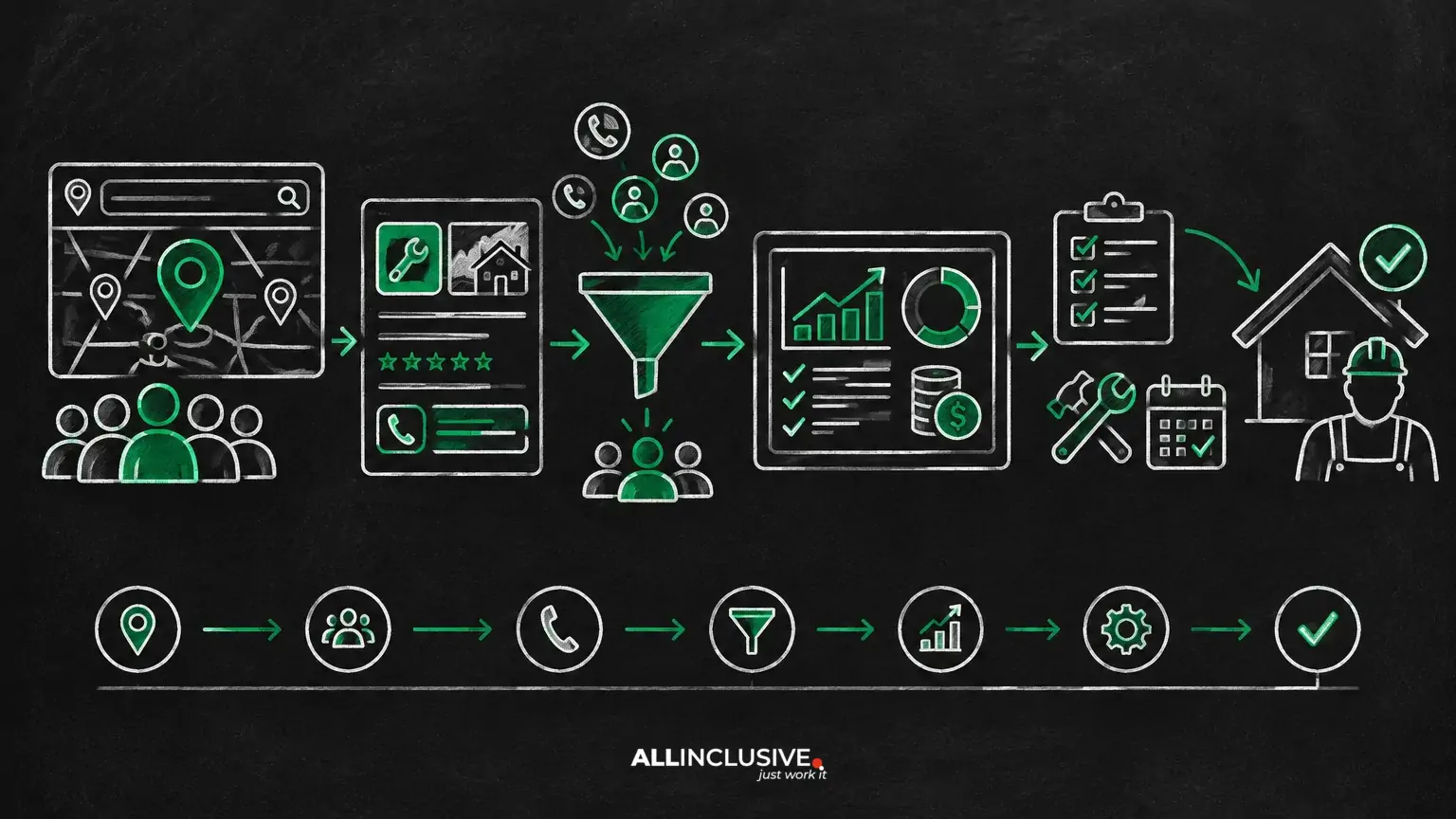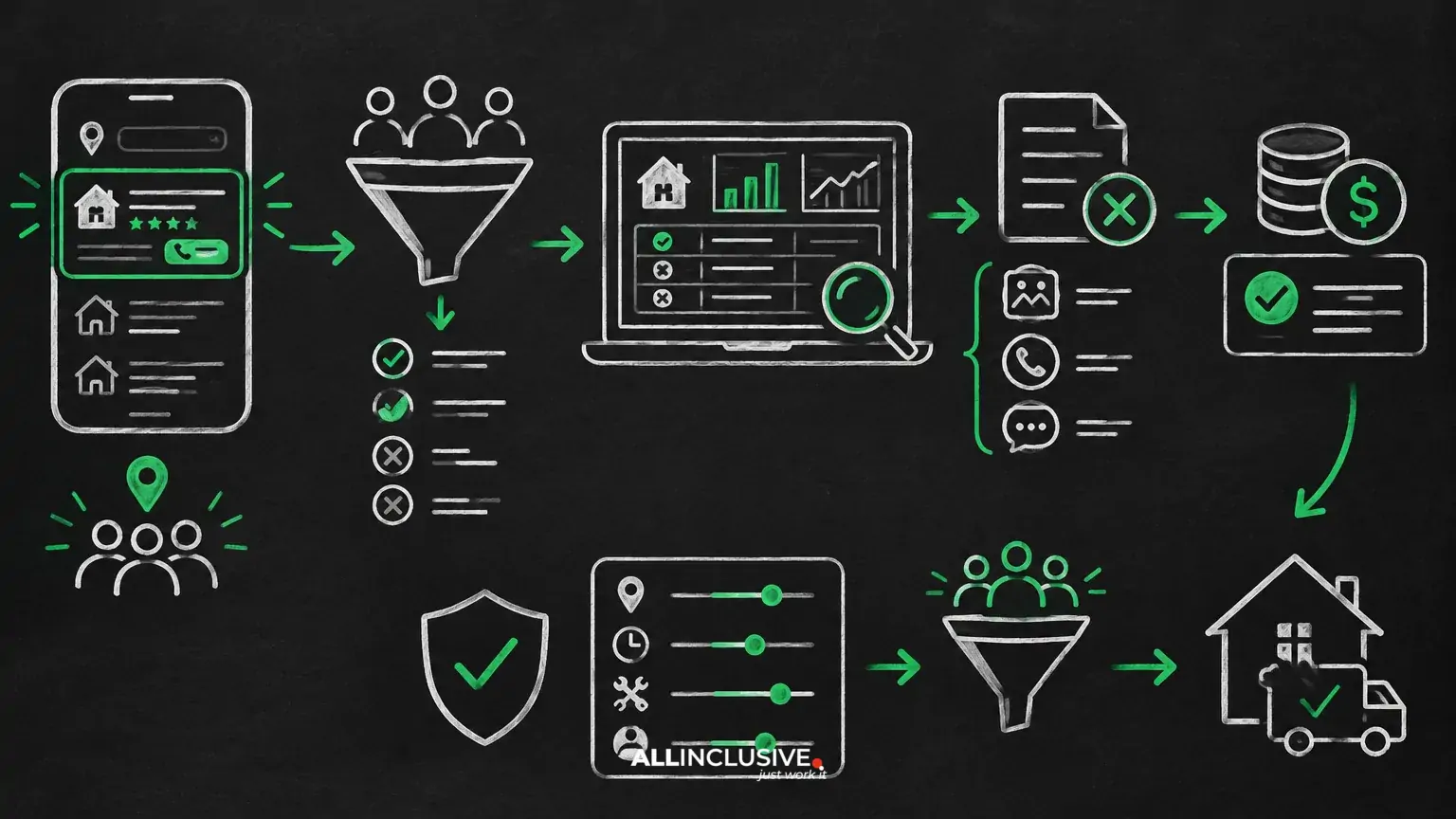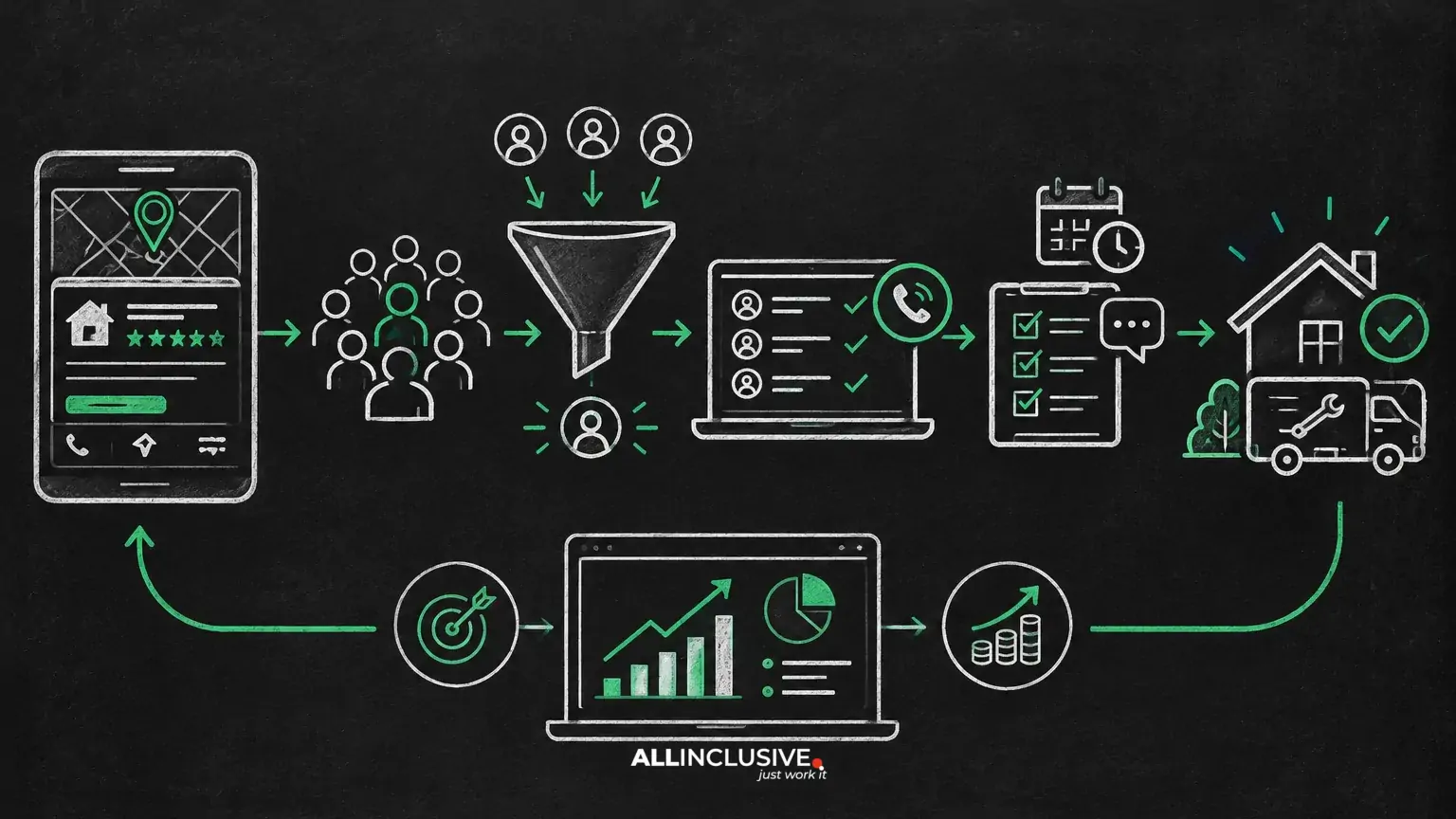
A strong local service ads booking rate means your business converts a meaningful share of qualified inquiries into scheduled jobs. It is one of the clearest ways to evaluate whether Local Services Ads are producing business rather than simply generating calls or messages.
Improving that rate is rarely about one campaign setting. It usually requires coordination between lead quality, response time, call handling, scheduling, follow-up, and the way outcomes are recorded. This guide explains how to calculate booking rate, diagnose leakage, and create a repeatable process for turning more Local Services Ads leads into revenue.
What is Local Services Ads booking rate?
Booking rate is the percentage of eligible Local Services Ads leads that become scheduled jobs or appointments.
A basic formula is:
Booking rate = booked leads ÷ eligible leads × 100
The definition of “booked” should be agreed internally. For a plumber, it may mean a confirmed service visit. For a cleaning company, it may mean a scheduled recurring or one-time appointment. For a professional service provider, it could mean a consultation placed on the calendar.
Do not automatically treat every lead as eligible. Spam, duplicate inquiries, out-of-area requests, employment inquiries, and services you do not offer may belong in separate categories. Reporting all inquiries in one denominator can make the booking rate look worse than the operational reality—or hide a lead-quality problem that needs attention.
Why booking rate matters more than lead volume
Lead volume is an acquisition metric. Booking rate connects acquisition to sales execution.
Two campaigns can generate the same number of leads while producing very different commercial outcomes. One may create many inquiries that never receive a response or do not match the service area. The other may generate fewer but better-qualified opportunities that are handled quickly and booked consistently.
Booking rate helps answer practical questions:
- Are leads reaching someone who can respond?
- Can staff identify fit and urgency quickly?
- Is the business making it easy to schedule?
- Are missed calls and after-hours inquiries receiving follow-up?
- Are certain services, locations, or lead types converting better?
For a broader measurement framework, see our guide to Local Services Ads reporting, which covers leads, costs, booking rate, and revenue.
Build a booking-rate calculation you can trust
Define the lead denominator
Start with a consistent lead taxonomy. At minimum, separate:
- New qualified inquiries
- Unqualified or out-of-area inquiries
- Spam or irrelevant contacts
- Duplicates
- Existing-customer requests
- Leads with an unknown outcome
You can report more than one version of booking rate, but label each clearly. For example, “all-inquiry booking rate” describes overall inquiry handling, while “qualified-lead booking rate” describes the sales process after poor-fit inquiries have been removed.
Define the booking event
A booking should be a confirmed commitment, not merely a conversation. A customer saying they will call back is not the same as an appointment on the calendar. If your sales cycle includes estimates, decide whether the booking event is the estimate, the service appointment, or the accepted job.
Record outcomes promptly
Outcome data becomes less reliable when staff update records days later from memory. Use a simple status structure such as:
- New
- Contacted
- Qualified
- Booked
- Completed
- Lost or unqualified
Include a reason for lost opportunities where possible. Common reasons include no response, price, timing, location, service mismatch, competitor choice, and unavailable capacity.
The main causes of a low booking rate
1. Slow or inconsistent response
Intent can decline quickly after an inquiry. A missed call, delayed callback, or message left unanswered gives the prospect a reason to contact another provider.
Review response performance by lead type and time of day. A business may appear responsive during office hours while losing after-hours inquiries, weekend demand, or calls that arrive while technicians are working.
Set an ownership rule: every new lead should have a named person responsible for the next action. If the first contact fails, define when the next attempt occurs and which channel is used.
2. Weak call handling
Answering the phone is not the same as handling the opportunity well. A rushed greeting, unclear service area, or failure to ask basic qualification questions can reduce trust before scheduling is discussed.
Create a short call framework that covers:
- The customer’s need and urgency
- Service location
- Relevant equipment, issue, or job scope
- Timing expectations
- Next step and availability
The framework should guide the conversation without forcing staff into a rigid script. The objective is clarity and scheduling, not a lengthy interrogation.
3. Poor lead qualification
Some low booking rates are caused by lead quality rather than sales execution. If an ad attracts requests outside your service area or for work you do not provide, staff may be unable to book those inquiries regardless of response quality.
Review patterns in unqualified leads. If the same mismatch appears repeatedly, revisit service categories, coverage areas, profile information, and the description of what your business does. For a deeper diagnostic approach, read Local Services Ads lead quality.
4. No clear scheduling path
Customers should not have to negotiate the entire process from scratch. Give staff access to current availability and define what they can offer when the preferred time is unavailable.
Offer specific options rather than an open-ended promise to “check and call back.” If a quote or site visit is required first, explain the sequence and book the next step before ending the interaction.
5. Incomplete follow-up
Not every lead will answer on the first attempt. A practical follow-up sequence can include a callback, a concise message, and another attempt at a sensible time. Document the sequence so performance does not depend on individual habits.
Follow-up should remain relevant and respectful. Avoid repeated generic messages that provide no new information. The best message confirms who is contacting the customer, what service is available, and how to schedule.
How to improve your booking rate step by step
Step 1: Establish a baseline
Use a recent, sufficiently consistent period and record lead count, eligible lead count, booked jobs, contact rate, response time, service type, and outcome reason. The goal is not to create a perfect analytics system on day one. It is to establish a trustworthy starting point.
Step 2: Separate acquisition problems from conversion problems
If many inquiries are irrelevant, improve targeting and profile alignment. If leads are qualified but rarely booked, inspect response time, call quality, availability, pricing communication, and follow-up.
This distinction prevents a common mistake: changing advertising when the largest loss occurs after the lead arrives.
Step 3: Audit real interactions
Review a sample of answered calls, missed calls, messages, and closed-lost records. Look for recurring friction:
- Long delays before first contact
- Unclear ownership of new leads
- Failure to confirm location or service fit
- No specific appointment request
- Unclear prices or next steps
- Appointments that cannot be fulfilled operationally
Use the findings to update training and process documentation. Do not rely only on dashboard totals; totals rarely explain why a prospect did not book.
Step 4: Improve response coverage
Map who handles new inquiries during business hours, evenings, weekends, breaks, and technician travel. If immediate live response is not realistic, define a reliable fallback process.
Track more than average response time. Averages can conceal a group of leads that receive no response at all. Review the share of inquiries contacted within your chosen service standard and the share with a documented outcome.
For more detail on this operational lever, see Local Services Ads response time.
Step 5: Make booking the explicit next action
Train staff to close each suitable interaction with a clear next step: schedule the visit, arrange an estimate, confirm a callback time, or request a specific detail needed to proceed.
For example, instead of ending with “Let us know,” use a direct choice: “We can send someone Tuesday afternoon or Wednesday morning. Which works better?” The exact wording should fit the business, but the principle is universal: make the path forward concrete.
Step 6: Review capacity and service mix
A low booking rate can reflect unavailable capacity. If a service is advertised but the business cannot accept work in the relevant period, the resulting inquiries may be difficult to convert.
Compare booking rate by service, day, location, and lead source where the data supports it. A high-volume segment with poor fulfillment may need different availability, tighter qualification, or reduced emphasis rather than more budget.
A practical booking-rate scorecard
Use a weekly or monthly scorecard that connects advertising to operational outcomes:
- Eligible leads: inquiries that fit the service and coverage criteria
- Contact rate: eligible leads reached by the business
- Response-time distribution: how quickly leads received a first response
- Qualified rate: eligible leads with a realistic service opportunity
- Booking rate: booked opportunities divided by the chosen denominator
- Completion rate: booked appointments that become completed work
- Revenue per booked job: revenue associated with completed bookings
- Cost per booked job: advertising cost divided by booked jobs
Do not optimize the scorecard by deleting difficult outcomes or changing definitions from month to month. Consistency is more valuable than false precision.
Examples of useful diagnosis
High lead volume, low contact rate
Investigate missed calls, routing, staffing, and after-hours coverage before changing creative or increasing budget. The immediate constraint is likely lead handling.
High contact rate, low qualified rate
Review service descriptions, coverage, categories, and the types of requests being attracted. The issue may be alignment between the business offer and incoming demand.
High qualified rate, low booking rate
Inspect sales conversations, availability, estimate processes, pricing communication, and follow-up. These are opportunities that appear viable but are not becoming scheduled work.
High booking rate, low completion rate
Examine cancellations, no-shows, scheduling accuracy, and customer expectations. Booking more jobs is not useful if the business cannot complete them profitably.
How booking rate should influence optimization decisions
Use booking rate as a decision signal, not an isolated target.
If one service produces fewer leads but a stronger booked-job rate and better economics, it may deserve more attention than a higher-volume service. If a segment books well but has poor completion or margin, investigate downstream quality before scaling it.
When comparing periods, keep the definitions, staffing conditions, service capacity, and attribution approach as consistent as possible. Seasonal demand, weather, holidays, and operational changes can affect results independently of advertising.
Also distinguish platform-reported lead activity from your internal business outcome. A platform can help identify interactions, but your CRM, booking system, call records, or disciplined spreadsheet process may be necessary to determine whether a lead became a real job.
Local Services Ads Booking Rate: Final Review Checklist
- Define eligible leads and booked jobs in writing.
- Record every lead with a current status and outcome reason.
- Measure contact rate and response-time distribution.
- Audit calls and messages, not just aggregate reports.
- Give staff a clear qualification and scheduling framework.
- Build coverage for missed and after-hours inquiries.
- Compare booking and completion rates by service and location.
- Evaluate cost per booked or completed job, not lead volume alone.
- Review the process regularly and keep definitions stable.
Local Services Ads can create valuable demand, but the commercial result depends on what happens after the inquiry arrives. A reliable booking-rate system exposes the points of leakage and gives marketing, sales, and operations a shared basis for improvement. For broader guidance on channel planning and measurement, explore our paid media resources and the Local Services Ads hub.