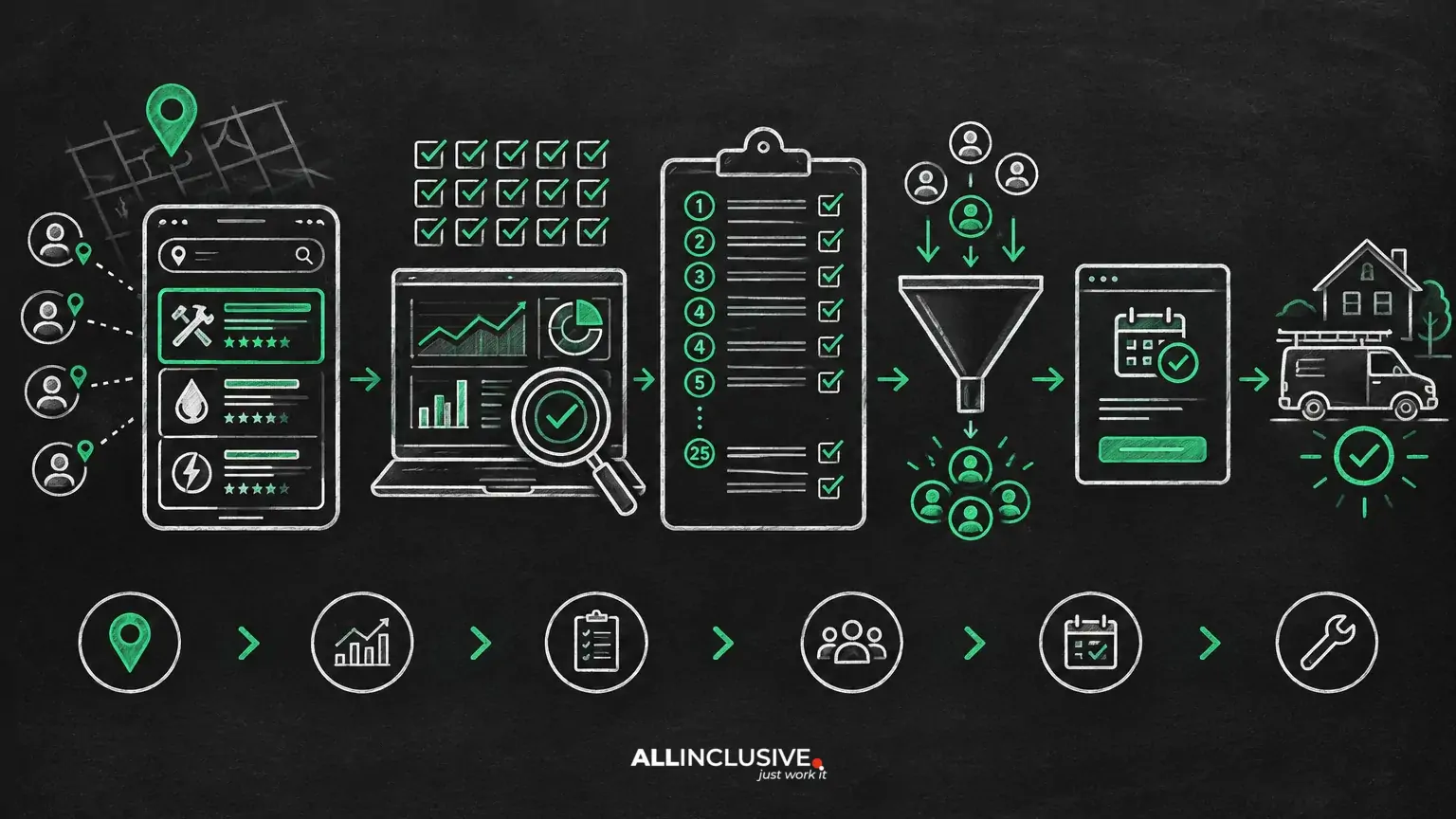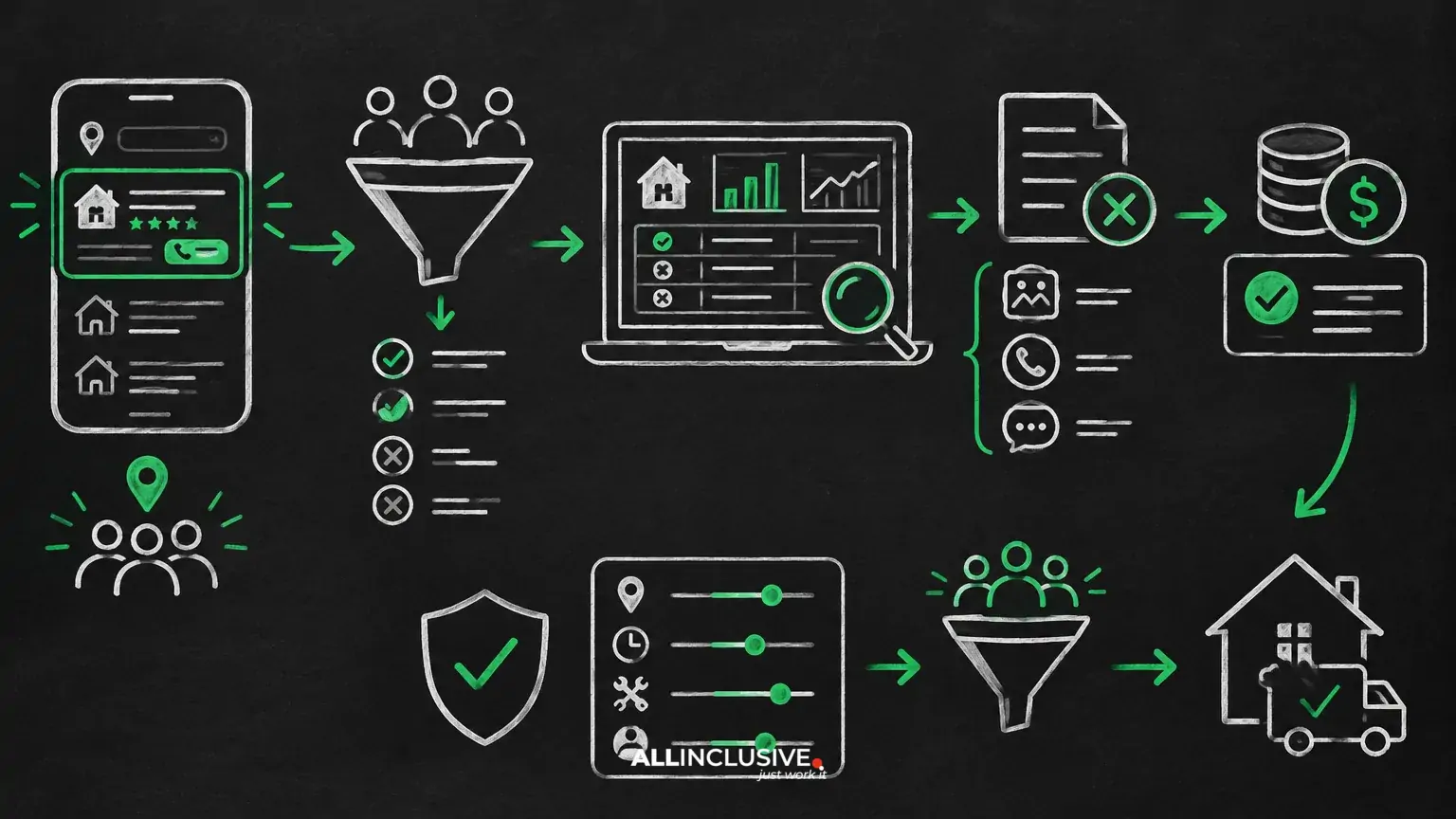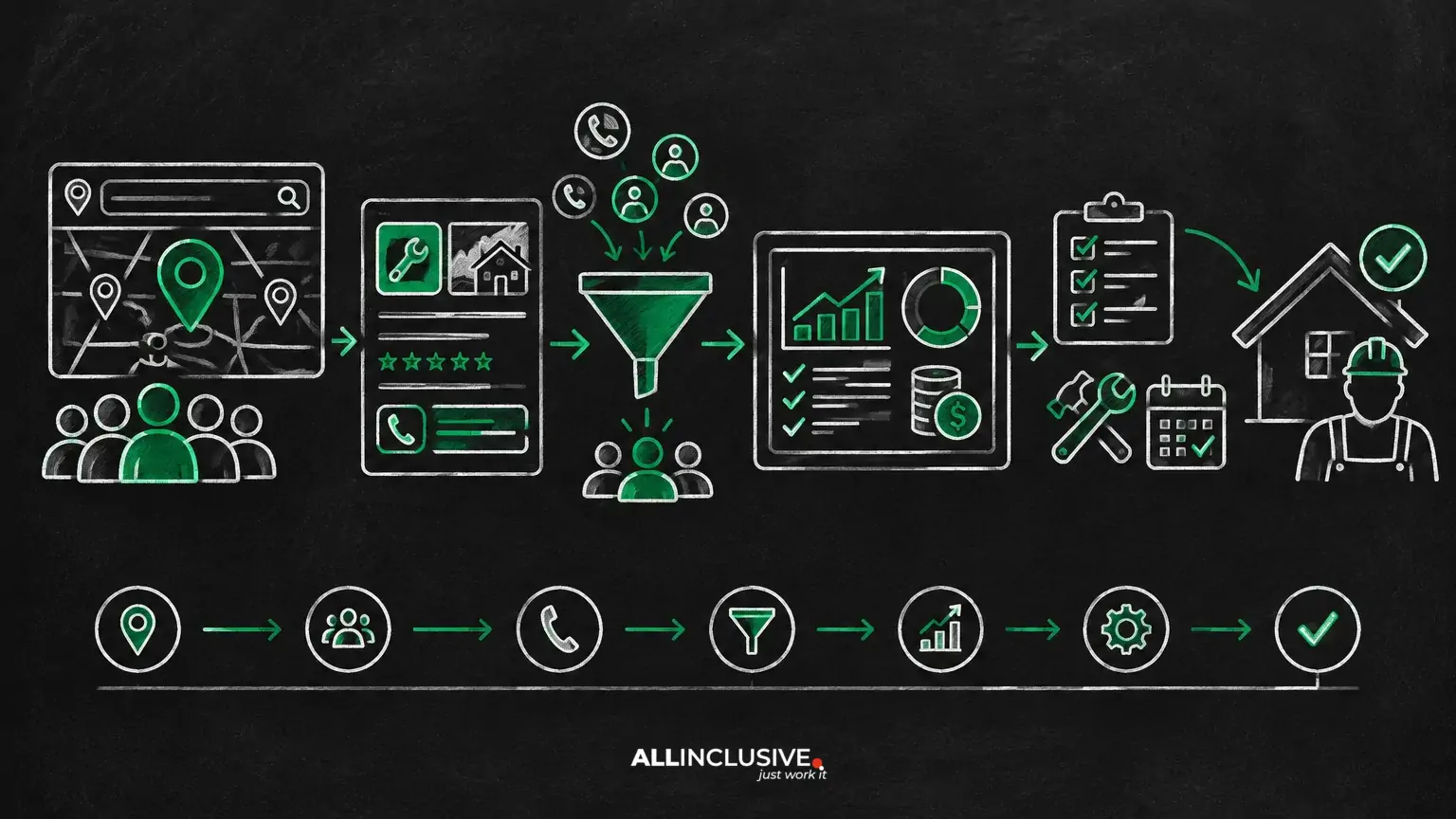
For contractors, Local Services Ads can be a direct path to customers who are already looking for help. But visibility alone does not create profitable growth. The channel works best when a contractor treats it as an operating system for qualified inquiries—not simply as another advertising placement.
The right evaluation starts with four questions: Do your services and coverage area fit the channel? Can you respond quickly and consistently? Is your budget aligned with realistic lead capacity? And do you have a process for separating valuable opportunities from poor-fit inquiries?
This guide explains how to assess local service ads for contractors, improve lead quality, set practical budget controls, and connect advertising activity to sales operations. Businesses outside contracting can apply the small-business setup and budget guidance to their own local-services advertising operations.
When Local Services Ads make sense for contractors
Local Services Ads are generally most useful when a contractor serves a defined geographic area, offers services customers actively search for, and can handle inbound calls or messages during the hours it advertises availability. The channel is especially relevant for businesses such as plumbing, HVAC, electrical, roofing, remodeling, landscaping, and other home-service categories, subject to current platform eligibility and verification requirements.
Fit is not determined by trade alone. A contractor should also assess:
- Service-area density: Are there enough potential customers in the locations you can profitably serve?
- Job economics: Can an average completed job support the cost of acquiring and selling the lead?
- Capacity: Can your team answer inquiries and schedule work without creating excessive delays?
- Qualification: Can staff quickly identify the service type, location, urgency, and likely scope?
- Reputation: Is your business prepared to maintain an accurate profile and manage customer feedback professionally?
Contractors with highly specialized work, long project cycles, or limited geographic coverage may still benefit, but they should evaluate lead quality and sales-cycle economics carefully rather than assuming every inquiry is valuable.
Lead quality: define a good lead before you buy more
A lead is not automatically good because it is relevant to your trade. For a contractor, quality usually depends on whether the inquiry matches the service, location, budget range, timing, and operational capacity of the business.
Before increasing spend, define a minimum qualification standard. For example, a roofing contractor might classify an inquiry as qualified when the property is within its service area, the customer owns or controls the property, the work is within the company’s scope, and an inspection can be scheduled. An HVAC contractor may prioritize urgent repairs differently from replacement projects, which may require more consultation.
Use a simple lead-classification model
- Qualified: The customer and project fit your service, location, and commercial criteria.
- Needs review: The inquiry may fit, but key information is missing or the project requires further diagnosis.
- Unqualified: The request is outside your service area, trade, availability, or acceptable project scope.
- Invalid or duplicate: The contact cannot be reached, is not a genuine request, or repeats an existing inquiry.
This classification should be applied consistently by the people answering calls and messages. Otherwise, marketing decisions will be based on subjective impressions rather than comparable evidence.
Budgeting for Local Services Ads
Budget should be tied to lead capacity and unit economics, not to a competitor’s claimed spend or a platform recommendation viewed in isolation. Start with the number of additional jobs your business can profitably handle, then work backward through the sales process.
A practical planning model is:
Required leads = target completed jobs ÷ lead-to-job close rate
Then estimate the required media investment using your expected cost per lead. These inputs are planning assumptions, not guarantees. They should be replaced with your own account data as it accumulates.
For example, if a contractor wants to add a defined number of jobs and historically closes only a portion of qualified inquiries, the necessary lead volume may be substantially higher than the number of jobs desired. The business should also account for missed calls, cancellations, estimates that do not convert, and work rejected because of schedule or geography.
For a more detailed planning process, see Local Services Ads Budget: How to Set Weekly Spend and Lead Targets.
Set budget controls around capacity
Contractors should review whether their weekly budget is compatible with:
- Available crews, technicians, or subcontractors
- Dispatch and appointment capacity
- Seasonal demand and emergency-service coverage
- Cash flow requirements for materials and labor
- Sales follow-up capacity for estimates and larger projects
If the business cannot answer or process additional inquiries, increasing exposure may create a worse customer experience without producing more completed work. Conversely, a contractor with unused capacity may need to test broader service coverage, additional job types, or different availability—provided those changes remain operationally profitable.
Separate lead cost from customer acquisition cost
Lead cost is only one layer of performance. A low-cost inquiry can be expensive if it rarely becomes a job. A higher-cost inquiry may be attractive if it produces profitable, repeatable work.
Track at least three stages:
- Inquiry: A call or message is received.
- Qualified opportunity: The request fits the contractor’s service and commercial criteria.
- Won job: The customer accepts the estimate or books the work.
Where possible, add revenue or gross-margin information to the won-job stage. This allows the contractor to compare channels by business value instead of optimizing for inquiry volume. It also helps reveal differences between emergency repairs, maintenance work, replacements, and larger projects.
Operations are part of the advertising strategy
Local Services Ads performance can be constrained by response handling as much as by targeting or budget. A contractor that misses calls, takes too long to return messages, or fails to record outcomes will have limited ability to improve the account.
Build a response workflow
- Assign ownership: Decide who answers incoming calls and who handles missed-call follow-up.
- Define intake questions: Capture location, service need, urgency, property type, and scheduling constraints.
- Use a consistent outcome code: Record whether the inquiry was qualified, booked, quoted, lost, invalid, or still open.
- Set follow-up tasks: Estimate requests and unanswered contacts should have a specific next action and due date.
- Review exceptions: Investigate repeated out-of-area inquiries, wrong-service requests, and duplicate contacts.
A short call script can improve consistency without making the conversation sound robotic. The objective is not to interrogate the customer; it is to establish fit quickly and move the inquiry to the appropriate next step.
Profile and service-area decisions
Accurate business information is foundational. Contractor profiles should reflect the services actually delivered, the areas genuinely served, current operating details, and the type of work the team is equipped to complete.
A broad service area may create more exposure, but it can also increase travel time, reduce close rates, and produce inquiries that are not economically viable. A narrower area may generate fewer leads while improving scheduling efficiency and job profitability. Test changes deliberately and evaluate qualified opportunities—not impressions alone.
Service descriptions should be specific enough to set expectations. Avoid presenting every possible trade or project type if the company only occasionally accepts that work. Misalignment between the profile and the actual business creates friction for customers and staff.
How to evaluate lead quality by trade
The definition of quality varies by contractor category:
- Emergency trades: Response time, service radius, dispatch availability, and urgency are often decisive.
- Roofing and exterior work: Property ownership, project scope, inspection access, and weather-related demand may affect qualification.
- Remodeling: Budget, project timeline, decision-maker involvement, and project fit usually require more discovery.
- Maintenance services: Recurring potential, route density, and service frequency may matter more than a single job value.
- Specialty contractors: Technical requirements, licensing or qualification needs, and limited service areas can make careful screening essential.
These are operational considerations, not platform guarantees. The contractor should use its own historical outcomes to establish which lead attributes predict profitable work.
Optimization: improve the system, not just the volume
Optimization should begin with the largest source of economic leakage. If many inquiries are outside the service area, improve coverage and qualification. If calls are answered but rarely booked, review intake, pricing communication, and scheduling. If estimates are issued but not accepted, examine sales follow-up and offer fit before increasing advertising.
Useful weekly questions include:
- Which services generated the most qualified opportunities?
- Which locations produced profitable or unprofitable work?
- How many inquiries were missed or left without a documented outcome?
- Where did the sales process lose otherwise suitable opportunities?
- Is current demand aligned with crew capacity and appointment availability?
For a broader testing framework, read Local Services Ads Optimization: 15 Ways to Improve Lead Quality. For ongoing operating discipline, Local Services Ads Management: Weekly Operating Checklist provides a complementary process.
Local Services Ads versus other demand channels
Local Services Ads should not be evaluated in isolation. Search campaigns may provide more control over messaging, landing pages, keywords, and conversion paths, while local SEO can build durable organic visibility over time. The best channel mix depends on service urgency, market competition, customer value, and the contractor’s ability to manage each source.
Use Local Services Ads when high-intent local inquiries and direct contact are priorities. Consider broader paid search when you need more control over query coverage or want to promote services that do not fit the local-services format. Treat local SEO as a longer-term investment rather than a substitute for immediate demand capture.
See Local Services Ads vs. Google Ads: When to Use Each Channel for a channel-level comparison, and review the broader Local Services Ads resource hub for related planning and management guidance.
A practical launch and review checklist
- Confirm current eligibility, verification, service categories, and business information.
- Define the service area and exclude locations that are operationally unprofitable.
- Document qualified, unqualified, invalid, and duplicate lead criteria.
- Set a starting budget based on capacity, target jobs, and realistic conversion assumptions.
- Assign call handling, missed-call follow-up, intake, and outcome recording.
- Review lead quality and booked work on a recurring schedule.
- Adjust operations, profile scope, service mix, or budget based on completed-job economics.
Local Services Ads for Contractors: Decision Summary
Local Services Ads can be valuable for contractors when the channel is connected to disciplined qualification, responsive operations, and business-level measurement. The goal is not to generate the maximum number of inquiries. It is to create a reliable flow of serviceable, profitable opportunities that the team can answer, schedule, sell, and fulfill.
Start with fit and capacity, establish a clear definition of lead quality, and make budget decisions from qualified opportunities and completed jobs. That approach gives contractors a stronger basis for deciding whether to scale, refine, or diversify their paid-media mix.
For broader strategic context, see the broader paid media hub.