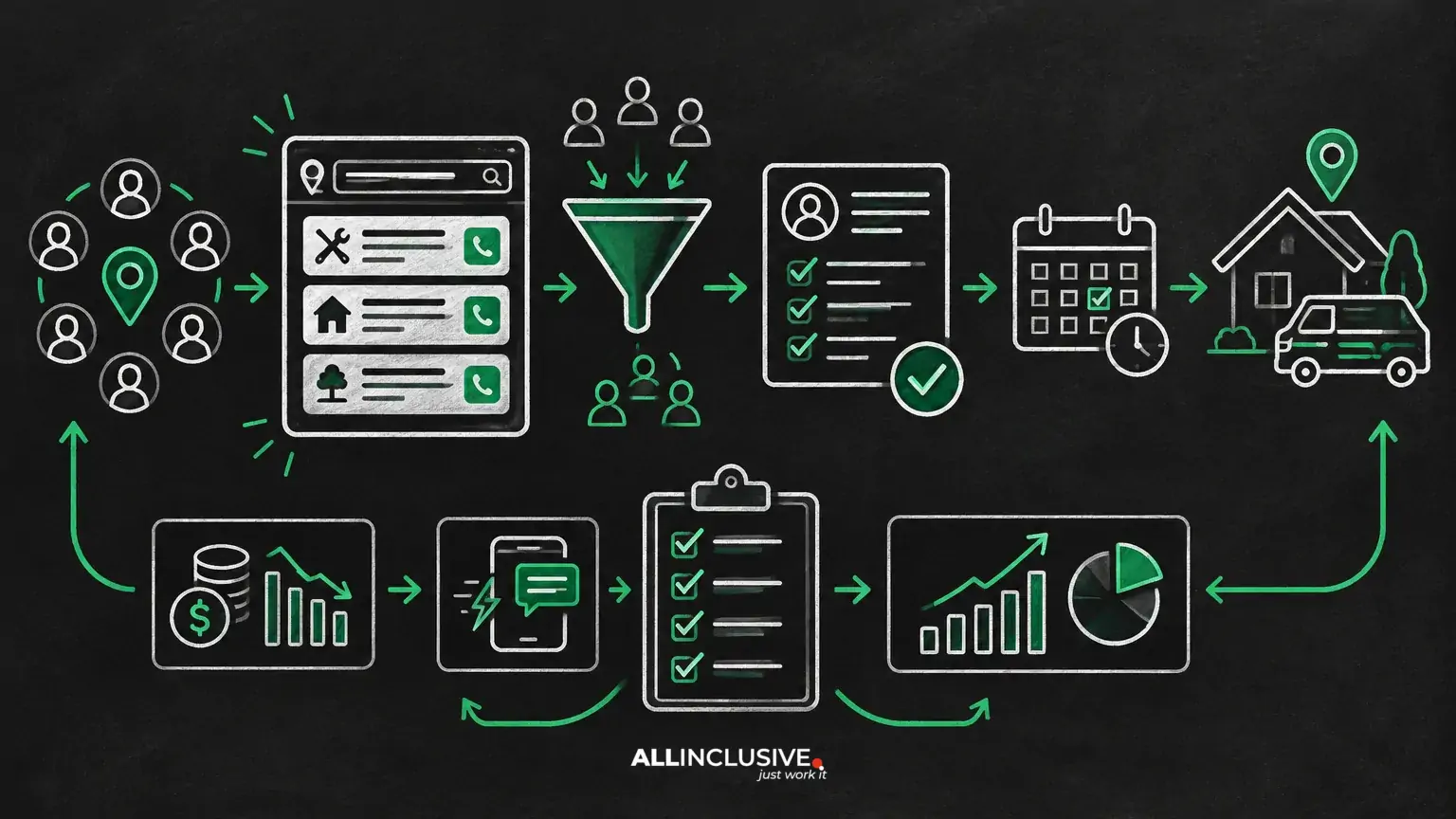
Effective local service ads management is not a set-and-forget task. The account needs a repeatable operating rhythm that connects platform activity with real business outcomes: qualified conversations, booked jobs, completed appointments, and profitable revenue.
This weekly checklist is designed for agencies, multi-location businesses, and local operators managing Google Local Services Ads (LSA). It focuses on decisions you can make consistently without assuming a specific account size, service category, market, or current platform policy.
The weekly Local Services Ads management checklist
- Review every new lead and its disposition. Confirm whether each inquiry was relevant, reachable, booked, completed, or lost.
- Check spend and lead pacing. Compare actual activity with the budget and lead volume the business can handle.
- Audit responsiveness. Review missed calls, delayed replies, unanswered messages, and after-hours coverage.
- Inspect lead quality by service and location. Look for patterns that require changes to targeting, service selection, or intake.
- Resolve questionable leads and document decisions. Keep evidence and follow the available platform process where appropriate.
- Update operational owners and next actions. Every issue should have a person responsible and a due date.
- Report business outcomes, not just platform activity. Tie leads to booked work and revenue when the client’s data allows it.
1. Start with a lead-by-lead quality review
The most important weekly task is to reconcile the leads shown in the LSA account with what happened in the business. Platform-reported lead volume does not explain whether those inquiries fit the company’s services, service area, schedule, or commercial objectives.
Build a simple review table with fields such as:
- Date and lead source
- Caller or contact identifier, subject to applicable privacy requirements
- Requested service
- Location or service-area fit
- New or existing customer
- Contact status
- Appointment or estimate status
- Job value or expected value, if available
- Disqualification reason
Use consistent dispositions. For example, “qualified and booked,” “qualified but not booked,” “outside service area,” “wrong service,” “duplicate,” “spam,” or “could not reach.” The exact labels matter less than applying them consistently.
Review a sample of calls and messages, where permitted and properly disclosed, rather than relying only on summaries. A lead marked as “poor quality” may actually reflect an intake problem, while a lead marked as “good” may never have received a timely response.
Separate lead quality from sales execution
Not every lost lead is an advertising problem. A relevant inquiry can fail because the business did not answer, offered an unsuitable appointment time, quoted outside the prospect’s budget, or lacked capacity. Reporting should distinguish media quality from operational conversion.
2. Check budget pacing against capacity
Weekly budget review should answer two questions: Is spend aligned with the approved plan, and can the business handle the demand it is generating?
Review:
- Spend or charges for the period
- Lead volume and lead type
- Remaining budget or expected pacing
- Scheduled capacity for the coming week
- Seasonal or promotional changes in demand
- Any location or service area receiving disproportionate activity
A budget increase is not automatically the right response to low lead volume. First check eligibility, profile completeness, service coverage, responsiveness, competition, service selection, and whether the business is limiting availability. Conversely, reducing spend may be appropriate when the team cannot respond quickly or when booked work already exceeds capacity.
Set an approval rule before changing the budget. For example, require agreement from the account owner and operations lead before a material adjustment. This prevents reactive changes based on a single slow day or an isolated expensive lead.
3. Audit responsiveness and intake operations
Local lead generation is inseparable from lead handling. During the weekly review, inspect the path from inquiry to first human response.
Check:
- Missed calls and abandoned calls
- Time to return missed calls
- Message response times
- Call routing and forwarding behavior
- After-hours instructions
- Weekend and holiday coverage
- Whether staff can identify the source and requested service
Do not assume that a phone number is working because the account is active. Test the customer journey carefully and document the result. For businesses using multiple locations, confirm that calls and messages reach the correct team rather than a central queue with no clear owner.
A weekly operations meeting can be short: identify missed opportunities, assign corrective action, and review whether the change was implemented. Examples include adding a backup responder, changing call routing, clarifying intake questions, or adjusting advertised availability to match real capacity.
4. Review services, locations, and qualification signals
LSA performance depends on who can find the business and what the business is willing and able to serve. Review the account’s service and location configuration against current operations.
Ask:
- Are all advertised services genuinely offered?
- Are any services generating inquiries the team cannot fulfill?
- Does the service area match actual travel or coverage limits?
- Have new locations, licenses, staff, or operating hours been added?
- Are there services that should be paused because of capacity or compliance concerns?
Make changes conservatively. A narrow targeting adjustment may improve relevance, but it can also reduce qualified demand. Record the hypothesis, change, date, and expected outcome so the next review has context.
For category-specific planning, see Local Services Ads for Contractors: Lead Quality, Budget and Operations and Local Services Ads for Healthcare: Eligibility, Leads and Compliance.
5. Handle disputed or questionable leads systematically
Some inquiries may appear invalid, irrelevant, duplicated, or outside the business’s coverage. Treat disputes as an evidence and process issue, not as a substitute for quality analysis.
For each questionable lead, record:
- The date and contact reference
- Why it appears invalid or unsuitable
- Whether the business attempted contact
- Any call notes or message history
- The action taken in the platform
- The final outcome or decision
Use the platform’s current review or dispute process where available, and verify the applicable requirements before acting. Avoid promising that every disputed lead will be reversed. The practical objective is to identify recurring patterns and improve the account-business feedback loop.
Common patterns worth escalating include repeated wrong-service inquiries, persistent coverage mismatches, duplicate contacts, or a sharp change in lead relevance after an account update.
6. Connect platform data to CRM and revenue data
LSA reporting is more useful when combined with the business’s own records. A lead is an input; the commercial outcome is usually a booked appointment, estimate, job, retained customer, or completed payment.
At minimum, reconcile weekly leads with a CRM, call-tracking system, booking tool, or structured spreadsheet. Where data quality permits, calculate:
- Qualified lead rate
- Contact rate
- Booked appointment rate
- Completed-job rate
- Cost per qualified lead
- Cost per booked job
- Estimated revenue or gross profit by source
Use careful definitions. A “qualified lead” should have a documented rule, and “revenue” should not be presented as realized if it is only an estimate. If offline data is incomplete, say so and report the limitation rather than filling the gap with assumptions.
Attribution may be imperfect, particularly when customers call directly, return later, or interact with multiple marketing channels. The answer is not false precision. Use a consistent model, disclose its limitations, and compare trends over time.
7. Produce a decision-oriented weekly report
A useful report should help an owner decide what to do next. Keep the structure consistent so changes are easy to spot.
Recommended report sections
- Executive summary: what changed and why it matters
- Lead quality: qualified, unqualified, booked, and unresolved leads
- Budget: planned versus actual activity and any pacing concern
- Operations: missed calls, response delays, and capacity constraints
- Account changes: edits made during the week
- Risks: policy, eligibility, tracking, or service-delivery issues
- Next actions: owner, action, deadline, and expected effect
Avoid reporting every available metric without interpretation. If lead volume increased but booked work did not, say that directly and investigate the conversion gap. If volume declined while qualified lead rate improved, explain whether the business prefers that trade-off.
What to review monthly rather than weekly
Some decisions need more data than a seven-day window can provide. Review these monthly or at another suitable interval:
- Service and location mix
- Qualified lead and booked-job trends
- Capacity utilization
- Customer value and repeat business
- Seasonal demand patterns
- Budget allocation across channels
- Tracking and CRM data quality
Monthly analysis reduces overreaction to normal volatility. Weekly management should focus on preventing avoidable waste and resolving operational blockers; monthly analysis should guide broader strategic decisions.
How LSA management fits the wider paid-media plan
Local Services Ads can be valuable when the business depends on direct inquiries and can respond effectively. They are not a complete substitute for every demand-generation channel. Search campaigns, local SEO, remarketing, referral programs, and strong conversion operations may play different roles.
Use the broader paid media strategy framework to clarify channel roles, measurement, budget governance, and testing priorities. For a direct comparison of channel intent and control, read Local Services Ads vs. Google Ads: When to Use Each Channel.
For a foundational explanation of the format and customer journey, see What Are Google Local Services Ads and How Do They Work?. The central Local Services Ads guide provides a broader overview of planning and management.
Final operating principle
Strong local service ads management is disciplined feedback management. Review the actual leads, identify where quality or conversion breaks down, make one controlled change at a time, and assign ownership for the next step.
The weekly checklist is successful when it improves decisions—not when it produces a longer report. Keep the process simple enough to run every week, rigorous enough to expose waste, and connected to the business outcomes that determine whether lead generation is working.