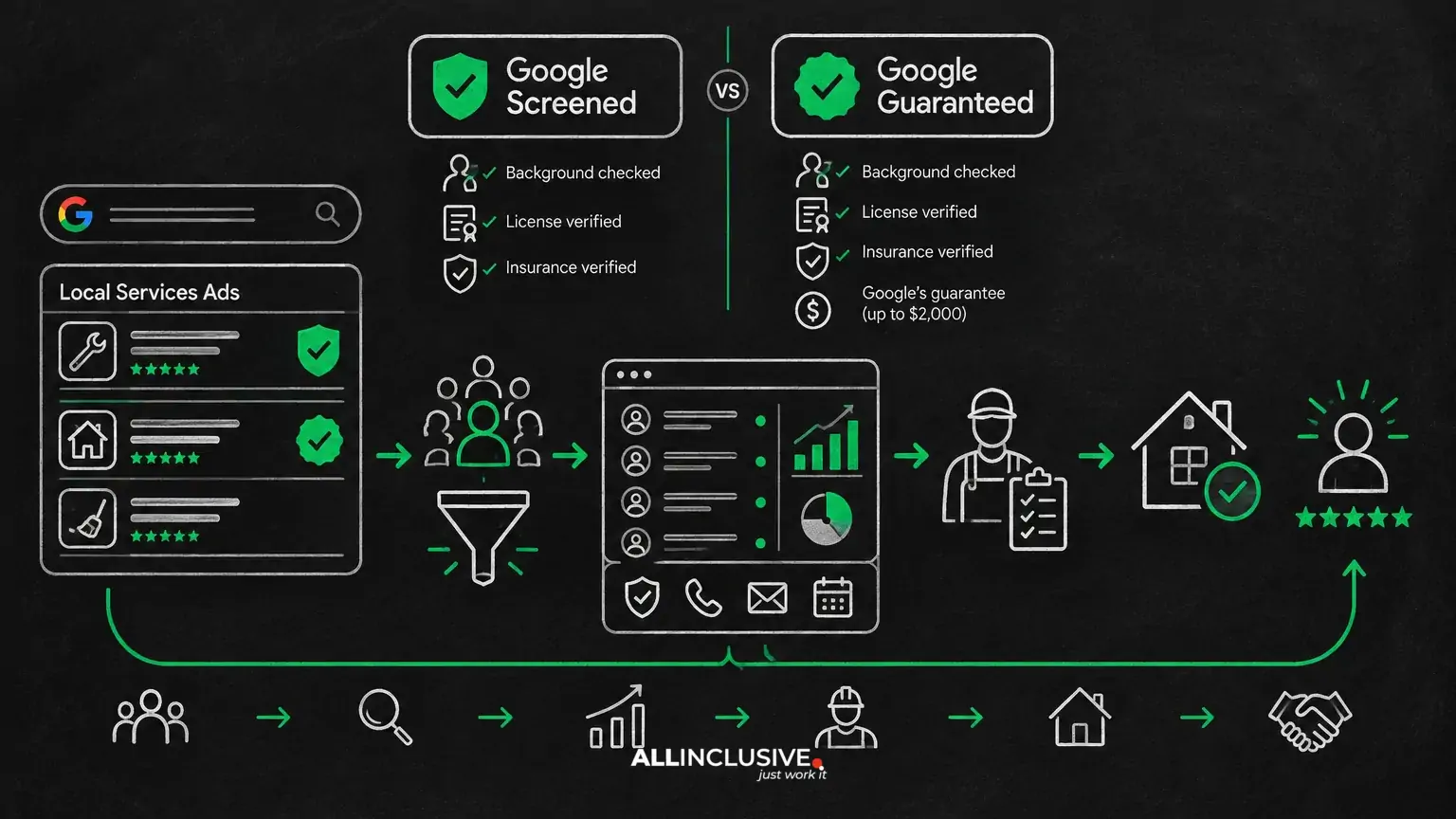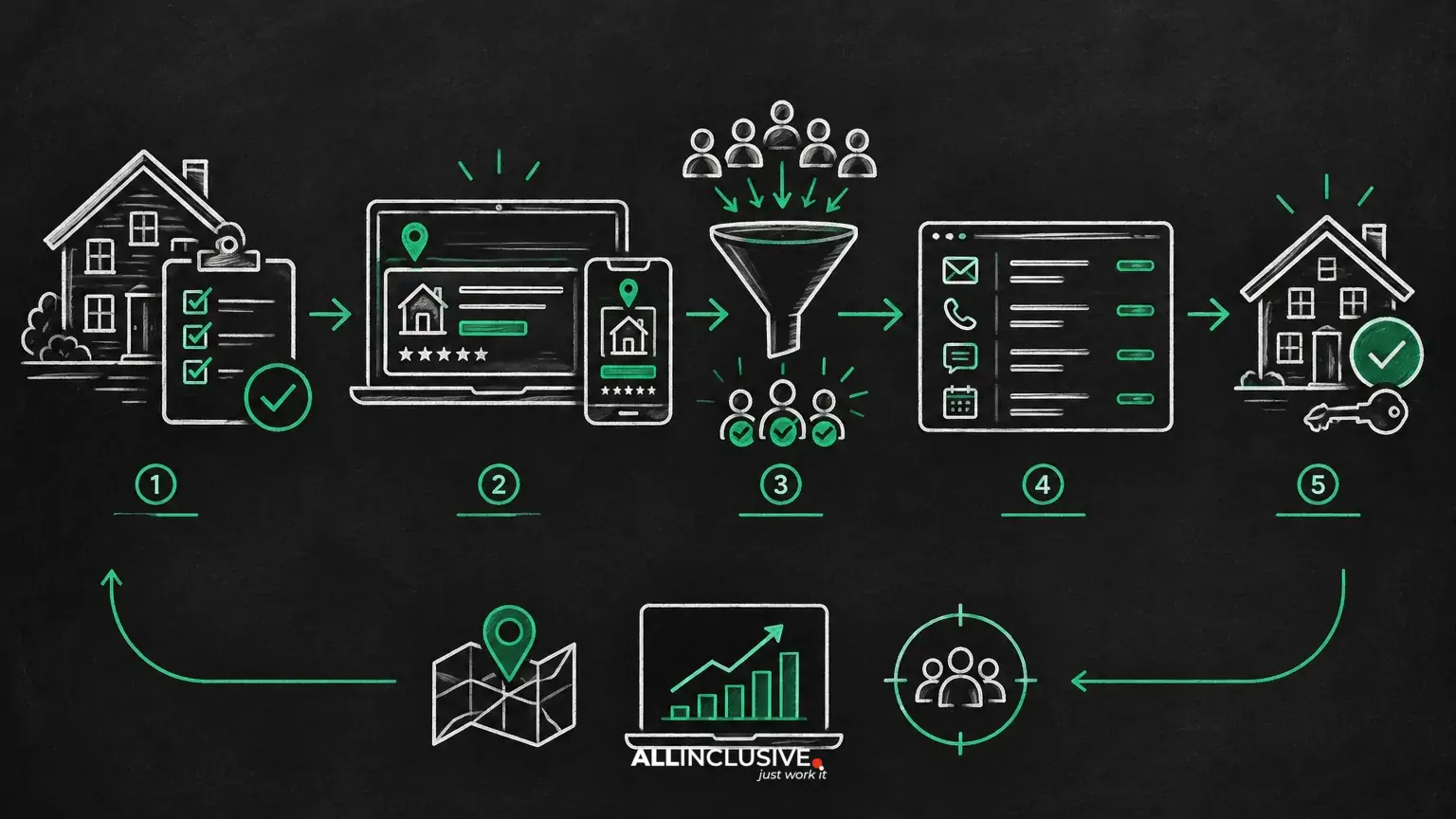
Local Services Ads can give real estate professionals a way to appear prominently when nearby prospects search for relevant services. But visibility alone does not make the channel profitable. Realtors need to confirm eligibility, define the services and locations they can support, build a credible profile, and create a lead-management process before increasing spend.
This guide explains how to evaluate and launch Local Services Ads for realtors, with an emphasis on practical setup decisions and the operational work that determines lead quality. Platform availability, verification requirements, ad formats, and billing mechanics can change by market and profession, so confirm current requirements in the account and region where you plan to advertise.
What Local Services Ads mean for realtors
Local Services Ads are designed to connect people searching for local services with eligible providers. For a realtor, the opportunity is usually tied to a specific service category, geographic coverage, and the type of client the business is equipped to serve.
The channel should be treated as a lead-generation system rather than a standalone listing. Its performance depends on four connected elements:
- Eligibility: whether the relevant real estate category and market can use the program.
- Profile trust: the accuracy, completeness, reviews, service descriptions, and verification signals associated with the business.
- Lead handling: how quickly and consistently inquiries are answered, qualified, and routed.
- Commercial measurement: whether leads become consultations, signed clients, transactions, or other meaningful outcomes.
A realtor should not assume that a prominent placement will solve weak positioning or slow follow-up. The strongest setup aligns the ad profile with a clear offer and a defined sales process.
Start with eligibility and business fit
Before building the profile, verify that the business, category, service area, and market meet current platform requirements. A real estate professional may operate as an individual agent, a team, a brokerage, or a property-focused specialist, and those structures can affect how the profile should be represented.
Use a short eligibility review:
- Confirm the relevant category. Make sure the available category accurately reflects the service being promoted. Do not select a broader or unrelated category simply to gain access.
- Check geographic coverage. Define the areas the business genuinely serves and can support with timely appointments and local knowledge.
- Review verification requirements. Gather business details, professional information, insurance or licensing documentation where applicable, and any other materials requested during onboarding.
- Decide which entity owns the profile. Keep ownership, contact details, and lead access clear when several agents or a brokerage are involved.
- Assess operational capacity. Estimate how many inquiries the team can respond to promptly without reducing service quality.
If the available category does not match the way the business actually serves clients, paid search may offer more control over messaging and targeting. Local Services Ads should be selected because they fit the business model—not simply because they appear above other placements.
Define the offer before setting up the profile
“Real estate” is too broad to guide a useful lead-management process. Decide what the profile is intended to generate. Examples could include buyer representation, seller consultations, relocation support, investor services, or another clearly defined area of expertise, subject to the category and policy requirements that apply in the market.
A focused offer helps with three decisions:
- Who should contact you? Define the client type, property context, urgency, and geographic need.
- What should they expect? Describe the first conversation or consultation accurately, without implying guaranteed outcomes.
- What should happen next? Establish whether the goal is a phone conversation, appointment, property consultation, or qualified handoff.
For example, a team specializing in relocation might prioritize inbound conversations from people moving into a defined region. Its profile, call script, availability, and follow-up sequence should all support that use case. A general profile that attempts to speak to every type of buyer and seller may attract more varied inquiries but make qualification harder.
Build a trustworthy Local Services Ads profile
Profile completion is not a substitute for a strong reputation, but incomplete or inconsistent information can create avoidable friction. Review every public-facing field for accuracy and alignment with the business’s website, business listing, and sales process.
Pay particular attention to:
- Business name and contact details: Use a consistent identity that prospects will recognize when the team responds.
- Service descriptions: Explain the work the realtor actually provides, using plain language rather than exaggerated claims.
- Service areas: Include only locations the team can serve effectively.
- Availability: Set expectations that the team can meet, especially if calls may arrive outside normal office hours.
- Reviews and reputation: Follow applicable platform rules and professional obligations when requesting or responding to reviews.
- Professional presentation: Use current, credible imagery and profile information that reflects the actual business.
Prospects are evaluating whether they can trust the person answering the inquiry. Accurate details, relevant experience, and a clear next step often matter more than broad promotional language.
Set a realistic budget and lead policy
Do not begin with a budget based only on what the platform allows or recommends. Start with the economics of the business and the capacity of the team.
Establish:
- the maximum monthly investment the business can sustain during the testing period;
- the minimum information required for a lead to be considered qualified;
- the acceptable cost for a qualified consultation or sales opportunity;
- the process for disputing or reviewing leads that appear irrelevant, duplicated, or outside the agreed service area; and
- the conditions that would trigger a budget increase, reduction, or pause.
Real estate revenue is often delayed and varies by transaction, so short-term lead volume should not be confused with profitability. A useful evaluation moves from total inquiries to qualified conversations, scheduled consultations, signed clients, and eventually revenue where attribution is feasible.
For a broader framework on whether the channel fits a business model, see our guide to evaluating whether Local Services Ads are worth it.
Design the lead-management workflow before launch
The first response is part of the advertising experience. A prospect who receives no answer may contact another agent, even if the original ad was relevant. Create the workflow before the profile goes live.
Route every inquiry
Decide who owns new calls and messages during business hours, evenings, weekends, vacations, and periods of high demand. If a team shares responsibility, use a defined rotation or centralized intake process rather than relying on informal forwarding.
Use a concise qualification script
The script should help the agent understand intent without turning the first contact into an interrogation. Useful questions may cover:
- Whether the prospect is buying, selling, investing, relocating, or seeking another service.
- The relevant location and property type.
- The expected timing and urgency.
- Whether the prospect already has representation.
- The preferred next step and best follow-up method.
The script should support a helpful conversation, not force every inquiry into the same sales path.
Record outcomes consistently
Use a CRM, call-tracking process, or structured spreadsheet to record source, service need, location, response status, qualification outcome, appointment status, and eventual business result. Consistent labels make it easier to distinguish a low-quality channel from a weak follow-up process.
Response speed deserves its own operational review. For more detail on the relationship between response handling and lead value, read our guide to Local Services Ads response time.
Measure quality, not just lead volume
Realtors should report performance in stages. A basic measurement structure might include:
- Inquiries received: total calls or messages attributed to the channel.
- Valid inquiries: contacts that are real, relevant, and within the intended service scope.
- Qualified opportunities: prospects with a plausible need, location, and timeline.
- Appointments or consultations: scheduled next steps with a defined business purpose.
- Signed clients or equivalent milestones: outcomes that indicate meaningful commercial progress.
- Revenue contribution: closed-business value, handled carefully when the sales cycle is long or attribution is shared.
Review lead quality by category and location where possible. A campaign can appear efficient at the aggregate level while generating poor-fit inquiries in one service area or for one offer. Also compare the channel with other acquisition sources using consistent definitions. The aim is not to assign perfect credit to every transaction; it is to make better allocation decisions.
Common mistakes realtors should avoid
Promoting services the team cannot support
Broad targeting can create operational strain and lower trust. Limit the profile to services, locations, and hours that match actual capacity.
Mixing brokerage and individual-agent identities
When multiple entities share branding, unclear ownership can lead to inconsistent information, duplicate follow-up, or confusion over who is accountable for a lead. Define the operating model before launch.
Ignoring compliance and professional obligations
Real estate advertising may be subject to licensing, disclosure, fair-housing, brokerage, and jurisdiction-specific requirements. Platform approval does not replace legal or professional review. Ensure claims, imagery, service descriptions, and lead handling comply with the obligations applicable to the business.
Optimizing for the cheapest inquiry
A low-cost contact is not necessarily a valuable opportunity. Review downstream outcomes and investigate whether inexpensive leads are genuinely relevant and reachable.
Changing too many variables at once
When testing a new channel, document changes to service areas, profile details, availability, budget, and routing. Otherwise, it becomes difficult to identify what improved or weakened performance.
When Local Services Ads may not be the right first channel
Local Services Ads may be a poor initial fit when the business lacks a verified operating structure, cannot answer inquiries consistently, serves a highly specialized audience that needs extensive education, or has not defined its offer. In those situations, improve the foundational process first.
Search campaigns, local content, referral systems, or relationship-based outreach may be more appropriate depending on the audience and sales cycle. The right choice depends on controllability, intent, economics, and operational readiness—not on placement alone. For context on broader acquisition planning, explore Allinclusive’s paid media resources.
A practical launch sequence for realtors
Use this sequence to reduce avoidable setup problems:
- Confirm current eligibility and documentation requirements for the relevant market and category.
- Choose one primary offer and define the intended client.
- Set service areas and availability based on actual capacity.
- Complete and proofread the profile for consistency and accuracy.
- Assign ownership for calls, messages, missed contacts, and follow-up.
- Document qualification criteria and outcome labels.
- Set a controlled initial budget and review period.
- Monitor inquiry quality, response handling, appointments, and downstream outcomes.
- Adjust targeting, profile information, routing, or investment based on evidence—not isolated lead counts.
The central question is not whether Local Services Ads can produce inquiries. It is whether the channel can produce relevant opportunities that the team can respond to, qualify, and convert within a sustainable operating model. Realtors that treat setup, reputation, follow-up, and measurement as one system will make better decisions than those focused only on getting listed.
For broader strategic context, see our Local Services Ads resource.