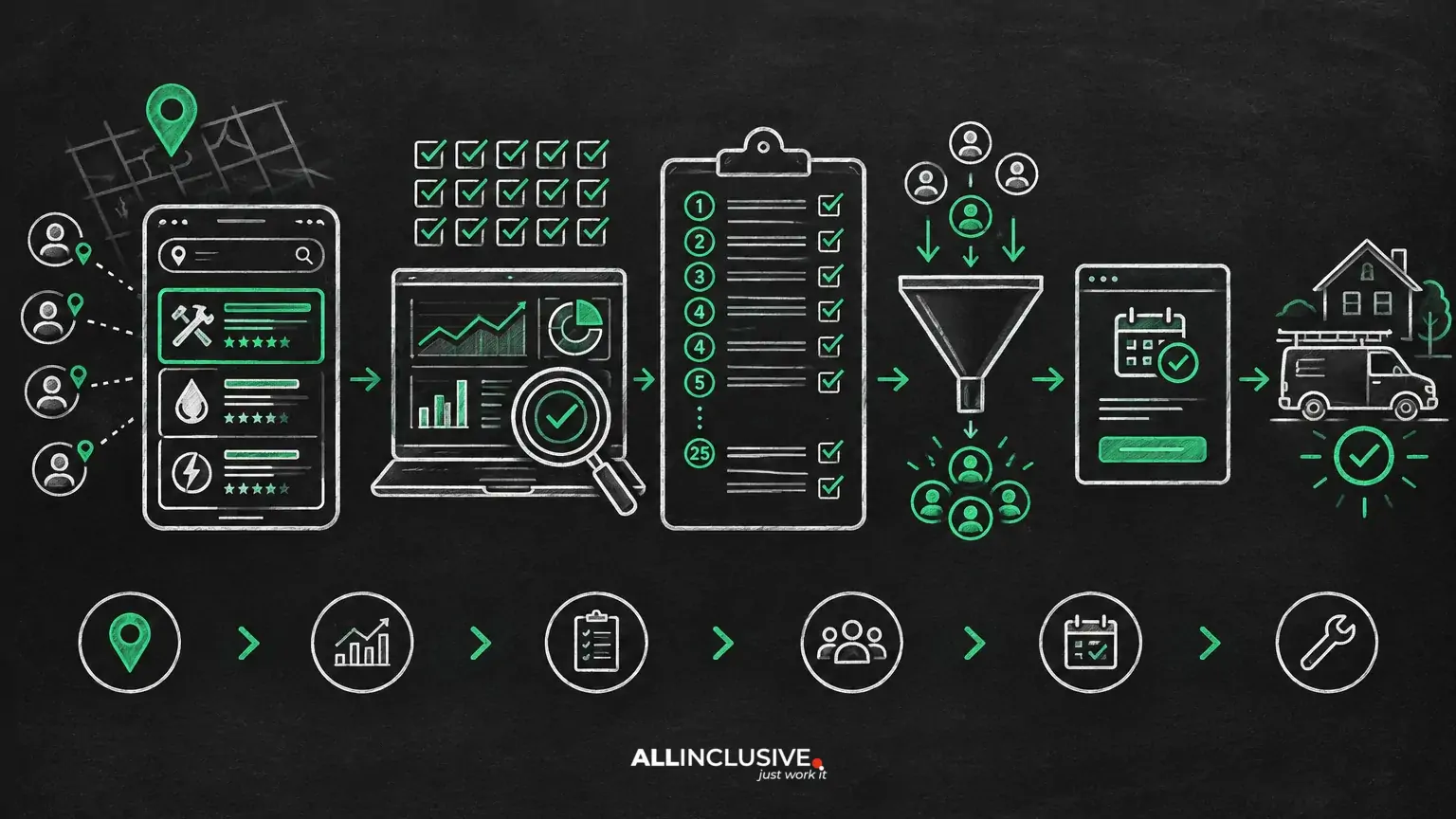
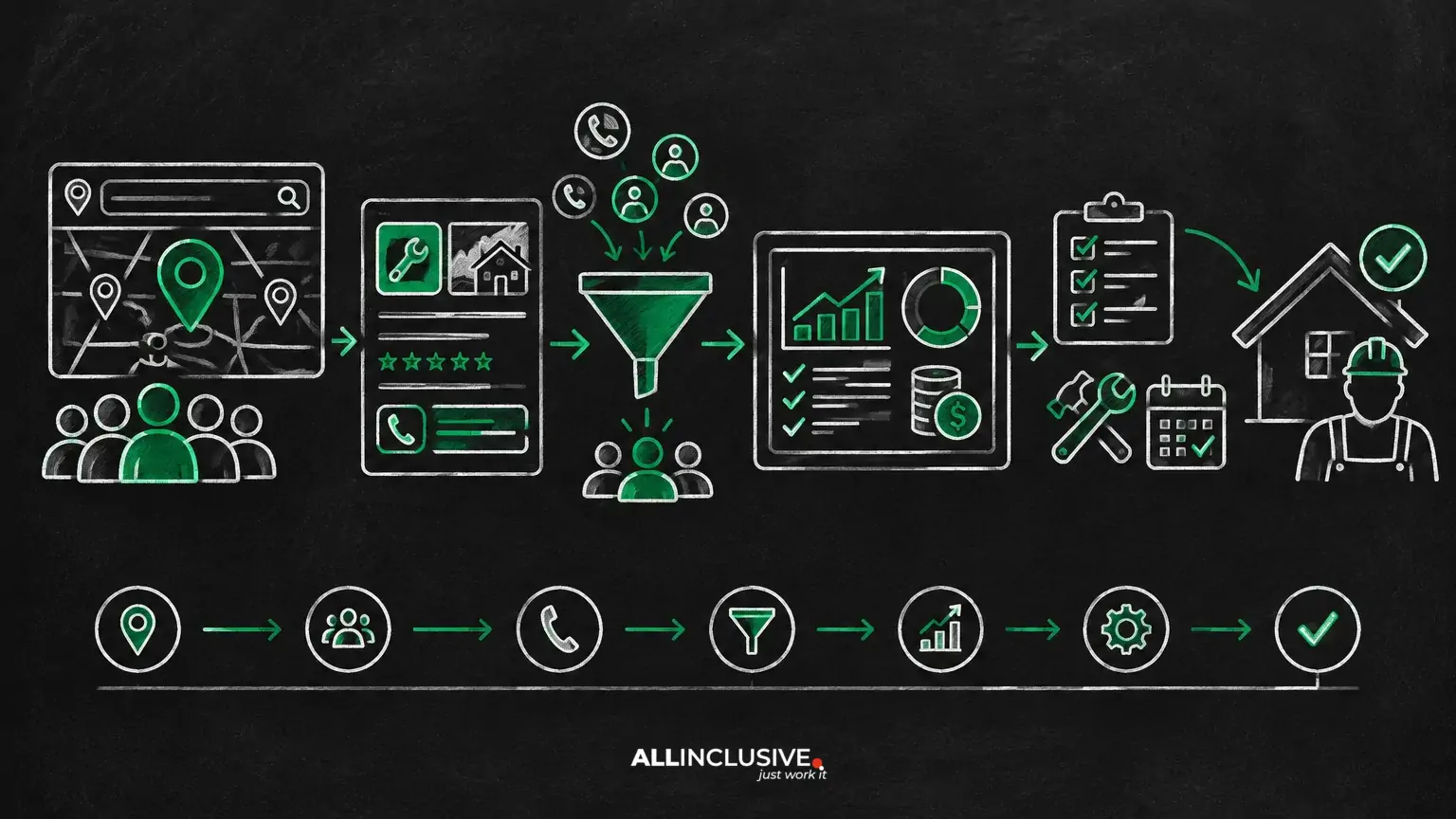
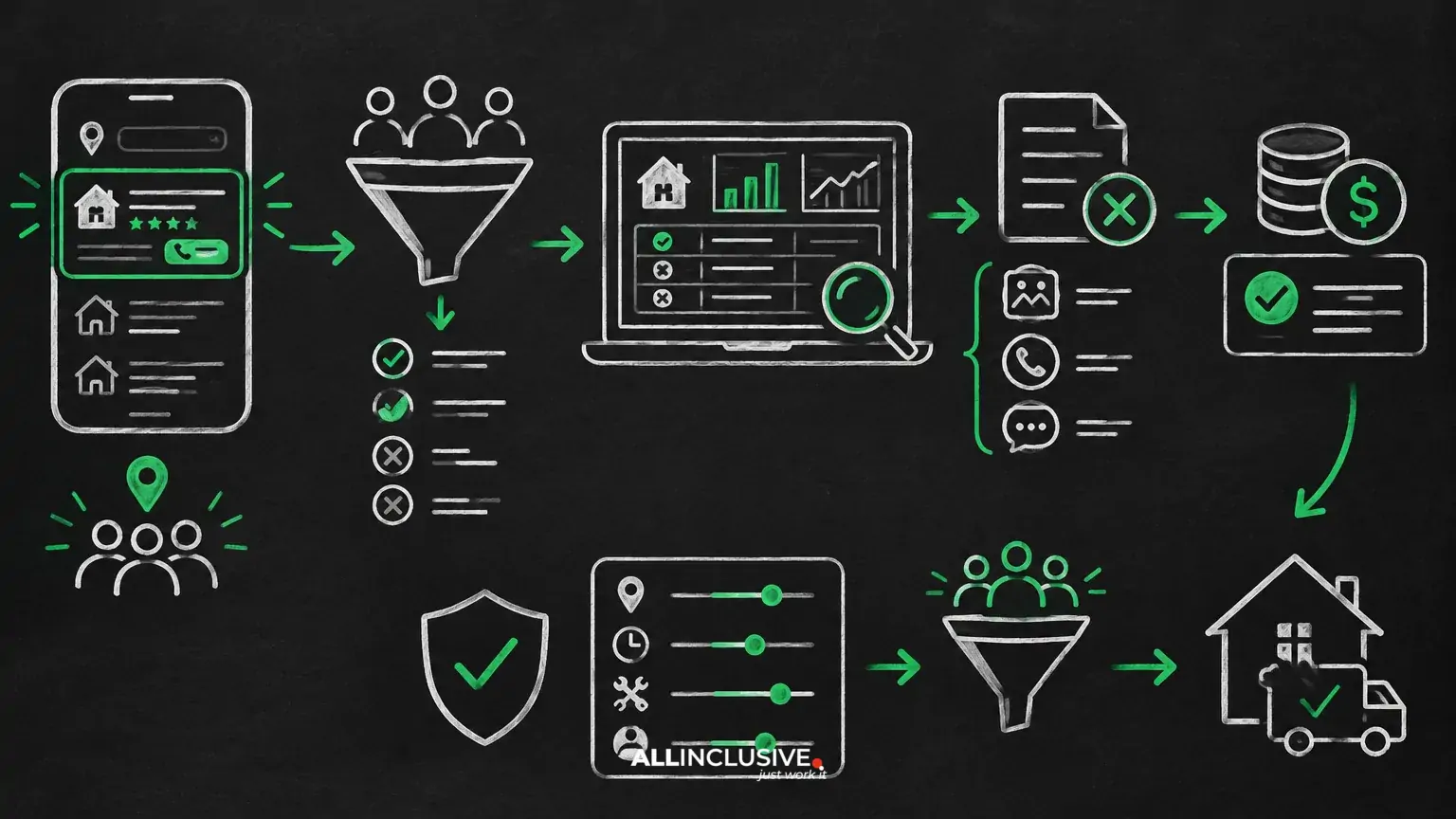
Are local service ads worth it? They can be—but not automatically. Local Services Ads (LSAs) are most likely to earn their place in a marketing mix when your business serves an eligible area, captures demand from people ready to contact a provider, and has the operational capacity to respond and convert those inquiries.
The right question is not whether LSAs produce leads. It is whether the profit from qualified, converted customers exceeds the total cost of generating and servicing those opportunities. That requires more than reviewing the number of calls or messages in the platform dashboard.
This article provides a practical framework for evaluating LSA economics, identifying when the channel is a good fit, and improving performance before increasing spend. For broader channel planning, see the Allinclusive paid media guide.
What Local Services Ads are designed to do
Local Services Ads are intended to connect people searching for certain local providers with businesses that serve their area. Depending on the category and market, a profile may present business information, service details, reviews and contact options near the top of search results.
That placement can be valuable because it reaches users with an immediate need. Someone looking for an emergency repair, a legal consultation or a nearby professional may be closer to contacting a provider than someone browsing a general informational result.
However, high intent does not guarantee profitable acquisition. An inquiry can still be outside the service area, unrelated to the offered service, price-sensitive, duplicated, unresponsive or poorly matched to the business. LSA performance therefore depends on the complete path from search to revenue.
The core LSA ROI equation
A useful starting point is:
Expected contribution profit = converted customers × contribution profit per customer − total acquisition and handling cost
For a simpler customer-acquisition view:
Target cost per acquired customer = average gross profit per customer × acceptable marketing share
Your analysis should include:
- Lead or inquiry cost charged by the platform
- Any agency, management or creative costs allocated to the channel
- Staff time spent answering calls, returning missed calls and qualifying prospects
- Appointment-setting or sales costs
- Refunds, disputed leads or other credits where applicable
- Revenue and gross margin from the customers acquired
- Repeat purchases, maintenance plans or referrals when they are realistically attributable
Do not compare lead cost directly with revenue. A $100 lead can be attractive if it frequently produces a high-margin customer, while a $25 lead can be expensive if it rarely converts.
Five criteria for deciding whether LSAs are worth it
1. Demand and eligibility fit
LSAs are a stronger candidate when people actively search for the service you provide and your business can meet the relevant location, category and verification requirements. The available categories and mechanics can vary by market, so confirm current eligibility and onboarding requirements before building a forecast.
Consider whether your demand is:
- Urgent: The customer wants help soon and is likely to contact providers.
- Locally constrained: Proximity, service area or local availability affects the decision.
- Commercially valuable: A new customer generates enough margin to support paid acquisition.
- Consistent: The business can handle fluctuations without wasting inquiries.
Low search volume, highly seasonal demand or a service that customers typically research for weeks may make another channel more appropriate—or require LSAs to be evaluated alongside longer-cycle campaigns.
2. Lead quality, not just lead volume
Lead quality should be assessed against your sales definition, not the platform’s delivery metrics. Establish categories such as:
- Valid inquiry and within the service area
- Correct service or job type
- New prospect rather than an existing customer
- Reachable contact with a genuine commercial need
- Qualified opportunity or booked appointment
- Won customer and realized revenue
Track these outcomes separately. A campaign can appear efficient on a cost-per-lead basis while underperforming on qualified opportunities. Conversely, a higher lead cost may be acceptable when the inquiries have strong close rates and customer value.
Review searcher expectations as well. If your profile suggests broad availability but your team only handles a narrow set of jobs, mismatched inquiries can consume budget and staff time.
3. Response speed and availability
LSAs tend to reward operational readiness more than many traditional awareness channels. When the customer is comparing providers in real time, missed calls and delayed follow-up can reduce the value of an otherwise good inquiry.
Before increasing budget, define:
- Who answers during business hours
- What happens to missed calls
- How quickly messages receive a response
- How inquiries are screened and routed
- When after-hours requests are handled
- How call outcomes are recorded in the CRM
Measure contact rate, qualified-lead rate, booked-appointment rate and close rate by response condition where possible. If the team cannot respond reliably, additional LSA spend may simply create more leakage.
4. Unit economics and customer value
Calculate economics by service line rather than relying only on an account-wide average. A business may find that LSAs are profitable for high-margin installations but unattractive for low-value one-time jobs.
Useful fields include:
- Average sale value
- Gross margin after direct delivery costs
- Close rate from qualified inquiries
- Cancellation or no-show rate
- Repeat purchase or contract value
- Maximum acceptable cost per acquired customer
For example, suppose a service line produces $1,200 in revenue and $700 in contribution profit per completed job. If 20% of qualified inquiries become customers, the expected contribution profit per qualified inquiry is $140 before acquisition and handling costs. That figure can help establish a rational ceiling for the cost of a qualified opportunity—but your actual model should use your own margins, conversion data and operating costs.
5. Capacity and geographic economics
Profitability is affected by where the work occurs. Travel time, technician utilization, appointment density and local competition can change the value of an otherwise similar lead.
Review results by:
- Service area or territory
- Job type
- Day and time
- Lead source and contact method
- Customer value
- Sales representative, branch or operating team
Geographic segmentation can reveal that a campaign is profitable in one area and unprofitable in another. In that case, the answer may be better targeting and capacity management rather than abandoning the channel entirely.
A practical LSA evaluation model
Use a staged test instead of committing to a permanent budget immediately.
Step 1: Define the business outcome
Choose one primary outcome, such as completed jobs, signed consultations, new accounts or contribution profit. Secondary metrics—calls, messages and appointments—should explain performance, not replace the commercial goal.
Step 2: Set a measurement window
Allow enough time for inquiries to move through the sales cycle. A short window may undercount customers for services that require estimates, consultations or follow-up. Record the lead date, first response, qualification result, appointment, sale and revenue date.
Step 3: Create an outcome taxonomy
Use consistent labels for valid, invalid, duplicate, unqualified, booked, lost and won inquiries. Require a reason for disqualification, such as outside area, wrong service, budget, no answer or duplicate request.
Step 4: Calculate the funnel
At minimum, calculate:
- Cost per inquiry
- Cost per valid inquiry
- Cost per qualified opportunity
- Cost per booked appointment
- Cost per acquired customer
- Revenue and contribution profit by source
This funnel prevents one strong metric from concealing a weak downstream result.
Step 5: Compare with a decision threshold
Set a threshold before reviewing the results. For example, you might require a target contribution margin, a maximum cost per customer or a minimum qualified-lead rate. Avoid changing the threshold after seeing the results simply to justify continued spending.
When Local Services Ads may be worth testing
LSAs are generally worth a structured test when several of the following conditions apply:
- You offer a service with clear local intent.
- Customers commonly search when they are ready to contact a provider.
- Your average gross profit supports paid acquisition.
- You can answer inquiries or follow up quickly.
- Your service area and capacity are clearly defined.
- You have a process for qualifying and tracking leads.
- You can distinguish profitable service lines from unprofitable ones.
Strong reviews and a credible business profile may also support conversion, but they do not substitute for measurement, response discipline or an attractive unit-economics model.
When LSAs may not be the right priority
The channel may be a poor fit when:
- There is little active local demand for the service.
- Most inquiries are low-value or difficult to serve profitably.
- The sales cycle is long and attribution is not yet reliable.
- Your team regularly misses calls or cannot follow up.
- You serve a broad audience but local intent is weak.
- Margins are too low to support the allowable acquisition cost.
- You need to create demand rather than capture existing demand.
In these situations, SEO, educational content, referral programs, paid search, social campaigns or account-based strategies may deserve attention. The best choice depends on the customer journey, not on the popularity of a platform.
How to improve LSA profitability
Improve qualification
Make service areas, operating hours and core services clear. Use call and CRM notes to identify recurring mismatch patterns, then adjust messaging, intake questions or service coverage where possible.
Protect response quality
Audit missed calls and delayed messages weekly. Create a fallback process for holidays, field work and peak periods. A lead-routing problem can look like a media problem in the reporting.
Optimize for profitable work
Review outcomes by service type and customer value. If one category produces low-margin jobs while another produces repeatable high-margin work, budget and operational attention should reflect that distinction—subject to the platform’s available controls and policies.
Use customer feedback in the analysis
Sales teams often know why inquiries fail before the dashboard does. Combine platform data with call recordings where lawful, CRM notes, booking outcomes and lost-sale reasons. This helps separate targeting issues from pricing, availability or sales-process issues.
How LSAs fit with the wider acquisition mix
LSAs should usually be evaluated as one part of a local demand strategy. Search campaigns can provide more control over keywords and landing pages; organic search can build durable visibility; referrals can deliver trust at a different cost structure; and remarketing can support prospects who are not ready to contact a provider immediately.
Do not assume channels are interchangeable. LSAs may capture high-intent demand, while other programs create demand, educate buyers or support branded searches. Use consistent definitions for qualified leads, customers and revenue so the comparison is meaningful.
For platform distinctions that can affect trust signals and profile expectations, review Google Screened vs. Google Guaranteed. Businesses focused on setup and operational readiness can also use the Local Services Ads launch checklist.
Bottom line: are local service ads worth it?
Local Services Ads are worth testing when they connect strong local intent with a profitable service, responsive operations and reliable conversion tracking. They are not worth scaling solely because they generate calls or appear prominently in search.
Make the decision using qualified inquiries, booked opportunities, acquired customers, contribution profit and capacity—not lead volume alone. If the economics work, improve the funnel and expand carefully. If they do not, diagnose service mix, location, response time and sales execution before concluding that the channel itself has failed.
For a broader overview of eligibility, positioning and strategy, visit the Local Services Ads pillar.