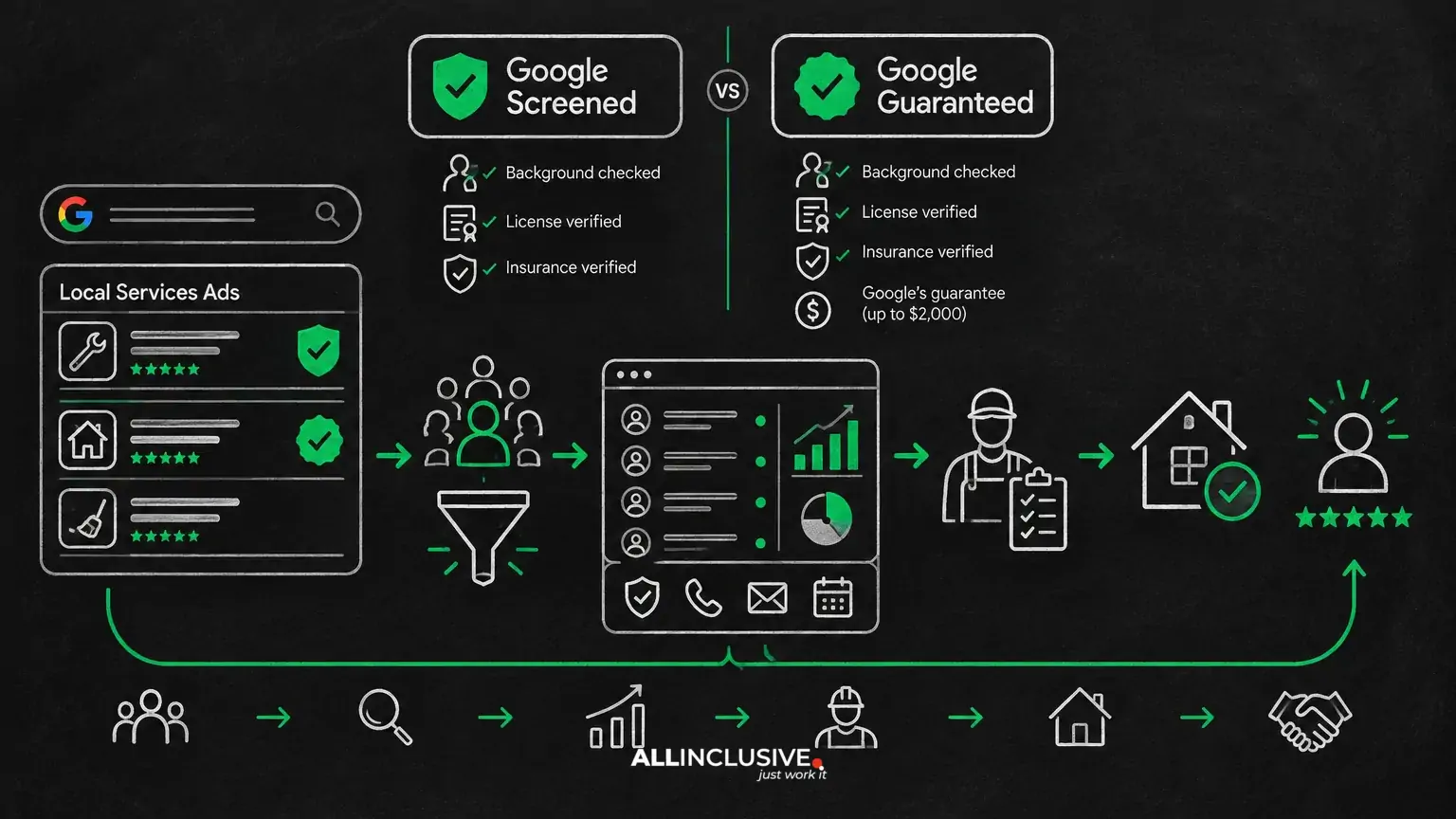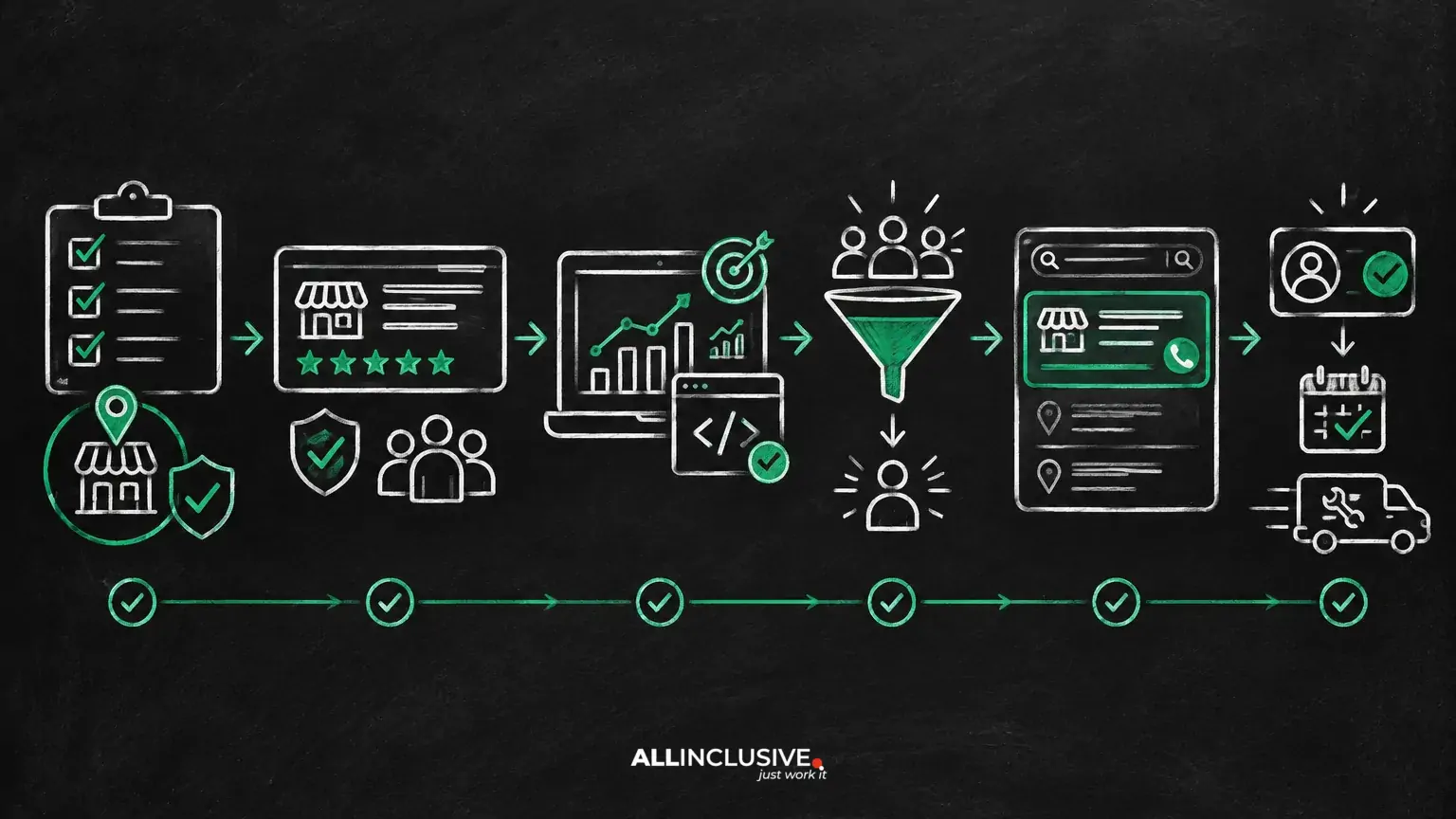
Launching Local Services Ads is not simply a matter of turning on a campaign. A reliable launch requires four things to work together: an eligible business profile, credible proof of trust, a realistic service-area and budget plan, and a process for answering and qualifying leads.
This local service ads launch checklist is designed to help service businesses move from initial eligibility checks to a controlled first-lead launch. Platform requirements and available features can vary by location, category, account status, and policy changes, so confirm current details in the relevant account interface before committing budget.
1. Confirm that the business is ready to apply
Start with the business, not the campaign settings. Local Services Ads are intended for specific local service categories and markets, and eligibility is not universal. Before creating an account, confirm that your business offers an approved service in a supported area and can meet the applicable verification requirements.
- Identify the legal business name and the customer-facing business name.
- Confirm the primary service category and the services you actually want to sell.
- List the locations where you can serve customers consistently.
- Check whether the business operates from a customer-facing location, travels to customers, or uses another eligible operating model.
- Assign one person to own verification, account access, billing, and lead follow-up.
Do not select a broader category simply because it appears to offer more volume. Category accuracy affects lead relevance, sales messaging, and the ability to identify poor-fit inquiries later.
2. Gather verification and business documents
Verification should be treated as a launch workstream rather than an administrative afterthought. Prepare consistent information across your business profile, website, licensing records, insurance documents, and any other materials the platform requests.
Prepare a document set
- Business registration or operating details, where applicable.
- Professional licenses for regulated services, where required.
- Insurance information if requested for the category or market.
- Proof of business address or service-area operation, where relevant.
- Accurate contact information and ownership details.
Use the same legal and operational facts everywhere. Differences in names, addresses, phone numbers, or service descriptions can create avoidable review delays. Keep copies of submitted materials and record the date, account owner, and current verification status.
3. Define the commercial offer before launch
Ads can generate inquiries, but they cannot repair an unclear offer. Decide what a qualified lead means before the first call arrives. For example, a qualified lead might be a homeowner within the service area requesting a service your team provides during an acceptable time window.
Write down:
- The services you want more of.
- The jobs you will not accept.
- The minimum location, timing, or project requirements.
- Whether you handle emergency, scheduled, residential, commercial, or recurring work.
- What information the sales team needs before quoting or booking.
This definition will guide category selection, profile copy, call-handling scripts, lead-quality reviews, and budget decisions. It also prevents the common mistake of judging the channel only by lead count.
4. Build a trustworthy business profile
Your profile is a conversion asset. Prospects are deciding whether to contact you before they understand your bidding strategy, so the information must be specific, current, and easy to verify.
Profile quality checklist
- Use a business name that matches the real customer-facing operation.
- Describe the core services in plain language.
- Set service areas that reflect actual coverage rather than theoretical reach.
- Use a phone number that is answered by someone prepared to handle new inquiries.
- Add accurate operating hours and explain any emergency or after-hours availability.
- Upload professional, current images where the platform supports them.
- Make sure the website, profile, and sales materials describe the same business.
A narrow, accurate profile is usually more useful than a broad profile that attracts requests your team cannot fulfill. Review the profile from a customer’s perspective: can a prospect understand what you do, where you work, and what happens after they contact you?
5. Treat reviews as part of launch readiness
Reviews are not a substitute for service quality, but they can influence whether a prospect chooses to contact one provider over another. Before launch, audit the business’s review presence for recency, relevance, and response quality.
- Check that reviews are associated with the correct business.
- Look for patterns in praise and complaints.
- Respond professionally to legitimate negative feedback.
- Create a compliant process for requesting reviews from real customers.
- Do not promise incentives or use review practices that conflict with applicable policies.
For a deeper operating framework, see Local Services Ads Reviews: How Reputation Affects Performance. The goal is not to chase a superficial rating; it is to make the public reputation consistent with the service experience your team delivers.
6. Set a budget based on capacity and economics
Choose a starting budget that your team can support operationally and evaluate financially. The right amount depends on service demand, close rates, average job value, margins, geography, competition, and how quickly you can respond.
Before launch, establish:
- A weekly or monthly spending limit.
- The maximum acceptable cost per lead as an initial control metric.
- A target cost per booked job based on contribution margin.
- The number of new jobs the business can fulfill without degrading service.
- A review date for deciding whether to maintain, reduce, or increase exposure.
Do not treat an early cost-per-lead figure as a final verdict. Early data may be limited, and lead quality can vary by service, location, timing, and customer intent. Evaluate spend alongside booked jobs, revenue, gross margin, and operational capacity.
7. Create a lead-response process before the first inquiry
Lead handling is part of media performance. A missed call, slow callback, or poorly prepared intake conversation can turn paid demand into lost revenue.
Minimum response plan
- Define who answers during business hours.
- Set a backup owner for missed calls and unavailable staff.
- Create a callback process for unanswered calls and messages.
- Prepare a short intake script covering location, service need, timing, urgency, and next step.
- Record the outcome of every lead in a consistent system.
- Set rules for marking leads as qualified, unqualified, duplicate, spam, booked, lost, or pending.
Make the script conversational rather than restrictive. The purpose is to identify fit and move the prospect forward, not to force every inquiry into the same sales path.
Response speed deserves its own operating review. Read Local Services Ads Response Time: Why Speed Matters for Lead Value for a focused discussion of the handoff between advertising and sales.
8. Prepare measurement before spending
At launch, you need enough measurement to connect an inquiry with a business outcome. The available reporting and attribution detail can depend on the platform setup and integrations, so document what is visible in the account and what must be recorded elsewhere.
At minimum, capture:
- Lead date and source.
- Service and location requested.
- Call or message status.
- Qualified or unqualified outcome.
- Appointment or estimate status.
- Booked job, revenue, and cancellation status when available.
- Reason for rejection or loss.
Use a consistent naming and status system from day one. If the team labels one lead as “bad” and another as “out of area,” later analysis will be less reliable. A simple shared sheet or CRM workflow is better than a sophisticated system nobody maintains.
9. Check the customer journey outside the ad
Before launch, test the experience a prospect will encounter after clicking, calling, or sending a request. Check the phone path, voicemail, forms, scheduling process, and landing pages on a mobile device.
- Does the phone number connect to the right team?
- Does voicemail explain when the caller will receive a response?
- Can a prospect request service without unnecessary friction?
- Are service areas and exclusions clear?
- Does the website support the same promise as the profile?
- Can staff identify and record the source of the inquiry?
Fix operational friction before increasing exposure. More traffic magnifies both good processes and weak ones.
10. Use a controlled first-week launch
The first week should be treated as a validation period, not a race for maximum volume. Review lead quality and handling every day at the beginning, especially if the business has limited capacity or a high-value sales process.
First-week review questions
- Are inquiries coming from the intended service areas?
- Do requests match the selected category and service offer?
- How many leads were reached successfully?
- How many were qualified, booked, or rejected?
- Are there recurring spam, duplicate, or out-of-area patterns?
- Did the team answer and follow up as planned?
- Is demand aligned with available appointment capacity?
Change one major variable at a time where possible. If you alter coverage, budget, categories, profile information, and follow-up simultaneously, it becomes difficult to identify what improved or weakened performance.
11. Establish a recurring optimization rhythm
After the initial launch, schedule a regular review that connects marketing data to sales outcomes. The review should include both account-level information and the operational notes collected by the team.
A practical cadence may include:
- Daily: check unanswered leads, urgent follow-ups, and obvious misroutes.
- Weekly: review service mix, location quality, response handling, and booked-job progress.
- Monthly: compare spend with qualified opportunities, revenue, margin, and capacity.
For a broader measurement framework, read Local Services Ads Reporting: Leads, Cost, Booking Rate and Revenue. Booking rate is especially useful when lead volume alone gives an incomplete picture; see Local Services Ads Booking Rate: How to Turn More Leads Into Jobs.
12. Final pre-launch checklist
- Business and service category eligibility has been reviewed.
- Required verification materials are available and consistent.
- Service areas reflect real operational coverage.
- Profile information, website, and contact details agree.
- The commercial offer and qualified-lead definition are documented.
- Budget limits and economic guardrails are approved.
- Phone, message, voicemail, and form paths have been tested.
- Lead owners, backups, and response expectations are assigned.
- Lead outcomes can be recorded consistently.
- A first-week review schedule is on the calendar.
Local Services Ads work best when media setup and frontline execution are planned as one system. If the business is eligible, the profile is credible, the offer is specific, and every inquiry has an owner, the launch can produce useful learning even before performance is fully predictable. For context on how this channel fits into a wider acquisition program, visit our Local Services Ads service overview and explore the broader paid media capabilities.