Local Services Ads reviews are more than a reputation signal. They help prospective customers decide whether to contact a provider, while also giving advertisers a practical way to identify service-quality problems that can affect lead outcomes. A strong review profile cannot guarantee visibility, lead volume, or conversion performance, but weak or inconsistent feedback can create friction at the most important point in the customer journey: the decision to contact you.
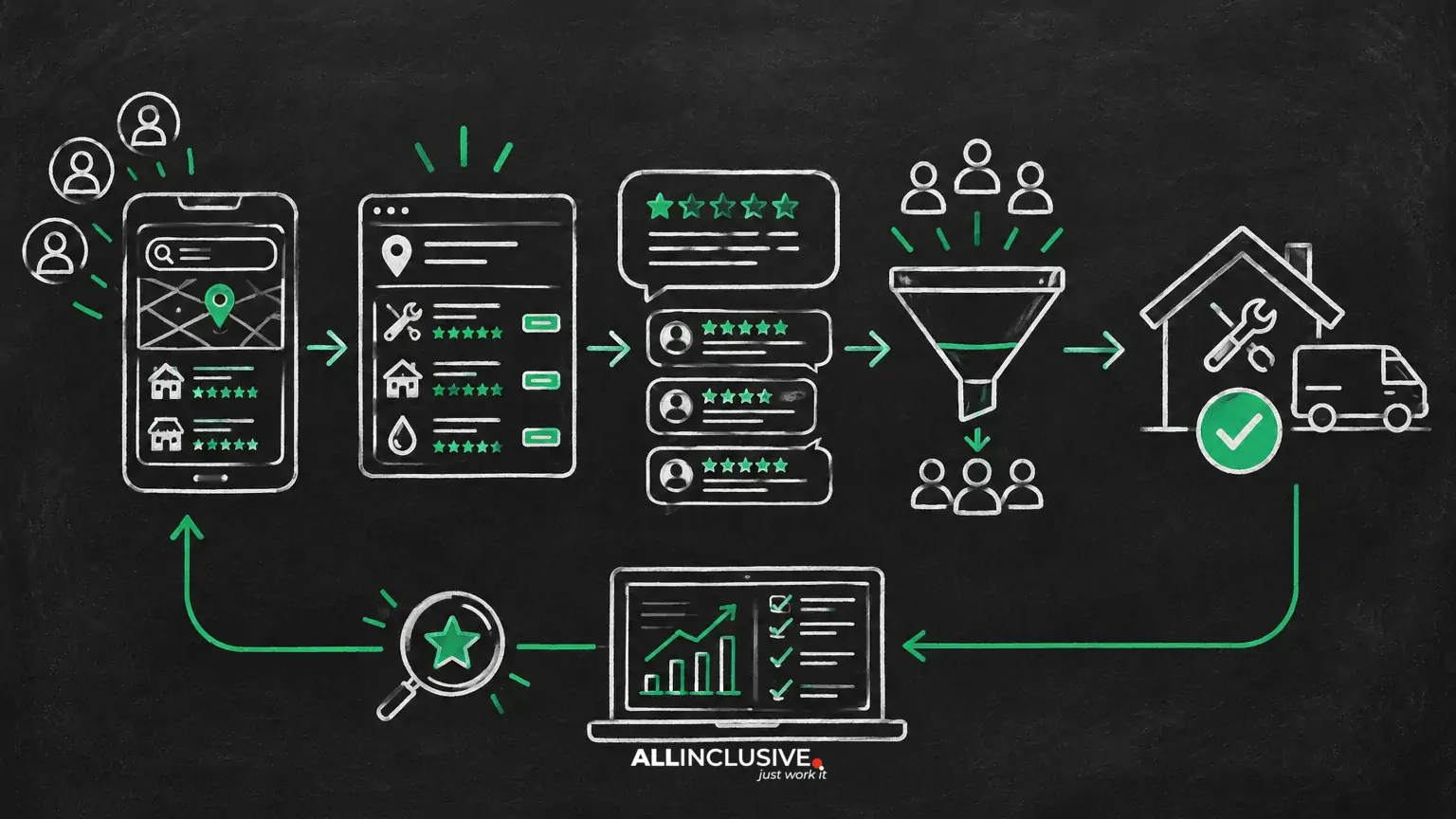
The right approach is to treat reviews as part of a broader acquisition system. Monitor the quality and relevance of feedback, request reviews consistently from eligible customers, respond professionally, and connect reputation trends to calls, messages, bookings, and revenue. This article explains how to do that without confusing customer sentiment with platform mechanics.
Why reviews matter in Local Services Ads
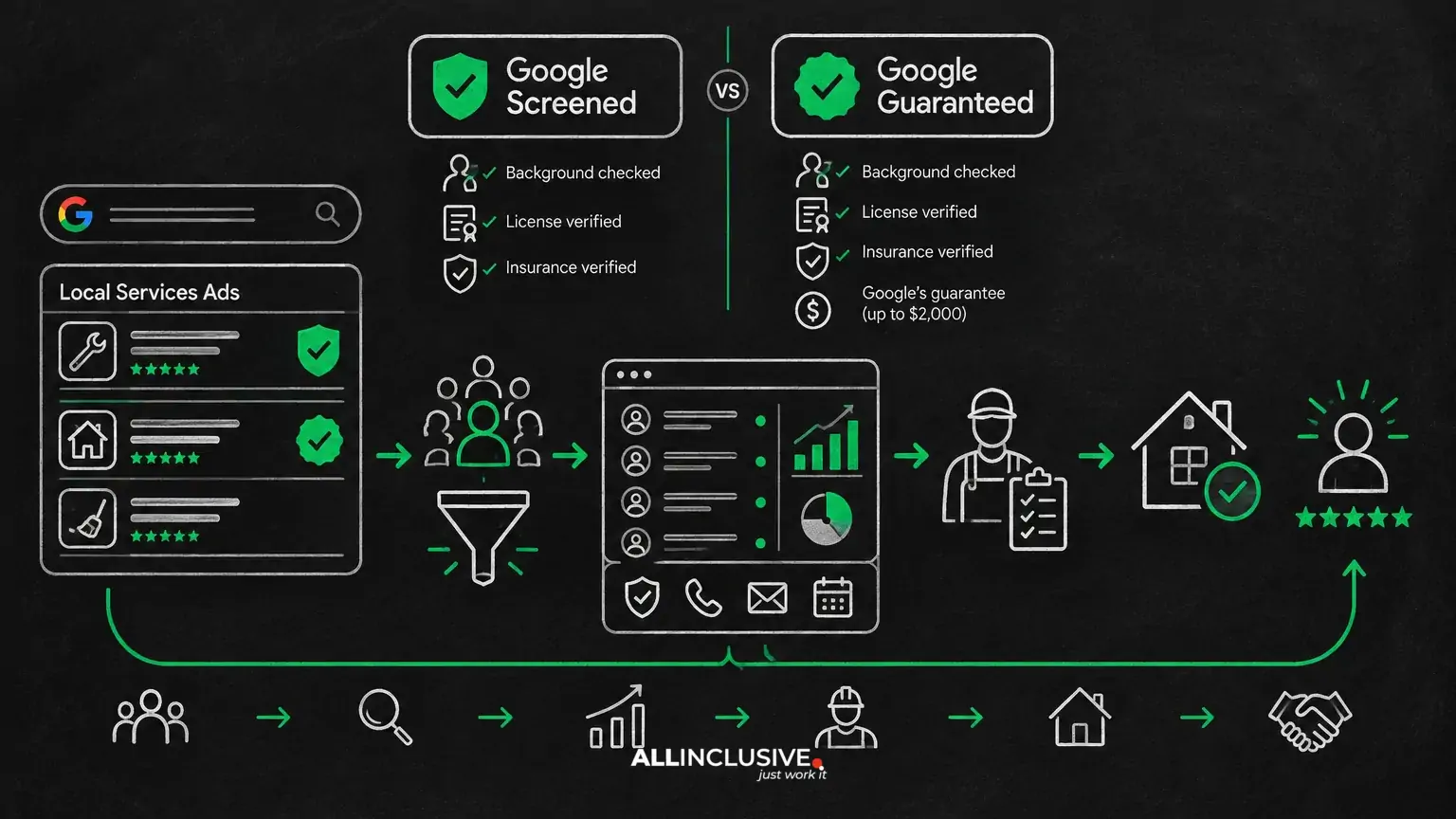
Local Services Ads often place a provider in a highly competitive comparison environment. A prospective customer may evaluate several businesses quickly, using visible signals such as service category, proximity, availability, screening information, photos, business details, and reviews. Reviews can therefore influence performance in several ways:
- Trust: Recent, relevant feedback can reduce perceived risk before a customer makes contact.
- Click and contact decisions: A provider with clearer evidence of satisfactory work may receive more calls or messages than a similarly positioned competitor.
- Lead quality: Reviews that describe the right services can help attract customers whose needs match your actual capabilities.
- Sales conversations: Customers may arrive with expectations shaped by previous reviews, including expectations about communication, pricing, punctuality, or workmanship.
- Operational feedback: Recurring complaints can reveal problems in scheduling, dispatch, quoting, or follow-up.
These effects are not the same as a guaranteed ranking advantage. The platform may use multiple signals and may change how information is displayed or evaluated. Avoid promising that a particular rating, review count, or review velocity will produce a specific placement or lead volume.
What reviews can influence—and what they cannot control
Reviews primarily affect perceived credibility and the likelihood that a customer will choose to contact or trust a provider. They are one input in the path from ad exposure to revenue, not a replacement for sound targeting, accurate business information, responsive intake, and effective sales follow-up.
Reviews can support
- Confidence when a customer compares providers.
- Understanding of the work you commonly perform.
- Expectation-setting around service experience.
- Identification of recurring customer-experience issues.
- Content for internal training and quality improvement.
Reviews cannot guarantee
- A top position or continuous ad visibility.
- A specific number of leads or booked jobs.
- That every inquiry will be relevant or profitable.
- Protection from disputes, missed calls, capacity constraints, or poor follow-up.
- That a high average rating compensates for inaccurate service details or limited availability.
This distinction matters because paid-media teams sometimes try to solve a conversion or operational problem with reputation activity alone. If calls are unanswered, service areas are inaccurate, or lead qualification is weak, more reviews may not improve the underlying economics.
How to evaluate a Local Services Ads review profile
Do not focus on the average rating in isolation. Review quality is multidimensional, and the most useful evaluation combines customer sentiment with business relevance.
1. Rating distribution
Averages summarize feedback but can hide its shape. Examine whether ratings are consistently strong, broadly mixed, or concentrated around a few recent incidents. A small number of reviews can make the average more sensitive to individual experiences than a mature profile.
2. Recency
Recent feedback helps prospects understand whether the current team and operating process are delivering a reliable experience. Older positive reviews may still be valuable, but they should not distract from a recent pattern of complaints.
3. Relevance
Look for reviews that describe the services and customer situations you want to sell. A profile may have favorable feedback but provide little evidence about a high-value service line, emergency response, commercial work, or another specific offering.
4. Specificity
Detailed feedback can communicate what customers value: clear estimates, punctual arrival, clean work, technical competence, communication, or effective problem resolution. Generic praise may support trust, but it gives prospects less context.
5. Response quality
Responses show how the business handles appreciation, confusion, and dissatisfaction. They should be professional, concise, and privacy-conscious. Avoid arguing, revealing customer details, or making promises that the team cannot keep.
6. Complaint themes
Categorize negative feedback rather than treating every complaint as an isolated event. Common categories include missed appointments, unclear estimates, delays, workmanship, billing, communication, and expectations that were not aligned before the job began.
Build a review process that supports paid-media performance
A review process should be operational, repeatable, and compliant with applicable platform and consumer-protection requirements. It should not depend on staff remembering to ask after every job.
- Define the customer moment. Choose a consistent point after service delivery when the customer has enough context to evaluate the experience. The timing may differ by service type and job complexity.
- Assign ownership. Decide whether the request comes from the technician, office team, CRM workflow, or customer-success process. Make one role accountable for monitoring completion.
- Use a neutral request. Ask for honest feedback rather than requesting only positive reviews or suggesting specific wording.
- Make the process easy. Provide clear instructions and avoid unnecessary steps, while respecting customer choice and platform requirements.
- Record the outcome. Track whether the request was sent, whether feedback was received, and whether follow-up is needed. Do not pressure customers or repeatedly contact them.
- Review themes with operations. Share patterns with the people who can correct the underlying issue, not only with the marketing team.
Consistency is more useful than short-term bursts. A steady process creates a clearer view of customer experience and reduces the temptation to manipulate feedback during a period of weak lead volume.
Responding to positive and negative reviews
Positive reviews
Thank the customer, acknowledge a specific aspect of the experience when appropriate, and reinforce the standard the business wants to repeat. Keep the response natural rather than using every reply as an advertisement.
Thank you for sharing this feedback. We appreciate you noting the communication and arrival experience, and we are glad the repair was completed as planned.
Negative reviews
A useful response should acknowledge the concern without accepting facts that have not been verified. Invite the customer to continue the conversation through an appropriate private channel, and avoid discussing account, payment, health, home-security, or other sensitive details publicly.
We are sorry to hear that the experience did not meet expectations. We would like to review what happened and understand where communication broke down. Please contact our office through the service channel listed on our profile so we can investigate.
Do not threaten, shame, or debate the customer in public. If the review appears fraudulent, abusive, or otherwise violates applicable rules, use the platform’s available reporting or review-management process. Removal is not guaranteed, so the response should still protect the business’s credibility.
Connect reviews to the metrics that matter
Reputation should be evaluated alongside the full lead funnel. Depending on your tracking capabilities, monitor:
- Lead volume by service and market.
- Calls answered and messages handled.
- Qualified-lead rate.
- Booking or appointment rate.
- Show rate and completed-job rate.
- Average job value and gross margin.
- Repeat complaints and refund or rework patterns.
Compare performance over meaningful operating periods, but avoid claiming that review changes caused every movement. Seasonality, budget, service availability, competitor activity, response time, and changes in customer demand can all affect results. A review profile is most useful when its trends are examined with campaign and operational data rather than in isolation.
For a broader measurement framework, see Local Services Ads reporting, including how to think about leads, booking rate, cost, and revenue. If the principal problem is irrelevant inquiries rather than trust, review Local Services Ads lead quality for a more direct diagnostic path.
Local Services Ads Reviews: Mistakes to Watch For
- Chasing volume without relevance: A large profile is not automatically persuasive if reviews do not reflect the services or markets you want to grow.
- Requesting only favorable feedback: Selective solicitation can create compliance and credibility risks.
- Offering incentives without checking requirements: Incentivized feedback may be restricted or require specific disclosure. Verify current rules before using any incentive.
- Automating public replies without review: Templates can save time, but sensitive complaints require human judgment.
- Ignoring operational causes: Reputation work cannot substitute for better scheduling, estimates, training, or call handling.
- Overpromising review impact: No responsible marketer can guarantee a position, lead count, or revenue outcome from a rating change.
A practical review-management checklist
- Confirm that the advertised services and service area match actual capacity.
- Map the customer journey from completed job to review request.
- Set a neutral, consistent request process.
- Monitor rating distribution, recency, relevance, and complaint themes.
- Respond promptly and professionally within your operating capacity.
- Escalate recurring complaints to the responsible team.
- Compare reputation trends with contact, booking, and revenue data.
- Document policy changes and verify current platform requirements before testing new tactics.
For platform mechanics and limitations related to review data, see Local Services Ads Reviews API: What It Can and Cannot Do. The distinction is important: a reporting or data-access workflow does not necessarily provide a way to control how reviews are collected, displayed, ranked, or removed.
The strategic takeaway
Reviews are a trust layer within Local Services Ads, not a standalone growth lever. They can help qualified prospects choose your business, clarify what your team does well, and expose service problems that eventually affect acquisition efficiency. The strongest approach combines a fair review-request process, thoughtful responses, operational improvement, and measurement across the entire lead-to-revenue funnel.
Use the broader Local Services Ads strategy framework to connect reputation with eligibility, targeting, lead handling, bidding, and reporting. For context on how reputation fits into a wider acquisition program, explore paid media strategy across channels and customer journeys.