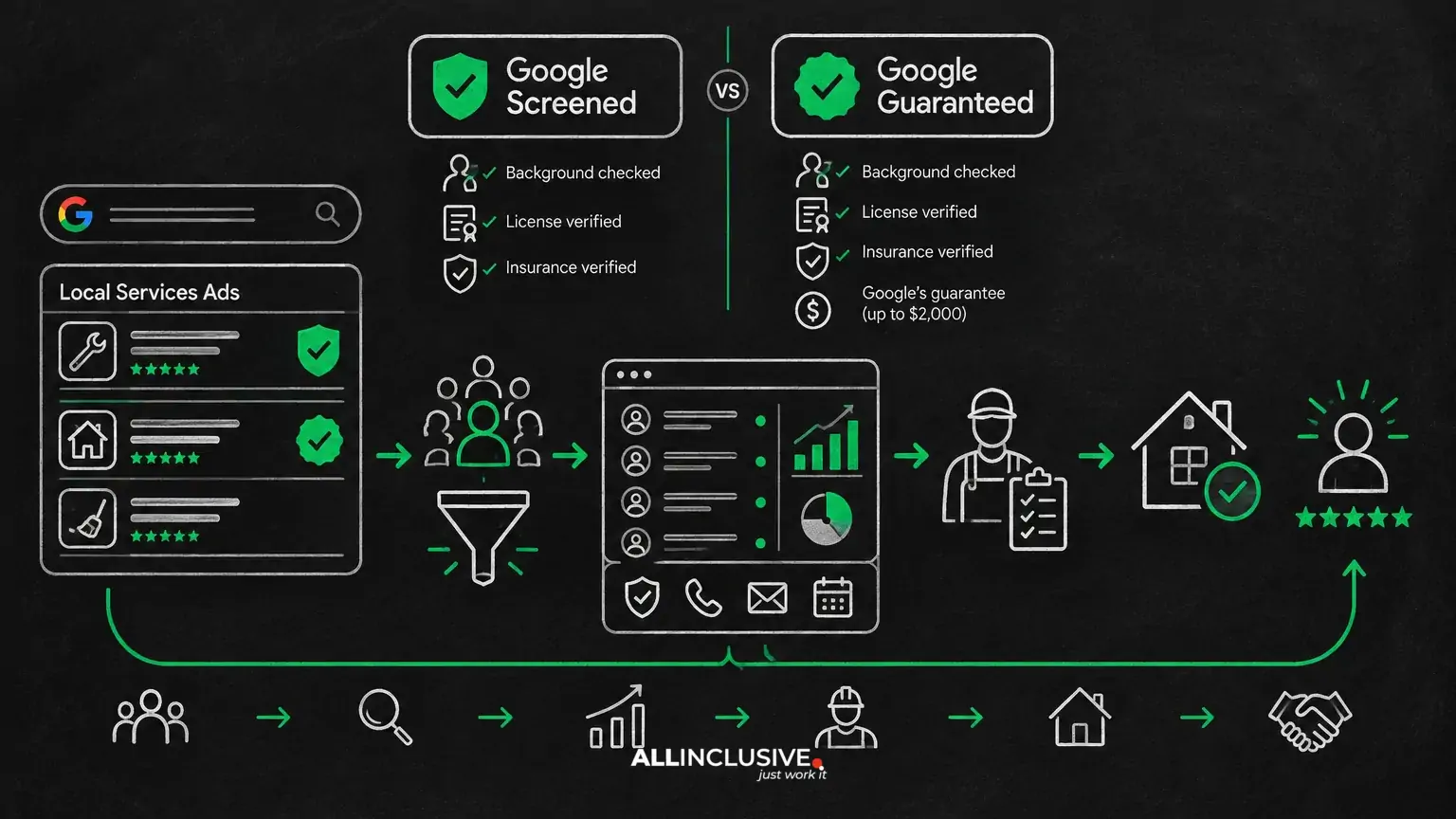
Local services ads cost is best understood as a lead-acquisition expense, not a conventional pay-per-click media cost. In eligible categories and markets, Google’s Local Services Ads model generally charges advertisers when a qualifying lead is generated, while the amount and availability of leads can vary by category, location, competition, profile quality, and budget settings.
That makes the right budgeting question less about finding one universal price and more about understanding your acceptable cost per lead, close rate, customer value, and operational capacity. A campaign can look inexpensive on a lead basis and still be unprofitable if calls are missed or leads rarely become paying customers. Conversely, a higher lead cost may be rational when the resulting customers have strong margins and repeat value.
What determines Local Services Ads cost?
Local Services Ads costs are not fixed across all businesses. The effective cost of generating a lead can change based on several interacting factors:
- Service category: Demand, eligibility, and competitive intensity differ between categories.
- Location and service area: Dense markets can have more demand and more competition, while broader or less populated areas may produce fewer opportunities.
- Lead type: Phone calls, messages, and other available contact actions can have different value to your business.
- Budget and availability: A constrained budget may limit delivery, while a larger budget does not guarantee a proportional increase in profitable leads.
- Profile strength: Reviews, responsiveness, business information, service coverage, and trust signals can influence visibility and conversion.
- Lead quality and dispute handling: Not every contact will be a valid sales opportunity, so your process for reviewing and disputing unsuitable leads matters.
Google may change product availability, billing details, eligibility requirements, or account controls. Confirm current mechanics in the platform before making a budget commitment. The strategic framework below remains useful even when the interface or policies change.
Budgeting starts with lead economics
Before selecting a weekly or monthly budget, calculate the maximum amount you can afford to pay for a qualified lead. Start with the economics of a new customer:
- Estimate the revenue from a typical first transaction.
- Subtract direct fulfillment costs, commissions, materials, and other variable costs.
- Account for cancellations, refunds, discounts, and unpaid work.
- Decide how much contribution margin can be allocated to acquiring that customer.
- Work backward from your expected lead-to-customer conversion rate.
A simple planning formula is:
Maximum acceptable cost per lead = allowable acquisition cost per customer × lead-to-customer conversion rate
For example, if your business can allocate $300 to acquire one new customer and your qualified leads close at 25%, the planning ceiling would be $75 per qualified lead. This is not a forecast of what the platform will charge. It is an internal decision rule for judging whether observed costs are sustainable.
Use a range rather than a single number. Your conversion rate may differ by service, lead source, season, salesperson, and customer urgency. A conservative case, expected case, and strong case will give you a more reliable budget model.
Separate platform cost from total acquisition cost
The amount associated with a Local Services Ads lead is only one part of the expense. A realistic assessment should include:
- Lead charges or other platform-attributed costs
- Account management and optimization time
- Call answering, scheduling, and sales labor
- CRM, call-tracking, or lead-management software
- Creative, profile, verification, and review-management work where applicable
- Travel, service-area inefficiency, or unprofitable job locations
For internal reporting, distinguish between platform cost per lead, blended cost per qualified lead, and cost per acquired customer. These metrics answer different questions:
- Platform cost per lead: How much media spend is associated with each generated contact?
- Cost per qualified lead: How much does it cost after removing spam, duplicates, out-of-area inquiries, and unsuitable requests?
- Customer acquisition cost: How much does it cost to produce a paying customer after accounting for conversion rate and relevant operating costs?
How to set an initial budget
Launch budgets should be large enough to produce useful evidence but small enough to protect cash flow while the business validates lead quality. There is no universal starting amount because service price, capacity, geography, and competition vary widely.
Use this process instead:
1. Define capacity first
Determine how many additional jobs or consultations the business can actually handle. A campaign that generates more calls than the team can answer may increase waste, damage response rates, and create a poor customer experience. Capacity should include scheduling availability, technician or provider coverage, and peak-period constraints.
2. Set a testing ceiling
Choose a maximum initial spend that the business can afford to lose if the first round of leads does not meet expectations. Treat this as a learning budget, not a promise of performance. The objective is to gather enough information about lead volume, quality, response time, close rate, and service mix.
3. Define stop and scale rules
Before launch, write down what would cause you to reduce spend, pause an area, or increase budget. Examples include a sustained cost per qualified lead above the economic ceiling, a high share of irrelevant inquiries, insufficient response capacity, or a profitable service line that is consistently constrained by budget.
4. Review by service and area
Do not evaluate the account only at an aggregate level. A campaign may be profitable for emergency services but weak for lower-value maintenance work. One service area may produce strong close rates while another creates travel costs and scheduling friction. Break out performance wherever the data supports it.
Why lead cost alone is a weak optimization target
A low lead cost is not automatically a good result. The cheapest inquiries can be the least commercially useful if they involve low-intent requests, poor geographic fit, price shopping, or services the business does not want to provide.
Evaluate lead quality through a consistent qualification framework:
- Was the contact within the advertised service area?
- Did the person request a service the business offers?
- Was the inquiry a duplicate, spam, vendor solicitation, or job seeker?
- Could the team reach the prospect quickly?
- Was an appointment scheduled?
- Did the appointment become a completed, profitable job?
Track these stages separately. “Lead received” is an operational event; “qualified opportunity,” “booked appointment,” and “completed customer” are commercial outcomes. Optimizing only to the first stage can encourage decisions that increase volume while reducing profitability.
Response speed is part of the cost model
Every unanswered call or delayed reply can turn a paid opportunity into wasted spend. Local service prospects often contact multiple providers, particularly when the problem is urgent. That means staffing and routing decisions directly affect the return from media.
Build a lead-response process before increasing budget:
- Route calls and messages to a monitored destination.
- Define who owns first response during business hours and after hours.
- Use a short qualification script that captures service, location, urgency, and availability.
- Record disposition consistently in a CRM or structured reporting sheet.
- Review missed calls and delayed responses each week.
If the business cannot reliably handle current volume, more spend is unlikely to solve the underlying problem. Improving answer rates and booking discipline may create more value than expanding coverage.
How to manage bidding and budget controls
Local Services Ads management involves more than selecting a budget. Account controls and delivery options may vary by market and platform updates, so confirm the current settings available to your account. Regardless of the interface, use a disciplined control structure:
- Budget control: Set a spend level aligned with cash flow and operational capacity.
- Service control: Promote services with acceptable margins and reliable fulfillment.
- Geographic control: Limit coverage to areas where travel time and job economics make sense.
- Schedule control: Match exposure to periods when the team can respond and serve customers.
- Quality control: Review leads, document unsuitable contacts, and follow available platform processes for corrections or disputes.
Do not make frequent changes based on one or two leads. Small samples can be misleading, especially for high-value services with long sales cycles. Establish a review cadence and make changes when the pattern is commercially meaningful.
When hiring a Local Services Ads agency makes sense
A business may manage the channel internally when lead volume is modest, the service area is simple, and someone can consistently monitor calls, profile information, reporting, and follow-up. An agency becomes more useful when the account has multiple locations, service lines, markets, or stakeholders—or when lead quality and conversion data are not being connected.
When evaluating a Local Services Ads agency, ask how it will manage the full commercial path rather than only the platform:
- How will qualified and unqualified leads be defined?
- Which data will be used to judge profitability?
- How will calls, messages, and booked jobs be reconciled?
- What decisions require client approval?
- How often will budget, geography, and service mix be reviewed?
- What happens when lead quality declines or capacity changes?
For broader channel planning, see the paid media strategy resource. Local Services Ads should be evaluated alongside branded search, organic visibility, referrals, and other demand sources—not in isolation.
Common budgeting mistakes
Using a competitor’s budget as the benchmark
Another business may have different margins, close rates, geography, reputation, and capacity. Borrowing its budget without its economics creates false confidence.
Confusing lead volume with growth
More inquiries matter only when the business can qualify, book, fulfill, and retain the resulting customers profitably.
Ignoring service mix
High-volume services may not be the most valuable. Report revenue and contribution by service when possible.
Failing to protect location economics
A lead can be valid yet unprofitable if travel, parking, scheduling gaps, or provider availability make fulfillment inefficient.
Changing too many variables at once
If budget, service coverage, location, profile information, and response process all change together, it becomes difficult to identify what improved or weakened performance.
A practical monthly review framework
At the end of each reporting period, review the funnel in this order:
- Delivery: Did the account generate enough opportunities to assess?
- Validity: What share of contacts were relevant and in-area?
- Responsiveness: How many contacts received a timely reply?
- Booking: How many qualified leads became appointments?
- Fulfillment: How many appointments became completed jobs?
- Economics: Did contribution margin justify the blended acquisition cost?
- Capacity: Can the business accept more demand without reducing service quality?
Then choose one of four actions: maintain, reduce, expand, or redesign. “Redesign” may mean narrowing the service mix, correcting the service area, improving call handling, updating qualification, or changing measurement—not simply spending more.
How Much Do Local Services Ads Cost? Budget, Bidding: Decision Summary
There is no single answer to how much Local Services Ads cost. The useful answer is the maximum cost your business can sustain for a qualified lead and an acquired customer, supported by real conversion and margin data.
Start with capacity, define acceptable economics, launch within a controlled testing ceiling, and evaluate the complete path from contact to profitable job. If you want a broader comparison framework before committing budget, read Are Local Services Ads Worth It?. Businesses serving specialized categories can also compare their planning needs with the guidance for Local Services Ads for Small Businesses.