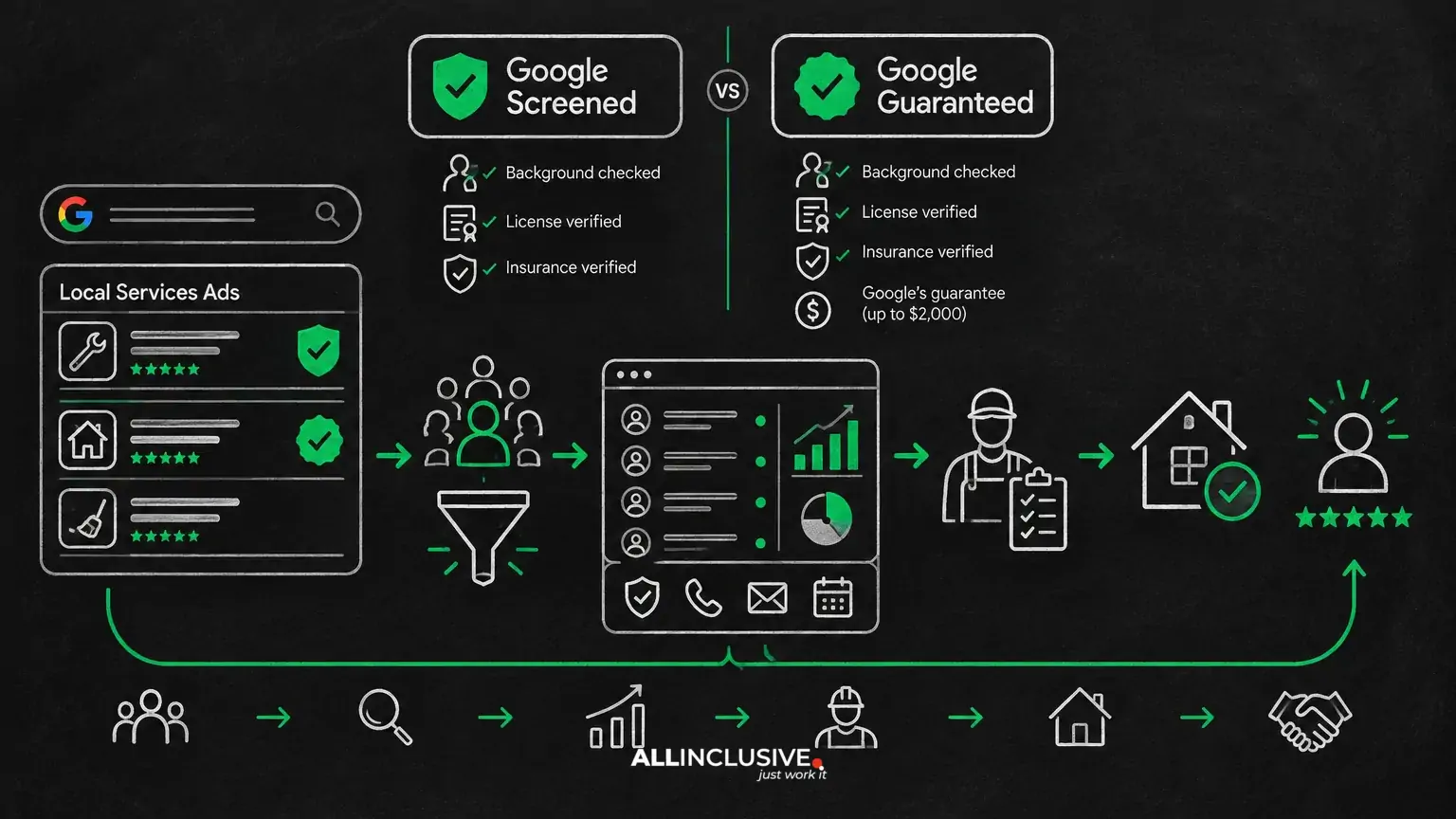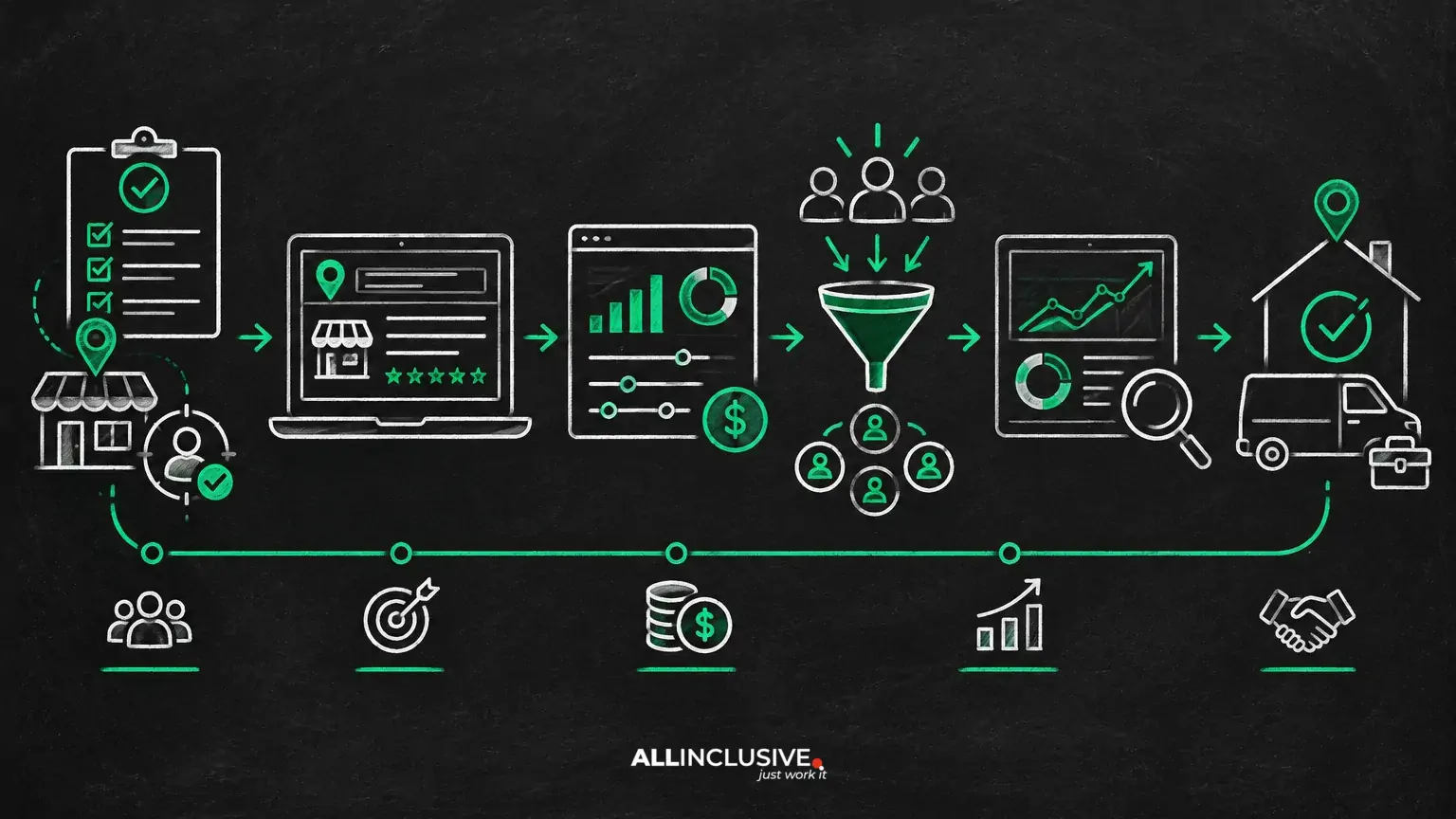
Local Services Ads can give small businesses a prominent way to reach people actively looking for a nearby provider. But the right setup is not simply a matter of turning on ads and accepting every lead. Results depend on eligibility, service-area design, profile credibility, budget control, response speed, lead quality, and the business’s ability to convert inquiries into profitable work.
This guide explains how to evaluate local service ads for small business, build a controlled launch plan, set a realistic budget, and decide whether the channel deserves more investment.
Are Local Services Ads a fit for your small business?
Local Services Ads are most relevant when customers search with clear local intent and the business can serve those customers reliably. The channel is worth investigating when your company has a defined service area, a phone or message handling process, enough operational capacity to accept new work, and a way to distinguish valuable leads from poor-fit inquiries.
Before investing, assess five areas:
- Service eligibility: Confirm that your business category and target locations are supported in the markets you want to reach. Availability and requirements can change, so verify current platform guidance before launch.
- Geographic fit: Define the locations you can serve profitably, not merely the largest area you can technically cover.
- Capacity: Estimate how many additional jobs your team can handle without damaging response times or customer experience.
- Lead economics: Calculate the maximum acceptable cost per qualified lead based on average job value, gross margin, close rate, and customer lifetime value.
- Operational readiness: Make sure calls and messages are answered, missed inquiries are returned promptly, and lead outcomes are recorded.
If the business cannot respond consistently or has no process for tracking booked work, increasing ad spend may create more administrative noise rather than more profitable revenue.
How to set up Local Services Ads
1. Confirm eligibility and business information
Start with accurate business details, service categories, operating hours, contact information, and service areas. Keep the information consistent with the company’s website and other customer-facing profiles. Inaccurate details can create friction during verification and reduce trust when a prospect compares sources.
Do not select every nearby location simply to increase reach. A large service area can generate inquiries that are expensive to travel to, difficult to schedule, or outside the team’s practical coverage. Begin with locations where the business has strong availability and a clear economic case.
2. Build a credible provider profile
Profile content should help a prospective customer answer three questions quickly: Can this business solve my problem? Does it serve my area? Why should I contact it instead of another provider?
Use clear descriptions of the services offered, accurate operating information, and authentic visual assets where the platform permits them. Reviews can support credibility, but they should be treated as an ongoing customer-experience asset rather than a short-term advertising tactic. Avoid making claims that cannot be substantiated.
3. Choose services and locations deliberately
Separate high-value services from low-margin or operationally difficult work. If the platform allows service-level selection or related controls, use them to align visibility with the jobs the business actually wants. Review search terms, inquiry descriptions, and booked outcomes after launch to identify mismatches.
A useful initial structure is to prioritize:
- Services with a clear customer need and predictable fulfillment.
- Locations with reliable travel times and sufficient capacity.
- Job types that support the business’s target margin.
- Hours when someone can answer or return inquiries quickly.
4. Complete verification and policy steps carefully
Platform verification requirements may include business documentation, licensing, insurance, background checks, or other category- and market-specific steps. Requirements can vary, so use the current instructions provided during account setup. Submit information that is accurate, current, and consistent across business records.
5. Prepare the lead-handling workflow before launch
Advertising and operations should be launched together. Decide who answers calls, who handles messages, how missed calls are followed up, and where every inquiry is recorded. Use a simple status system such as new, contacted, qualified, booked, completed, lost, or invalid.
Response time is especially important for local demand. For a deeper operational framework, see the Local Services Ads response time guide.
How much should a small business budget?
There is no universal starting budget for Local Services Ads. A suitable budget depends on local demand, competition, service economics, capacity, and the amount of testing the business can afford. The most defensible approach is to work backward from profitable jobs rather than choosing a round number based on another company’s spend.
Use a unit-economics model
Start with the maximum acquisition cost the business can tolerate:
- Estimate the average revenue from a new customer or job.
- Subtract direct fulfillment costs and the gross profit required by the business.
- Estimate the percentage of qualified leads that become booked jobs.
- Use that relationship to determine an acceptable cost per qualified lead.
For example, if a business can spend up to a defined amount to acquire a profitable customer, and only a portion of qualified inquiries become booked jobs, the allowable cost per qualified inquiry must be lower than the allowable cost per acquired customer. The exact figures should come from the company’s own sales records, not a generic benchmark.
Set a test budget with a review point
Choose a budget large enough to generate enough real conversations for an initial assessment, but small enough to protect cash flow while lead quality is uncertain. Define the review point in advance. The review should consider qualified leads, booked jobs, revenue, margin, missed opportunities, and operational capacity—not impressions or raw lead count alone.
Budget pacing should also reflect seasonality and availability. A business at full capacity may need to reduce exposure or narrow services, while a business with open appointments may reasonably test more coverage. Avoid increasing spend before confirming that the team can handle the resulting demand.
Separate channel performance from business performance
A lead can be inexpensive and still unprofitable if it is outside the service area, asks for an unavailable service, or cannot be reached. Conversely, a higher-cost inquiry may be valuable if it consistently becomes a profitable job. Evaluate the channel through the full path from inquiry to revenue.
What to track after launch
Small businesses do not need a complex measurement system to make better decisions, but they do need more than a platform lead count. Track each inquiry through at least these stages:
- Total inquiries: All calls, messages, or other contacts attributed to the channel.
- Valid inquiries: Contacts that are genuine and relevant to the business.
- Qualified leads: Prospects that match the service, location, timing, and commercial criteria.
- Booked jobs: Qualified leads that schedule work.
- Completed jobs: Bookings that become delivered work.
- Revenue and margin: The financial outcome after fulfillment costs.
Also record why leads are lost. Common categories may include wrong location, unwanted service, duplicate inquiry, price mismatch, no answer, unreachable prospect, unavailable appointment, or competitor selection. These categories show whether the issue is targeting, profile positioning, sales handling, capacity, or market demand.
For a more detailed measurement framework, read Local Services Ads reporting: leads, cost, booking rate and revenue.
How to improve lead quality
Lead quality improvement usually comes from tighter alignment between what the profile promises and what the business can deliver. Review the services and locations that generate inquiries, then compare them with the jobs the company wants and can profitably complete.
Practical actions include:
- Remove or deprioritize services that generate frequent poor-fit inquiries.
- Narrow coverage where travel costs or scheduling constraints make jobs unattractive.
- Clarify service descriptions so prospects understand what is and is not included.
- Use call and message records to identify recurring misunderstandings.
- Train staff to qualify inquiries consistently and record outcomes.
- Review profile accuracy whenever operating hours, coverage, staffing, or services change.
Do not judge lead quality solely by whether a caller sounds interested. The useful question is whether the inquiry has a realistic path to a profitable, deliverable job.
Common mistakes small businesses should avoid
Launching before the phone process is ready
More visibility cannot compensate for unanswered calls, slow callbacks, or unclear ownership. Test the contact workflow before spending meaningfully.
Using a broad service area by default
Reach is not the same as efficiency. A smaller area with better availability and travel economics can outperform a wider area with poor fulfillment fit.
Optimizing for lead volume
Raw inquiry volume can conceal low booking rates, low average order value, or high invalid-lead rates. Use qualified leads, booked work, completed work, and margin as decision metrics.
Ignoring reviews and customer experience
Reviews are not a substitute for sound targeting or follow-up, but customer experience affects both reputation and future conversion. Build a legitimate process for requesting feedback from eligible customers without manipulating or fabricating reviews.
Changing too many variables at once
When location, service selection, budget, profile information, and response process all change simultaneously, it becomes difficult to identify what improved performance. Make controlled changes where possible and document the reason for each one.
A practical launch sequence
- Define the commercial goal: Decide which services, customers, and job economics matter most.
- Validate eligibility: Check current category, market, verification, and policy requirements.
- Prepare the profile: Use accurate business information, service details, coverage, and credible supporting assets.
- Set the operating area: Start with locations the team can serve consistently and profitably.
- Build tracking: Record source, service, location, contact status, booking status, revenue, and loss reason.
- Set a controlled budget: Choose an amount that supports learning without exceeding operational or cash-flow limits.
- Review quality: Evaluate inquiries and outcomes at a regular cadence, then adjust targeting, handling, or budget.
The Local Services Ads launch checklist can help turn these steps into a pre-launch review.
When to scale, pause, or reconsider
Scale gradually when the business has a repeatable pattern of qualified inquiries, prompt follow-up, acceptable booking rates, profitable completed work, and enough capacity to serve additional customers. Increase coverage or budget only when the operational system can absorb the change.
Reduce or pause spend when lead quality deteriorates, the team cannot respond, service capacity is full, or acquisition costs exceed the allowable economics. Before concluding that the channel is ineffective, check whether the problem is caused by profile accuracy, geographic coverage, missed calls, poor qualification, or incomplete revenue tracking.
Local Services Ads can be a useful acquisition channel for a small business, but they should be managed as a commercial system rather than a standalone advertising switch. For broader planning across search, social, and other acquisition channels, explore Allinclusive.llc paid media resources and the Local Services Ads pillar guide.