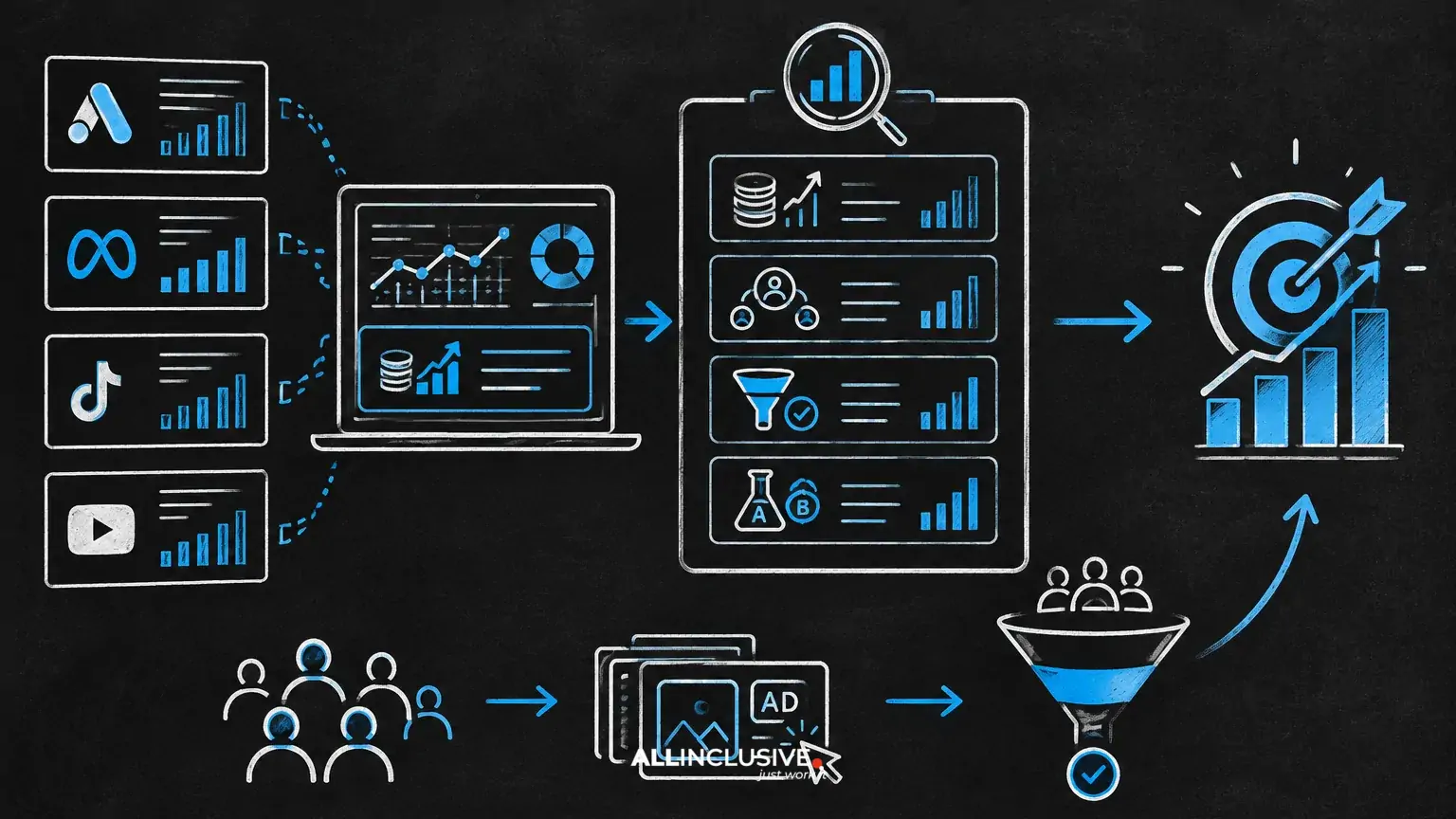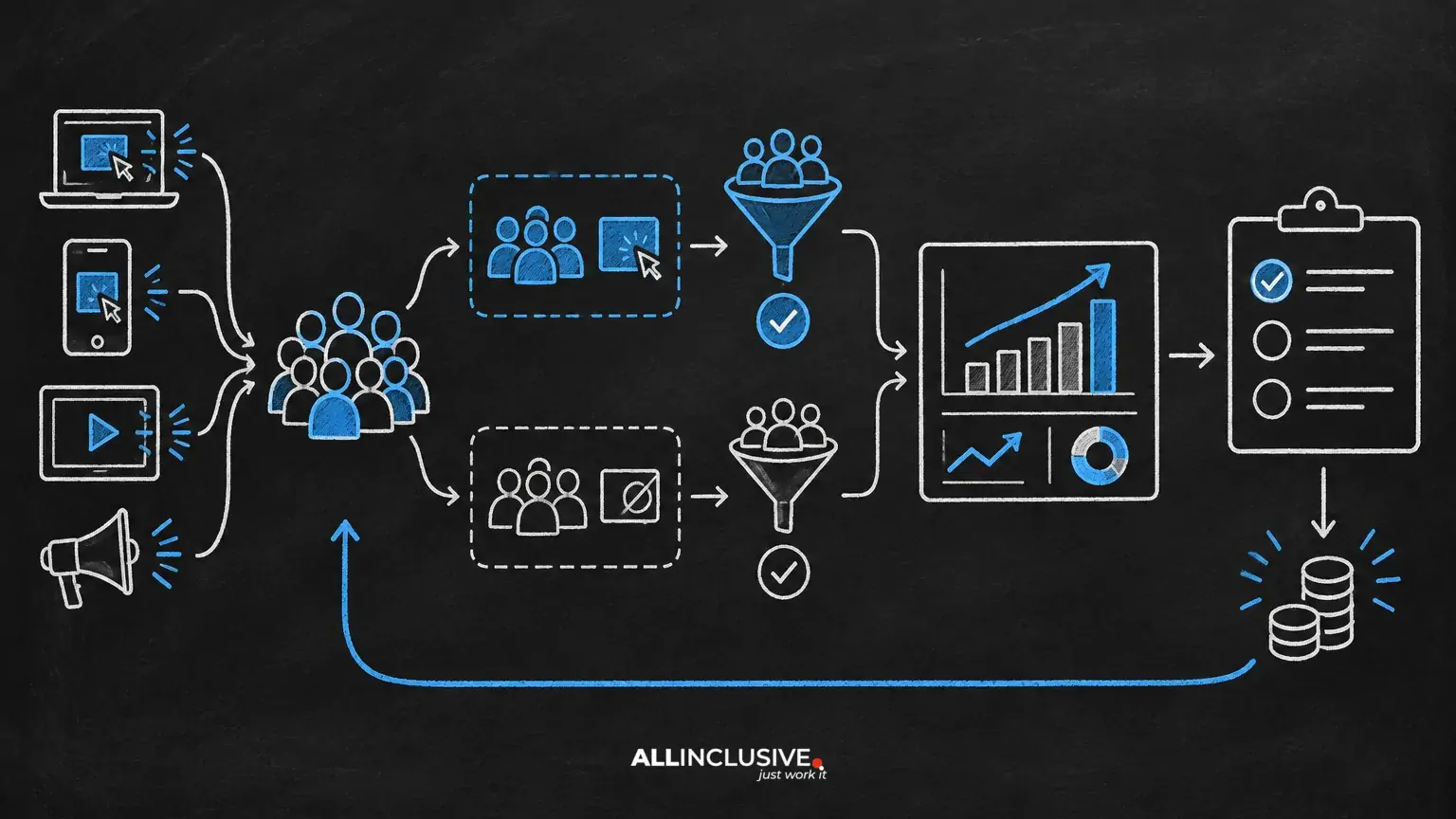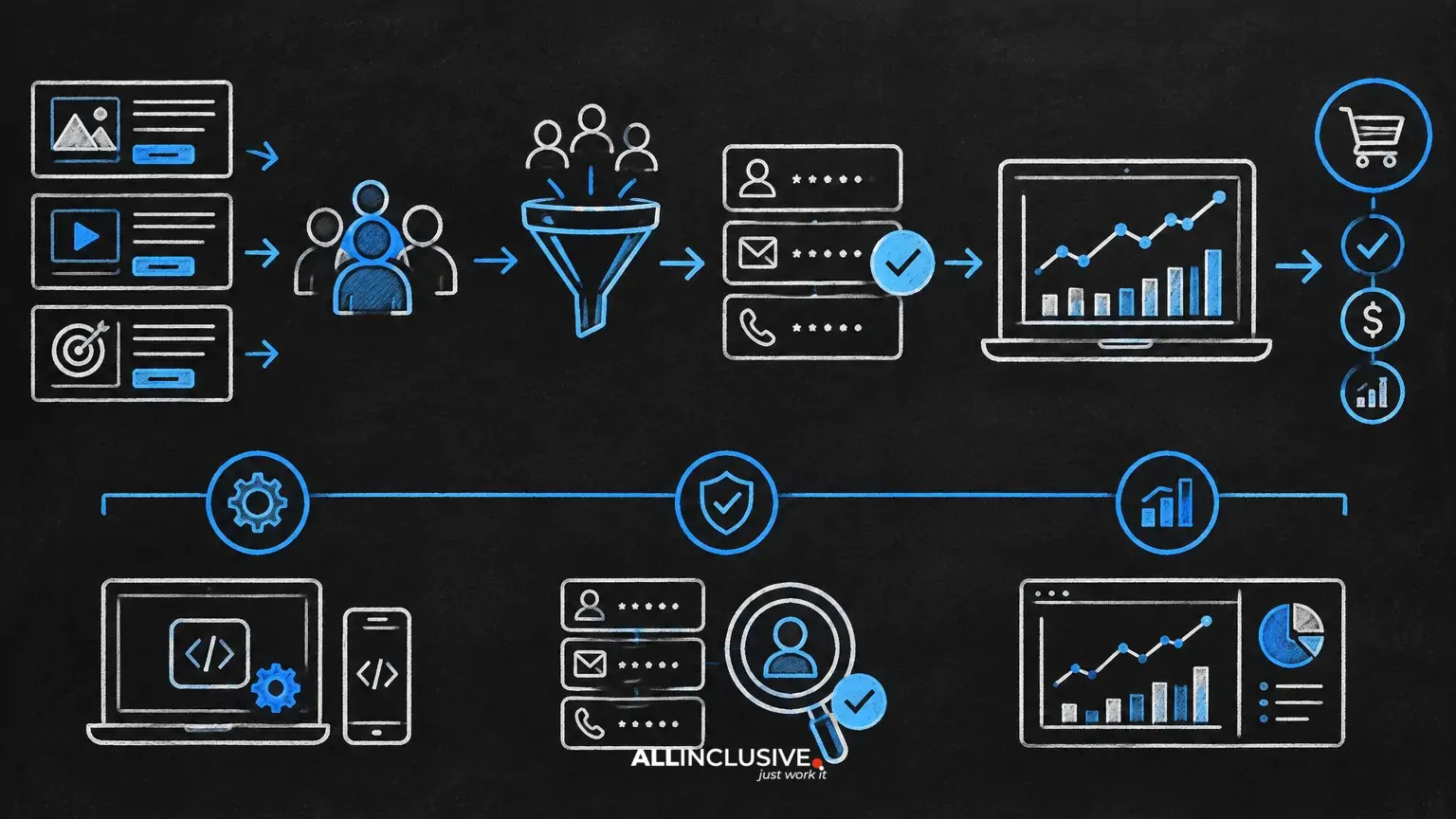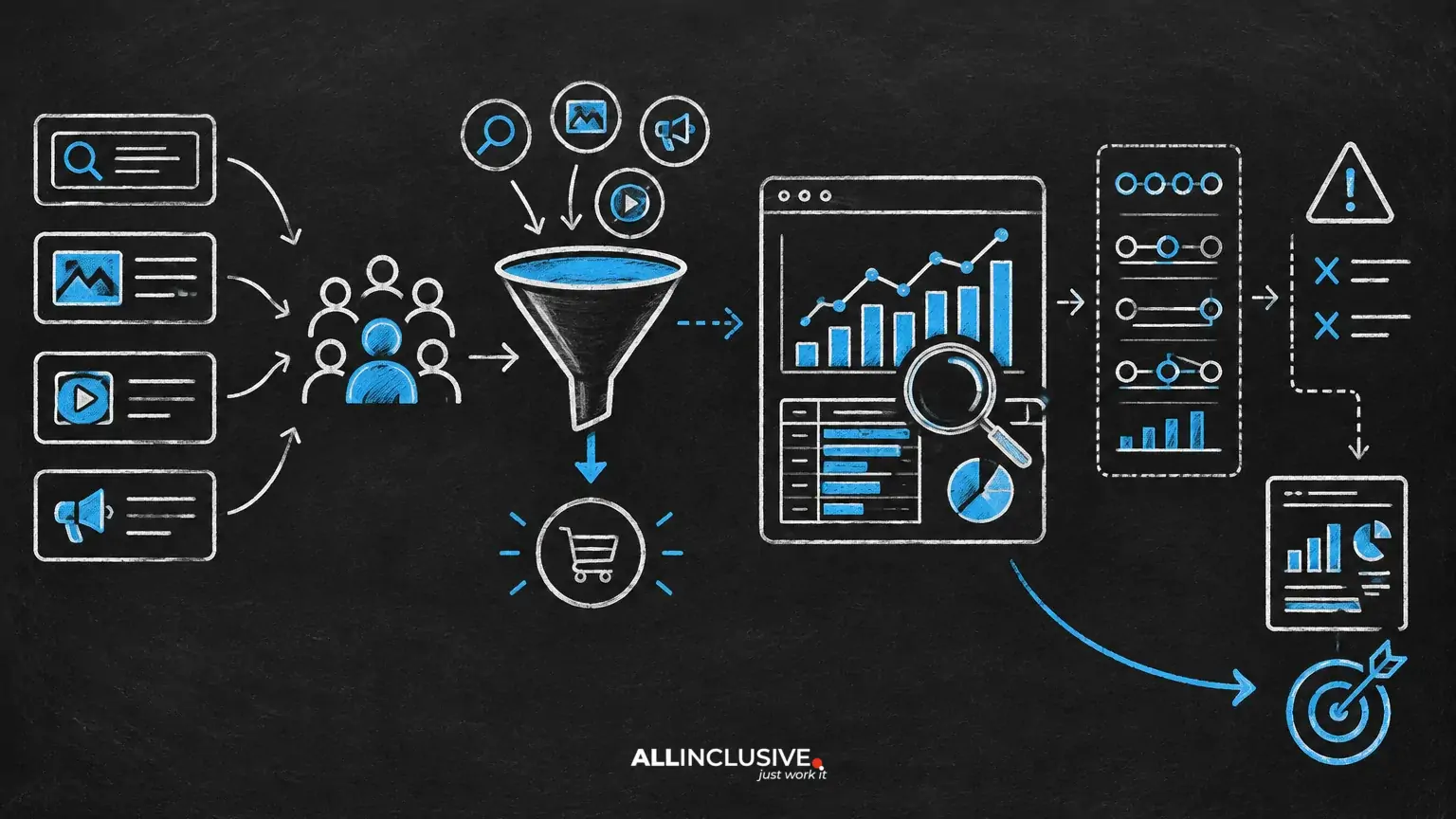
GA4 paid media attribution is best used as a structured way to analyze conversion paths, compare selected attribution perspectives, and improve campaign reporting—not as a definitive answer to which channel created demand.
GA4 can help teams connect marketing interactions with on-site or app conversions. However, its results depend on tracking quality, identity resolution, consent signals, conversion definitions, attribution settings, and the limits of analytics-based measurement. Paid platforms may report different results because they use different scopes, windows, models, and optimization signals.
The practical approach is to use GA4 for consistent behavioral and conversion reporting, then complement it with first-party revenue data, offline conversion tracking, incrementality testing, or marketing mix modeling when the decision requires stronger causal evidence.
What GA4 attribution is designed to do
GA4 attribution assigns conversion credit across interactions recorded in a user or account journey. The purpose is to help marketers understand how channels and campaigns appear in relation to conversions, rather than relying only on a final-touch report or on each advertising platform’s own reporting.
For paid media teams, that can make GA4 useful for:
- Comparing acquisition channels within one analytics environment.
- Reviewing conversion paths that include multiple interactions.
- Separating paid traffic from organic, referral, direct, and other sources when tagging and channel definitions are sound.
- Evaluating campaign performance against consistently defined conversion events.
- Creating a reporting layer that is less dependent on any single ad platform.
GA4 attribution does not establish that a reported interaction caused a conversion. It also does not automatically reveal what would have happened without the advertising exposure. Those are incrementality questions, and they usually require a different measurement design.
How attribution models differ
An attribution model is a rule for distributing credit. The choice can materially change how a paid channel appears in reports, even when the underlying customer journeys have not changed.
Data-driven attribution
Data-driven attribution uses observed conversion and interaction patterns to distribute credit across eligible touchpoints. It is generally more flexible than assigning a fixed percentage to every interaction, but it still operates on the data available to the analytics property and the assumptions built into the method.
Use it as an analytical view, not as proof that the credited touchpoint generated incremental demand. Results can also be less stable when conversion volume is limited, tracking coverage changes, or the population being measured shifts.
Last-click attribution
Last-click attribution gives full or predominant credit to the final eligible interaction before conversion. It is simple and easy to explain, which can be useful for operational reporting. Its weakness is that it tends to understate earlier discovery, consideration, and remarketing interactions.
Other comparative views
Some teams compare multiple attribution perspectives to identify where conclusions are robust and where they depend heavily on the selected model. These comparisons are more useful when accompanied by a clear decision rule. For example, a channel may remain a priority if it performs acceptably across several views and also passes efficiency, quality, and incrementality checks.
Why GA4 and ad-platform numbers disagree
Differences between GA4 and paid-platform reporting are normal. They do not automatically indicate that one system is broken.
Common causes include:
- Different attribution windows: Systems may count interactions over different periods before a conversion.
- Different conversion scopes: An ad platform may report an action configured for optimization, while GA4 reports an event with different inclusion rules.
- Different counting methods: A platform may use account-level, campaign-level, or event-level rules that do not match GA4’s reporting logic.
- Cross-device and identity differences: A journey may be recognized in one system but fragmented or unavailable in another.
- Consent and tracking loss: Browser restrictions, ad blockers, consent choices, and implementation gaps can remove or alter observed interactions.
- Time-zone and processing differences: Reporting dates and data availability may not align.
- Click versus session interpretation: An ad click, a tagged session, and an engaged visit are related but not identical events.
- Post-conversion exclusions: Refunds, cancellations, duplicate leads, and qualified-revenue adjustments may be handled differently.
Before reconciling totals, document the definition used by each system. A credible comparison explains why the numbers differ instead of forcing them into artificial agreement.
GA4 attribution limitations paid media teams should plan for
Attribution is not incrementality
An attributed conversion is a conversion associated with one or more observed marketing interactions. An incremental conversion is one that would not have occurred without the intervention. The two measures can overlap, but they are not interchangeable.
Brand search, retargeting, email-assisted journeys, and other lower-funnel activity can receive substantial attributed credit while influencing fewer additional conversions than the report suggests. To test that distinction, use a carefully designed holdout or lift study. See incrementality testing for paid media for a deeper framework.
Observed journeys are incomplete
GA4 records what its implementation can observe. It may not capture every impression, device, browser, offline interaction, or pre-analytics touchpoint. B2B journeys are especially likely to span multiple people, sessions, and channels before revenue is recognized.
Conversion quality may be missing
A form submission, trial start, purchase, qualified opportunity, and collected revenue are different business outcomes. If GA4 optimizes reporting around a shallow event, attribution may favor traffic that generates volume without generating commercial value.
Long sales cycles complicate interpretation
When a prospect converts weeks or months after the first interaction, standard analytics reporting may not represent the full path or may associate marketing activity with an early-stage event rather than revenue. Connect lead and opportunity data where possible, and make the sales-cycle limitation explicit in reporting.
Model changes can disrupt trend analysis
When an attribution method, conversion definition, consent configuration, or tagging structure changes, a trend break may reflect measurement rather than performance. Annotate such changes and avoid treating pre-change and post-change figures as perfectly comparable without validation.
A practical GA4 paid media reporting framework
A useful reporting system separates three questions: what happened, what quality was produced, and what caused the outcome.
1. Report delivery and observed response
Start with spend, impressions, clicks, sessions, engaged sessions, conversions, and attributed revenue where available. These metrics describe platform delivery and observed behavior. They should not be presented as causal proof.
2. Report business quality
Connect analytics events to outcomes such as qualified leads, sales-accepted opportunities, closed revenue, gross margin, retention, or customer value. For lead-generation programs, offline conversion tracking can help connect marketing activity to downstream outcomes. Review the guide to offline conversion tracking for implementation considerations.
3. Add efficiency measures with clear denominators
Use cost per qualified lead, cost per opportunity, customer acquisition cost, revenue-to-spend ratio, or contribution-margin return when the data supports them. Define whether costs include media only or also agency, creative, technology, and operational expenses.
4. Add causal evidence where decisions warrant it
For material budget changes, use geo tests, audience holdouts, platform experiments, or other controlled approaches when feasible. At broader planning levels, marketing mix modeling may be more appropriate, particularly when user-level tracking is incomplete. The article on marketing mix modeling for paid media explains when that approach becomes useful.
GA4 Attribution for Paid Media: Implementation Checklist
- Define business conversions first. Separate micro-conversions from outcomes that represent commercial value.
- Document ownership and definitions. Record which system is authoritative for spend, traffic, leads, opportunities, revenue, and refunds.
- Audit campaign tagging. Use a consistent naming convention and verify that paid traffic is classified correctly.
- Validate event transmission. Test key events across landing pages, forms, checkout, consent states, and relevant devices.
- Connect offline outcomes. Pass qualified stages and revenue back into the measurement process where legally and technically appropriate.
- Record attribution settings. Keep a change log for model, conversion, lookback, timezone, and consent-related changes.
- Reconcile by cohort and time period. Compare like with like rather than expecting daily totals from different systems to match.
- Use uncertainty in decisions. Avoid reallocating substantial budget because of small differences in attributed results.
How to interpret common reporting questions
“Which channel gets the most credit?”
Answer with the selected model, conversion definition, date range, and attribution window. Then explain whether the result is consistent with other evidence. A channel that receives credit under one model but not another deserves investigation, not an automatic budget increase or cut.
“Why did conversions rise while revenue quality fell?”
Check event definitions, lead qualification, sales acceptance, duplicate submissions, channel mix, conversion lag, and changes in landing-page or sales processes. GA4 can show more reported conversions while the business produces fewer valuable outcomes.
“Can GA4 determine the right budget?”
Usually not by itself. It can provide important inputs, but budget decisions should also consider marginal efficiency, capacity, customer quality, incrementality, and the reliability of observed data.
Governance: make the report decision-ready
Senior stakeholders need a concise explanation of what the numbers mean and what they do not mean. Every recurring report should identify the reporting period, data freshness, conversion definition, attribution view, scope of spend, and known limitations.
It is also useful to separate three labels in dashboards:
- Observed: Directly reported by the measurement system.
- Modeled: Estimated or distributed using an attribution or other analytical model.
- Tested: Supported by a controlled experiment or credible causal design.
This language prevents modeled credit from being mistaken for validated incremental impact. For broader measurement planning, use the paid media hub to connect attribution with experimentation, reporting, and channel strategy.
When GA4 should not be the only measurement source
Use additional methods when the decision involves major spend, long customer journeys, substantial offline activity, privacy-related data loss, or conflicting evidence. A balanced measurement stack might include GA4 for digital behavior, ad-platform reporting for delivery and optimization, a CRM for pipeline and revenue, controlled tests for incrementality, and modeled analysis for aggregate planning.
The right stack depends on the question. GA4 is often strong for consistent observed web and app reporting. It is not designed to replace experiments, financial reconciliation, or a complete view of demand generation.
GA4 Attribution for Paid Media: Decision Summary
GA4 paid media attribution is valuable when treated as one layer of measurement. Use it to standardize definitions, analyze observed journeys, identify reporting gaps, and inform optimization. Do not treat attributed credit as equivalent to incremental impact or recognized revenue.
The strongest reporting combines clean implementation, explicit definitions, downstream business outcomes, and an evidence hierarchy that distinguishes observation from causation. That approach produces fewer misleading answers—and better budget decisions.