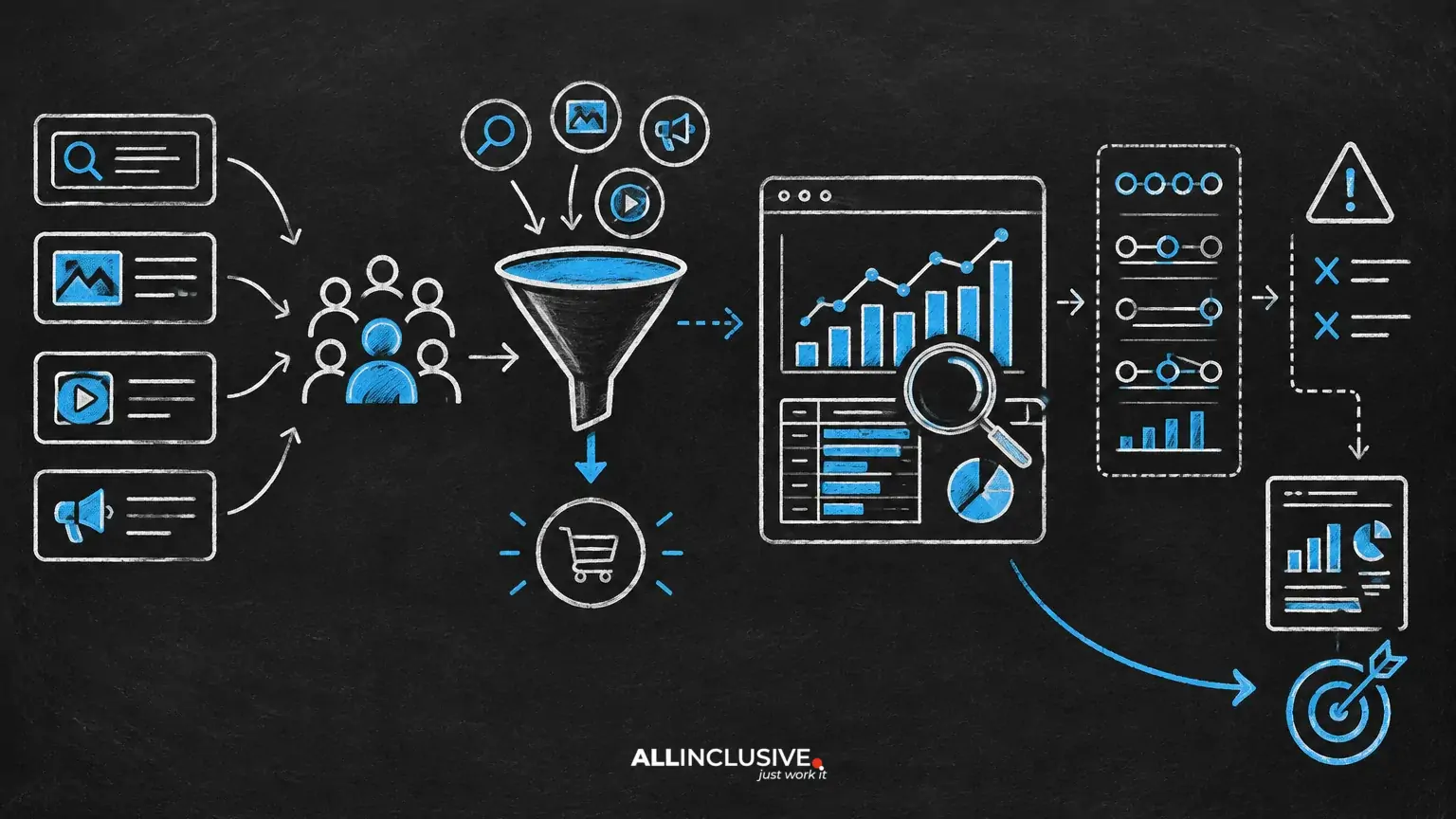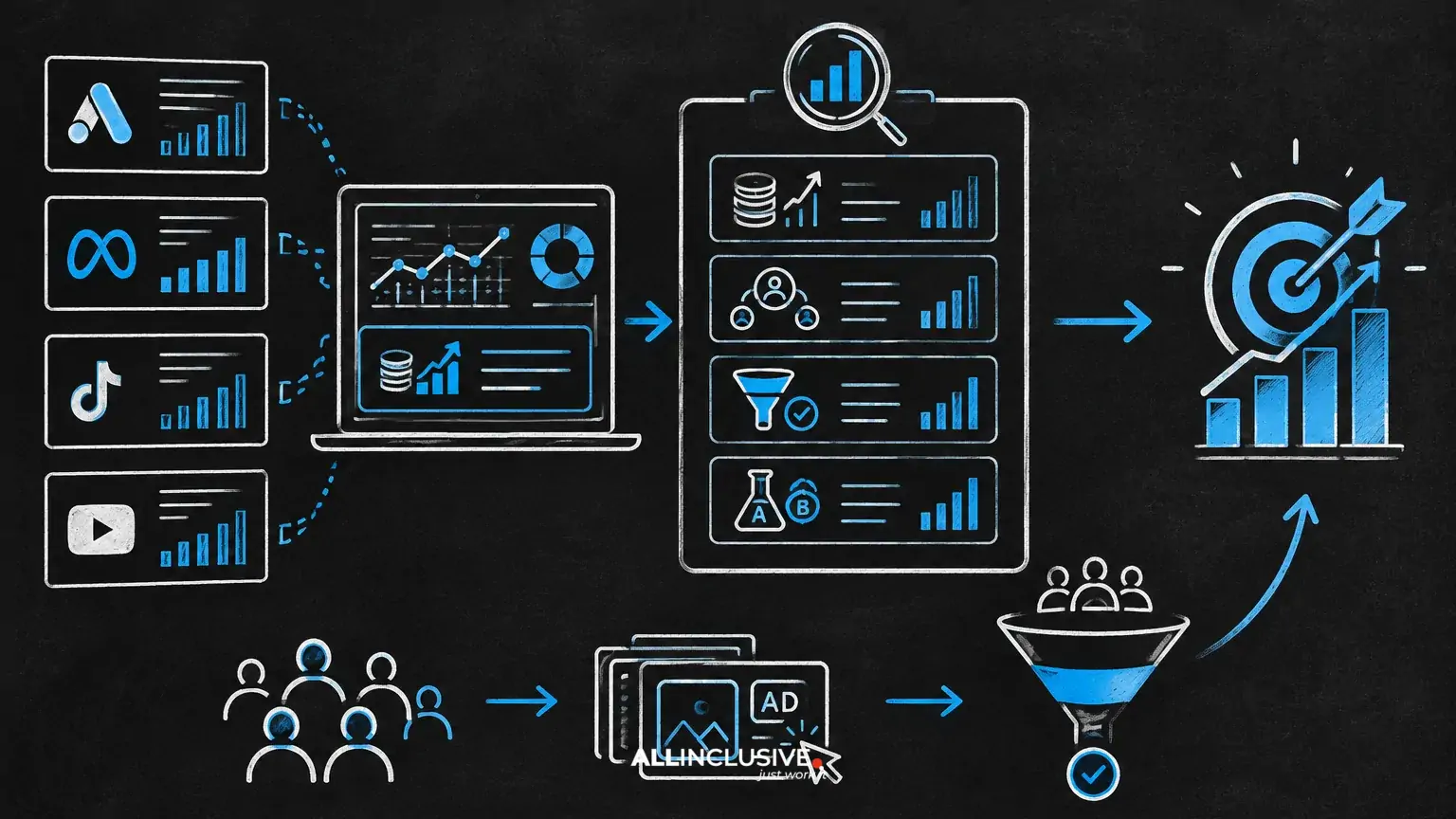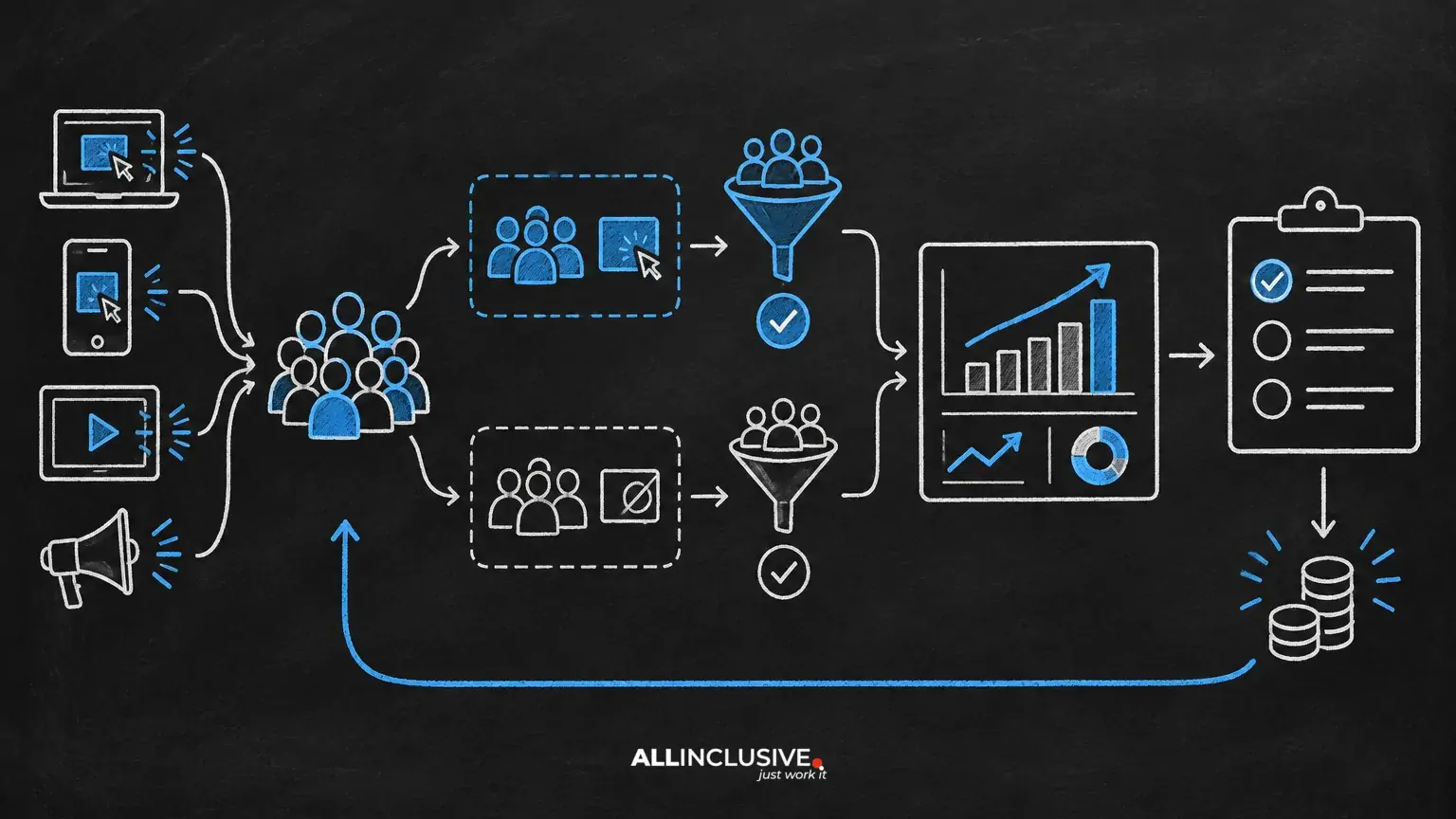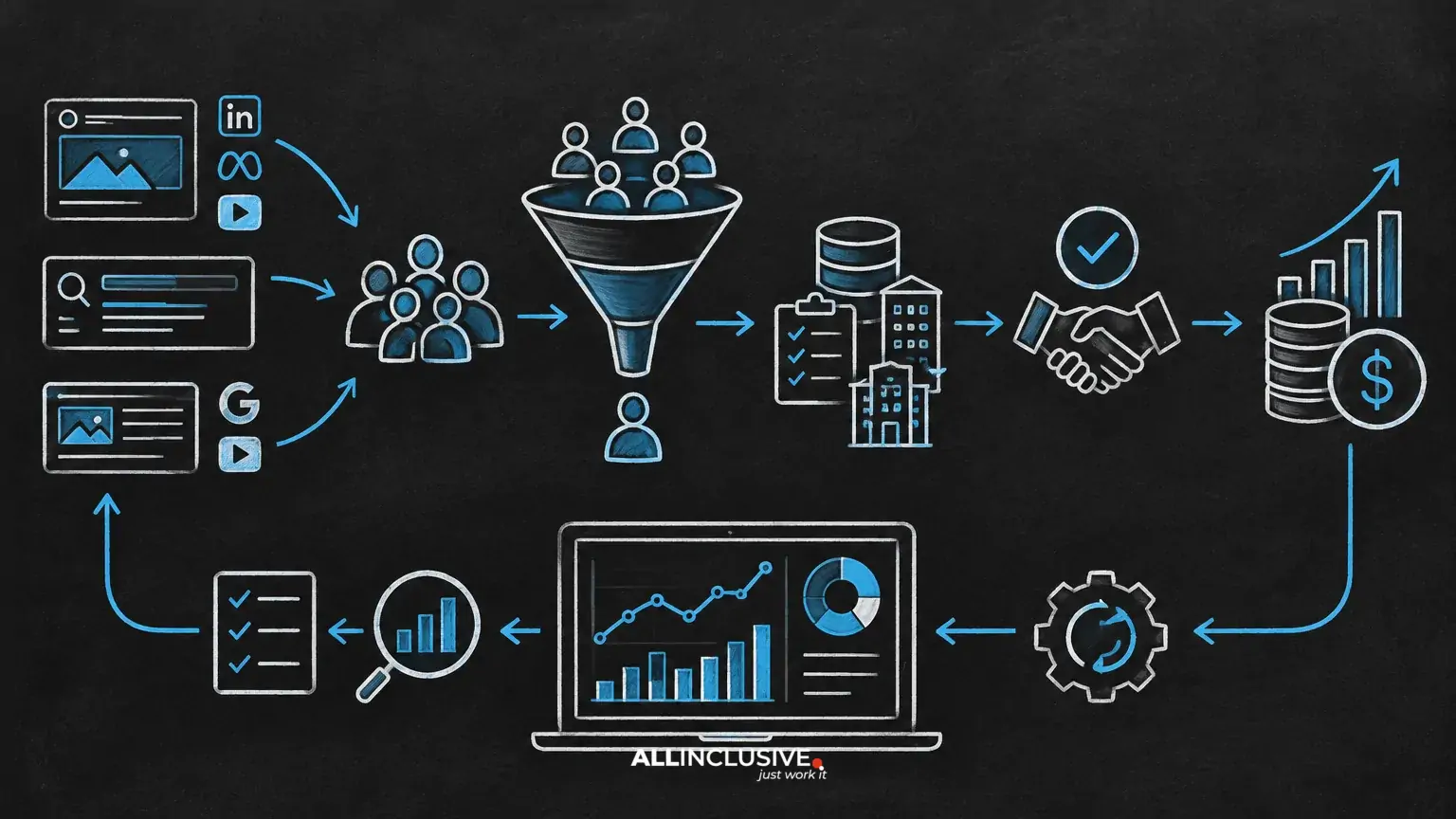
Offline conversion tracking connects what happens after a form fill, call, or chat with the campaigns that generated it. Instead of treating every lead as the final outcome, it links advertising interactions to downstream events such as qualified opportunities, closed deals, renewals, or revenue recorded in a CRM.
This matters most when the buying process continues outside the advertising platform. A lead may be contacted by sales, qualified weeks later, assigned to an opportunity, and eventually become a customer. Without that connection, media teams optimize toward volume or early funnel actions rather than business value. With it, marketers can evaluate lead quality, improve bidding inputs where supported, and make budget decisions using evidence closer to revenue.
Offline conversion tracking is not a replacement for attribution, incrementality testing, or sound CRM governance. It is a measurement connection between ad exposure or click activity and a later business outcome.
What offline conversion tracking means
In practical terms, offline conversion tracking has four parts:
- Capture an identifier: Preserve a consented click, campaign, session, or lead identifier when someone responds to an ad.
- Store the identifier with the lead: Pass it into the CRM or another system that remains connected to the customer record.
- Record a downstream outcome: Mark events such as sales acceptance, opportunity creation, contract signature, or revenue.
- Send the outcome back for analysis or optimization: Match the event to the relevant advertising source and report it with appropriate timing and value.
The specific identifier and upload method vary by platform, account configuration, consent framework, and technical architecture. The durable principle is the same: retain enough reliable information to connect an early marketing interaction with a later business event.
Why lead volume is an incomplete performance metric
Lead generation campaigns often create a misleading performance picture. Two campaigns can produce the same number of leads while differing substantially in sales acceptance, opportunity value, close rate, or time to revenue. If reporting stops at form completion, those differences remain invisible.
Offline conversion tracking helps answer questions that surface-level reporting cannot:
- Which campaigns generate sales-accepted leads rather than unqualified inquiries?
- Which audiences create opportunities with meaningful expected value?
- Do lower-cost leads progress through the funnel, or merely increase follow-up workload?
- How long does it take for a lead to become an opportunity or customer?
- Are reported conversions duplicated, delayed, or assigned to the wrong source?
These answers support better budget allocation, but they do not automatically prove that advertising caused the revenue. A tracked opportunity may have been influenced by multiple channels, brand activity, sales outreach, or existing demand. For a broader view of measurement, see our paid media attribution guide.
Choose the right offline conversion events
The most important design decision is deciding which events should be imported or reported. More events are not necessarily better. The event must be meaningful, consistently defined, and available with enough volume and quality to support analysis.
Common event levels
- Lead created: Useful for connecting form submissions or calls to CRM records, but usually too early to represent business value.
- Lead qualified: A stronger signal when qualification criteria are documented and applied consistently.
- Sales accepted: Helpful for organizations where sales review is a meaningful quality gate.
- Opportunity created: Often appropriate for longer B2B journeys, provided opportunity definitions are governed.
- Opportunity value or stage progression: More informative than a binary opportunity event when pipeline stages are reliable.
- Closed won or revenue: Closest to the commercial outcome, although delayed reporting and lower event volume can limit immediate optimization.
A useful framework is to separate diagnostic events from optimization events. Diagnostic reporting may include every funnel stage. Optimization should generally focus on one or a small number of events that are reliable, valuable, and sufficiently frequent for the selected media system to use responsibly.
Design the data flow before choosing a platform method
Offline conversion tracking fails more often from broken data flow than from a missing upload button. Map the journey from ad interaction to revenue before implementing any platform-specific mechanism.
- Ad interaction: Identify what source information can be captured and under what consent conditions.
- Landing experience: Preserve required identifiers across redirects, forms, calls, and session changes without overwriting trustworthy values.
- Lead creation: Store the identifier alongside the lead record, timestamp, source fields, and a stable internal record ID.
- CRM progression: Define how qualification, opportunity, and revenue events are created, updated, and timestamped.
- Transformation: Convert CRM states into a controlled event schema with clear names, values, currencies, and event dates.
- Delivery and reconciliation: Send or export records through the approved integration, then compare accepted, rejected, duplicated, and unmatched events.
- Reporting: Document attribution windows, reporting dates, revenue treatment, and the difference between platform-reported and CRM-reported results.
Keep the raw source data separate from transformed upload fields. This makes troubleshooting possible when a campaign name changes, an identifier is missing, or a CRM stage is redefined.
Identity, consent, and data quality
Matching is the central technical challenge. The system must connect the advertising interaction to the correct lead and later business record without creating false matches or retaining data inappropriately.
At minimum, establish rules for:
- Identifier capture: Which identifiers are collected, where they are stored, and how long they remain available.
- Record linkage: How duplicate leads, shared contact details, multiple opportunities, and account-level buying groups are handled.
- Consent: Which collection, storage, and activation steps are permitted in each applicable market and context.
- Data minimization: What fields are necessary for matching and measurement, and which should not be transferred.
- Access control: Which teams and vendors can view identifiers, revenue fields, or customer-level records.
- Retention: How long source and event data are retained and how deletion requests propagate through connected systems.
Do not treat a high match rate as proof of accuracy. A system can match many records while assigning events to the wrong person, opportunity, or source. Validate matches with controlled samples, duplicate checks, timestamp comparisons, and CRM record reviews.
Value design: revenue, pipeline, or weighted outcomes?
Sending a constant value for every lead makes reporting simple but hides quality differences. Sending raw contract value may also be misleading if revenue is recognized over time, heavily discounted, canceled, or shared across multiple opportunities.
Choose a value approach that reflects the decision you are trying to make:
- Equal event value: Suitable for an early pilot when reliable monetary values are unavailable.
- Stage-based value: Assigns values to qualified stages based on documented historical or modeled expectations.
- Expected pipeline value: Uses opportunity value adjusted for a defined probability, with assumptions reviewed regularly.
- Closed revenue: Uses realized commercial value when the sales cycle and data latency permit it.
- Margin or contribution value: More decision-useful than revenue when costs, discounts, or fulfillment economics vary materially.
Label modeled values clearly. A weighted pipeline event is not the same as booked revenue, and neither should be presented as incremental profit. Review the value model when sales qualification, pricing, product mix, or close rates change.
Reporting and attribution rules
Offline events arrive later than clicks and leads. That delay creates several reporting traps. Recent campaigns may look weak because their opportunities have not matured, while older campaigns may benefit from a longer observation period.
Use consistent reporting rules for:
- Conversion date versus upload date
- Click-through and view-through treatment, where applicable
- Attribution windows and eligibility rules
- Lead, account, and opportunity deduplication
- Currency conversion and revenue recognition
- Reopened, canceled, or lost opportunities
- Late-stage events that occur after a campaign or ad group has changed
Report at least two views: a platform-oriented view for media operations and a business view grounded in CRM outcomes. The first helps explain delivery and optimization. The second supports budget and commercial decisions. They should be reconciled, not forced to match exactly.
Platform metrics also remain directional. Their reported conversions may use platform-specific attribution logic, while CRM revenue may use a different source rule or a multi-touch model. For broader context, compare the implementation with our guide to GA4 attribution for paid media and our discussion of paid media ROAS.
A practical implementation sequence
A staged rollout reduces risk and makes errors easier to isolate.
- Document the funnel: Define the business events, owners, timestamps, and source-of-truth systems.
- Audit current capture: Test landing pages, forms, calls, redirects, consent states, CRM field mapping, and duplicate handling.
- Start with one reliable event: Select a downstream milestone with a clear definition and manageable latency.
- Build a test dataset: Use known records to verify capture, storage, transformation, matching, and reporting.
- Run reconciliation: Compare CRM event counts with sent, accepted, rejected, unmatched, and duplicated records.
- Monitor a full decision cycle: Allow enough time for the chosen event to mature before judging campaign quality.
- Add value carefully: Introduce stage or revenue values only after event integrity is stable.
- Expand optimization: Move from reporting to bidding or budget workflows only when data quality and volume justify the change.
Common failure modes
Optimizing to the earliest available event
Early events arrive quickly but may reward low-quality demand. If qualification data is dependable, test a later event or use early events for diagnostics while retaining downstream events for evaluation.
Changing CRM definitions without updating measurement
When “qualified” changes from a sales judgment to an automated rule, historical comparisons become unreliable. Version event definitions and annotate material changes.
Ignoring latency
Short reporting windows can favor campaigns with fast lead progression rather than better commercial outcomes. Use cohort views or maturity-adjusted reporting where the sales cycle requires it.
Counting records instead of outcomes
One person may create several leads, and one account may have multiple opportunities. Establish deduplication and account-level rules before comparing campaigns.
Confusing attribution with causality
Sending revenue back to an advertising platform improves connection, not causal certainty. Use experiments or other incrementality methods when the decision requires evidence of lift. Our guide to incrementality testing for paid media covers that distinction in more detail.
How to judge whether the system is working
Evaluate offline conversion tracking across data quality, business usefulness, and operational reliability.
- Completeness: Are expected leads and downstream events represented?
- Match quality: Are records linked to the correct advertising interactions?
- Freshness: Do events arrive within a useful decision window?
- Consistency: Are definitions and values stable across campaigns and periods?
- Reconciliation: Can differences between CRM, analytics, and platform reports be explained?
- Decision value: Does the data change budget, creative, audience, bidding, or sales feedback decisions?
Do not evaluate the system solely by whether platform-reported conversions increase. A healthy implementation may initially reveal that some campaigns generated fewer qualified outcomes than lead reports suggested.
Offline Conversion Tracking: Strategic Perspective
Offline conversion tracking is the connective layer between paid media activity and the revenue process that follows. Its value depends less on a particular platform feature than on disciplined event definitions, durable identifiers, consent-aware data handling, CRM governance, and honest interpretation.
Start with one well-defined downstream outcome, prove the data flow end to end, reconcile it against the CRM, and only then expand into value-based optimization. Used this way, offline conversion tracking gives media teams a more credible view of lead quality while preserving the distinction between attributed revenue and incremental business impact. Explore the broader paid media measurement and strategy resources for related planning guidance.