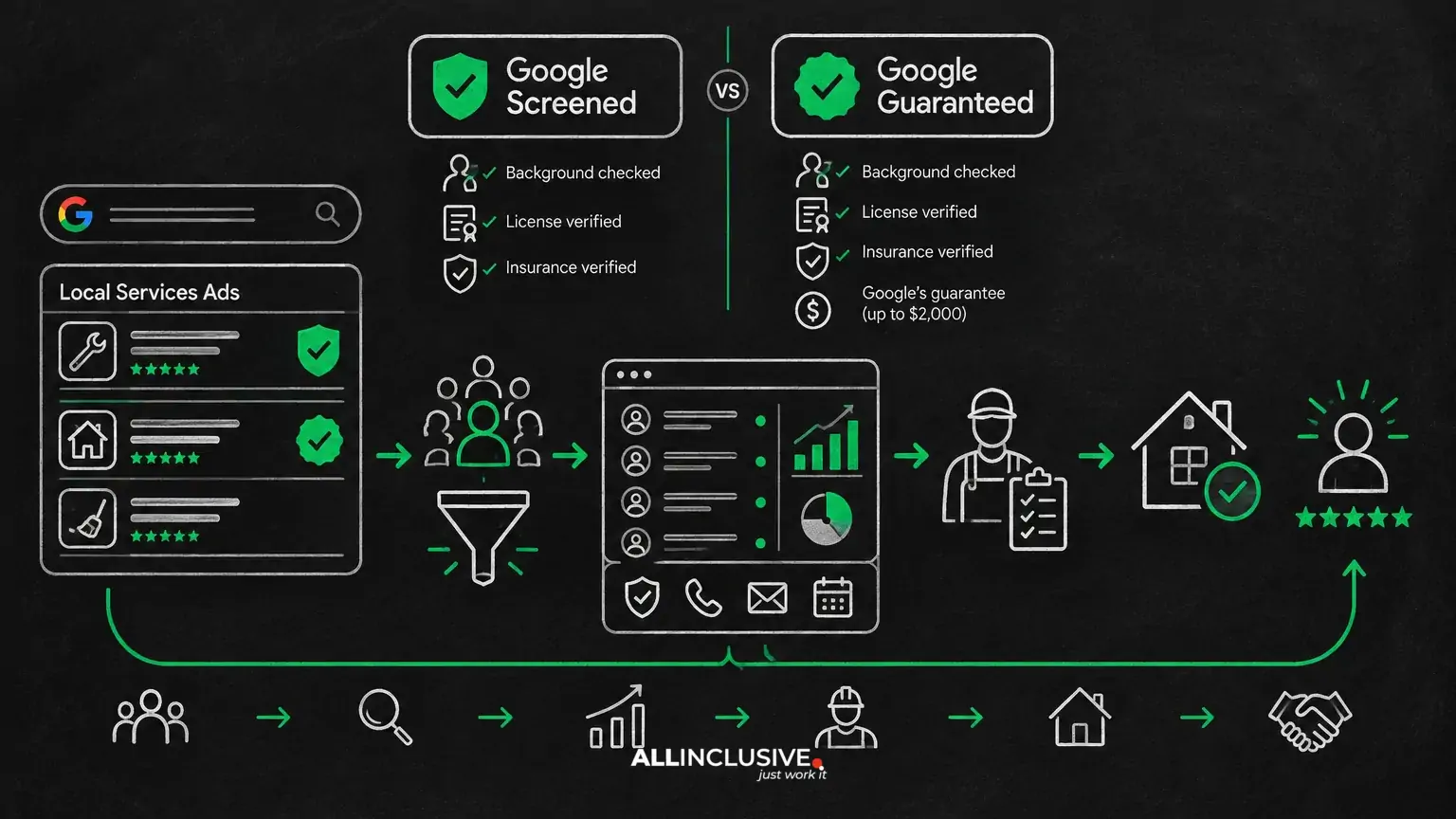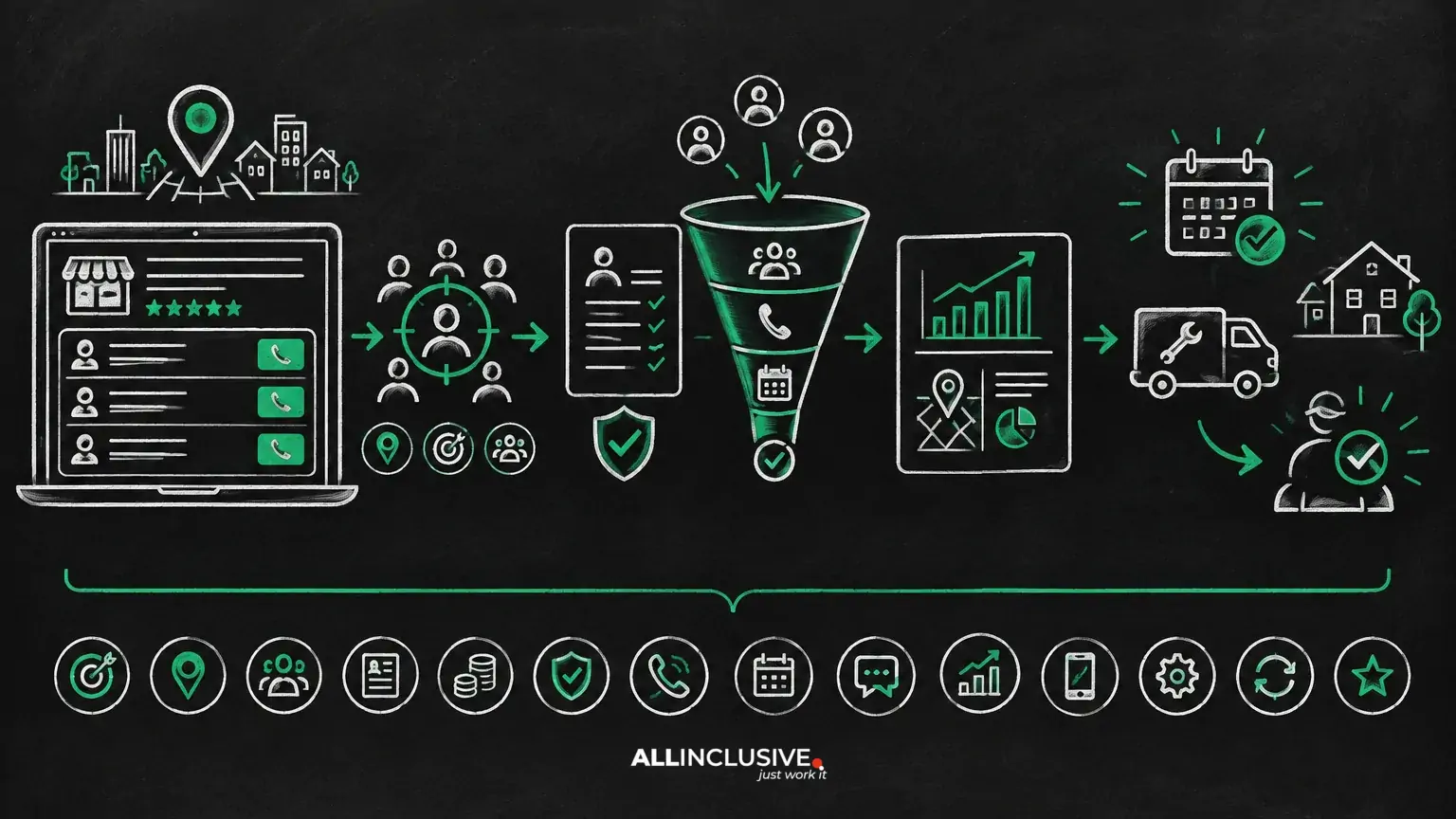
Local Services Ads optimization is not simply a matter of increasing budget or waiting for more inquiries. The strongest programs connect three parts of the system: how the business is presented, which searches and locations it can serve, and what happens after a lead arrives.
To improve lead quality, start by defining a qualified lead in operational terms. For one business, that may mean a serviceable address and a specific repair need. For another, it may require a commercial property, a minimum project scope or an appointment within a defined service area. That definition should guide the 15 improvements below.
Local Services Ads can support high-intent demand, but results depend on accurate setup, credible positioning, disciplined lead handling and regular review. The platform is only one part of the acquisition process.
1. Define a qualified lead before changing the campaign
Write down the criteria that separate a useful inquiry from an expensive distraction. Include service type, location, urgency, customer type, project size and any eligibility requirements. Make the definition specific enough that two team members would classify the same lead in the same way.
Then separate qualified, unqualified, duplicate and unreachable leads. This creates a better optimization signal than counting every call or message as a success.
2. Align the profile with the services you actually want to sell
Your profile should reflect the work the business can perform profitably and consistently. Review service categories, descriptions, photos and business information for gaps or contradictions. Avoid presenting a broad list of services if the team lacks capacity, geographic coverage or expertise to handle them.
Lead quality often declines when the profile attracts demand outside the company’s real offer. Clear positioning can reduce volume while improving fit.
3. Tighten service-area decisions
Review every location the business claims to serve against travel time, staffing, scheduling and close rates. A large service area may create more inquiries, but it can also produce wasted calls, delayed appointments and poor customer experiences.
Use operational evidence to decide where coverage makes sense. If leads from a particular area are consistently unserviceable or unprofitable, consider reducing exposure there rather than compensating with more aggressive follow-up.
4. Separate strategically different locations when needed
Businesses with multiple offices, branches or service territories should avoid treating every location as one undifferentiated program. Separate structures may be appropriate when locations have different teams, phone numbers, services, hours or budgets.
The objective is not maximum account complexity. It is clear ownership and reporting. For a broader framework, see Local Services Ads for Multi-Location Businesses.
5. Make the business profile answer buying questions
Prospects want to know whether the provider is relevant, available and credible. Use concise language to clarify the services offered, the customers served and the areas covered. Show evidence that supports the decision, such as authentic project imagery, team information or customer feedback where available.
Do not make claims the business cannot substantiate. Trust is part of lead quality: an unclear or overstated profile can attract the wrong expectations before the first conversation.
6. Audit job types and service categories regularly
Review the actual lead mix against the services selected in the account. Look for categories that generate frequent inquiries but rarely produce viable opportunities. Also identify profitable services that receive little visibility because they are underrepresented in the profile.
This is a strategic review, not an invitation to select every available category. Relevance matters more than breadth.
7. Set budget around capacity and sales targets
A practical budget starts with the number of qualified opportunities the business can handle, not an arbitrary spend target. Consider available appointment capacity, average sales value, close rate and acceptable acquisition cost.
Track spend alongside qualified leads and booked appointments. A budget that produces more raw inquiries but overwhelms the sales team may reduce overall performance. For planning mechanics, see Local Services Ads Budget: How to Set Weekly Spend and Lead Targets.
8. Review lead quality by service, area and time period
Aggregate reporting can hide important differences. Break performance down by service type, location, day and time when the available data supports it. Compare lead volume with qualification, booking and revenue outcomes.
For example, one service may generate many calls but few appointments, while another produces fewer inquiries with stronger commercial value. Optimization should favor the business outcome, not the largest count.
9. Improve call-answering coverage
High-intent leads often lose value when nobody answers promptly. Define ownership for incoming calls and establish coverage during advertised operating hours. If calls are missed, return them quickly and record the outcome.
Also examine whether the listed contact route reaches the right team. A lead routed to an unattended line, busy office or unsuitable location is a process failure, not necessarily a demand problem.
10. Use a consistent lead-screening script
Give staff a short set of questions that identifies fit without making the conversation feel like an interrogation. Useful topics may include address, service needed, urgency, property type, project scope and preferred timing.
Keep the script adaptable. The goal is to qualify and help the customer, not to force every inquiry through a rigid checklist.
11. Train teams to distinguish inquiries from opportunities
A caller can be genuine and still be a poor fit. Train staff to classify the outcome consistently and explain why. Suggested outcomes include:
- Qualified and booked
- Qualified but follow-up required
- Outside service area
- Wrong service or job type
- Price or scope mismatch
- Spam, duplicate or unreachable
These categories make optimization more actionable than a single “lead” total.
12. Improve response and appointment workflows
Lead quality depends partly on what happens after contact. Define response ownership, follow-up timing, appointment availability and escalation rules. If the business cannot accept new work, decide whether to pause exposure, redirect inquiries appropriately or update expectations.
Use a simple workflow that records contact attempts and final outcomes. Without this feedback loop, campaign decisions will rely on incomplete platform data.
13. Capture offline outcomes
Connect lead records to the stages that matter commercially: contacted, qualified, booked, completed, quoted, won and lost. The exact system may be a CRM, spreadsheet or another operational tool, provided the definitions remain consistent.
Offline outcome data helps reveal whether apparent performance is real. It can also show that a lead source is valuable even when immediate booking rates appear modest, or that inexpensive inquiries rarely become customers.
14. Treat reviews as a trust and conversion asset
Customer feedback can influence whether a prospect chooses to call, continues the conversation or accepts an appointment. Establish a compliant, consistent process for requesting feedback from genuine customers. Monitor recurring themes, especially complaints about communication, punctuality, pricing or service scope.
Reviews cannot replace operational quality. They should reinforce an experience the business can deliver repeatedly.
15. Run a structured optimization cycle
Avoid changing several variables at once unless the account requires immediate correction. Use a recurring review to identify the largest source of waste or missed opportunity, make one focused change, and measure the effect over an appropriate period.
A useful review agenda includes:
- Lead volume and spend
- Qualified and unqualified lead counts
- Missed-call and response performance
- Appointment and sales outcomes
- Service-area and service-type patterns
- Profile accuracy and capacity constraints
- Next action, owner and review date
How to prioritize Local Services Ads optimization
Start with issues closest to the customer and revenue outcome. If calls are unanswered, fix coverage before changing targeting. If the business receives inquiries for services it does not provide, correct the profile and service configuration. If inquiries are relevant but not closing, review qualification, pricing communication, appointment availability and follow-up.
A simple prioritization model is:
- High impact, low effort: correct contact details, remove unsupported services and assign call ownership.
- High impact, medium effort: refine service areas, improve screening and connect lead records to sales outcomes.
- Lower urgency: test profile wording or creative presentation after foundational issues are controlled.
When to compare Local Services Ads with other channels
Local Services Ads are not automatically the best fit for every business or every stage of demand. Compare them with other acquisition options based on intent, control, coverage, conversion path and reporting needs. The distinctions are explained in Local Services Ads vs. Google Ads and Local Services Ads vs. Local SEO.
For a broader view of measurement, channel planning and paid acquisition, explore Allinclusive paid media resources.
Local Services Ads Optimization: What to Prioritize
The best local service ads optimization programs do more than increase exposure. They improve the match between the customer’s need, the business’s capabilities and the sales team’s response. Define lead quality, tighten service and location alignment, protect response coverage, and feed real outcomes back into decision-making.
When those foundations are in place, platform changes become more meaningful because the business can distinguish additional demand from additional value.
For broader strategic context, see our Local Services Ads resource.