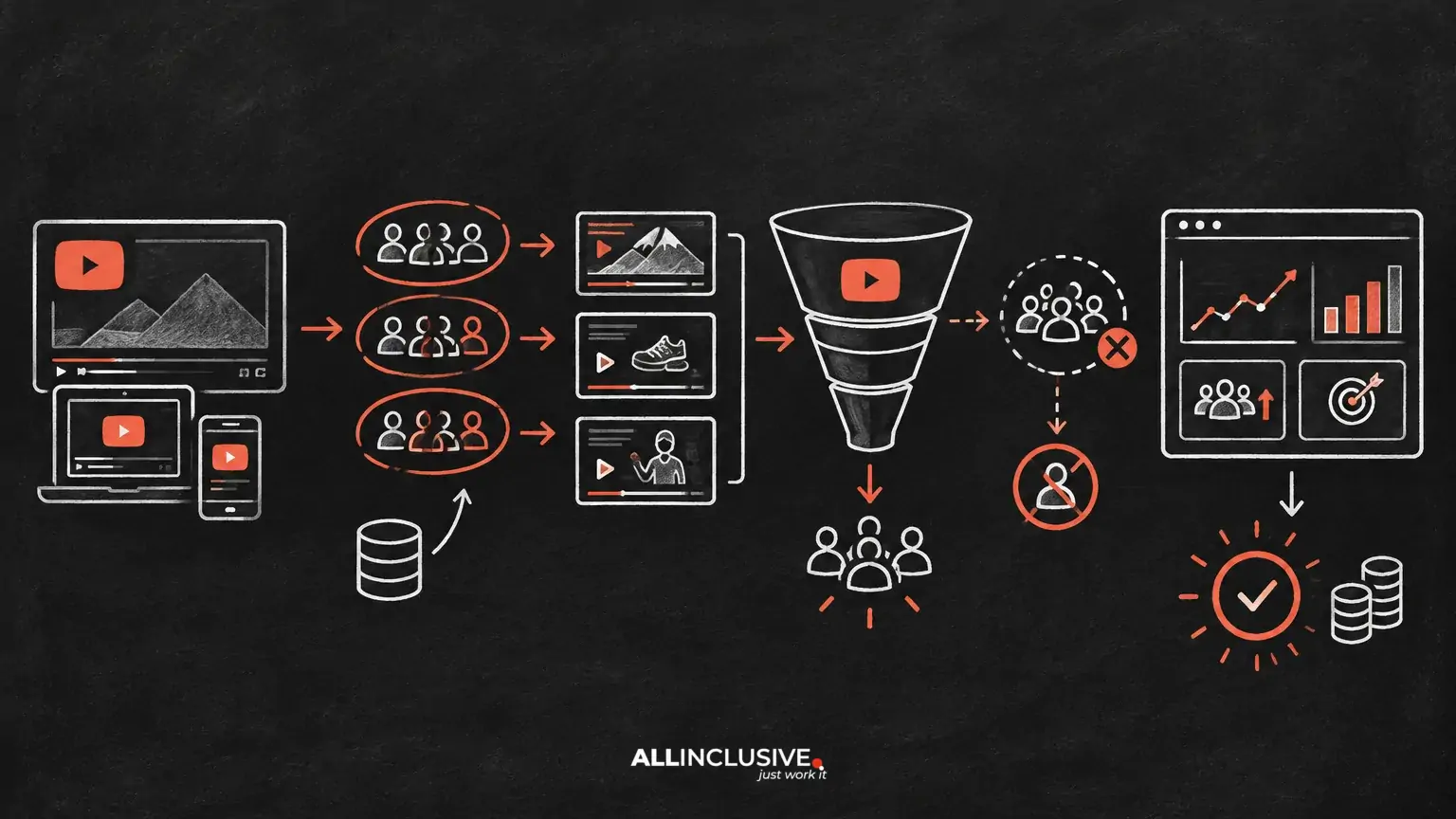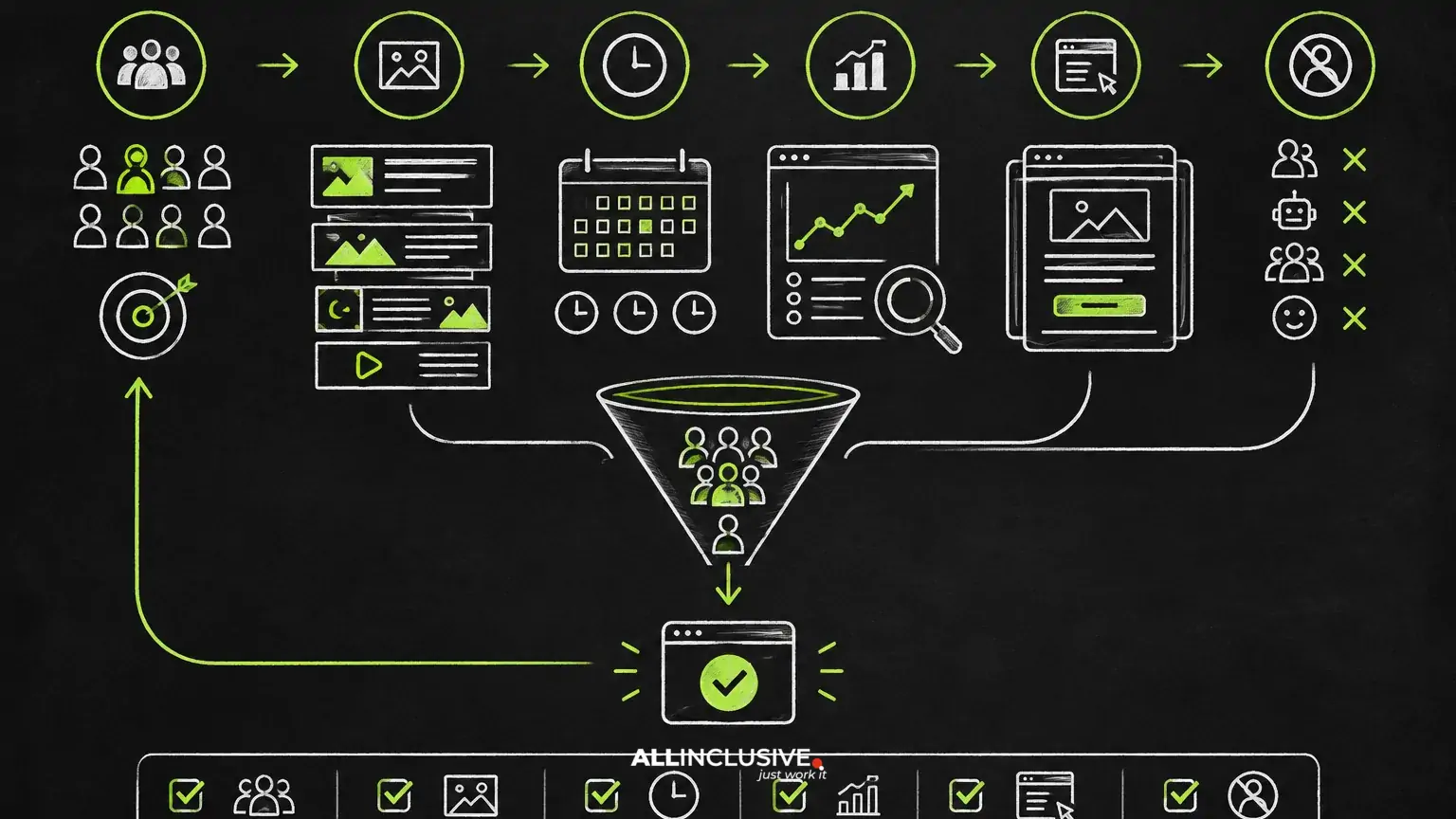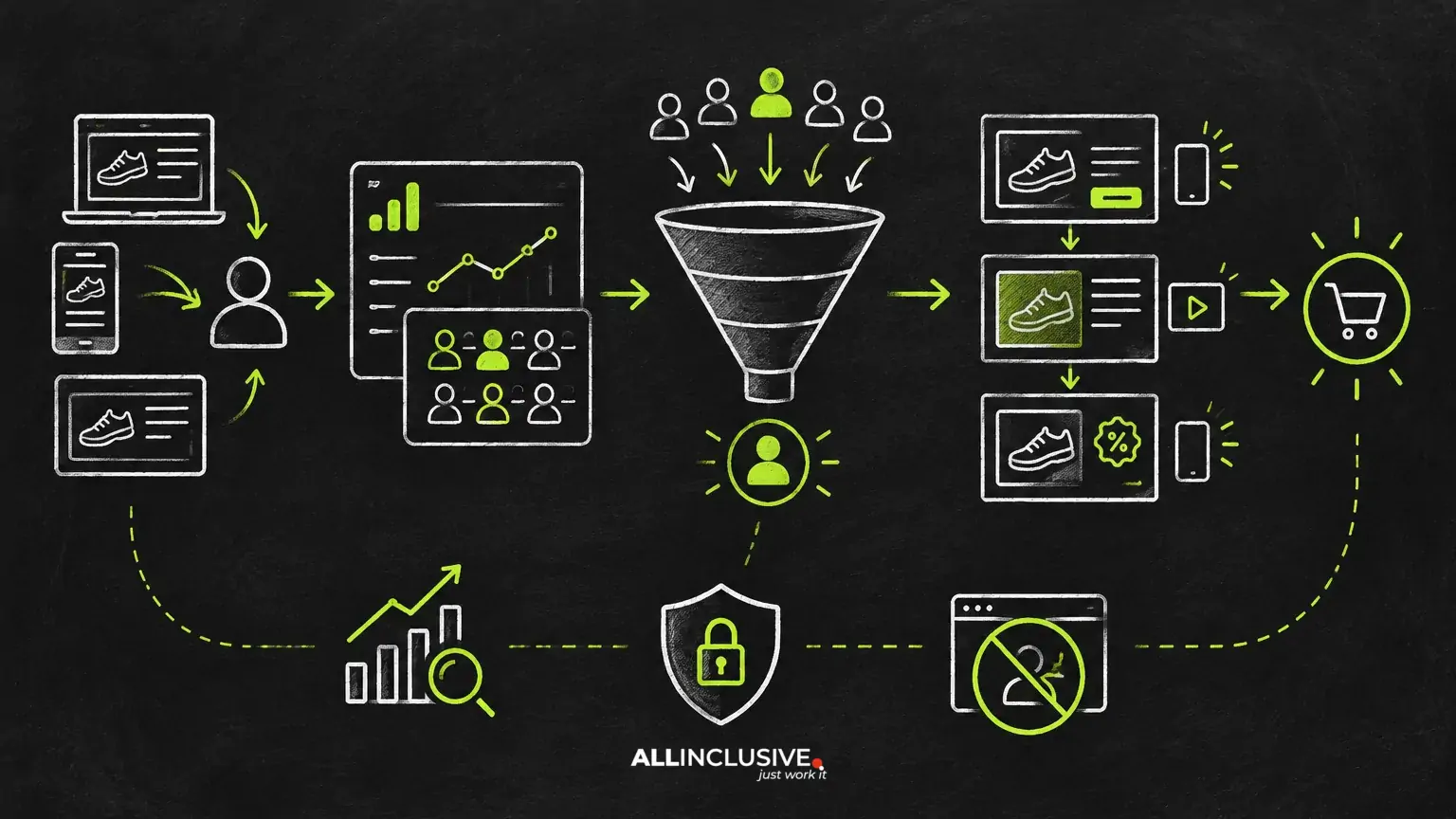
Remarketing with GA4 audiences helps advertisers reconnect with people who have already interacted with a website or app. Instead of treating every visitor as equally valuable, you can define audiences around behaviors such as viewing a product, starting a form, returning to key pages, or completing a conversion.
The important distinction is that GA4 is primarily an audience-definition and measurement environment. It does not replace campaign strategy, consent management, media planning, creative testing, or conversion tracking. A useful audience combines a clear business purpose with reliable event data, an appropriate membership window, sensible exclusions, and a destination platform that can lawfully and technically use the audience.
What GA4 remarketing audiences are
A GA4 audience is a group of users who meet conditions you define in Analytics. Conditions can be based on events, parameters, page or screen activity, user attributes, engagement behavior, or combinations of these signals. Examples include:
- Visitors who viewed a pricing page but did not submit a form.
- Users who began a consultation request but did not complete it.
- People who viewed several product or service pages during a short research period.
- Existing customers who may be eligible for a cross-sell or renewal message.
- High-intent visitors who returned to the site but have not reached the primary conversion event.
Once configured, an audience may be made available to advertising or activation platforms supported by your measurement setup. Availability, eligibility, consent requirements, and audience size can vary by platform, geography, account configuration, and implementation quality. Treat activation as a validation step, not an assumption.
Before setup: define the audience’s job
The most common mistake is creating audiences because a platform makes the option easy to find. Start with the decision the audience should support. A good audience brief answers five questions:
- Who is included? Define the observable behavior or event sequence.
- Who is excluded? Remove converters, existing customers, unqualified traffic, or people who should receive a different message.
- What should happen next? Specify the campaign objective, offer, landing page, and follow-up experience.
- How long is the behavior relevant? Use a membership window that reflects the buying cycle.
- How will success be judged? Select a conversion and supporting quality signals before launch.
For example, a B2B software advertiser might create an audience for users who viewed an implementation page or pricing page, exclude completed demo requests, and use a longer membership window than a consumer ecommerce advertiser. The audience is not the strategy by itself; it is an input to a planned sequence.
How to set up GA4 remarketing audiences
1. Audit events and conversions first
Review the events that will define eligibility. Confirm that names, parameters, and firing conditions represent real user actions. A form-start event should not fire on a page view, and a purchase or lead event should not depend on an unreliable thank-you-page load alone.
Check whether important events are duplicated, missing, or triggered by internal traffic and testing activity. If the underlying event is inaccurate, the audience will be inaccurate regardless of how carefully its conditions are configured.
2. Choose a behavior that signals a meaningful next step
Not every interaction deserves a remarketing audience. Prioritize behaviors that indicate consideration or unfinished intent. Examples include viewing a high-value page, using a product configurator, downloading a buying guide, initiating a form, or returning to the site after an earlier visit.
Broad audiences such as all visitors can be useful when volume is limited, but they usually need stronger controls. Consider layering recency, page groups, engagement, or traffic source where those signals are reliable and relevant.
3. Build inclusion and exclusion rules
Use inclusion rules to describe the behavior you want to follow up on, then add exclusions for people who have already taken the desired action. For lead generation, this may mean excluding users who completed a qualified lead event. For ecommerce, it may mean separating recent purchasers from product viewers so each group receives a different message.
Exclusions also protect user experience. Someone who has already requested a sales conversation should not continue seeing an ad designed to persuade them to request one for the first time.
4. Set a membership duration based on buying behavior
Membership duration determines how long a user remains eligible after meeting the audience conditions. Short windows are generally better for urgent or highly time-sensitive actions. Longer windows may be appropriate for considered B2B purchases, renewals, or products with extended evaluation periods.
Do not choose the longest available window by default. A long duration can preserve stale intent and cause ads to follow users after the original need has disappeared. If the customer journey varies substantially, create separate audiences for different recency bands rather than one undifferentiated pool.
5. Name audiences for operational use
A consistent naming convention makes audiences easier to audit and activate. Include the behavior, recency, market or product group, and exclusion logic where useful. For example:
- PricingView_NoLead_30d
- FormStart_NoSubmit_14d
- Customer_CrossSell_ProductA_90d
Document the definition in an audience register. Record the business purpose, event dependencies, membership window, exclusions, destination platform, owner, and review date.
6. Validate availability before planning spend
After creating an audience, confirm that data is populating as expected and that the intended activation platform recognizes it. A newly created audience may not be immediately useful for every destination, and platform reporting may not match GA4’s user counts exactly.
Check the audience status, estimated scale where available, consent behavior, and campaign eligibility. If the audience is too small, broaden the qualifying behavior carefully or combine closely related segments. Do not weaken the definition simply to create volume; test whether the resulting audience still represents meaningful intent.
Audience strategies that work better than “all visitors”
Intent-stage audiences
Separate discovery, consideration, and conversion-stage behavior. A visitor who reads an educational article should not automatically receive the same message as someone who viewed pricing or started a form. Match creative and landing pages to the user’s likely question.
Sequence-based audiences
Build audiences around what happened and what did not happen. For instance, include users who downloaded a guide but exclude those who requested a consultation. The next ad might invite them to compare approaches, see a product demonstration, or review implementation considerations rather than repeat the initial call to action.
High-value page audiences
Page-based audiences can be useful when page taxonomy is stable. Group pages by commercial meaning rather than by arbitrary URL structure. Pricing, integration, security, service-area, and case-study pages can each indicate a different concern, but only if the content genuinely supports that interpretation.
Customer and prospect separation
Existing customers and prospects require different messages, permissions, and success criteria. Keep them separate where possible. A customer audience may support adoption, expansion, or renewal activity, while a prospect audience may need education and proof. For first-party list activation, see Customer Match remarketing as a separate approach with its own data and compliance considerations.
Measurement: judge the audience, not just the ad
Evaluate GA4 remarketing audiences against a defined conversion and a meaningful comparison group. Platform-reported clicks or view-through activity can help diagnose delivery, but they do not by themselves prove incremental business value.
Useful questions include:
- Does the audience convert at a different rate from a relevant prospecting or non-remarketing group?
- Are leads qualified, or has the campaign simply increased low-value form submissions?
- Does the audience produce assisted activity while another channel receives the final conversion credit?
- Are frequency, placement, and creative signals suggesting fatigue?
- Does performance hold after accounting for consent, tracking loss, and reporting differences?
Use a consistent measurement window and avoid declaring success from very small samples. When possible, use holdouts, geographic comparisons, or other structured testing methods appropriate to your volume and buying cycle. The purpose is to estimate whether remarketing changed behavior, not merely identify people who were already likely to convert.
Common GA4 remarketing mistakes
Relying on weak event definitions
If events are inconsistent, duplicated, or overly broad, audience membership becomes unreliable. Maintain an event specification and review key events after major site, consent, or tag changes.
Retargeting converters with acquisition messages
Failure to exclude converters wastes impressions and creates a poor customer experience. Build conversion exclusions into the audience or campaign structure and refresh them when the conversion definition changes.
Using one long window for every audience
Intent decays at different rates. Separate recent high-intent visitors from older research traffic and tailor bids, creative, or eligibility accordingly.
Ignoring consent and privacy requirements
Audience activation must follow applicable privacy laws, consent choices, contractual requirements, and platform policies. Do not treat GA4 audience creation as permission to use data for advertising. Confirm that your consent mode, notices, data controls, retention practices, and destination settings reflect your organization’s obligations.
Confusing analytics audiences with universal identity
GA4 audience counts are not guaranteed to equal counts in an advertising platform. Consent, identifiers, modeling, attribution settings, processing differences, and eligibility rules can all affect scale. Use the counts directionally and investigate material discrepancies rather than forcing them to match.
Repeating the same creative
Remarketing is not a license to show one ad indefinitely. Create a message progression: clarify the problem, reduce uncertainty, provide proof, and offer a relevant next step. Apply frequency controls where supported and monitor negative feedback, declining engagement, and conversion quality.
GA4 Remarketing Audiences: Pre-Launch Checklist
- Business objective and conversion are documented.
- Required events and parameters are tested.
- Audience inclusion and exclusion rules reflect the funnel stage.
- Membership duration matches the buying cycle.
- Consent and privacy controls have been reviewed.
- Audience naming and ownership are documented.
- Destination platform eligibility and scale are confirmed.
- Creative, landing page, and follow-up action match the audience.
- Measurement includes quality and incremental-value questions.
- Review dates are set for event changes, audience size, fatigue, and performance.
Where GA4 audiences fit in a broader remarketing program
GA4 audiences are most useful when they connect measurement to a deliberate remarketing system. Combine behavioral audiences with appropriate first-party data, contextual campaign logic, creative sequencing, and disciplined exclusion rules. For the broader planning model, review remarketing strategy, and place GA4 audience work within your overall paid media operating framework.
Also consider the limitations of any single activation method. Changes in browser behavior, consent, identity availability, and platform measurement can affect audience reach. A resilient program does not depend on one list or one channel; it uses clear first-party relationships, useful content, sound conversion design, and transparent measurement. To understand how behavioral remarketing fits alongside other options, see remarketing without third-party cookies and the practical framework for B2B remarketing strategy.
The strongest GA4 remarketing audiences are not the largest ones. They are the ones built from trustworthy signals, connected to a specific business decision, given an appropriate time horizon, and evaluated against the behavior the campaign is intended to change.