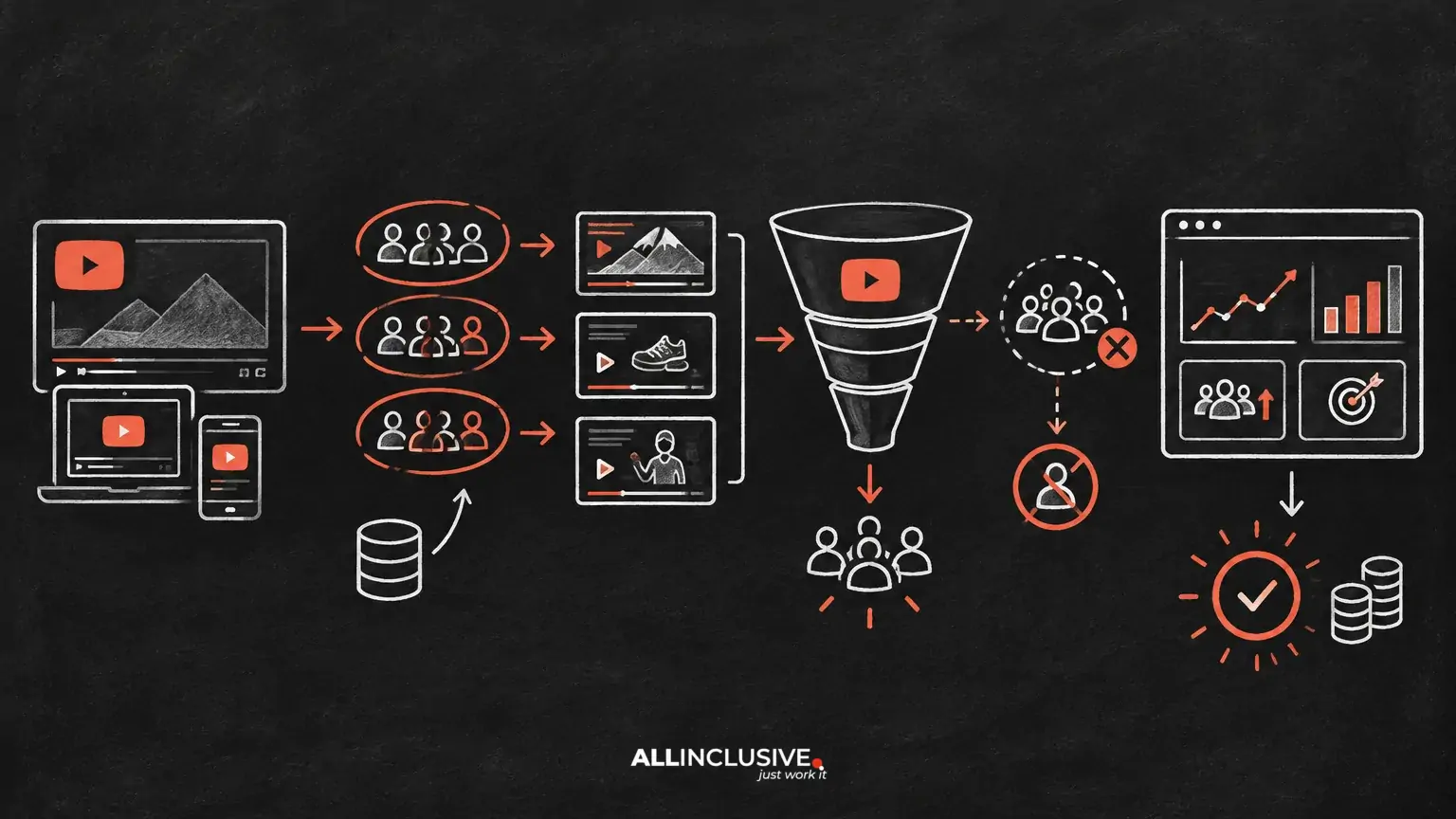
Advanced remarketing strategies are not defined by showing more ads to more visitors. They are defined by making better decisions about who should be reached, when they should be reached, what message they should receive and when advertising should stop.
For high-intent audiences, the central challenge is usually not generating another impression. It is separating meaningful buying signals from weak engagement, coordinating touchpoints across channels and preserving enough measurement quality to judge incremental value.
This guide presents a practical framework for building advanced remarketing programs. It focuses on audience qualification, sequential messaging, offer control, conversion-aware exclusions, creative testing and measurement. Platform-specific mechanics vary, so the strategy should come first and the implementation should follow each channel’s current capabilities.
What makes a remarketing strategy advanced?
Basic remarketing often uses a single audience, a single creative theme and a broad lookback window. That can be useful for initial coverage, but it treats very different prospects as if they had the same needs.
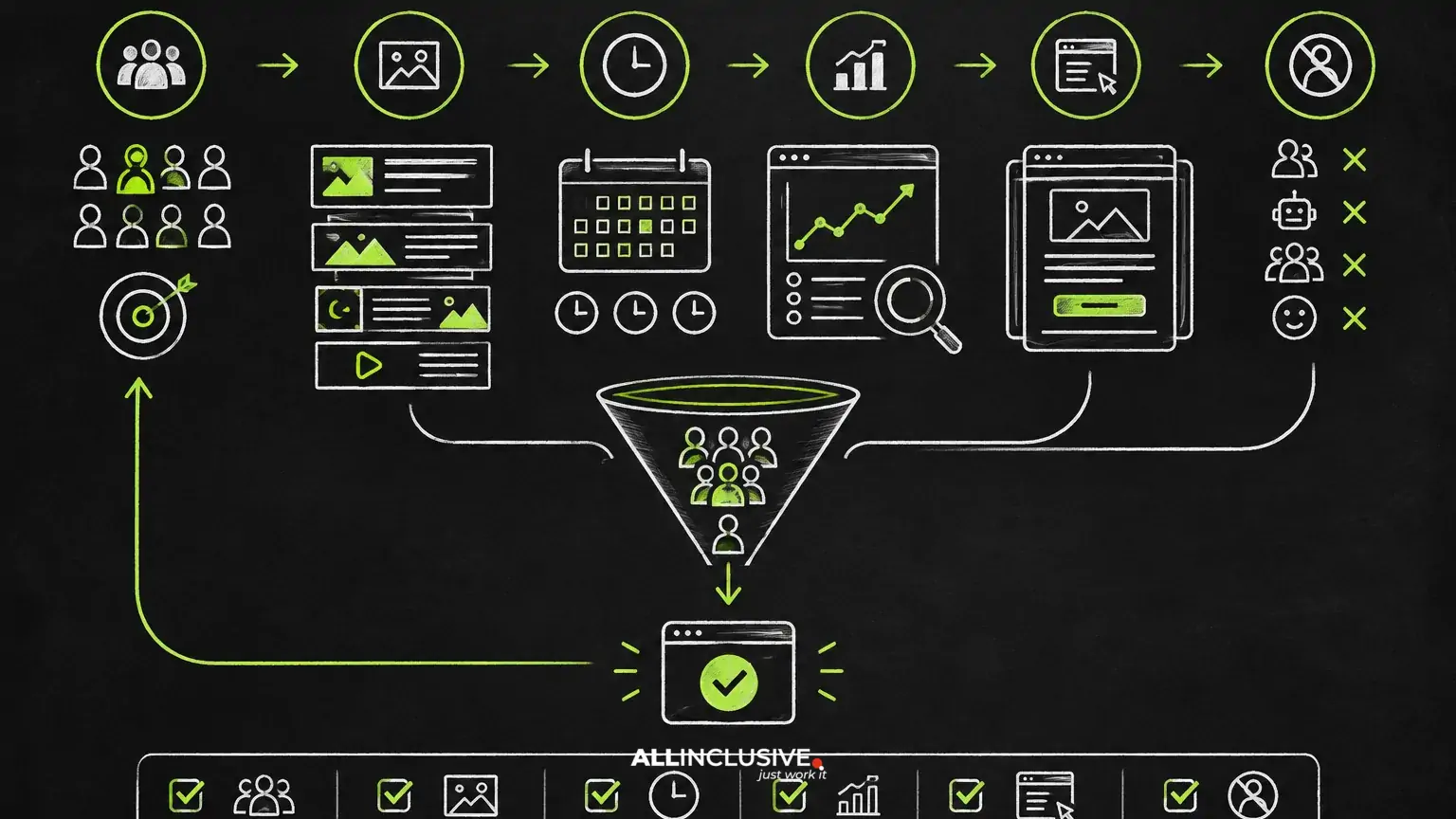
An advanced program typically introduces five forms of control:
- Intent qualification: audiences are grouped by actions that indicate different levels of purchase readiness.
- Message sequencing: creative evolves as the prospect moves from evaluation to decision.
- Offer governance: discounts, demonstrations, consultations or proof points are reserved for situations where they are strategically justified.
- Suppression logic: recent converters, disqualified leads, employees and low-value traffic are removed where appropriate.
- Measurement discipline: performance is assessed with attention to lead quality, revenue and incremental impact—not only platform-reported conversions.
The objective is not maximum remarketing reach. It is efficient progression toward a qualified business outcome.
Start with an intent-based audience architecture
Audience design should reflect the buying journey and the value of different actions. A visitor who reads one article should not automatically receive the same treatment as someone who reviews pricing, starts an application or requests a sales conversation.
1. Define intent tiers
A practical structure might include the following tiers:
- Exploratory: recent visitors with limited engagement or content readers who have not shown a product-specific signal.
- Evaluating: users who visit product, solution, comparison, integration or case-study pages.
- High intent: users who view pricing, complete a meaningful form step, interact with a booking flow or return several times within a defined period.
- Decision-stage: users who begin but do not complete a conversion action, such as a demo request, checkout, application or consultation.
- Post-conversion: customers or leads who may need onboarding, expansion, renewal or cross-sell communication rather than acquisition messaging.
The exact events depend on the business model. In B2B, a pricing-page visit may be valuable but not sufficient by itself. In ecommerce, product interaction and cart activity may provide stronger behavioral signals. The important principle is to document the business meaning of each event before turning it into an audience.
2. Add recency and frequency dimensions
Intent decays at different rates. A product-page visit yesterday may deserve more attention than the same visit six weeks ago, while a completed form may remain commercially relevant for longer.
Build separate recency bands where they support different actions, such as:
- Very recent visitors who may need a direct continuation of the experience they started.
- Mid-window evaluators who may benefit from proof, education or comparison content.
- Older visitors who should receive lighter-touch reactivation or be excluded if there is no continuing signal.
Frequency should also be treated as a control variable. If a user has seen several impressions without progressing, increasing exposure may create waste or negative perception. Use the available channel controls carefully, and supplement them with audience exclusions, shorter eligibility windows and creative rotation.
Use sequential messaging instead of repeating one proposition
High-intent prospects often need reassurance, not repetition. A sequence should answer the next unresolved question implied by the user’s behavior.
Example sequence for a B2B software evaluation
- Continuation: acknowledge the solution or category the prospect explored and clarify the primary use case.
- Proof: introduce relevant customer evidence, implementation detail or a credible explanation of how the solution works.
- Risk reduction: address switching effort, integration, security, procurement, support or time-to-value concerns.
- Decision prompt: invite a demo, consultation, trial or other next step with a clear expectation of what happens afterward.
- Reactivation: if the prospect remains inactive, use a new angle rather than endlessly repeating the original call to action.
Each stage should have a defined entry condition and exit condition. For example, a user may leave the proof stage after viewing a case study, completing a form, becoming sales-qualified or reaching the end of the eligibility window.
Sequential creative does not require perfect cross-channel identity resolution. It does require consistent campaign logic, agreed audience definitions and a clear hierarchy of messages. Where the channel cannot reliably enforce a sequence, treat the sequence as a planning framework rather than assuming delivery will occur in exact order.
Prioritize signals that predict business value
Not every engagement event deserves equal bidding priority. Build a signal hierarchy based on the likelihood that the event leads to a valuable outcome.
Useful inputs can include:
- Depth and type of product or service engagement.
- Visits to pricing, implementation, comparison or availability pages.
- Repeat visits within a commercially relevant period.
- Form completion, booking initiation or checkout progression.
- Firmographic, geographic or account-level fit where collection and use are appropriate.
- Offline outcomes such as qualified opportunities, purchases or retained customers.
In longer B2B cycles, connect remarketing analysis to CRM stages where possible. A campaign that produces inexpensive form fills but weak opportunities should not be judged successful solely on its front-end conversion count.
Decision rule: give greater strategic attention to signals that predict qualified revenue, not simply signals that are easy to count.
Coordinate remarketing across channels
High-intent audiences often encounter a brand through several paid and owned touchpoints. A coordinated plan prevents channels from competing to deliver the same message.
For example, search remarketing can support users who return to actively investigate a solution, while display or social placements can reinforce proof and address objections between active sessions. Email, sales outreach and lifecycle communications may carry the most specific next-step information when the user has provided permission and contact details.
Define the role of each channel:
- Demand capture: respond to active searches and returning evaluation behavior.
- Reinforcement: maintain familiarity and distribute proof between high-intent sessions.
- Education: explain fit, process, use cases or implementation requirements.
- Conversion support: remove friction from the next action and set expectations.
- Retention or expansion: communicate with existing customers separately from acquisition audiences.
Then establish exclusions and priority rules. A prospect who has submitted a demo request may need to leave acquisition remarketing immediately or move into a different communication track. Without this handoff, paid media can continue promoting an action the user has already completed.
For channel-specific structure and bidding considerations, see our guide to PPC remarketing strategy. For broader planning principles, explore the remarketing strategy pillar.
Match the offer to the friction
An advanced program does not default to a discount. The right offer depends on why the prospect has not progressed.
- Unclear fit: use a comparison guide, use-case explanation or qualification resource.
- Insufficient proof: use customer evidence, expert review, implementation detail or a relevant case study.
- Perceived complexity: offer a consultation, walkthrough or explanation of the process.
- Timing uncertainty: use planning resources, reminders or a clear statement of what can be done now.
- Price sensitivity: consider transparent value communication or a qualified commercial incentive, but protect margin and avoid training users to wait for promotions.
- Checkout or form friction: simplify the path, clarify requirements and remove unnecessary steps before increasing media pressure.
Offer testing should account for downstream quality. A stronger immediate conversion rate may be counterproductive if it lowers average order value, lead quality, retention or sales acceptance.
Build creative around objections and context
High-intent creative should be specific enough to feel relevant without implying that the advertiser knows more about the user than is appropriate. Avoid over-personalization that could create privacy concerns or an uncomfortable experience.
Develop creative variations by:
- Audience intent tier.
- Product or service category.
- Known objection or buying barrier.
- Funnel stage.
- Desired next action.
- Format and placement constraints.
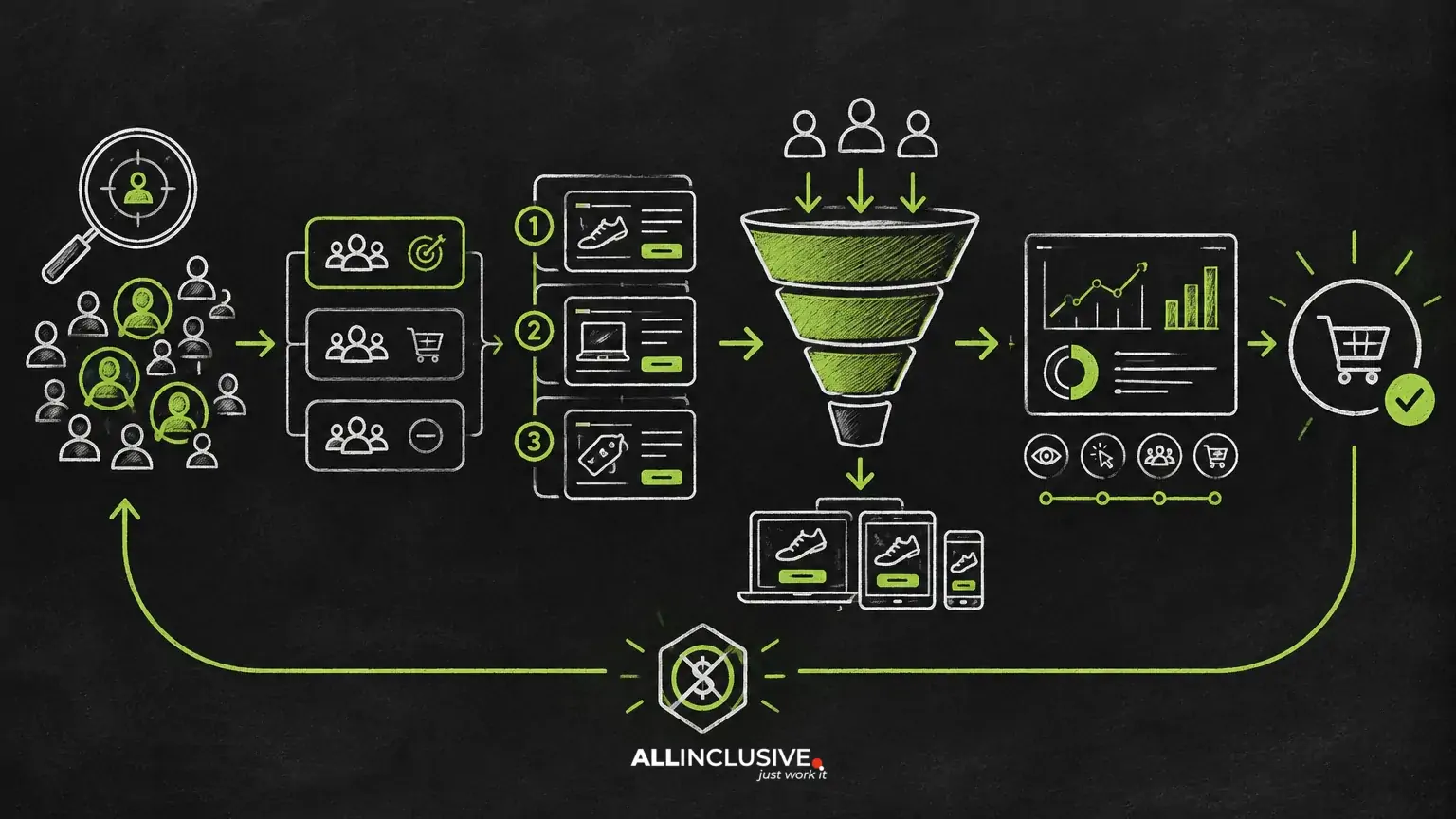
For ecommerce programs, product-level relevance may be appropriate when feed quality, availability and business rules are reliable. For a deeper treatment, read Dynamic Remarketing: How Feeds, Audiences and Creative Work Together.
For service businesses, context may come from the solution page or content topic rather than a specific product. Keep claims supportable, avoid unsupported urgency and make the landing-page experience consistent with the ad’s promise.
Use exclusions as actively as inclusions
Remarketing efficiency often improves when the program removes audiences that should not receive the current message. Common exclusion categories include:
- Completed converters, unless they belong in a retention or expansion campaign.
- Leads already being handled by a sales or customer-success process.
- Users who have reached an unqualified or disallowed status.
- Employees, partners, agencies and internal testers where identifiable and appropriate.
- Audiences whose consent, eligibility or data-use basis does not support the planned activation.
- Users who have exceeded the intended exposure or eligibility window.
Review exclusions whenever conversion paths change. A new thank-you page, CRM status, checkout flow or consent implementation can make an older audience rule incomplete.
Measure incrementality, not just attributed conversions
Remarketing audiences already contain people who have shown interest, so platform-attributed conversions do not automatically prove that advertising caused the outcome. Measurement should combine efficiency reporting with a test-and-learn approach.
Core measurement layers
- Delivery: reach, impressions, frequency, spend and placement quality.
- Behavior: engaged sessions, return visits, landing-page actions and conversion starts.
- Business outcomes: qualified leads, accepted opportunities, purchases, margin, revenue or retention indicators.
- Incrementality: results compared with a suitable holdout, geo test, audience split or other credible comparison where feasible.
Use a consistent attribution framework across channels, document reporting windows and separate new conversions from post-conversion activity. When sample sizes are limited, avoid presenting small differences as definitive conclusions. Directional evidence can still guide testing, but it should be labeled accordingly.
A practical implementation checklist
- Document the commercial goal and primary conversion.
- Map user actions to intent tiers and assign business meaning to each event.
- Set recency windows based on the buying cycle rather than habit.
- Define entry, progression and exit rules for each message stage.
- Assign a distinct role to each paid and owned channel.
- Create conversion, qualification and privacy-related exclusions.
- Build creative around objections, proof and the next best action.
- Validate landing-page continuity and conversion tracking before launch.
- Set frequency and budget guardrails, then monitor exposure and audience size.
- Evaluate quality and incrementality alongside attributed conversions.
- Schedule a review of audience rules, creative fatigue and business outcomes.
Teams that need a broader paid acquisition framework can use the paid media hub to connect remarketing with search, social, display and measurement planning. If the immediate focus is ecommerce, the guide to ecommerce remarketing strategies covers product, category and cart-related use cases in more detail.
Advanced Remarketing Strategies for High-Intent Audiences: Strategic Perspective
The strongest advanced remarketing strategies are built as decision systems, not as collections of retargeting ads. They distinguish intent, adapt the message to the prospect’s unresolved question, coordinate handoffs across channels and stop paying for communication that no longer fits.
Start with a small number of meaningful intent tiers, clear exclusions and a measurable sequence. Then expand only when the data shows that additional complexity improves qualified business outcomes. Sophistication should make the program more useful and accountable—not merely harder to operate.