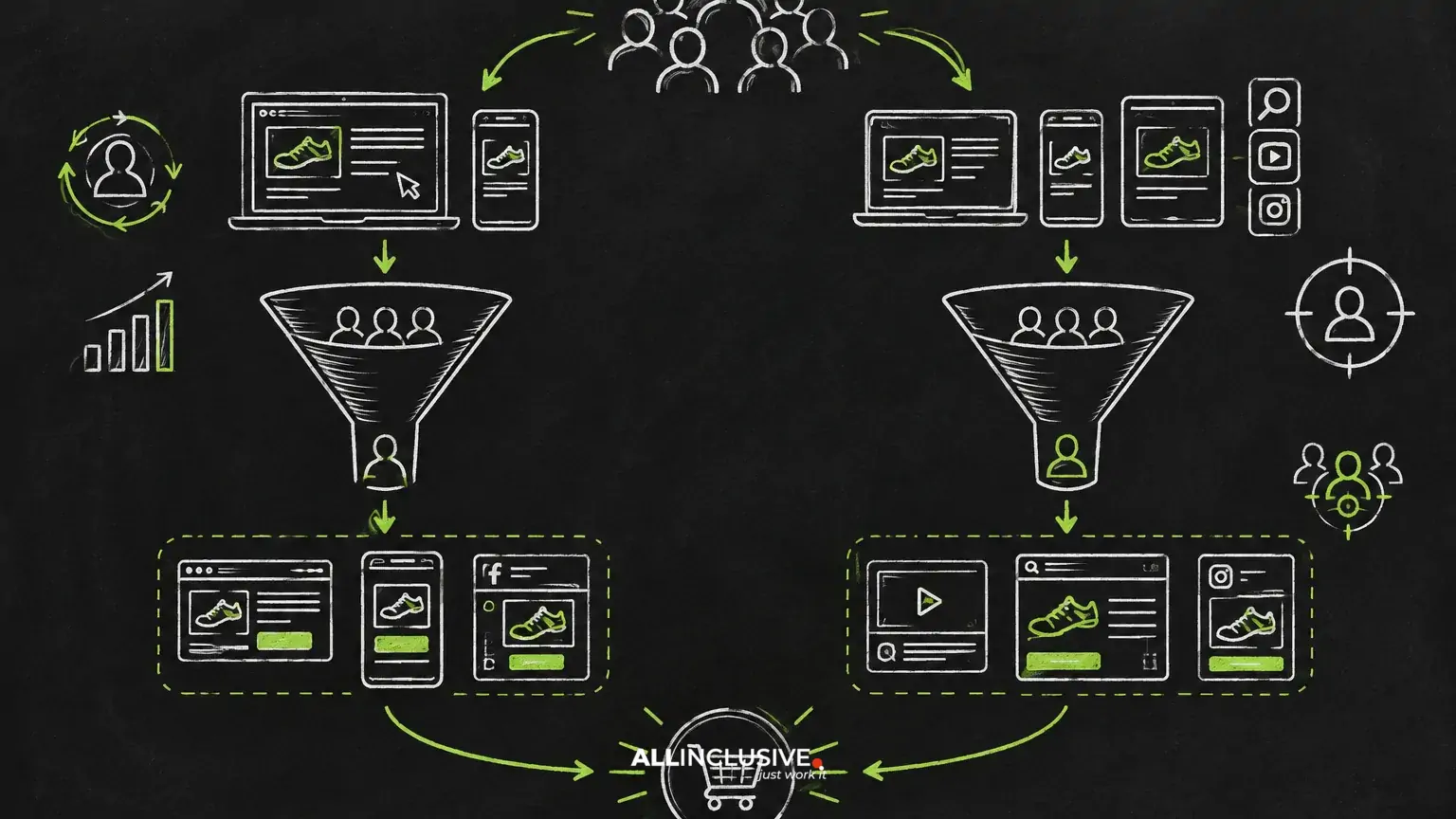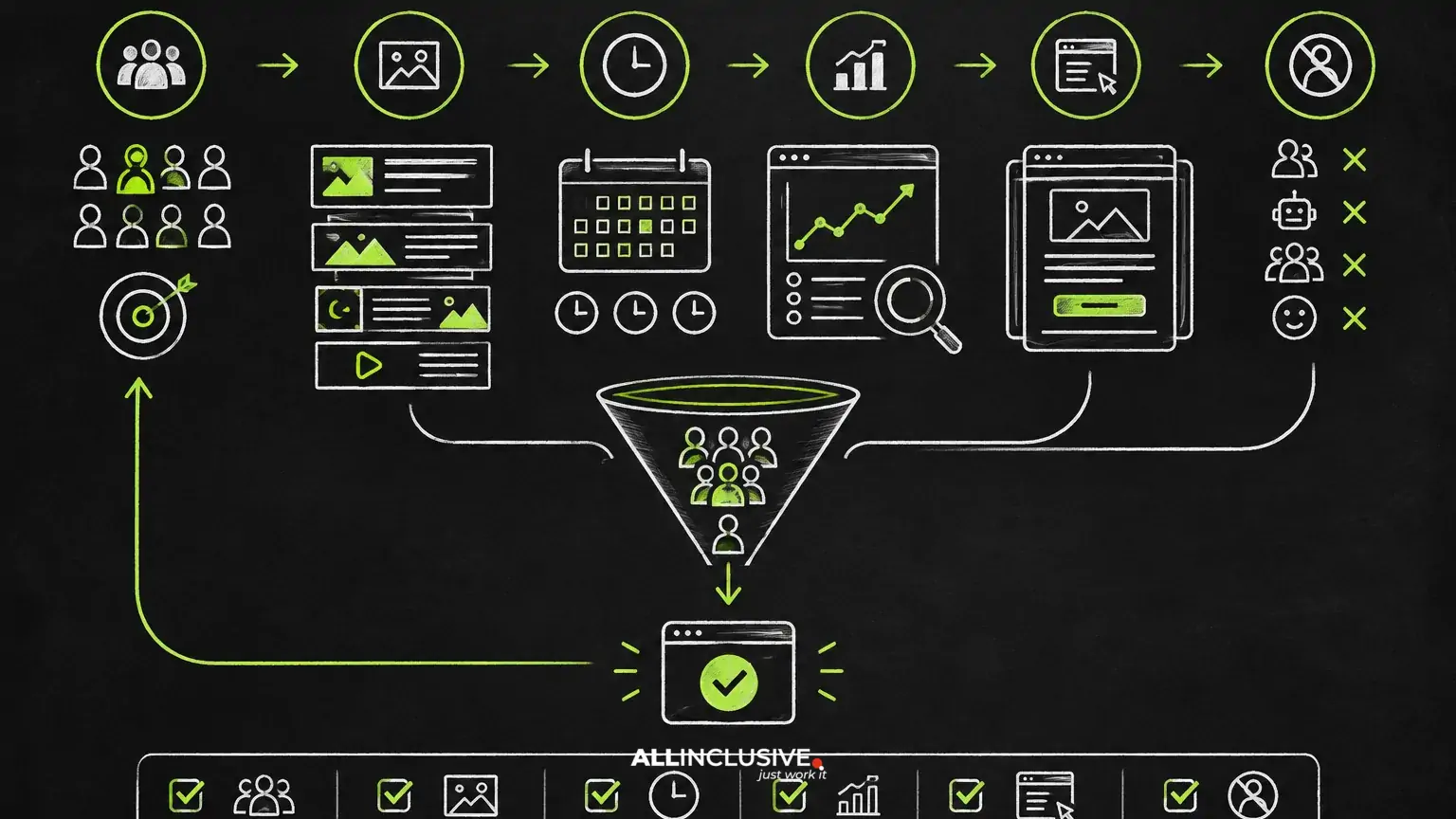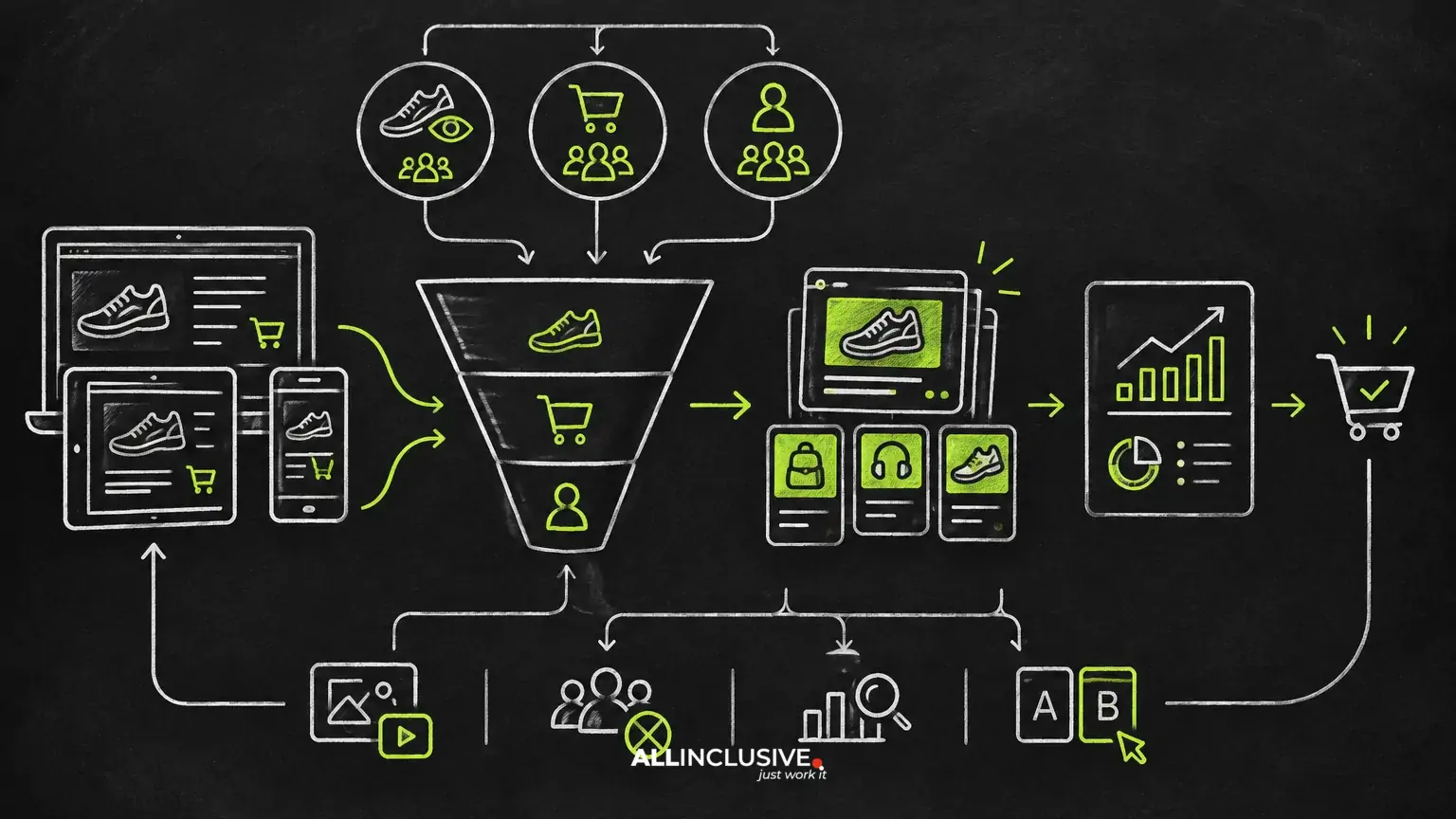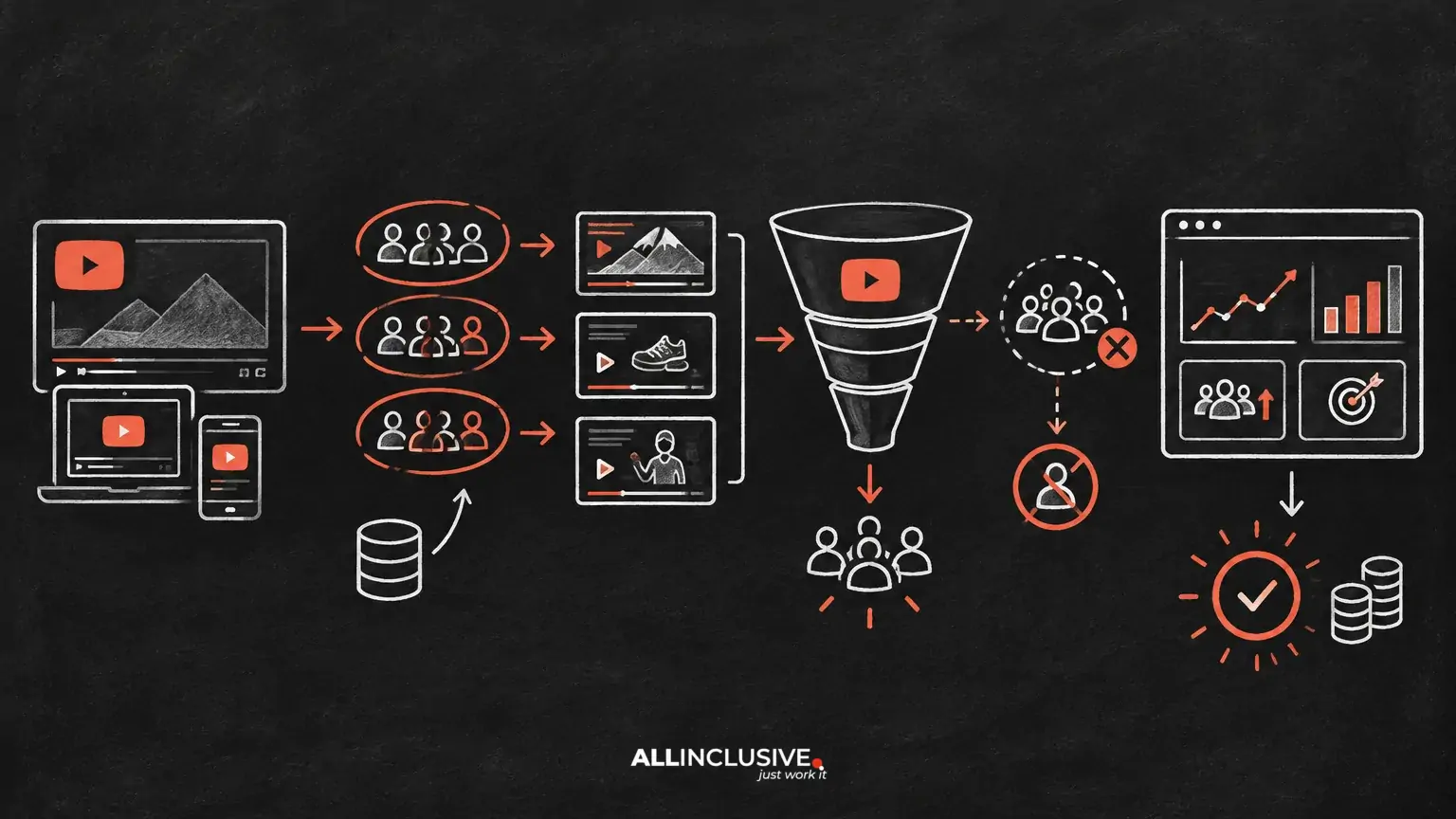
YouTube remarketing re-engages people who have already interacted with your brand, website, videos, or conversion path. The strongest programs do more than show the same ad repeatedly: they use audience signals and customer-stage context to decide what message should come next.
That makes YouTube remarketing especially useful for considered purchases, lead generation, subscriptions, and products that require education before conversion. A practical system has four parts: clear audience definitions, sequenced creative, deliberate exclusions, and measurement that separates direct response from assisted influence.
What YouTube remarketing should accomplish
Remarketing is not simply a cheaper form of prospecting. Its purpose is to move an identified or previously engaged audience toward a more valuable next action.
Examples include:
- Reintroducing a product to someone who visited a key landing page but did not convert.
- Answering objections after a person watched an educational video.
- Inviting a trial user to activate a feature or book an implementation call.
- Showing existing customers onboarding, cross-sell, or renewal content.
The right objective depends on the audience’s current relationship with the business. Someone who watched a short awareness video needs a different message from someone who reached a pricing page, started a form, or abandoned checkout.
Start with audience intent, not available lists
Build the remarketing structure around user behavior and business value. A useful hierarchy usually includes four layers.
1. Video engagement
These audiences have watched, interacted with, or otherwise engaged with video content. Segment them by the content consumed rather than treating all viewers as equivalent. A viewer of a product demonstration may be further along than someone who watched a broad category introduction.
2. Website behavior
Useful website segments can include visitors to product pages, solution pages, pricing pages, comparison pages, resource libraries, and high-intent forms. Page depth and recency often provide more strategic value than a large, undifferentiated visitor pool.
3. Conversion-stage behavior
Separate people who began but did not complete an action from people who completed it. Form starters, checkout abandoners, trial sign-ups, booked meetings, and purchasers each require distinct follow-up logic.
4. Customer and account status
Where permitted by the applicable privacy, consent, and data-use requirements, customer lists can support retention, expansion, suppression, or account-based messaging. The creative should reflect the relationship: customer education is not the same as acquisition remarketing.
For broader audience architecture, see YouTube Ads Targeting: Audiences, Keywords, Placements and Custom Segments.
Use recency windows to reflect buying momentum
Recency is a strategic variable. A recent pricing-page visitor may need reassurance or a direct next step, while an older video viewer may need a fresh explanation of the problem and solution.
Rather than choosing windows solely because they are available in the interface, ask how quickly intent decays in your buying cycle. A useful framework is:
- Recent engagement: direct response, proof, demo, consultation, or checkout messaging.
- Mid-funnel engagement: comparisons, implementation detail, objections, and use cases.
- Older engagement: refreshed education, category relevance, or a low-friction re-entry offer.
Recency segments also help control fatigue. If a person qualifies for several audiences at once, establish a priority order so the most relevant message wins.
Design audience sequences around the next question
A sequence is not merely a series of videos. It is a progression of questions the buyer needs answered.
- Recognition: Does this solution address my problem?
- Relevance: Is it suitable for my situation or organization?
- Confidence: Can I trust the provider and the expected process?
- Action: What should I do next, and what will happen afterward?
For example, a B2B software sequence might begin with a short explanation of a costly workflow problem, follow with a product demonstration, then address security or implementation concerns, and finish with an invitation to request a consultation. A consumer sequence may move from product education to comparison, social proof, and purchase.
Keep the sequence tied to observable behavior. If someone watches the demonstration, move them to proof or objection-handling creative. If they visit pricing but do not convert, do not send them back to a generic awareness video unless there is a clear reason.
Match creative to audience temperature
Warm but lightly engaged audiences
People who watched introductory content or visited a broad page often need a concise reminder of the problem and a reason to investigate further. Use a clear hook, one relevant benefit, and a low-friction call to action such as viewing a guide or exploring a use case.
High-intent visitors
Pricing-page visitors, repeat product-page visitors, and form starters usually need risk reduction rather than more category education. Creative can address implementation, support, contract considerations, common objections, or what happens after the inquiry.
Abandoners
Abandonment is a signal, not an explanation. Avoid assuming why the person stopped. Test creative that simplifies the next step, clarifies the offer, answers a likely concern, or provides a way to continue without repeating the entire journey.
Existing customers
Customer remarketing should serve retention or expansion goals. Feature education, onboarding reminders, training, complementary products, and renewal support are more appropriate than acquisition-oriented claims.
For principles that apply across prospecting and remarketing, review YouTube Ad Creative: Hooks, Story Structure and Calls to Action.
Build creative variation without losing the message
Variation should solve a communication problem, not create random asset volume. Develop versions that change one meaningful dimension at a time:
- Hook: lead with the operational problem, desired outcome, or objection.
- Proof: use a demonstration, customer experience, process explanation, or concrete use case.
- Length: provide concise and fuller versions for different attention levels.
- Speaker: test a subject-matter expert, customer voice, founder, or product narrator where appropriate.
- Call to action: align the action with the audience’s readiness rather than using a generic sales request.
Do not evaluate every asset only by immediate conversion volume. A top-of-sequence video may create qualified engagement while a later asset captures the final click. Creative should be assessed within the role it plays in the journey.
Use exclusions to protect relevance and efficiency
Exclusions are central to remarketing design. At minimum, consider excluding recent converters from acquisition or lead-generation sequences, unless they are intentionally being moved into a customer program.
Additional exclusions may include:
- People already assigned to a higher-priority audience.
- Employees, agencies, or internal traffic where identifiable and appropriate.
- Unqualified actions that should not receive high-intent follow-up.
- Customers who should receive retention or expansion messaging instead.
- People who have completed the intended action for the sequence.
Apply a frequency approach that reflects audience size, buying cycle, and creative depth. Small audiences with few assets can experience repetition quickly. If delivery becomes concentrated, add creative alternatives, widen the relevant recency window, reduce overlap, or pause the segment while the next asset is prepared.
Connect landing pages to the sequence
A strong video cannot compensate for a mismatched destination. The landing page should continue the same promise, stage, and vocabulary as the ad.
For each audience, document:
- The problem or intent signal that qualifies the person.
- The claim or question addressed in the video.
- The next action the landing page should support.
- The proof, detail, or reassurance needed to complete that action.
A pricing-page visitor may need a consultation page with implementation information. A content viewer may be better served by a relevant guide or use-case page. Keep the path coherent and make the next step understandable before asking for extensive information.
Measure YouTube remarketing beyond last-click conversions
Remarketing can influence people who later convert through another channel, direct visit, branded search, sales contact, or return session. That does not mean every exposed conversion should be credited to video. It does mean last-click reporting alone can understate the role of the sequence.
Use a measurement framework that separates:
- Direct outcomes: conversions attributed under the selected platform and analytics rules.
- Engagement outcomes: qualified video views, site visits, key-page visits, or form starts.
- Assisted behavior: later conversions involving other channels or sessions.
- Business outcomes: qualified pipeline, revenue, activation, retention, or customer expansion where data is available.
Before launch, define the primary conversion, secondary signals, attribution view, conversion windows, and reporting owner. Compare audience segments by intent and sequence stage, not only by blended account averages. For measurement concepts and limitations, see YouTube Ads Measurement: View-Through, Lift and Conversions.
YouTube Remarketing: Implementation Checklist
- Map the customer journey and identify meaningful engagement events.
- Group audiences by intent, recency, and customer status.
- Define the next question each audience needs answered.
- Create a sequence with a clear role for every asset.
- Set exclusions and priority rules before launch.
- Align each ad with a relevant landing-page experience.
- Set primary, secondary, and business outcome measurements.
- Review reach, repetition, engagement quality, conversion behavior, and audience overlap.
- Refresh creative when the message is no longer relevant or delivery becomes concentrated.
YouTube Remarketing: Strategic Perspective
Effective YouTube remarketing is a managed conversation with people who have already shown interest. The advantage comes from recognizing what they did, inferring what they may need next, and delivering creative that reduces uncertainty without repeating the same message.
For a broader view of planning, activation, and optimization across paid channels, visit Allinclusive paid media. To place this approach within the wider channel discipline, explore YouTube advertising.