Effective youtube ads creative does more than make a video look polished. It must earn attention quickly, communicate a relevant promise, build enough understanding to support action and make the next step obvious. The strongest concepts are designed around the viewer’s context and the campaign objective—not simply adapted from a brand film.
This guide explains how to plan YouTube ad creative, structure the message, write stronger hooks and calls to action, and build a testing system that produces useful learning. For broader channel strategy, see our YouTube advertising guide.
Start with the campaign job
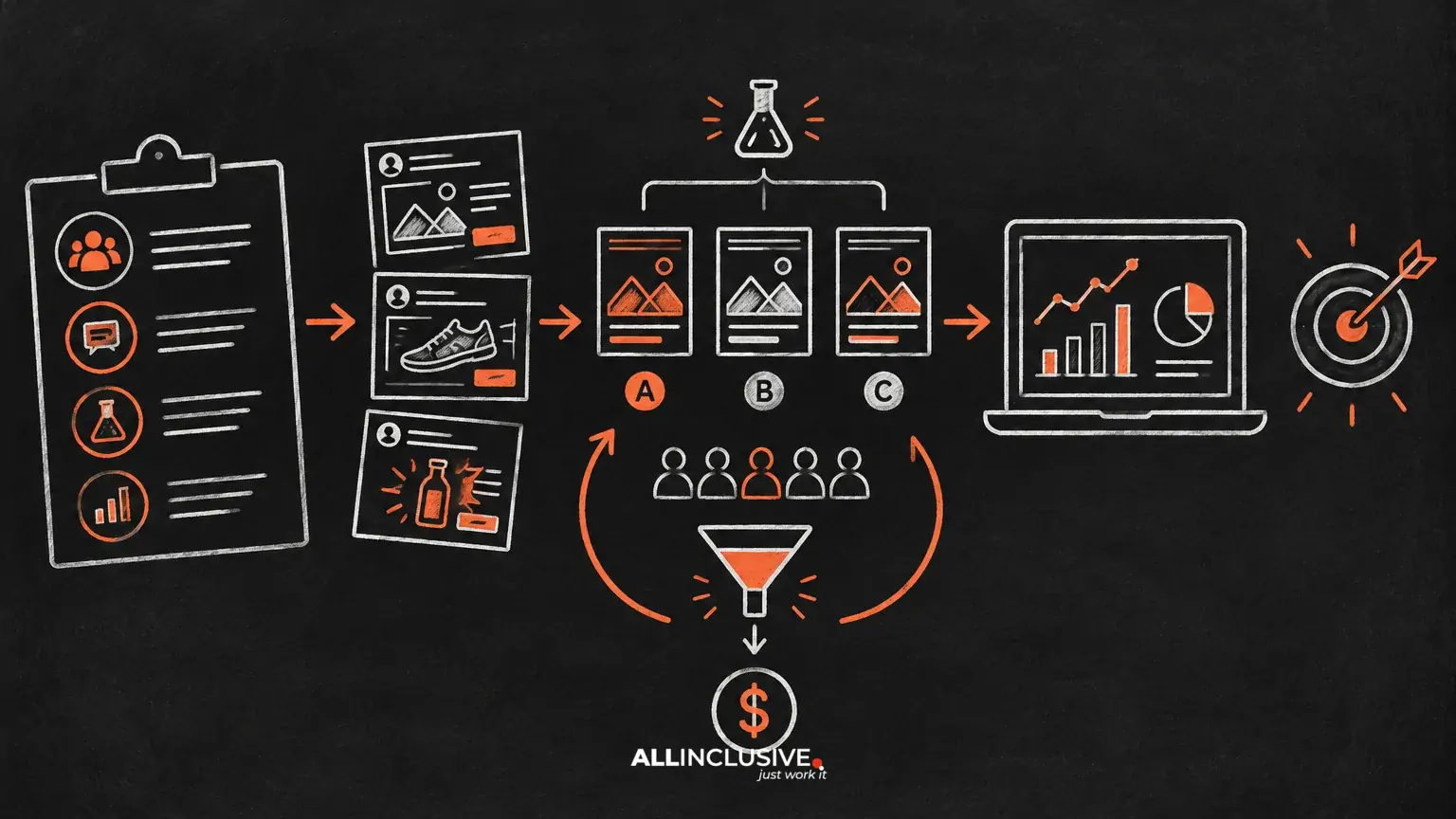
Before writing a script, define what the ad needs to accomplish. Creative for prospecting should usually create recognition and interest. Creative for a high-intent audience may need to remove objections, demonstrate a workflow or make conversion easier. A remarketing ad can assume more familiarity, but it still needs a specific reason to act now.
Write the campaign job in one sentence:
- Audience: Who is seeing the ad and what do they already know?
- Problem: What business problem, risk or desired outcome is relevant?
- Promise: What value will the viewer understand from the ad?
- Proof: What evidence makes the promise credible?
- Action: What should the viewer do next?
This brief prevents a common failure: trying to explain the entire company in one video. A focused ad gives one audience one reason to continue.
Build the hook around relevance
The opening seconds are not a request for attention; they are an opportunity to demonstrate relevance. A useful hook can identify a problem, challenge a familiar assumption, show a compelling outcome or create curiosity about a specific mechanism.
Four practical hook patterns
- Problem recognition: “If your paid video campaigns generate views but few qualified leads, the issue may be the message—not the reach.”
- Outcome first: Show the end state or business result, then explain how the viewer can get there.
- Contrarian insight: Question a common approach when you can clearly explain the alternative.
- Demonstration: Put the product, workflow or transformation on screen immediately.
A hook should be specific enough to qualify the audience. Broad claims such as “Everything is changing” rarely give a viewer a reason to continue. A stronger opening names a recognizable situation, audience or decision.
Test the idea, not just the wording. Two hooks can use different language while expressing the same underlying concept, making it difficult to learn whether performance came from the opening or from a broader creative angle.
Use a simple story structure
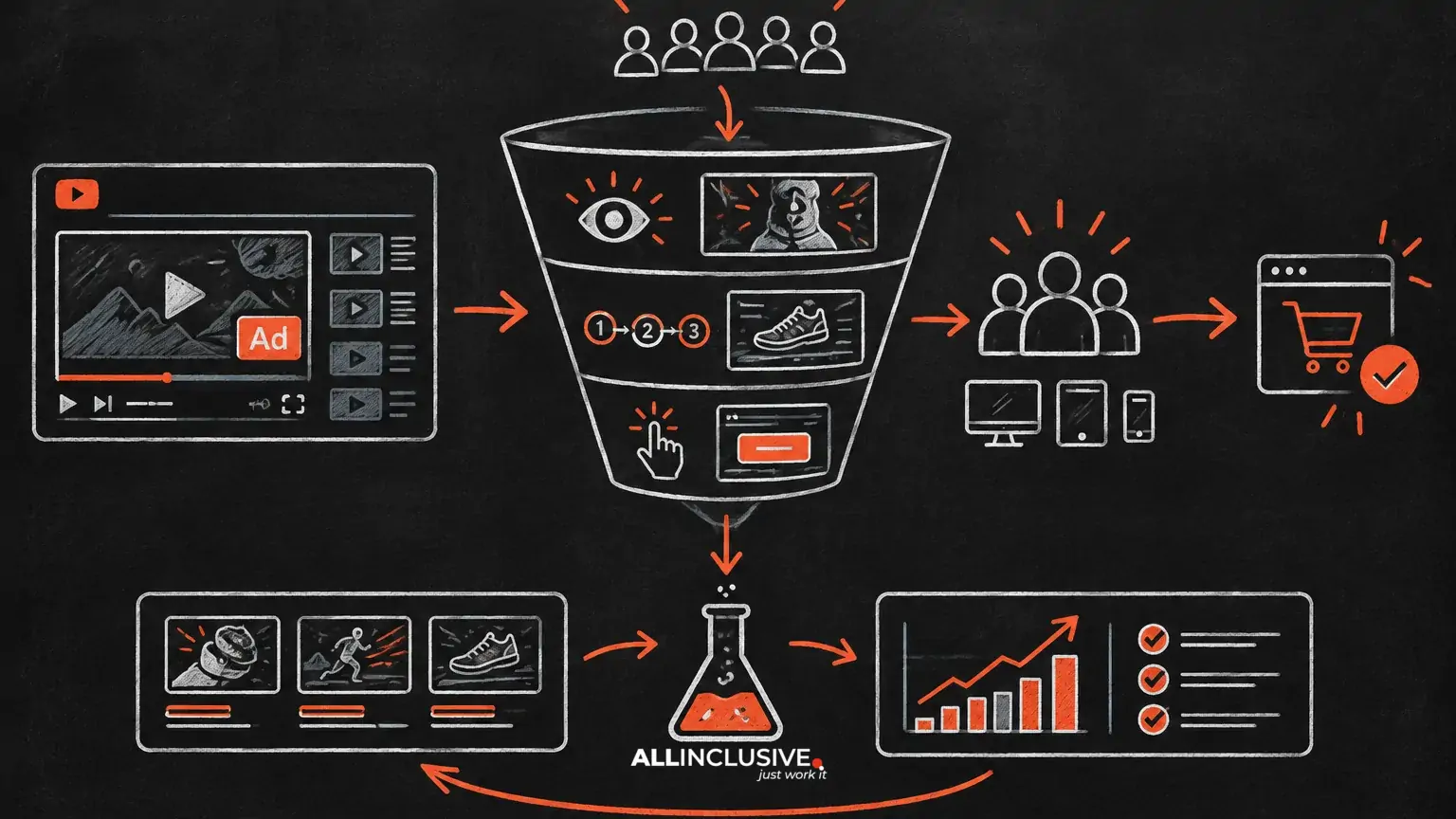
Most performance-oriented YouTube ads do not need a complex narrative. They need a sequence that matches the viewer’s decision process. A flexible structure is:
- Attention: Introduce the relevant problem, tension or outcome.
- Context: Explain why the issue matters to this audience.
- Solution: Show how the product, service or point of view addresses it.
- Proof: Add a demonstration, process, customer perspective, comparison or other credible support.
- Action: Tell the viewer what to do next and what they can expect.
This structure can be compressed for short placements or expanded when the offer requires more explanation. The sequence matters more than a fixed duration. Remove repetition before removing the information needed to make a decision.
Match the structure to the buying stage
For awareness, lead with a recognizable problem or useful insight. The ad’s job is to make the audience care and remember the category or point of view. For consideration, use more demonstration and proof. Viewers need to understand how the solution works and why it is credible. For conversion, prioritize clarity: the offer, the fit, the key objection and the next step.
If the campaign uses audience sequencing, vary the creative role rather than repeating the same introduction. An initial video can frame the problem, a follow-up can demonstrate the solution, and a later ad can address an objection or invite a direct response. See our guide to YouTube remarketing for more on sequencing and audience context.
Make the message easy to process
Video gives you sound, visuals, movement and on-screen text, but more information is not automatically more persuasive. Each element should reinforce the same central idea.
- Use spoken language that sounds natural when read aloud.
- Show the product, process or evidence rather than describing everything abstractly.
- Keep on-screen text brief and legible at the intended viewing size.
- Use visual changes to support the story, not to create distraction.
- Repeat the core value proposition when the ad is long enough to support repetition.
Write a one-sentence message hierarchy before production. The first sentence is the main promise, the second explains how it works, and the third identifies the proof or next step. If the script contains several competing promises, choose one primary message and treat the others as support.
Design calls to action that reduce uncertainty
A call to action should answer three questions: what should the viewer do, why should they do it, and what happens next? “Learn more” may be appropriate when the next page contains education, but it provides little guidance by itself.
Stronger calls to action connect the action to the viewer’s intent:
- “See how the workflow works.”
- “Compare the approach and review the implementation steps.”
- “Book a consultation to discuss your use case.”
- “Download the planning checklist and evaluate your current setup.”
Use one primary action in most ads. Multiple competing CTAs can weaken the decision, especially when the viewer has limited context. The landing page should continue the same promise and language so the transition feels expected rather than abrupt.
Choose formats and executions deliberately
Creative should reflect where and how the ad will be experienced. A horizontal long-form concept may require a different opening and visual rhythm when adapted to vertical short-form inventory. A product demonstration may work well in an in-feed environment, while a direct-response message may benefit from a clear spoken explanation and visible proof.
Do not treat every placement variation as a new strategic concept. Keep the core promise consistent while adapting framing, pacing, captions, safe areas and visual composition. For a comparison of available placements and formats, review YouTube ads formats.
Plan for sound-off and sound-on viewing
Audio can carry tone, explanation and credibility, but important meaning should not depend on audio alone. Use captions or on-screen reinforcement where appropriate, and ensure the opening visual communicates enough context to sustain interest. At the same time, avoid turning the ad into a dense block of text that competes with the speaker or demonstration.
Create a testing matrix
Testing works best when each variation has a defined hypothesis. Instead of producing several superficially different edits, vary meaningful dimensions:
- Hook: problem, outcome, demonstration or insight.
- Presenter: founder, subject-matter expert, customer voice or voiceover.
- Proof: product walkthrough, customer evidence, process explanation or comparison.
- Offer: education, consultation, trial, demo or content download.
- Style: direct-to-camera, screen recording, live action, animation or hybrid.
Keep the test interpretable. If the hook, offer, landing page and audience all change at once, performance may move without revealing why. Establish a control concept, document the intended variable and use consistent naming in the asset library.
Evaluate creative against the campaign objective. Attention indicators can show whether the opening is working, while downstream engagement and conversion signals help assess message quality and traffic fit. A high view rate does not automatically mean the ad is producing qualified demand. For measurement design, see YouTube ads measurement.
Diagnose creative problems by symptom
Viewers leave early
Check whether the opening is relevant, specific and visually clear. The ad may be starting with brand context before establishing a reason to care. Try leading with the problem, outcome or demonstration.
Viewers watch but do not act
The ad may be entertaining without making the offer or next step clear. Review the message hierarchy, proof and CTA. Also check whether the landing-page experience continues the same promise.
Clicks arrive but lead quality is weak
The creative may be attracting broad curiosity rather than the intended buyer. Add qualifying language, show the use case more precisely and make the offer reflect the real decision stage.
The message is understood but not remembered
Look for a stronger distinctive asset: a consistent visual device, memorable demonstration, clear point of view or concise phrase. Repetition should reinforce the central idea rather than repeat every line.
Use a production-ready creative brief
A useful brief can fit on one page. Include the audience, campaign job, primary insight, single-minded promise, proof points, hook options, required product moments, CTA, landing page, format adaptations and measurement plan. Add exclusions such as unsupported claims, unnecessary features or jargon that the audience may not understand.
Before launch, review the complete journey: audience, ad, CTA, landing page and follow-up. Creative is not an isolated asset. It is the first part of a conversion path, and its quality depends on whether the promise remains credible after the click.
Final checklist for YouTube ad creative
- Does the opening establish relevance quickly?
- Is there one primary promise?
- Does the story explain the problem, solution and proof in a logical order?
- Can the key message be understood with limited audio dependence?
- Does the CTA state a specific next step and set expectations?
- Are format adaptations intentional rather than simple crops?
- Does each test have a clear hypothesis?
- Will the measurement plan distinguish attention from qualified business outcomes?
Strong YouTube creative is disciplined communication: a relevant opening, a focused narrative, credible proof and a clear next action. Build the system around those decisions, then use testing to improve the parts that influence the campaign objective.
For a wider view of channel planning, measurement and execution across paid channels, visit our paid media resources.