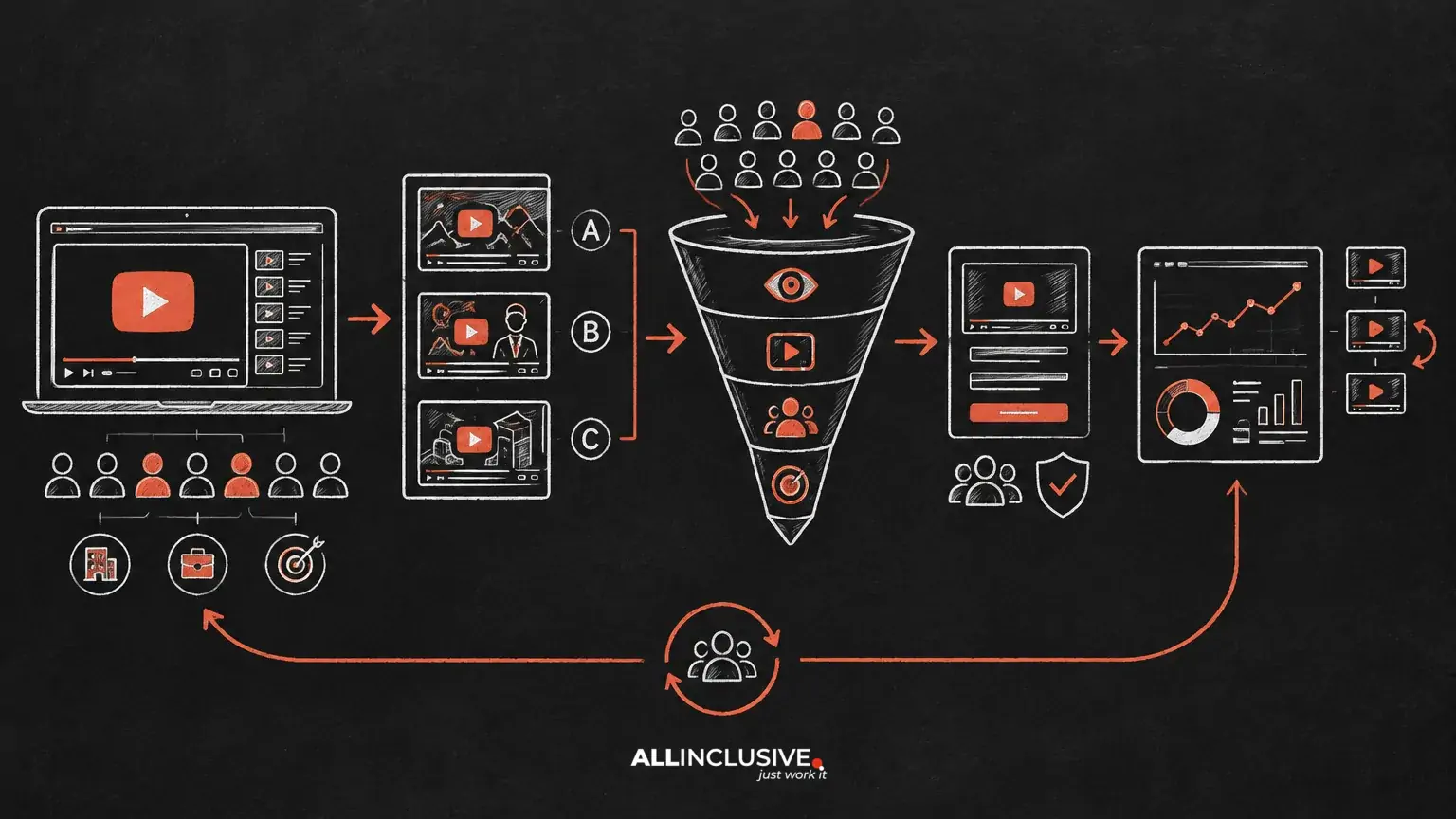
YouTube ads formats differ in how they appear, when viewers can skip them and what kind of response they are best suited to generate. The right choice depends less on selecting a universally superior format and more on matching the placement, message and measurement plan to the campaign objective.
For broad video reach, skippable in-stream ads offer flexible storytelling and efficient exposure. Non-skippable ads provide more controlled attention but require concise creative. Shorts ads are built for vertical, mobile-first viewing, while in-feed ads reach people as they browse video content and decide what to watch.
This guide explains the main formats, when to use each one and how to build a practical testing plan.
What are YouTube ads formats?
YouTube ad formats are the delivery environments and viewing experiences available for paid video advertising on YouTube and eligible video inventory. Format affects the viewer’s relationship with the ad: they may encounter it before or during a video, see it within the Shorts feed or choose to watch it from a discovery surface.
Format is only one part of campaign design. Audience, bidding, creative, landing-page experience and conversion tracking all influence performance. A strong media plan treats the format as a strategic constraint and opportunity, not as a substitute for positioning or testing.
1. Skippable in-stream ads
Skippable in-stream ads play before, during or after video content, with viewers generally able to skip after the platform’s permitted viewing threshold. The exact buying and reporting mechanics can vary by campaign setup, so advertisers should confirm current settings in the relevant Google Ads workflow.
Why use skippable in-stream?
- Flexible storytelling: You can communicate a problem, point of view and solution in a longer narrative while making the opening seconds work independently.
- Efficient qualification: Viewers who continue watching may signal stronger interest than someone who sees only the opening.
- Versatile objectives: The format can support awareness, consideration, website visits or conversion-oriented campaigns, depending on the campaign type and optimization signals.
- Creative learnings: Skip behavior, view quality and downstream actions can help identify which hooks attract relevant prospects.
Limitations and risks
Skippable inventory is unforgiving when the value proposition arrives late. Many viewers will make a decision about relevance immediately. A polished brand film can still underperform if it does not establish the audience, problem or benefit quickly.
Do not judge the format only by completed views. For a B2B campaign, a shorter viewing rate may be acceptable if the ad generates qualified site visits, content engagement or sales conversations. Conversely, high view completion without meaningful business action may indicate entertainment value without commercial relevance.
Best use cases
- Explaining a complex product or category
- Introducing a differentiated point of view
- Building demand among prospects who need education
- Testing multiple hooks before investing in longer-form production
2. Non-skippable in-stream ads
Non-skippable in-stream ads are designed to be viewed without a skip option during the applicable ad experience. Availability, duration limits and buying conditions can depend on the inventory and campaign configuration, so treat current platform documentation as the source of truth for implementation details.
Why use non-skippable ads?
- More controlled exposure: The core message has a greater chance of being seen in full.
- Strong reach planning: The format can support campaigns where consistent exposure to a defined audience matters.
- Simple communication: A focused proposition can work well when the audience needs to remember one key idea.
Creative requirements
Non-skippable does not mean the viewer is attentive. The first seconds still need to earn attention through clear visual movement, a relevant situation, a compelling claim or an immediately recognizable brand cue. Use one primary message and make the call to action easy to understand.
Avoid forcing a skippable-style long narrative into a non-skippable placement. Build the edit around a single takeaway, then use supporting proof rather than several competing benefits.
Best use cases
- Brand awareness and message reinforcement
- Launching a new category or offer
- Reaching a defined audience with a concise proposition
- Supporting broader campaigns that need consistent video exposure
3. YouTube Shorts ads
Shorts ads appear in the vertical Shorts viewing experience. They compete with creator-led, fast-moving content, so the creative should feel native to mobile viewing without copying trends that do not fit the brand.
Shorts is not simply a smaller version of a horizontal video ad. It requires vertical composition, legible captions, immediate context and a message that survives rapid scrolling. Audio can contribute, but the ad should remain understandable when viewers are watching silently or in environments where sound is not prominent.
What makes Shorts creative effective?
- Vertical-first framing: Keep the subject, product and key visual information inside a safe central area.
- Immediate context: Show the problem, outcome or audience early rather than beginning with a long logo animation.
- Fast visual progression: Use changes in framing, demonstrations, on-screen proof or purposeful motion to maintain attention.
- Readable overlays: Keep text brief and large enough for mobile viewing.
- Platform-appropriate tone: Native does not have to mean informal, but it should feel designed for the feed rather than repurposed without editing.
For a deeper treatment of the placement, see YouTube Shorts Ads: Creative, Targeting and Measurement.
4. In-feed video ads
In-feed ads appear in discovery contexts where people are choosing what to watch, such as search results or content feeds. Unlike an interruption-based in-stream placement, the viewer may actively select the video after seeing its thumbnail, headline and surrounding context.
Why in-feed ads matter
In-feed placements can be useful when the campaign depends on qualified attention rather than simply maximizing completed exposure. The viewer has demonstrated enough interest to consider watching, which makes the packaging—the thumbnail, title and opening seconds—especially important.
This format is often a strong fit for educational video, product explainers, category comparisons and thought leadership. It can also support demand capture when the creative aligns with the viewer’s information need.
Packaging and creative considerations
- Use a clear title that reflects the viewer’s likely question or problem.
- Design a thumbnail that communicates one idea without relying on tiny text.
- Ensure the opening delivers on the promise made by the title and thumbnail.
- Separate curiosity from clickbait: attracting an unqualified click can weaken downstream efficiency.
- Use a clear next step, such as a relevant guide, product page or consultation path.
How the main formats compare
The following comparison is a strategic framework rather than a fixed performance ranking. Results depend on audience, creative quality, campaign objective, inventory and measurement.
- Skippable in-stream: Best for flexible storytelling, consideration and conversion testing. The opening must work before the viewer skips.
- Non-skippable in-stream: Best for controlled exposure and concise awareness messaging. The creative must earn attention despite the lack of a skip option.
- Shorts: Best for mobile-first reach and rapid, visually led communication. Vertical-native production is essential.
- In-feed: Best for discovery, education and viewer-selected attention. Thumbnail and title quality are central to the experience.
How to choose a YouTube ad format
Start with the business objective
Define the outcome before choosing the placement. An awareness campaign may prioritize reach and message recall. A consideration campaign may need qualified video engagement or site visits. A lead-generation campaign needs a credible offer, a measurable conversion path and enough audience signal for optimization.
Do not ask one format to perform every job. A campaign can use short reach-oriented assets to establish familiarity and longer or more educational assets to support evaluation.
Match the message to the viewing context
Ask how much explanation the proposition requires. A simple offer may work in a concise non-skippable edit. A technical B2B product may need a skippable narrative or in-feed explainer. A visual demonstration may translate well to Shorts if the result is obvious without extensive context.
Consider audience temperature
Cold audiences generally need a fast explanation of relevance and a low-friction next step. Warm audiences may respond to proof, comparison, objection handling or a more specific offer. Format should support that stage rather than force every viewer into a sales message.
Plan for the landing experience
The ad promise and landing page should form a continuous argument. If the video promotes a guide, send viewers to the relevant guide—not a generic homepage. If the video demonstrates a product capability, the destination should make that capability easy to verify.
A practical testing framework
- Choose one primary objective. Define the business action that matters and the supporting indicators that help explain performance.
- Build format-specific edits. Do not resize one master video and assume it will work everywhere. Create versions for horizontal in-stream, vertical Shorts and in-feed discovery where relevant.
- Test the opening separately from the body. Develop multiple hooks around the same offer so you can learn whether performance is driven by framing, audience or production style.
- Keep the offer and destination consistent during the first comparison. Changing format, message, audience and landing page simultaneously makes results difficult to interpret.
- Evaluate quality, not only volume. Review view behavior, engaged visits, lead quality, conversion rate and sales feedback where available.
- Refresh based on evidence. Replace weak hooks, clarify the offer or adjust the audience before concluding that the format itself cannot work.
Measurement considerations by format
Each format creates different expectations for measurement. In-stream formats can be assessed through exposure and viewing behavior, but those metrics should be connected to brand or business outcomes. In-feed performance must account for the interaction between packaging and video engagement. Shorts requires attention to mobile behavior and the quality of traffic or actions it generates.
Use consistent conversion definitions and attribution settings across tests where possible. Review assisted and post-view behavior carefully, especially when the campaign objective is awareness. Platform-reported conversions can be useful for optimization, but they should be interpreted alongside analytics, CRM data and sales-quality feedback.
For a broader measurement framework, see YouTube Ads Measurement: View-Through, Lift and Conversions. Audience and placement decisions should also connect with your YouTube Ads Targeting: Audiences, Keywords, Placements and Custom Segments strategy.
YouTube Ads Formats: Mistakes to Watch For
- Choosing a format because it is familiar: Familiarity is not a business objective.
- Using one edit everywhere: Aspect ratio, pacing and viewer intent differ by placement.
- Delaying the proposition: Establish relevance before spending time on background or brand history.
- Overloading the message: One memorable benefit is usually stronger than a list of undifferentiated claims.
- Optimizing to cheap attention: Low-cost views are not automatically valuable if they do not reach or influence the intended audience.
- Ignoring brand clarity: Make the advertiser identifiable without allowing branding to replace the message.
YouTube Ads Formats: What to Prioritize
The best YouTube ads formats are the ones that fit the audience’s viewing context, the complexity of the message and the action you want to influence. Use skippable in-stream for flexible storytelling, non-skippable placements for concise controlled exposure, Shorts for vertical mobile-first communication and in-feed ads for viewer-selected discovery.
Then test each format with purpose-built creative, consistent measurement and a landing experience that delivers on the ad’s promise. For the wider channel strategy, explore YouTube advertising and the broader paid media framework.