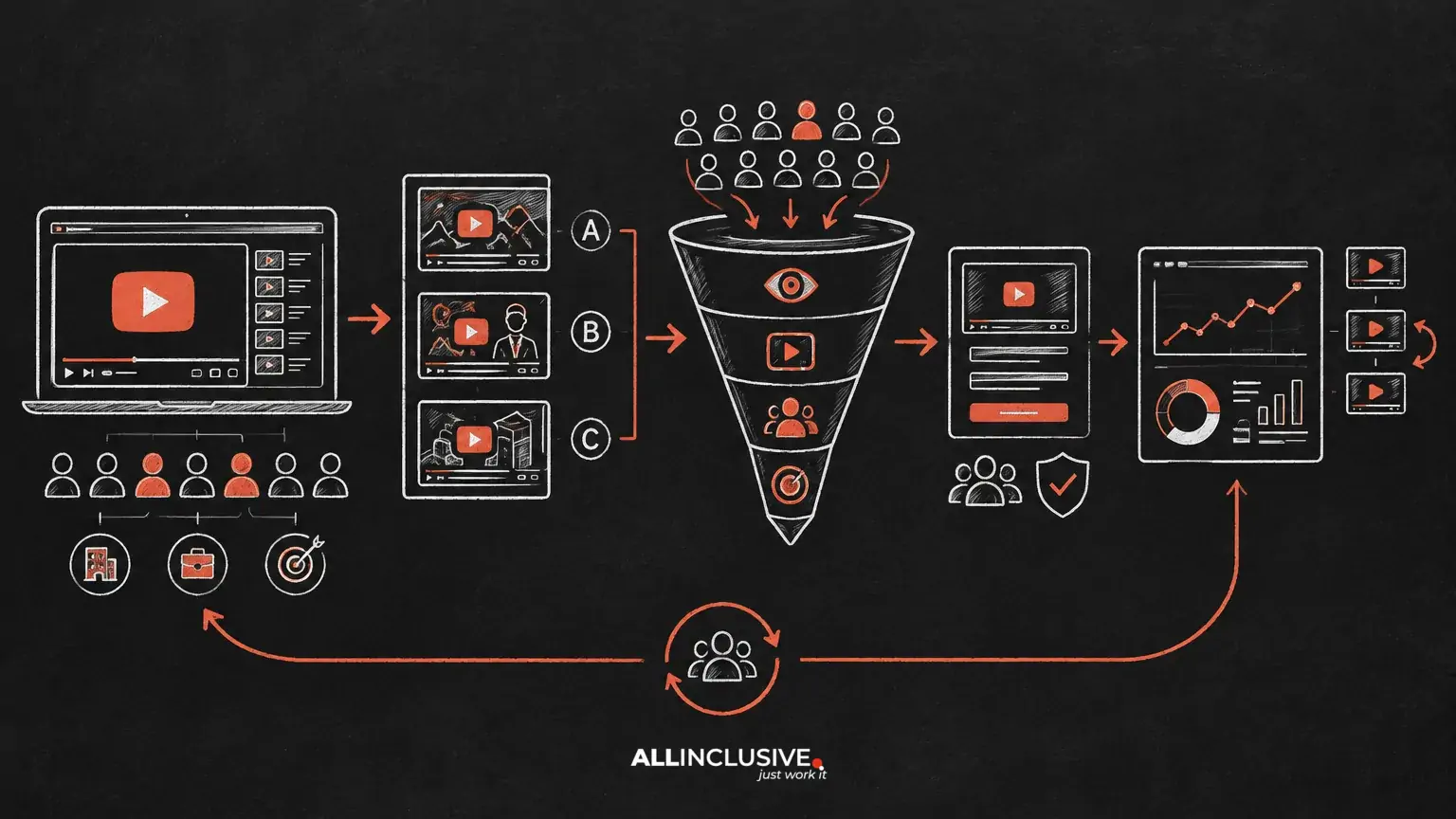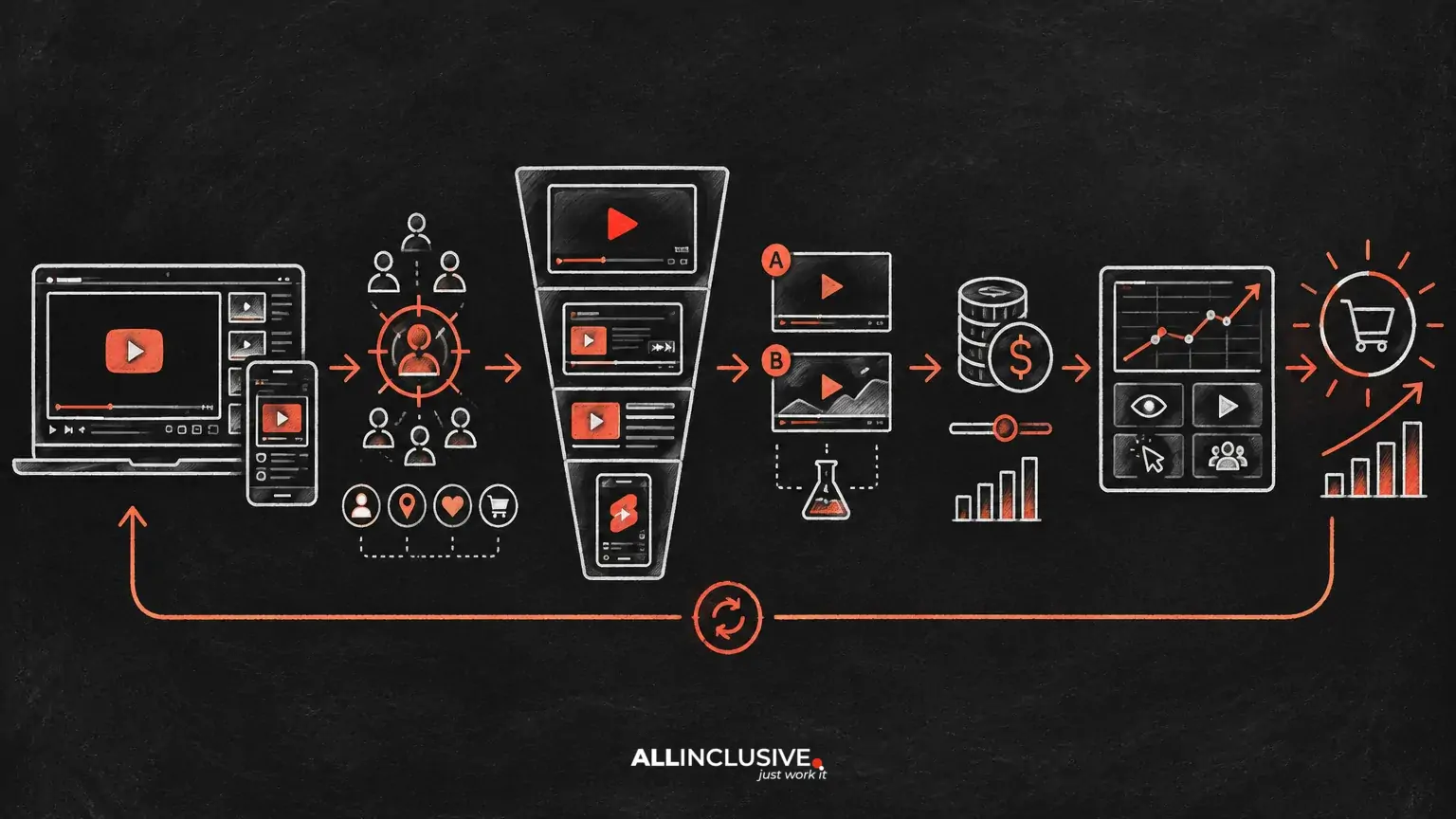
Programmatic video advertising uses automated technology to buy video ad impressions across digital publishers, streaming environments, apps, and other connected screens. The value is not automation alone. A well-designed programmatic video campaign combines suitable inventory, audience strategy, creative sequencing, media-quality controls, and measurement that connects exposure to business outcomes.
For commercial teams evaluating channels, the central question is not simply whether video can deliver reach. It is whether the campaign can place the right message in a credible environment, at an acceptable cost, with enough signal to evaluate incremental business impact. This guide explains the main formats and inventory options, how to structure a campaign, and how to approach programmatic ROI without relying on a single platform metric.
For broader planning context, see Allinclusive’s paid media resources and the programmatic advertising pillar.
What is programmatic video advertising?
Programmatic video advertising is the automated purchase and delivery of video ad impressions through digital buying platforms. Depending on the campaign, inventory may be purchased through real-time auctions, private marketplaces, preferred arrangements, or guaranteed deals. The buyer typically applies audience, contextual, geographic, device, frequency, placement, and bidding rules to determine which impressions are eligible.
Programmatic describes the buying process, not a single media environment. A campaign can include short-form in-stream placements, streaming television inventory, online video on publisher sites, mobile-app placements, and out-stream units. Each environment has different viewing behavior, supply characteristics, creative requirements, and measurement limitations.
Core programmatic video formats
In-stream video
In-stream ads appear within video content. They may run before, during, or after the primary content, depending on the publisher and placement. Pre-roll can provide an early opportunity to establish a message, while mid-roll may reach users who are already engaged with longer content. Post-roll often requires careful evaluation because completion and attention can vary.
In-stream buying is useful when the campaign needs a recognizable video experience and a defined relationship between the ad and content. Evaluate placement quality, sound behavior, skippability, completion signals, and whether the impression is rendered in a genuine player rather than a low-value implementation.
Out-stream and in-article video
Out-stream units appear outside a traditional video player, often between editorial content or within an article. They can expand reach beyond publishers with substantial video libraries and may be efficient for awareness objectives. However, visibility and attention are highly dependent on the unit design, scroll behavior, sound settings, and the amount of time the player remains in view.
Do not treat an out-stream impression as equivalent to a completed, sound-on in-stream view. Use format-specific reporting and define what counts as a meaningful exposure before launch.
Connected TV and streaming video
Connected TV and streaming inventory reaches viewers through internet-connected televisions, streaming devices, smart-TV applications, and related environments. It can support broad reach and household-oriented planning, but identifiers, attribution paths, inventory access, and frequency management differ from browser and mobile video.
A dedicated programmatic CTV advertising strategy may be appropriate when the campaign prioritizes living-room reach, premium streaming supply, or television-style creative. Keep CTV planning distinct from general online video even when the buying platform reports both under a single video category.
Mobile-app video
Mobile-app video can deliver scale across gaming, entertainment, utility, and social-style environments. Performance depends on the app category, user experience, placement behavior, and whether the ad is rewarded, interruptive, or naturally integrated into content.
Rewarded video may generate strong completion signals because users receive an in-app benefit, but completion should not automatically be interpreted as brand attention or purchase intent. Review the context and downstream behavior alongside delivery metrics.
How to evaluate video inventory
Inventory selection should begin with the role the channel plays in the media plan. The same audience can be reached through very different environments, but those impressions do not have equal value.
- Environment: Identify whether the placement is open web, publisher-owned, app-based, streaming, or connected TV.
- Content context: Consider editorial quality, suitability requirements, adjacency controls, and whether the context supports the message.
- Viewability and exposure: Define how much of the player must be visible and for how long before an impression is considered meaningful.
- Sound and attention: Confirm whether sound starts on or off and whether the creative remains understandable without audio.
- Supply path: Review the number and type of intermediaries, deal structure, reporting access, and opportunities for duplicated or low-quality supply.
- Reach and frequency: Determine whether the campaign can reach incremental users or is repeatedly serving the same audience.
- Identity and privacy: Understand which targeting and measurement signals are available in the selected environment and how durable they are.
Inventory packages can be attractive because they simplify buying, but the package should not replace inspection. Ask for placement-level or supply-level reporting where available, then compare delivery against the campaign’s stated objective.
Choosing a programmatic video buying approach
Open-market buying
Open-market buying can provide broad access and flexible optimization. It may suit campaigns that need scale, testing, or responsive bidding. The tradeoff is that quality and transparency can vary across supply sources, so controls and exclusions must be defined before launch.
Private marketplaces
Private marketplaces can offer more controlled access to selected publishers, content categories, or inventory packages. They may be useful when brand context, premium supply, or predictable placement matters more than maximum breadth. Evaluate the deal on actual delivery, not just the label attached to it.
Preferred and guaranteed arrangements
Preferred and guaranteed deals can provide greater predictability around access or volume, subject to the agreement. They may support important launches or environments where open-market availability is limited. Confirm the reporting, cancellation, makegood, audience, and frequency terms before committing budget.
Creative strategy for programmatic video
Creative should be designed for the viewing environment rather than adapted from a single master asset without modification. Establish the value proposition early, use visual branding throughout the spot, and make the message understandable when sound is unavailable. The opening seconds need to earn attention, but the creative should also work for viewers who watch longer or encounter the brand more than once.
Build a versioning plan around meaningful variables, such as audience need, product category, funnel stage, offer, or geographic relevance. Avoid creating so many variants that delivery and analysis become fragmented. Each variant should have a clear hypothesis and an associated success measure.
Consider sequencing when the campaign has a story to tell. A short introduction can establish the problem, a follow-up can explain the solution, and a later exposure can provide proof or a next step. Frequency rules should protect the audience from repetition while allowing enough exposure for the sequence to function.
Targeting and audience design
Programmatic video targeting can combine first-party audience data, contextual signals, geography, device, content categories, modeled audiences, and prospecting rules. The right mix depends on the objective and the quality of available signals.
For prospecting, begin with a broad enough audience to learn which contexts and users respond. For account-based or high-value B2B campaigns, use carefully defined account or professional audience inputs where permitted, then evaluate reach and match quality rather than assuming the audience definition is exact.
For remarketing, separate users by meaningful behavior. Someone who viewed a product page, downloaded a resource, or completed a lead form should not necessarily receive the same message. Apply recency windows and exclusions so that video supports the broader journey rather than duplicating every other channel.
Audience strategy should also include negative rules. Exclude existing customers when the goal is acquisition, suppress converters when the intended action has occurred, and set practical frequency limits. These rules require ongoing validation because audience membership and platform availability can change.
Measurement: from delivery to business outcome
Video measurement works best as a layered framework rather than a single KPI.
- Delivery: Track spend, impressions, reach, frequency, completed views, view-through rate, and cost by format and environment.
- Media quality: Review viewability, invalid-traffic indicators, player behavior, supply source, content suitability, and placement transparency where available.
- Engagement: Measure site visits, landing-page quality, engaged sessions, video interactions, and other actions that reflect genuine interest.
- Conversion: Track leads, qualified leads, pipeline events, purchases, or another defined business action. Keep conversion definitions consistent across channels.
- Incrementality: Where feasible, use holdouts, geo-based tests, conversion-lift studies, or other controlled approaches to estimate what would have happened without exposure.
Completion rate can help diagnose delivery and creative fit, but it is not a complete measure of effectiveness. A completed view in a low-attention environment may be less valuable than a shorter, high-quality exposure that reaches a relevant prospect. Likewise, last-click conversions can undervalue video when the channel introduces or influences demand rather than capturing the final action.
How to evaluate programmatic ROI
Programmatic ROI should be calculated from the business outcome and the measurement design, not from a platform-reported return metric alone. Start by defining the value of the conversion, the cost basis, the attribution window, and the treatment of assisted or view-through activity.
For lead generation, distinguish delivered leads from qualified leads and pipeline. For ecommerce, align revenue reporting with cancellation, margin, and repeat-purchase assumptions where those data are available. For brand or demand-generation campaigns, use reach quality, branded search behavior, site engagement, qualified traffic, and controlled outcome studies as complementary evidence.
Compare results by meaningful dimensions: format, device, inventory type, audience, creative, frequency band, and supply path. Be cautious when making comparisons across segments with different conversion windows or levels of scale. A lower cost per action may reflect easier-to-convert users rather than better incremental performance.
Programmatic Video Advertising: Implementation Checklist
- Define the primary business objective and the role of video in the funnel.
- Choose formats and inventory based on audience behavior, message requirements, and quality controls.
- Prepare creative versions for sound-on, sound-off, mobile, desktop, and television-style viewing as relevant.
- Set audience exclusions, frequency rules, geographic boundaries, and brand-suitability requirements.
- Confirm tracking, conversion definitions, naming conventions, and reporting dimensions before launch.
- Separate platform-reported delivery from independent or first-party outcome reporting.
- Review early delivery for waste, concentration, poor placements, and creative fatigue.
- Use controlled testing when the budget and operating conditions support an incremental measurement approach.
How programmatic video fits with other channels
Programmatic video is rarely evaluated in isolation. Display can extend reach and support retargeting, while audio may reach users in screenless or multitasking contexts. Paid social can provide platform-native creative and engagement signals, but its audience, inventory, and measurement model differ from programmatic buying.
To compare channels fairly, align the objective, audience definition, conversion window, frequency treatment, and quality criteria. Allinclusive’s guide to programmatic display advertising covers the adjacent display strategy, while programmatic versus paid social explains why inventory and measurement should not be compared using surface-level metrics alone.
Programmatic Video Advertising: Strategic Perspective
Programmatic video advertising can be a flexible way to buy video reach across web, app, streaming, and connected-screen environments. Its effectiveness depends on decisions made before the bid is placed: selecting credible inventory, matching the format to the objective, building creative for the viewing context, controlling frequency, and measuring outcomes beyond completion rate.
For teams investigating the channel, the strongest starting point is a testable plan. Define what a valuable exposure means, establish how success will be measured, and make inventory quality visible in the reporting. That approach creates a more credible basis for optimizing spend and assessing programmatic ROI.