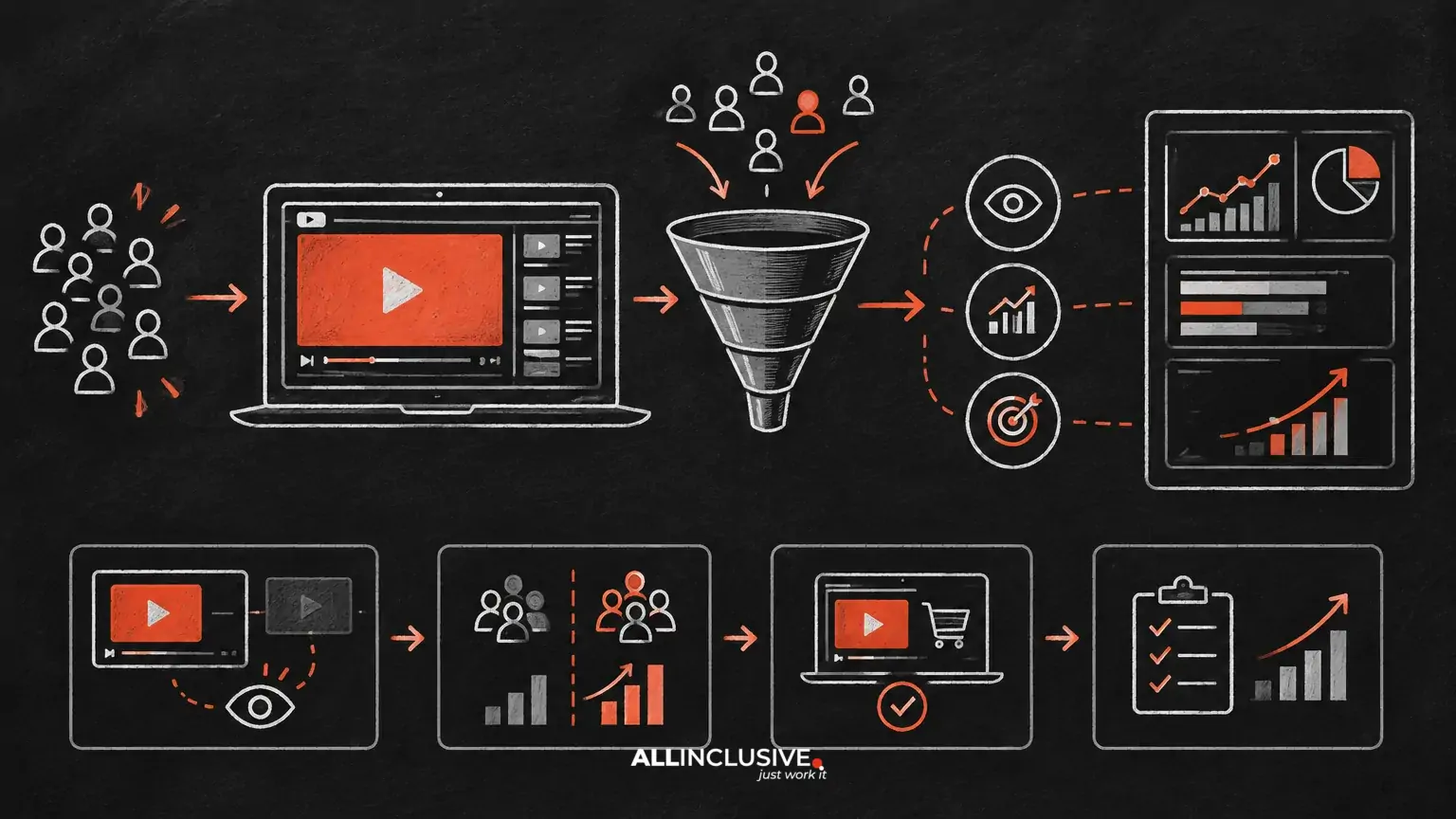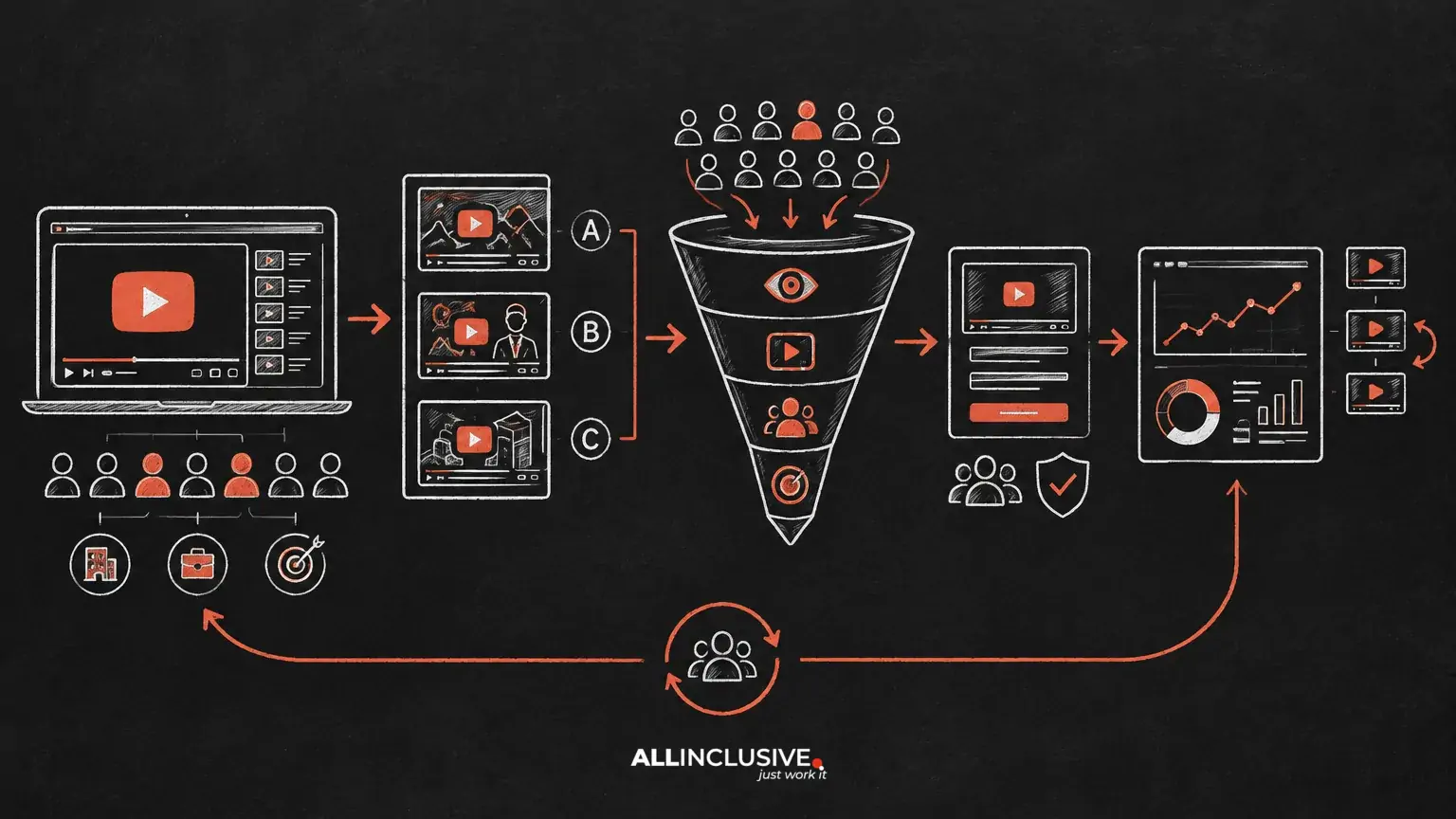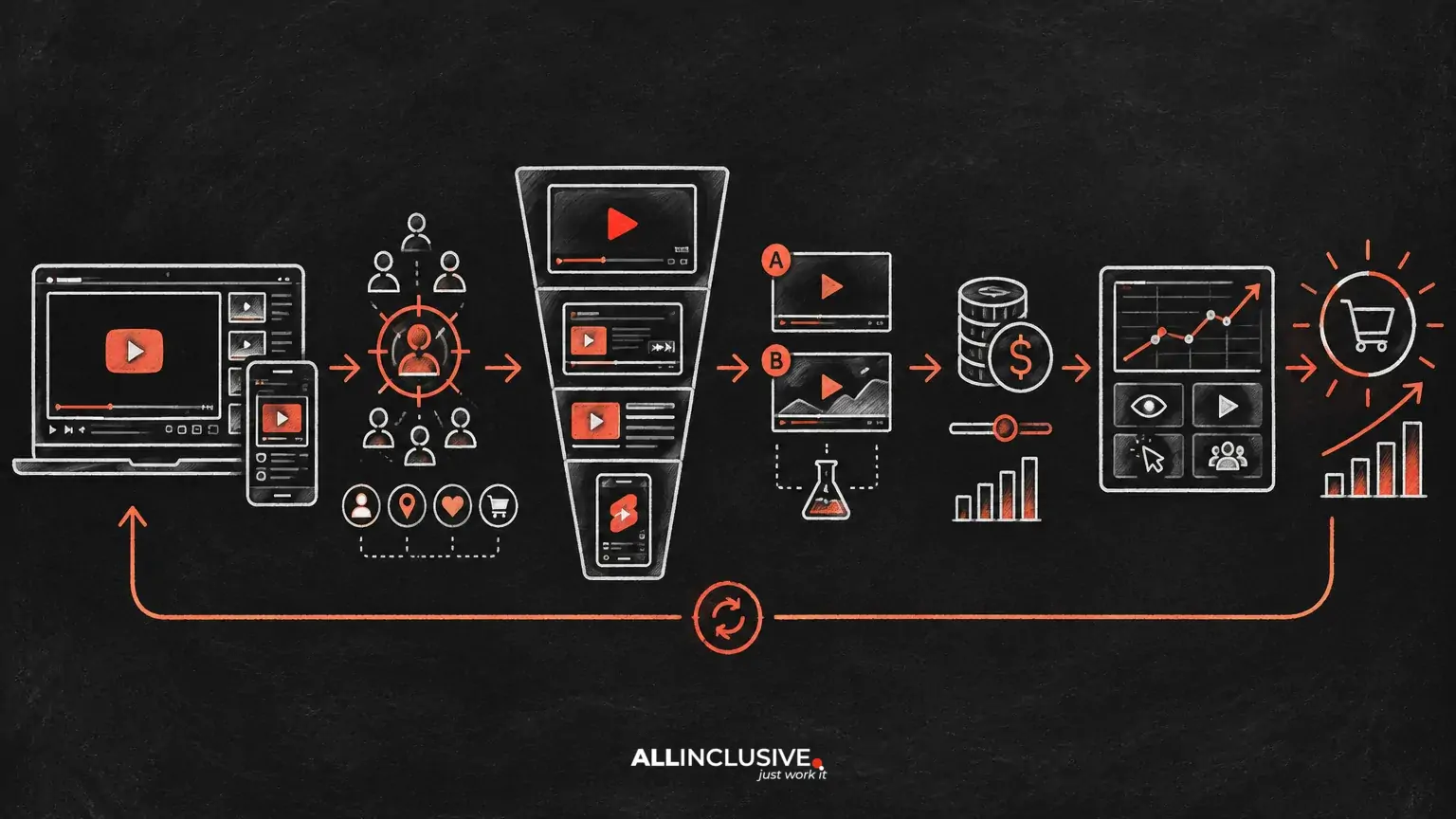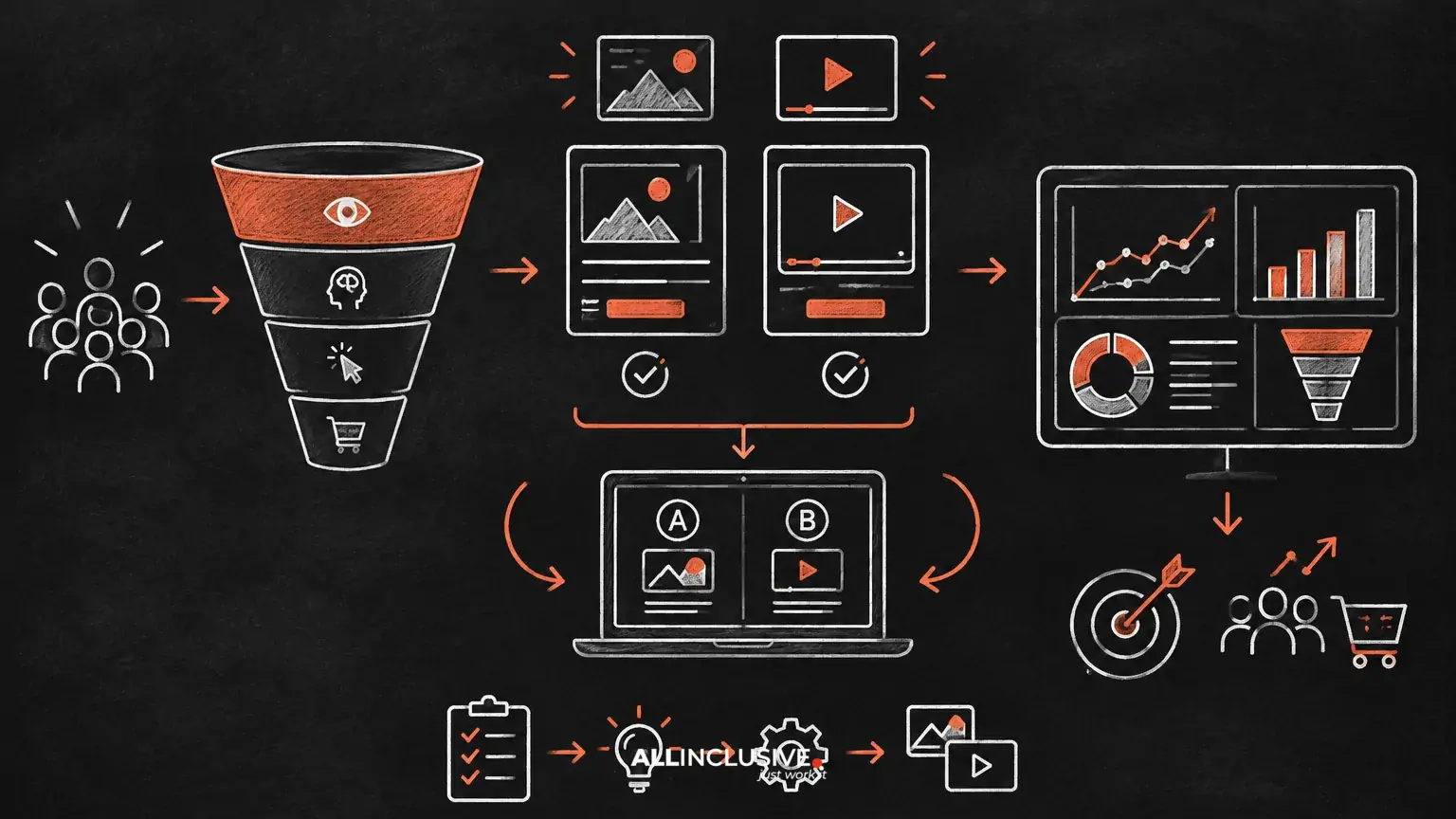
Choosing between static vs video ads is less about declaring one format the winner and more about matching the creative to the job it must do. Static ads can communicate a focused proposition quickly and efficiently. Video can demonstrate a product, establish context, show a customer experience, or build a stronger narrative.
For most paid-media programs, the practical answer is to use both across the funnel. Use the format that reduces the biggest barrier at each stage: attention and comprehension at the top, consideration and proof in the middle, and clarity and confidence near conversion.
The short answer: choose by the job, not the format
- Use static ads when the message is simple, the offer is easy to understand, or you need many variations for rapid testing.
- Use video ads when motion, demonstration, sequence, personality, or before-and-after context materially improves understanding.
- Use both when different audiences need different levels of explanation or when one format can generate a hypothesis and the other can validate it.
Format is only one variable in performance creative. Audience, offer, angle, hook, landing-page experience, placement, spend, and conversion signal also affect results. A strong video cannot rescue an unclear proposition, and a well-designed static ad may outperform a video when the buyer needs an immediate answer.
Static vs. video ads by funnel stage
Top of funnel: earn attention and establish relevance
At the awareness stage, the audience may not know your brand or recognize the problem you solve. The creative must create enough relevance for the viewer to pause and understand the category or tension.
Static ads are useful when you have a sharp insight, visual contrast, or concise point of view. A strong headline paired with a recognizable problem can make the ad understandable at a glance. Static also makes it easier to produce multiple hooks around the same audience pain, use case, or category misconception.
Video is more useful when the product or problem needs context. A short demonstration, founder explanation, customer scenario, or visual sequence can communicate something that would require too much copy in a single image. Video may also give the brand more room to establish tone and distinctiveness, provided the opening seconds or opening frame work without assuming sustained attention.
For top-of-funnel creative, ask:
- Can the audience understand the problem or promise immediately?
- Does motion add meaning, or merely decoration?
- Would a still frame communicate the hook clearly if the viewer does not continue watching?
- Are you testing enough distinct angles rather than producing minor design variations?
Middle of funnel: explain the solution and build consideration
Consideration audiences need more than recognition. They may be comparing approaches, evaluating alternatives, or trying to determine whether your solution fits their situation.
Video often has an advantage when the buying decision depends on process. Product walkthroughs, screen recordings, customer stories, expert explanations, and use-case demonstrations can show how the solution works. Sequential information is easier to follow when the creative controls the order in which points appear.
Static ads remain valuable for comparison and message compression. A clear workflow, feature-to-benefit explanation, proof point, or objection-handling statement can be easier to scan in a static format. Static creative can also support retargeting by presenting a specific answer to a known objection, such as implementation effort, integration complexity, or suitability for a particular team.
At this stage, do not evaluate video only on entertainment. Evaluate whether it improves understanding, creates belief, or resolves an objection. Likewise, do not evaluate static only on click-through behavior. A concise ad may pre-qualify the right audience even if it produces fewer casual clicks.
Bottom of funnel: reduce friction and reinforce the decision
Near conversion, the audience usually needs clarity and confidence. The creative should make the next step obvious and address the final uncertainty preventing action.
Static ads can work especially well for bottom-funnel messages because they are direct. A clear offer, eligibility statement, product benefit, deadline where applicable, or call to action can be understood quickly. They also provide a stable frame for retargeting messages that need to align closely with the landing page.
Video can be effective when trust or demonstration remains the main barrier. A short customer perspective, implementation preview, or product proof sequence may help a prospect visualize what happens after conversion. Keep the message tightly connected to the action you want the viewer to take. A broad brand story is usually less useful here than evidence that answers the prospect’s immediate question.
When static ads are the better choice
Static is often the stronger starting point when one or more of these conditions apply:
- The proposition is simple. The audience can understand the value without a sequence of scenes or explanation.
- Speed of learning matters. You want to test multiple hooks, offers, audiences, or objections without the production overhead of full video iterations.
- The message is highly specific. A headline and visual can target a defined use case, industry, role, or pain point with precision.
- The creative must be scanned quickly. The viewer needs to identify the relevance and action without committing to watch.
- The landing page carries the demonstration. The ad’s main role is to qualify interest and move the right prospect to a deeper experience.
Static does not mean minimal effort. The hierarchy, contrast, subject selection, copy length, visual metaphor, and relationship between ad and landing page all influence comprehension. A static testing program should vary the strategic idea, not only colors, backgrounds, or button treatments.
When video ads are the better choice
Video is usually worth prioritizing when the format itself solves a communication problem:
- The product must be demonstrated. Software workflows, physical products, services, and transformations may require visible steps.
- Sequence changes meaning. The audience needs to see a problem, process, and outcome in a deliberate order.
- Human delivery builds trust. A founder, practitioner, customer, or subject-matter expert can communicate nuance that text and imagery cannot easily convey.
- The category is unfamiliar. Video can provide the context needed to explain why the solution exists and how it fits into a workflow.
- Objections require explanation. A spoken walkthrough or visual proof may answer concerns more convincingly than a short claim.
Video should still be designed for partial attention. The opening visual and message should communicate the core idea without depending entirely on sound, a long setup, or a final-frame reveal. Treat the first moment as a self-contained entry point, then use the rest of the asset to deepen the case.
A practical decision framework
Before selecting a format, answer five questions:
- What must the audience understand? Write the single idea the ad needs to communicate.
- What is the largest barrier? Is it awareness, comprehension, trust, differentiation, urgency, or action?
- Does motion add information? If the answer is no, start with static or test static first.
- How much attention can you reasonably expect? Design the message for the actual viewing context rather than an ideal uninterrupted watch.
- What will happen after the click? The ad should prepare the audience for the landing page, form, demo, checkout, or sales conversation.
A useful rule is to choose static when compression improves clarity and video when sequence improves understanding. If both are plausible, produce a focused version of each and compare them against the same strategic hypothesis, audience definition, and conversion objective.
How to compare static and video fairly
Format comparisons become misleading when the assets differ in more than format. A polished video with a new offer should not be compared with an old static ad aimed at a different audience and judged as a pure format test.
Define the test variable before production. For example, you might hold the audience and offer constant while comparing a static explanation with a video demonstration. Or you might test whether a human-led video improves trust for a specific objection compared with a text-led static asset.
Evaluate the result at multiple levels:
- Attention and engagement: Are people stopping, watching, or interacting with the message?
- Traffic quality: Do clicks produce meaningful sessions or downstream engagement?
- Conversion behavior: Does the asset contribute to the desired action?
- Efficiency: What is the cost of the qualified outcome, not merely the cheapest click?
- Learning value: Does the test reveal a stronger angle, objection, audience, or offer?
Do not force a universal conclusion from one result. A video may win for cold prospecting but lose for retargeting. A static asset may drive efficient lead volume while video assists users who require more explanation. Interpret results within the funnel stage, audience temperature, delivery environment, and conversion lag.
Build a format system instead of isolated ads
The most durable approach is to develop a creative system in which one strategic idea can be expressed in multiple formats. Start with the audience insight, promise, proof, objection, and call to action. Then adapt the idea into:
- A static hook for fast comprehension.
- A short video opening that makes the same hook visible or human.
- A demonstration or explanation for consideration.
- A proof-led retargeting asset for the final decision.
This approach preserves strategic consistency while allowing each format to do what it does best. It also makes reporting more useful: you can learn whether the issue is the idea, execution, format, or stage rather than treating every asset as unrelated.
For a broader operating model, see our performance creative guide. For a deeper process for generating and prioritizing concepts, read Performance Creative Strategy. If your team needs a structured way to turn hypotheses into experiments, the Creative Testing Framework provides a useful companion.
Static vs. Video Ads: Implementation Checklist
- Map each funnel stage to its primary communication job.
- Choose static when the message benefits from compression and video when sequence or demonstration adds information.
- Write the core hook before choosing the production format.
- Design the first frame or opening message to work under partial attention.
- Keep ad claims, proof, and landing-page expectations aligned.
- Test strategic differences before polishing minor variations.
- Judge performance using qualified outcomes and appropriate conversion windows.
- Document what the test taught about audience, angle, objection, and format.
There is no permanent winner in the static vs video ads debate. The better question is which format communicates the next decision most efficiently for this audience, at this stage, with this offer. Use static for clarity and testing velocity, video for demonstration and narrative depth, and a coordinated combination when the buyer journey requires both.
For context on how these choices fit into a broader acquisition program, explore our paid media resources.