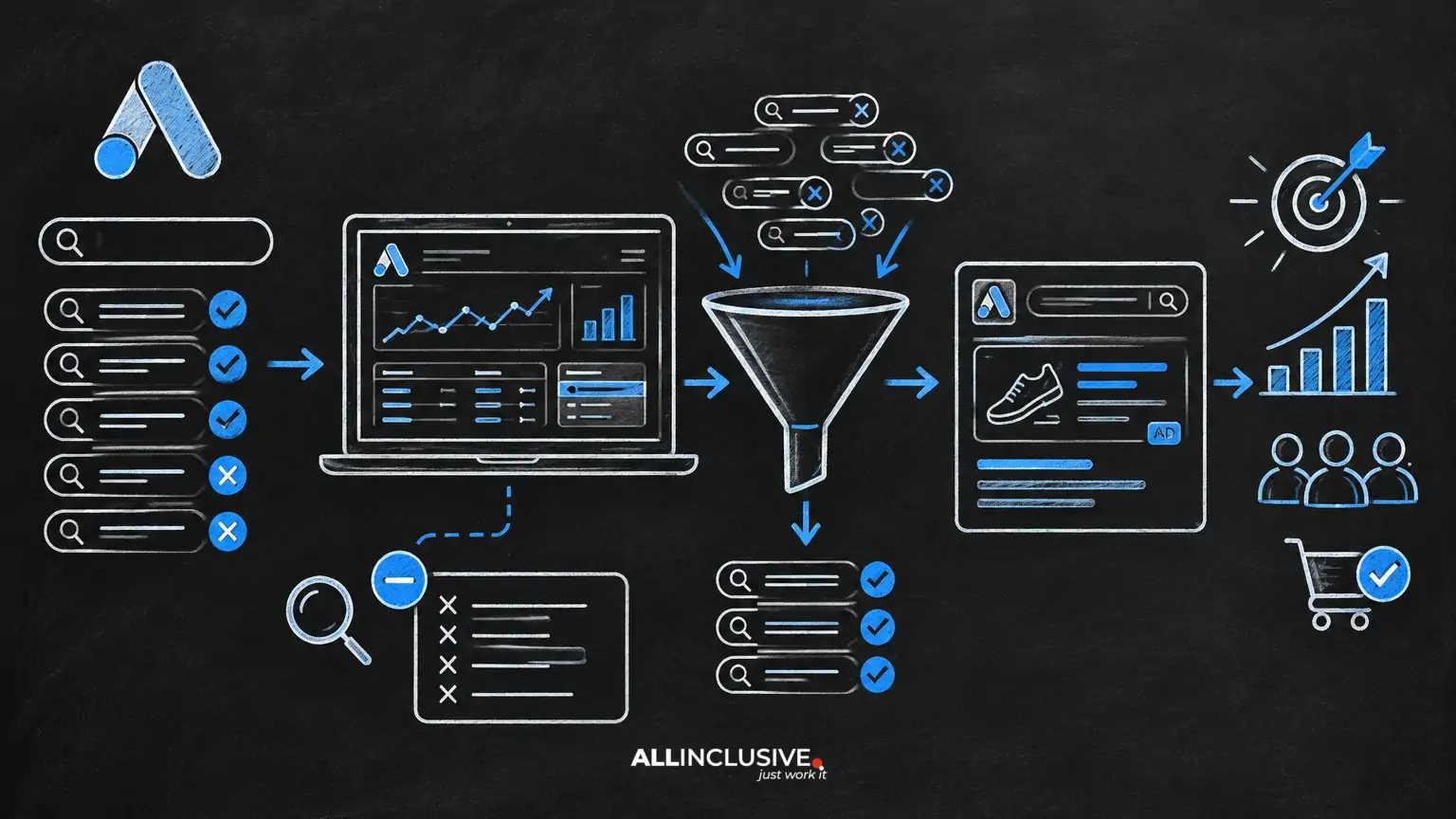
YouTube ads targeting determines who is eligible to see your video ads, where those ads can appear, and how narrowly you define the audience. The strongest approach is not to select every available option. It is to match each targeting method to a clear business objective, funnel stage and measurement plan.
For prospecting, advertisers commonly evaluate audience segments, demographic signals, keywords, topics and placements. Custom segments can help translate search or website-intent research into a video audience, while first-party data can support remarketing when the necessary consent and platform requirements are in place. The right mix depends on whether the campaign is designed to create demand, capture existing interest, generate leads or support conversions.
This guide explains the main targeting choices, how to structure them, and how to avoid the common mistake of making an audience look precise while limiting useful delivery and learning.
Start with the job the campaign must do
Targeting should follow the campaign’s role rather than precede it. Define the intended action and the type of user you need before selecting settings.
- Awareness: prioritize relevant reach, attention and message exposure among a broad but defensible audience.
- Consideration: reach people showing relevant interests or researching a problem your offer addresses.
- Conversion: use stronger intent signals, first-party audiences and conversion-focused measurement where available.
- Remarketing: reconnect with people who watched, visited, engaged or started a commercial action, while separating audiences by recency and behavior.
A campaign for a complex B2B service may need broad problem-aware prospecting and a separate high-intent layer for people who have visited solution pages. Combining both in one undifferentiated audience makes it harder to understand which signal is contributing to results.
The core YouTube ads targeting options
Audience segments
Audience segments group users according to signals such as interests, life events, purchase intent or previous interactions, depending on the options available in the account and market. They are useful when the customer profile is easier to describe by need or behavior than by a single search term.
Use audience segments when:
- the buying problem has a recognizable interest or intent pattern;
- you need to reach a category audience at scale;
- the creative explains a problem rather than answering one narrow query;
- you want to test different audience hypotheses without building a complex keyword list.
Do not assume that an audience label guarantees purchase intent. Treat the segment as an eligibility signal, then assess quality through engaged views, site behavior, leads and downstream conversion data.
Demographic and firmographic signals
Demographic controls can help align delivery with a known customer profile, but they should not be used as a substitute for a value proposition. Age, gender, household-related signals and other available attributes can be directionally useful, yet some users may be unknown, misclassified or outside the profile you initially expect.
For B2B campaigns, firmographic targeting may be limited or indirect compared with account-based media environments. If company, role or industry is commercially important, use the available signals as a testable layer and validate them with first-party conversion data rather than assuming perfect coverage.
Keywords and search themes
Keywords can help connect video delivery to topics people have shown interest in. They are most useful when you build a small set of tightly related themes around a customer problem, category or solution—not when you paste a large search-account keyword inventory into the campaign.
For example, a cybersecurity provider might organize themes such as:
- cloud security assessment;
- identity access management;
- security compliance preparation;
- managed detection and response.
Each theme should have a corresponding creative angle. If the ad discusses compliance readiness but the targeting centers on unrelated product terms, the campaign may produce reach without a coherent message-to-audience fit.
Keywords are signals, not guaranteed placements or exact search-query controls. Review actual delivery and user quality where reporting permits, and avoid treating a keyword list as proof that every impression is reaching someone actively searching for that phrase.
Topics
Topic targeting is appropriate when content context matters and the audience may consume many different videos within a broad subject area. It can help a campaign reach relevant environments without requiring a long list of individual channels or URLs.
The trade-off is breadth. A topic may include content that is relevant at a category level but not equally valuable for your business. Use topic targeting as a scalable test, then compare its audience quality with more intentional segments and placements.
Placements
Placements let you define environments such as selected YouTube channels, videos or other eligible destinations, depending on the campaign setup. They are valuable when context, creator adjacency or content relevance is central to the strategy.
Use placements when:
- you have a credible list of channels or videos watched by your target buyers;
- brand suitability or contextual alignment is especially important;
- you want to test creator or content communities separately;
- your creative is designed for a recognizable audience context.
Placement lists require maintenance. A channel can change its content mix, audience or publishing pattern. Treat placements as a research and testing input, not a permanent guarantee of audience quality. Also confirm the campaign’s actual eligibility and delivery behavior before promising that every selected environment will generate scale.
Custom segments
Custom segments are useful for turning observed intent patterns into an audience hypothesis. Depending on the setup, advertisers may build them from relevant search terms, URLs, apps or other available signals. The strategic value is translating customer research into a testable prospecting audience.
A good custom segment is specific enough to represent a meaningful problem but broad enough to support delivery. Consider separate segments for:
- category research;
- competitor or alternative-solution research;
- problem-stage education;
- high-intent solution evaluation.
Keep the segments interpretable. If one segment combines unrelated products, industries and use cases, you will not know which intent pattern drove the response. Align each segment with a distinct creative proposition and name it according to the hypothesis it represents.
How to choose between targeting methods
Use a decision framework rather than selecting every option at once.
- Define the audience hypothesis. Describe the person or account in terms of problem, need, behavior and buying stage.
- Choose the strongest available signal. Use first-party audiences for known interactions, custom segments for intent hypotheses, placements for contextual control, and broader audience signals when reach is the priority.
- Match the creative to the signal. A problem-aware audience needs education; a solution-aware audience can receive proof, differentiation and a clearer next step.
- Separate materially different tests. Keep distinct audience hypotheses separated when you need to compare quality or control budget.
- Set a measurement rule. Decide in advance whether the test will be judged by qualified traffic, lead quality, assisted actions, conversions or another agreed business outcome.
For example, a B2B software company could create three prospecting groups: a broad category audience, a custom segment based on solution research, and a placement list of relevant industry channels. The ads can share a core product story but use different openings. After sufficient delivery, compare not only conversion volume but also engagement depth, sales acceptance and cost per qualified opportunity where those signals are available.
Audience structure: avoid unnecessary fragmentation
Over-segmentation is one of the most common YouTube targeting problems. Splitting audiences by every demographic, keyword theme and placement can create small cells that are difficult to evaluate. It can also make budget allocation less efficient.
Build separate campaigns or ad groups when there is a meaningful reason, such as:
- a different funnel objective;
- a distinct creative message;
- a separate budget or bidding approach;
- a material brand-safety or placement requirement;
- a need to compare audience quality independently.
Keep related signals together when they support the same proposition and do not need separate reporting. Start with a manageable structure, then add detail when performance data or business requirements justify it.
Targeting and creative must work as one system
Targeting cannot compensate for an unclear video. The opening should reflect the audience’s awareness level, and the call to action should fit the desired next step.
For a broad audience, lead with a recognizable business problem and explain why it matters. For a custom segment based on solution research, acknowledge the decision context and offer a useful differentiator. For a placement built around specialist content, use language that demonstrates familiarity with the audience’s priorities without relying on unsupported assumptions.
Format also affects the targeting decision. Review the practical implications of skippable, non-skippable, in-feed and Shorts placements before designing the media plan. See the related guide to YouTube ads formats for a format-level comparison, and use the YouTube ad creative guide for hooks, structure and calls to action.
Remarketing and prospecting should be planned together
Prospecting introduces the message; remarketing gives you a way to continue the conversation with eligible previous viewers or site users. Create clear audience windows and exclusions where appropriate so that users who have already taken a meaningful action receive a more relevant message.
For example, an initial video can explain a category problem, followed by a case-study or product-demonstration message for engaged viewers. A separate conversion message may be reserved for visitors to high-intent pages. The exact sequence should reflect the buying cycle and the signals your account can reliably observe.
For a deeper treatment of sequencing and creative strategy, see YouTube remarketing.
Measurement: evaluate audience quality, not just delivery
Reach, impressions and views describe distribution. They do not by themselves establish commercial value. Build a measurement hierarchy that connects media signals to business outcomes.
- Delivery: impressions, reach, frequency and view behavior.
- Engagement: watch depth, clicks, visits and other available interactions.
- On-site quality: engaged sessions, key page views, form starts and qualified actions.
- Business outcomes: leads, opportunities, sales or other agreed conversions.
Interpret view-through and assisted activity carefully. Video can influence users who do not click immediately, but attribution settings and conversion definitions affect what the reports mean. When possible, compare audience groups using consistent conversion windows, tracking rules and quality criteria. The YouTube ads measurement guide covers view-through, lift and conversion considerations in more detail.
Common targeting mistakes
Stacking every signal
Combining multiple targeting restrictions can reduce eligible reach more than intended. Confirm whether settings narrow delivery, expand it, or function as observation signals in the specific campaign type before relying on the structure.
Using competitor terms without a clear hypothesis
Competitor or alternative-solution signals can be useful, but they may attract researchers with different needs. Pair them with a distinct message and evaluate lead quality instead of judging the test on traffic alone.
Confusing relevance with intent
A person watching relevant content is not necessarily ready to buy. Use creative and landing-page alignment to move the audience from interest toward a measurable next step.
Changing too many variables at once
If you alter audience, creative, bid strategy, landing page and conversion event simultaneously, the result is difficult to diagnose. Prioritize the most important hypothesis and document the changes.
YouTube Ads Targeting: Pre-Launch Checklist
- Define the campaign objective and funnel stage.
- Write the audience hypothesis in plain language.
- Choose one primary targeting method and one or two controlled comparisons.
- Separate materially different messages or business objectives.
- Review exclusions, remarketing eligibility and consent requirements.
- Align the opening, proof and call to action with the audience signal.
- Confirm tracking, conversion definitions and reporting windows.
- Set a review schedule based on meaningful delivery, not an arbitrary early result.
- Record what changed between tests so the account produces reusable learning.
Build targeting around decisions, not settings
Effective YouTube ads targeting is a process of forming, testing and refining audience hypotheses. Audience segments can provide scalable reach, keywords and custom segments can represent intent, placements can add contextual control, and first-party audiences can support more relevant follow-up. None is universally best.
The practical standard is whether the targeting choice makes the campaign’s message, measurement and next action clearer. Start with a focused structure, protect enough reach for learning, and use business-quality signals to decide what deserves more investment. For broader planning context, explore YouTube advertising and the wider paid media strategy framework.