Creative fatigue occurs when an ad concept loses its ability to generate efficient attention and action after repeated exposure. It is not simply a matter of an ad becoming old. Fatigue is a performance pattern: the relationship between exposure, attention, engagement, conversion, and cost starts to deteriorate.
The practical goal is not to eliminate fatigue entirely. Every scalable campaign eventually needs new creative. The goal is to detect the pattern early enough to preserve efficiency, identify what is actually failing, and replace or adapt the right part of the creative system before performance collapses.
This article explains how to diagnose fatigue, distinguish it from audience saturation and other causes of decline, and create a repeatable response process. For broader context, see our performance creative resources and the related guide to ad fatigue versus audience saturation.
What creative fatigue looks like
Fatigue is usually visible through a combination of signals rather than one isolated metric. Common patterns include:
- Engagement or click-through rates declining as the same concept receives more impressions.
- Frequency or repeat exposure increasing while incremental response weakens.
- Conversion rate falling even though the landing page, offer, and audience conditions have not materially changed.
- Cost per click, cost per acquisition, or another efficiency metric worsening alongside weaker attention signals.
- Comments, reactions, or qualitative feedback indicating that the ad feels repetitive or increasingly irrelevant.
- Delivery shifting toward less responsive users as the strongest pockets of the audience become exhausted.
These signals should be interpreted together. A lower click-through rate can indicate fatigue, but it can also reflect a weaker placement mix, a change in audience quality, an offer problem, or tracking disruption. Diagnosis matters because the wrong intervention creates wasted production and may hide the real issue.
Why fatigue happens
Repeated exposure reduces novelty
Creative earns attention partly through novelty and relevance. Once people have seen the same opening, visual structure, promise, and proof repeatedly, the ad may no longer interrupt their browsing behavior. The audience does not necessarily reject the product; it may simply stop noticing the message.
The concept has limited reach within the audience
A strong concept can perform well initially because it finds a responsive segment. As delivery expands, the concept may encounter people with weaker need, lower intent, or a different understanding of the problem. Performance can decline even when the creative itself remains clear.
The message no longer matches the buying context
Market conditions, seasonality, competitors, pricing, and customer objections can change. An ad that once addressed the dominant reason to act may become less persuasive as the buyer’s context evolves.
The creative system has too little variation
Minor edits to a headline or background do not always create a meaningfully different experience. If the hook, argument, visual rhythm, and offer remain the same, the audience may perceive several assets as one repetitive ad.
How to detect creative fatigue early
1. Establish a meaningful comparison period
Compare performance against a relevant baseline, not an arbitrary historical average. Useful comparisons may include the same ad during an earlier delivery period, the same concept in a comparable audience segment, or a recent period with similar budget and placement conditions.
Record the date range, spend level, audience, placement mix, optimization event, and major campaign changes. Without this context, an apparent decline may be caused by a different delivery environment rather than fatigue.
2. Read the signal sequence
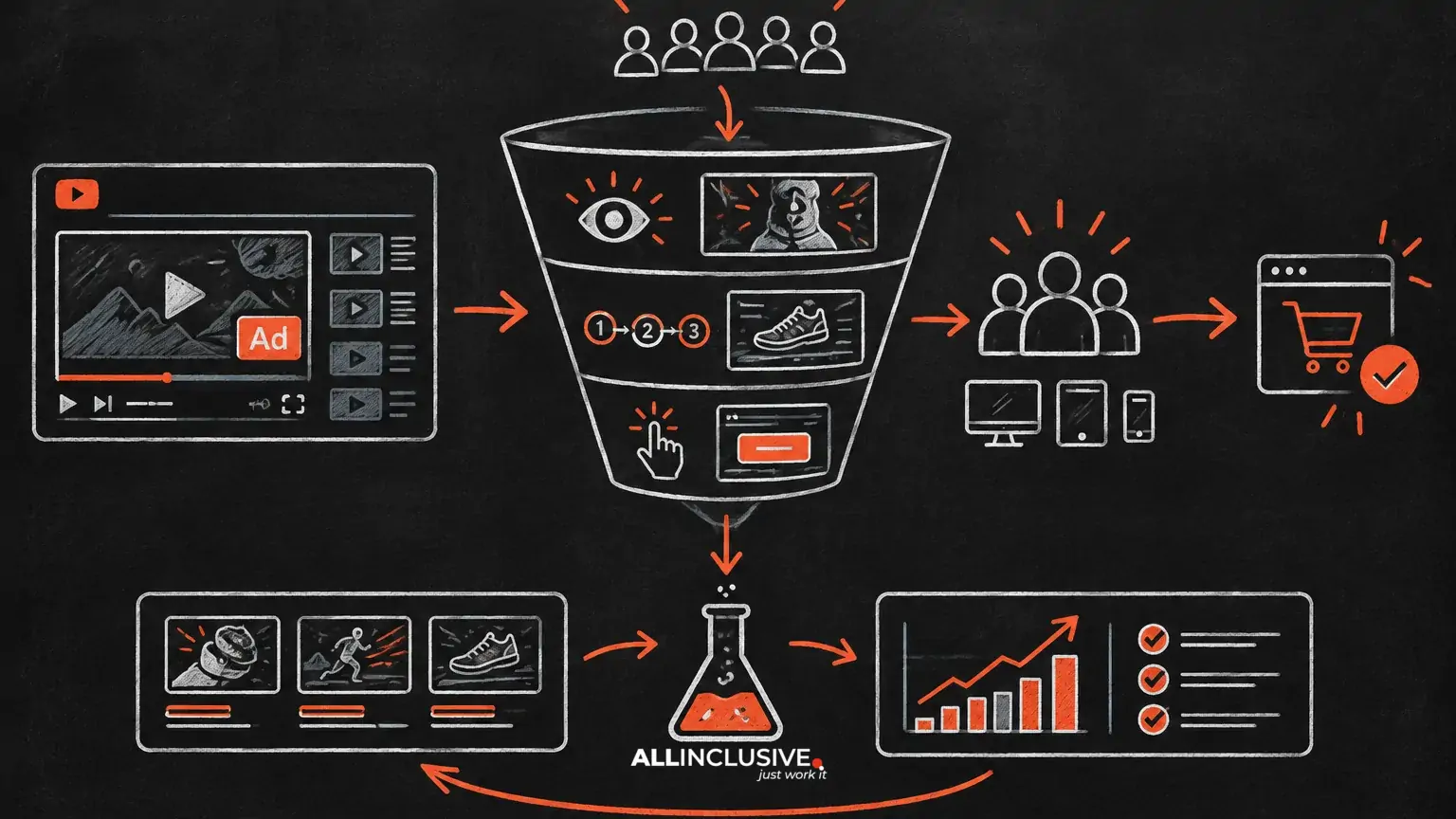
Fatigue often develops in stages. Attention signals may weaken first, followed by traffic quality and then conversion efficiency. A possible sequence is:
- The ad receives more repeat exposure.
- Impression-to-click response softens.
- Traffic becomes less qualified or less engaged.
- Conversion rate and acquisition efficiency deteriorate.
- Marginal spend produces increasingly poor returns.
This sequence is not universal, and it should not be treated as a platform rule. It is a diagnostic model that helps teams ask whether declining conversion performance is preceded by a creative attention problem.
3. Separate attention signals from business signals
Use two groups of metrics. Attention signals can include thumbstop behavior, video hold, click-through rate, outbound engagement, or other measures available in the relevant buying environment. Business signals include qualified lead rate, conversion rate, revenue, contribution margin, or customer acquisition cost.
An ad can produce inexpensive clicks while generating poor commercial outcomes. Conversely, an ad can have modest engagement but strong conversion quality. The decision to refresh should account for the complete path from impression to business result. Our guide to ad creative KPIs provides a framework for connecting early creative signals with downstream performance.
4. Inspect performance by audience and placement
Aggregate results can conceal localized fatigue. Break out performance by meaningful audience groups, prospecting versus retargeting context, creative format, placement, device, geography, or other dimensions that are stable enough to interpret.
If one segment is declining while others remain healthy, a full creative replacement may be premature. A targeted rotation, budget adjustment, or audience-specific adaptation may solve the issue with less disruption.
5. Review the asset as a viewer would
Watch or read the ad repeatedly without looking at the dashboard. Ask:
- Is the value proposition understood immediately?
- Does the opening still create a reason to continue?
- Is the visual pattern distinct from the other active ads?
- Does the proof support the claim, or has the claim become familiar without added credibility?
- Is the call to action still appropriate for the audience’s level of intent?
Creative fatigue is partly a data problem and partly a perception problem. The dashboard shows that response is changing; structured review helps explain why.
Creative fatigue versus other causes of decline
Before replacing an ad, test alternative explanations. A useful diagnosis compares the creative pattern with changes in the surrounding system.
Fatigue versus audience saturation
Audience saturation is about how much of the reachable audience has been exposed and how much additional delivery remains productive. Creative fatigue is about the declining effectiveness of a particular message or experience. They can occur together, but they are not interchangeable.
If several unrelated ads weaken in the same audience at the same time, saturation or audience quality may be the larger issue. If one concept declines while newer concepts remain efficient in the same environment, fatigue is a stronger hypothesis.
Fatigue versus offer or landing-page problems
If attention metrics remain stable but conversion rate falls, inspect the offer, landing page, form, checkout, availability, pricing, and tracking before blaming the ad. A creative refresh may increase traffic without repairing the conversion problem.
Fatigue versus measurement disruption
Unexpected changes in attribution, event capture, reporting windows, or data quality can create an apparent performance decline. Confirm that the measurement system is functioning consistently before making major creative decisions.
Fatigue versus delivery changes
Changes in budget, bid strategy, optimization event, inventory mix, or audience definition can alter the quality and cost of impressions. Compare like with like where possible, and document operational changes alongside creative performance.
What to do when fatigue is confirmed
Refresh the weakest layer first
Do not automatically discard the entire concept. Identify the layer that appears to be losing effectiveness:
- Hook: Change the opening claim, question, tension, or visual interruption.
- Angle: Reframe the problem around a different pain point, use case, objection, or desired outcome.
- Proof: Introduce a different demonstration, customer perspective, comparison, or evidence structure.
- Format: Adapt the idea into a different video, static, carousel, testimonial, or creator-led execution where appropriate.
- Offer or call to action: Reassess whether the next step matches the audience’s intent and current buying context.
When the underlying insight remains valid, a structured iteration can preserve learning while restoring novelty. When the insight itself is no longer relevant, produce a new concept rather than repeatedly polishing the old one.
Change meaning, not just decoration
Swapping colors, cropping an image, or changing a few words may create a new file without creating a new viewer experience. More substantive changes include a new first three seconds, a different problem framing, a new proof mechanism, a different speaker, or a distinct narrative sequence.
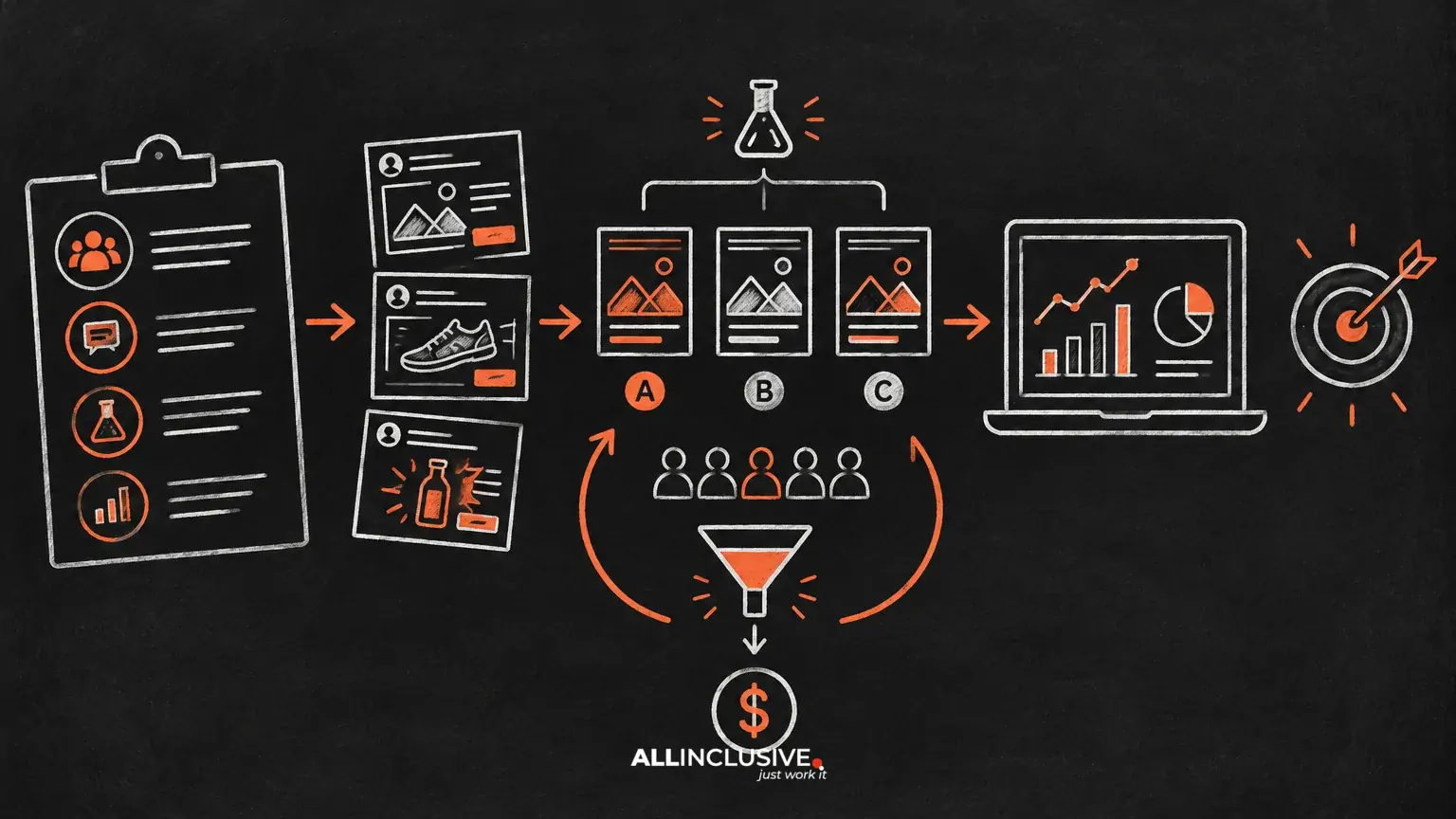
Use a creative test matrix to make those differences explicit. The creative test matrix can help teams map hooks, angles, formats, and offers without confusing superficial variations with genuine learning.
Protect the learning agenda
Every replacement should have a stated hypothesis. For example: “A demonstration-led opening will outperform the current benefit-led opening among high-intent prospects because it makes the product’s mechanism easier to understand.” Define what will change, what will remain constant, and which outcomes will determine the next decision.
This avoids replacing fatigue with random production. The objective is not merely to create something different; it is to learn which creative variables sustain response.
Build a proactive fatigue-management system
Maintain a creative health log
Track launch dates, meaningful edits, audience context, spend changes, primary results, early attention signals, downstream outcomes, and the reason for each decision. A simple log makes it easier to spot recurring patterns across concepts and audiences.
Set review triggers, not universal thresholds
There is no reliable universal fatigue threshold for every account, audience, format, or buying objective. Instead, define internal triggers based on your own baseline. Examples include a sustained deterioration in attention and conversion quality, increasing repeat exposure without incremental results, or one concept underperforming newer assets in a comparable environment.
Keep a pipeline of distinct concepts
Production should begin before the current winner fails. Maintain a backlog of customer problems, objections, use cases, demonstrations, proof points, and message angles. This gives the team options beyond cosmetic refreshes when fatigue appears.
Separate testing from maintenance
Testing asks a question and produces learning. Maintenance keeps the account supplied with viable variations and replacements. Combining both activities in one undifferentiated workflow makes it difficult to know whether a new asset is intended to validate a hypothesis or simply extend delivery.
For a broader operating model, see the creative testing framework and the guide to creative iteration.
A practical decision checklist
- Confirm that the decline is real and compare it with a relevant baseline.
- Check whether attention signals weakened before business outcomes.
- Review audience, placement, budget, offer, landing page, and measurement changes.
- Compare the affected concept with newer creative in the same context.
- Decide whether to adjust, iterate, pause, or replace the concept.
- Write the hypothesis and define the next evaluation criteria.
- Update the creative health log and feed the learning into the next brief.
Creative fatigue is best managed as an operating condition, not a surprise event. Teams that monitor signal sequences, distinguish fatigue from saturation, and maintain a pipeline of materially different ideas can respond before declining efficiency becomes an account-wide problem. That discipline should sit inside the broader paid media operating system, where creative, audience, offer, measurement, and budget decisions are evaluated together.