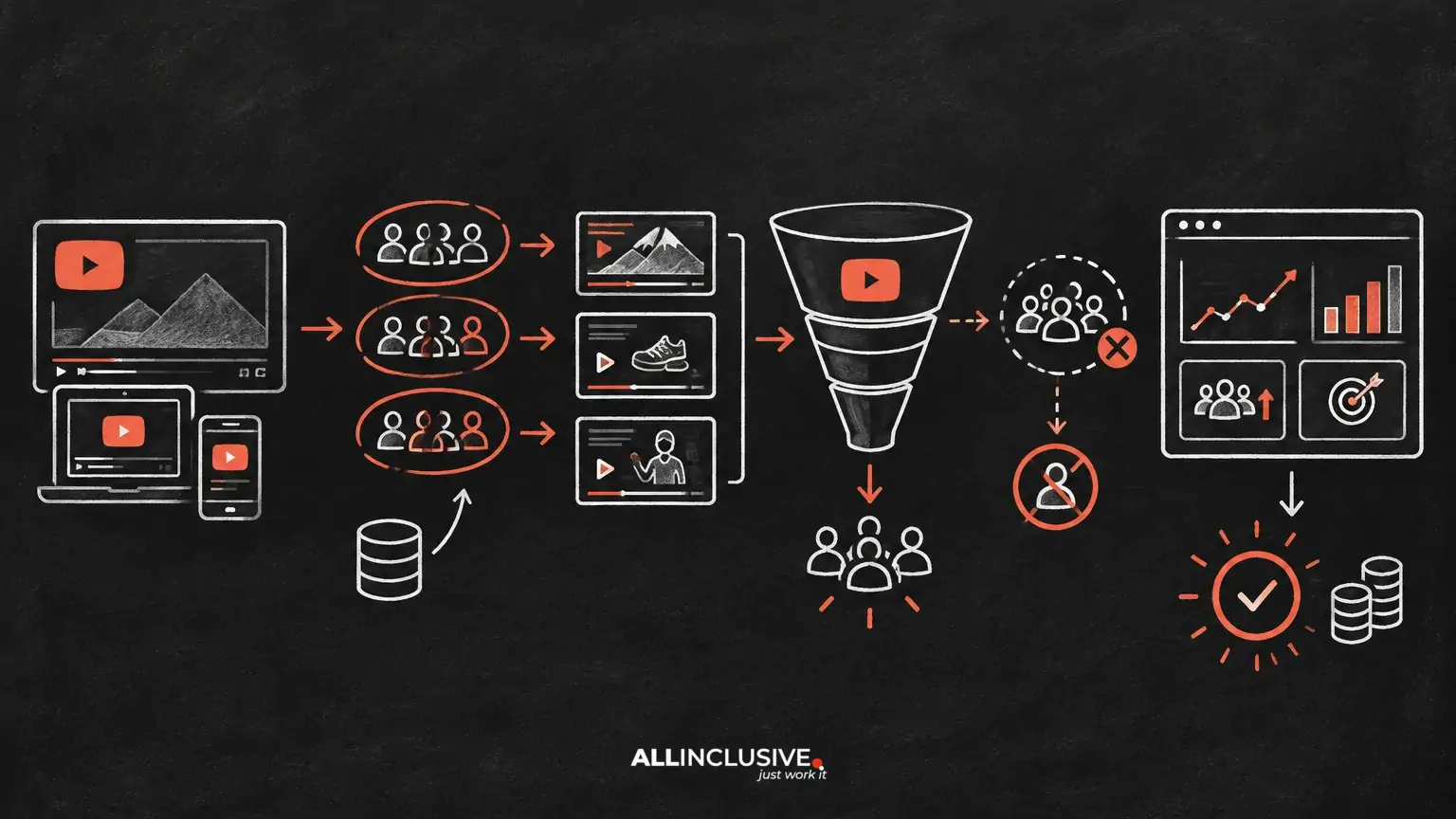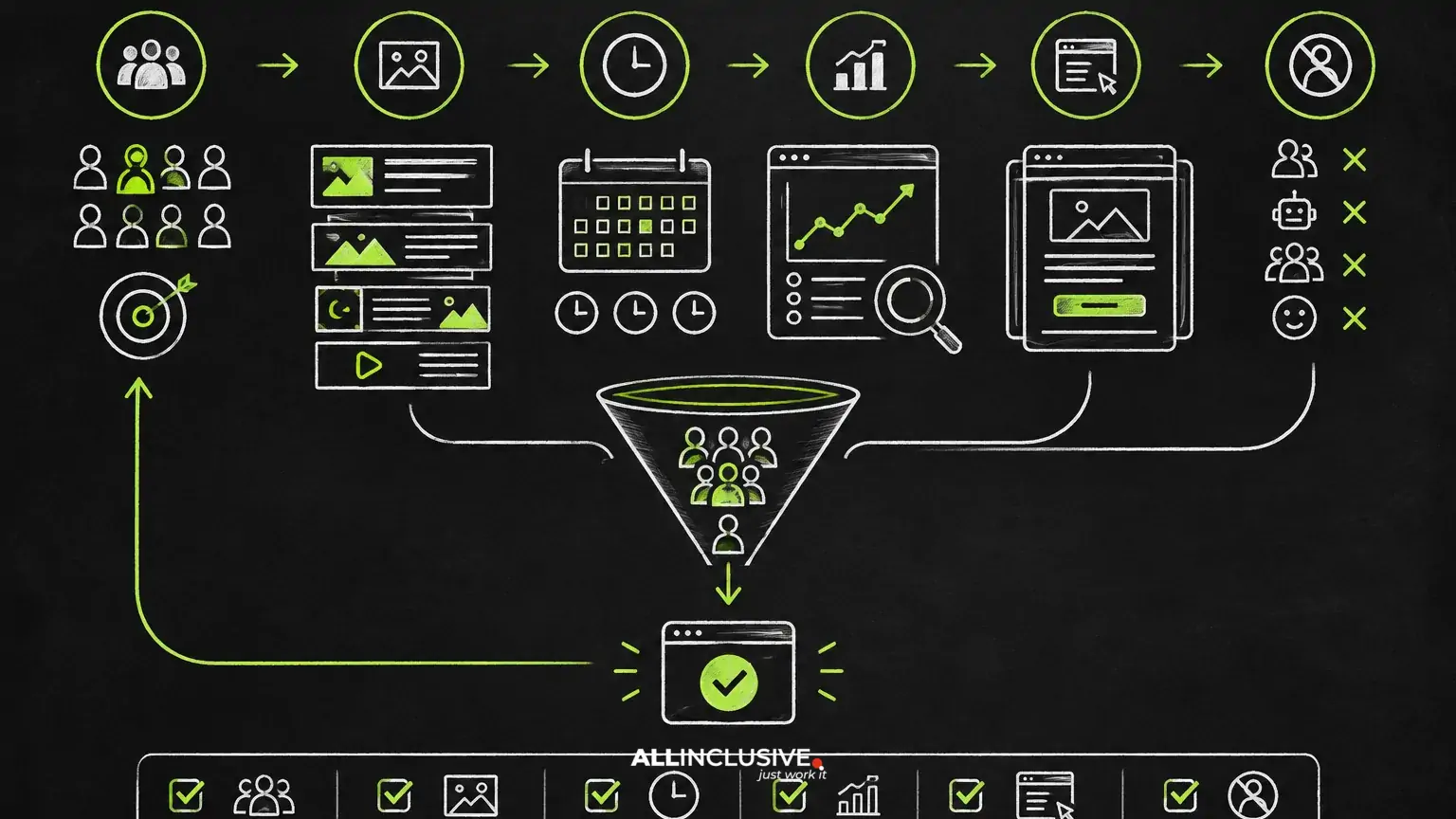
Remarketing can reconnect paid-media campaigns with people who already visited your site, viewed a product, started a form or engaged with your brand. But prior exposure does not automatically make an audience valuable. A weak audience definition, repetitive creative, incomplete tracking or missing exclusions can turn a useful follow-up program into wasted spend.
Use this remarketing checklist before launch and during routine reviews. It covers five connected areas: audience design, creative, frequency, tracking and exclusions. The goal is not to show more ads to more people. It is to create a controlled sequence that reflects what a person has already done and what should happen next.
1. Define the job of remarketing first
Start by identifying the business action the campaign is meant to support. Remarketing may be used to recover abandoned demand, nurture consideration, reintroduce a product, support a sales cycle or retain existing customers. Each use case needs different audiences, messages and success criteria.
Write a one-sentence campaign brief before building segments:
“We will reach [audience] after [signal] to encourage [next action] within [time window], while excluding [people who should not receive this message].”
For example, a B2B advertiser might target visitors to a solution page who did not submit a form, with proof-oriented content and a consultation offer. An ecommerce advertiser might target product viewers separately from cart abandoners, because those groups have demonstrated different levels of intent.
Keep the program aligned with the broader remarketing strategy, rather than treating each audience as an isolated campaign.
2. Audit audience definitions
Use meaningful behavioral signals
Build audiences from actions that change the appropriate message. Useful signals can include:
- Visited a product, service or solution page.
- Viewed multiple pages or spent meaningful time with content, where measurement is reliable.
- Started but did not complete a lead form or checkout.
- Downloaded a resource or attended a webinar.
- Engaged with a video, social post or lead-generation asset.
- Purchased, subscribed or became an existing customer.
A page visit alone may be too broad for a high-cost conversion campaign. Conversely, a narrowly defined action may produce too little delivery to support a meaningful test. Choose signals based on the decision you want the audience to make next.
Separate intent levels
Do not automatically combine all non-converters. A first-time content reader, a pricing-page visitor and a cart abandoner should not receive the same creative or bid priority.
A practical structure is:
- Exploration: light engagement or general site visits.
- Consideration: visits to product, service, comparison or case-study pages.
- High intent: pricing views, form starts, demo requests or cart activity.
- Post-conversion: customers, leads or subscribers who may need onboarding, cross-sell or retention messaging.
Document the qualifying event, audience duration, intended message and desired next action for each segment. This makes later troubleshooting far easier.
Review audience size and eligibility cautiously
Audience availability can vary by platform, region, consent status, traffic volume and campaign settings. Do not assume that an audience is immediately usable simply because its rule has been configured. Confirm that it is populating and eligible for the intended destination before making performance judgments.
For a deeper look at duration choices, see Remarketing Windows: Choosing 7-, 30-, 90- and 180-Day Audiences.
3. Match creative to the user’s next question
Remarketing creative should acknowledge prior behavior without sounding intrusive. The ad does not need to repeat the exact page someone viewed. It should answer the objection or uncertainty that likely prevented the next step.
Match message to intent:
- Content reader: offer a related guide, framework or educational asset.
- Solution-page visitor: explain differentiation, implementation or suitability.
- Pricing visitor: reduce uncertainty around process, scope, support or qualification.
- Form starter: make the next step clear and remove avoidable friction.
- Cart abandoner: return attention to the product, purchase process or relevant reassurance.
- Existing customer: promote onboarding, adoption, renewal or genuinely relevant complementary products.
Prepare multiple creative angles rather than minor variations of one headline. Useful angles include proof, education, objection handling, product utility, comparison and urgency where the urgency is real. Keep claims supportable and consistent with the landing page.
Check message continuity
A person who clicked an ad about implementation should not land on a generic homepage with no visible connection to that promise. Before launch, compare the audience rule, ad message, offer and landing-page content. Any mismatch can create friction and make attribution harder to interpret.
Use a distinct call to action when the audience is already familiar with the brand. “Review the implementation guide” may be more appropriate for a research-stage visitor than “Buy now.” The correct call to action depends on the conversion path, not on the fact that the person has seen an ad before.
4. Set frequency controls and fatigue rules
Frequency management is a strategic control, not merely a platform setting. Repeated exposure can help maintain attention, but excessive repetition can reduce perceived relevance, irritate users and obscure whether the campaign is generating incremental demand.
Define the following before launch:
- How often a person may see the campaign within a chosen period.
- Whether high-intent audiences should receive different limits from broader audiences.
- When creative should rotate or be replaced.
- What signals indicate fatigue, such as declining engagement, rising costs, negative feedback or weaker conversion quality.
- Whether overlapping campaigns can expose the same person to multiple messages.
Platform frequency controls differ by buying method and inventory. Treat the configured limit as one safeguard, not a guarantee that the overall account experience is controlled. Review audience overlap, campaign-level delivery and creative repetition together.
For a fuller measurement framework, read Remarketing KPIs: What to Measure Beyond CTR and ROAS.
5. Verify tracking before judging performance
Remarketing depends on two measurement jobs: qualifying people for audiences and recording the outcomes that matter. Test both independently.
Audience collection checks
- Confirm the relevant pages or events trigger the intended audience rule.
- Check that key actions are not firing multiple times unintentionally.
- Verify consent and privacy controls are handled according to the applicable requirements and business policy.
- Confirm that important customer or lead states can be used for suppression where appropriate.
- Record the expected delay between a user action and audience availability.
Conversion checks
- Test the primary conversion from ad click through completion.
- Confirm that the conversion event records the correct action and value, if value is used.
- Check deduplication when more than one measurement method is active.
- Separate primary business outcomes from secondary engagement events.
- Compare platform reporting with analytics and backend or CRM records where possible.
Do not interpret a strong reported return as proof that remarketing created incremental demand. Prior visitors may have converted through another channel or without further advertising. Review attribution assumptions alongside campaign results; Remarketing Attribution: Avoiding False ROAS and Double Counting covers this issue in more detail.
6. Build exclusions before launch
Exclusions protect budget, relevance and measurement. They should be designed at the same time as inclusions, not added only after complaints or wasted spend appear.
Common exclusions include:
- People who completed the campaign’s primary conversion.
- Existing customers when the offer is intended only for acquisition.
- Leads already being handled by sales or enrolled in a different nurture path.
- Employees, partners, vendors or internal traffic where identifiable.
- People who are ineligible because of geography, product availability or compliance requirements.
- People already receiving a higher-priority message from another campaign.
- Audiences whose recent behavior indicates that the offer is no longer relevant.
Exclusions are not always permanent. A customer may be excluded from an acquisition campaign but included in a retention or cross-sell campaign. Define the business state each exclusion represents and assign an owner for reviewing it.
See Remarketing Exclusions: Who You Should Stop Advertising To for a more detailed exclusion framework.
7. Review landing-page readiness
The landing page should support the next step promised by the ad. Check that:
- The page reflects the audience’s likely intent.
- The offer and call to action are immediately understandable.
- Forms, checkout steps and contact paths work across relevant devices.
- Existing customers or known leads are not forced through an irrelevant acquisition flow.
- Page content does not contradict the ad’s claims or conditions.
- Conversion tracking is present and tested on the destination.
Sending every remarketing audience to the homepage is usually a sign that the campaign has not been mapped to the user journey. A dedicated page is not always necessary, but the destination should make the next action obvious.
8. Create a launch and review checklist
Use this condensed checklist in your campaign documentation:
- Campaign objective and next action are documented.
- Audience rules reflect meaningful behaviors.
- Intent levels are separated where the message or value differs.
- Audience windows have a clear rationale.
- Creative answers a likely objection or next question.
- Ad and landing-page promises are consistent.
- Frequency controls and fatigue rules are defined.
- Audience collection and conversion tracking are tested.
- Exclusions cover converters, customers and conflicting journeys.
- Overlap with other campaigns has been reviewed.
- Reporting distinguishes delivery, engagement and business outcomes.
- Ownership and review cadence are assigned.
After launch, review performance by audience, intent level, creative, frequency and conversion quality. Avoid making decisions from aggregate campaign totals alone. A campaign can look efficient because a small high-intent segment is carrying results while broader audiences receive spend without comparable value.
Use the checklist to improve control, not just delivery
Effective remarketing is a sequence of decisions: who qualifies, what they should see, how often they should see it, what action counts and when advertising should stop. The strongest programs make those decisions explicit before launch and revisit them as the customer journey changes.
If you are building a broader paid-media operating model, use this checklist within your paid media planning process. It will help your team distinguish genuine follow-up opportunities from audiences that are merely available to target.