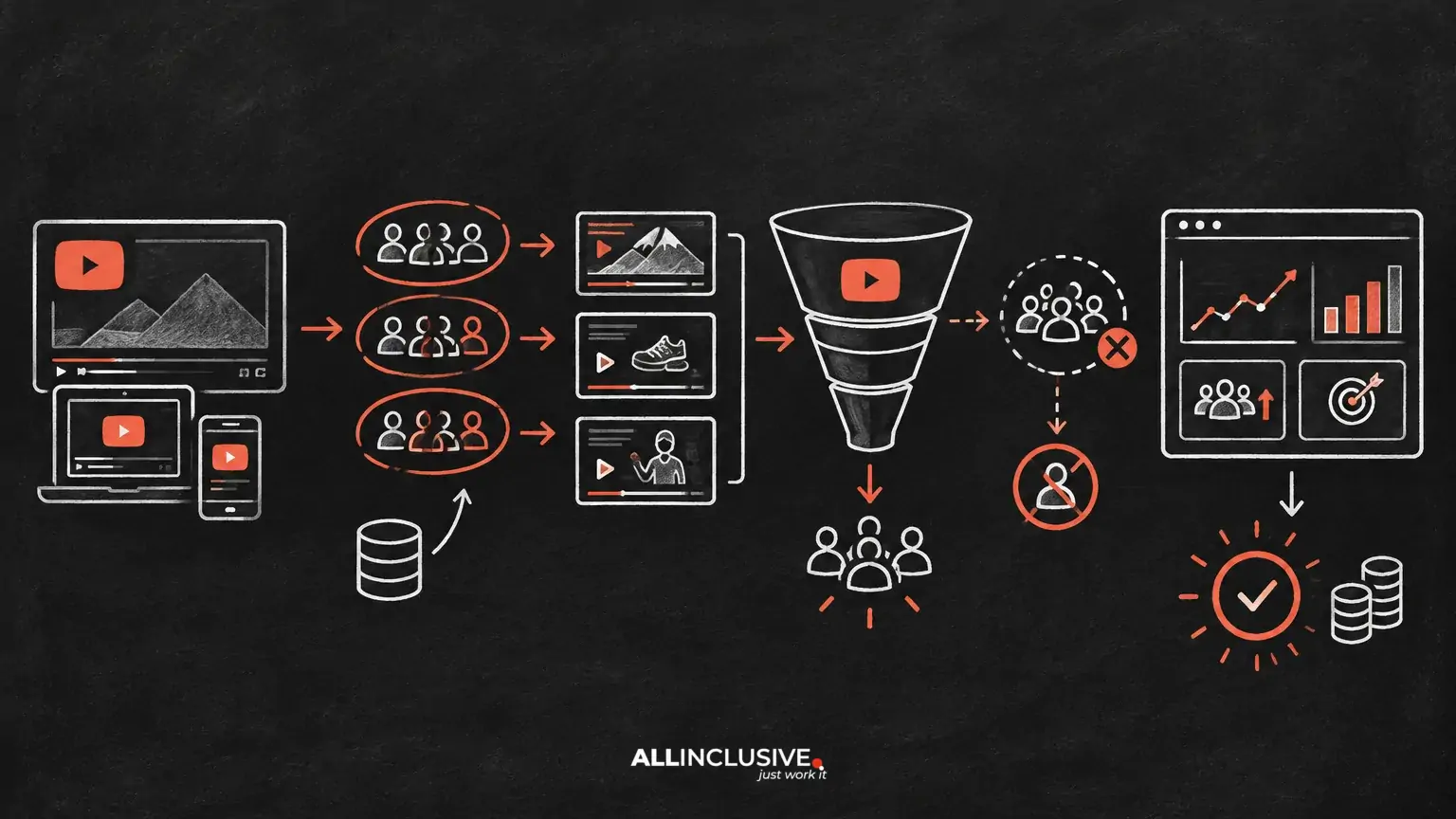
Remarketing audience segmentation is the practice of dividing previous visitors, prospects, and customers into meaningful groups so each can receive a more relevant message, offer, bid strategy, or exclusion. The objective is not to create the largest possible audience list. It is to distinguish people who need different next steps.
A visitor who viewed a pricing page should not automatically receive the same ad as someone who read one introductory article. Likewise, a recent customer may need retention or cross-sell messaging rather than acquisition creative. Effective segmentation connects observed behavior with a clear business decision: what should this person see next, and should they be advertised to at all?
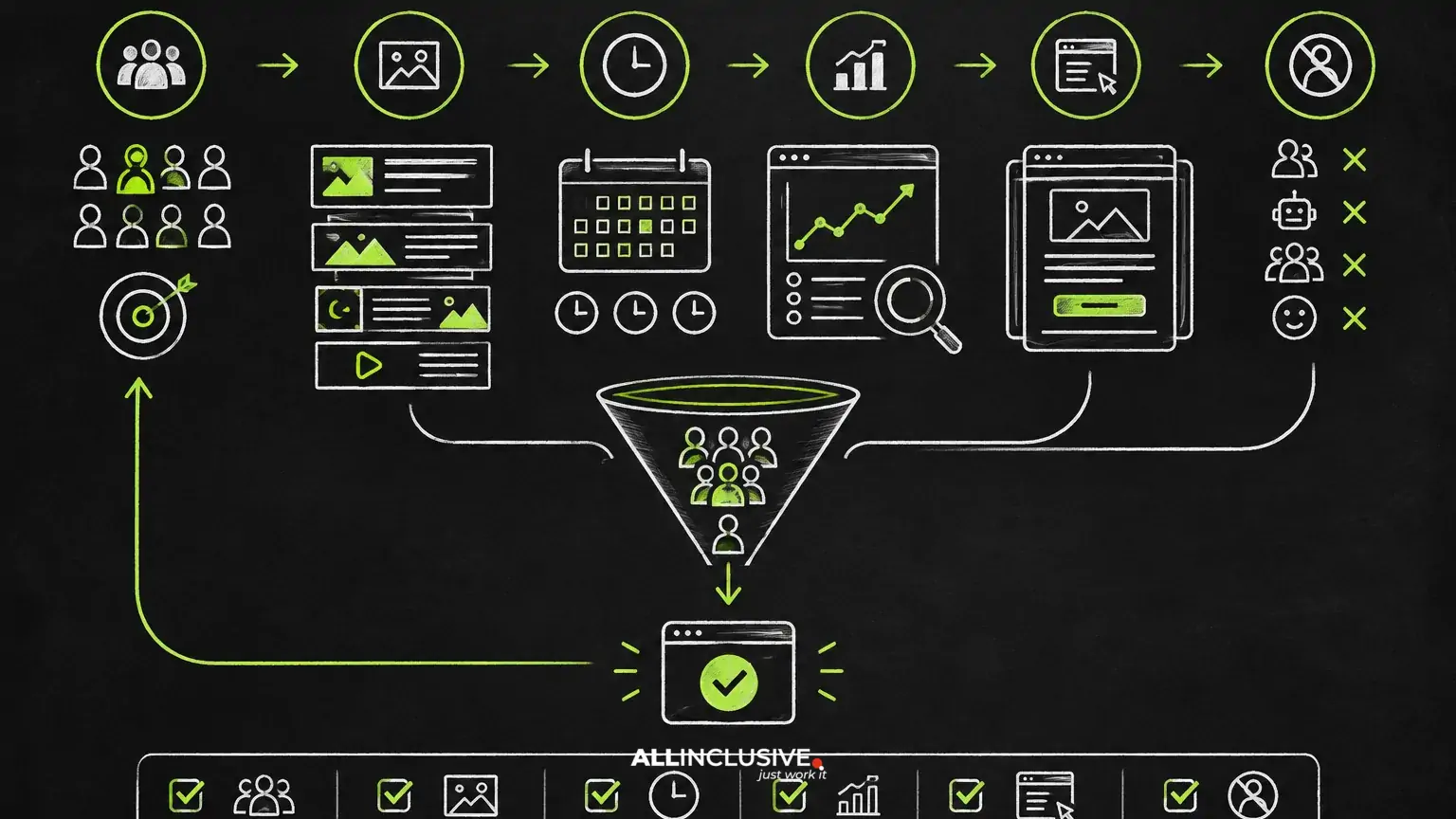
This framework organizes remarketing audiences by five practical dimensions: intent, behavior, value, timing, and customer status. Use those dimensions to build a manageable audience architecture, prioritize high-signal groups, and avoid paying to repeat irrelevant messages.
Start with the decision, not the audience list
Before creating a segment, define the decision it will support. A useful segment should change at least one of the following:
- The message or creative shown to the audience
- The landing page or conversion path used
- The bid, budget, or delivery priority
- The frequency or duration of exposure
- The audience’s eligibility for advertising
If two audiences receive the same creative, follow the same conversion path, have the same value, and share the same exclusions, combining them may be more efficient. Segmentation has a cost: more audiences create more naming, QA, reporting, and delivery complexity. Build a segment when the expected improvement in relevance or control justifies that cost.
The five dimensions of remarketing audience segmentation
1. Segment by intent
Intent is usually the most useful starting point because it reflects how close someone may be to taking a commercial action. Signals can include pages viewed, product or service category, use of a calculator, form initiation, demo-page visits, pricing-page visits, or other meaningful interactions.
A simple intent hierarchy might look like this:
- Exploratory: visitors who consumed introductory content or arrived through broad educational queries
- Evaluating: visitors who reviewed solution pages, comparison content, case studies, or detailed product information
- High intent: visitors who viewed pricing, requested information, started a form, or reached another defined conversion step
- Converted: leads, buyers, subscribers, or other completed outcomes that require a different treatment
Intent does not guarantee readiness. A pricing-page visitor may be researching, and a content visitor may already know the category well. Treat intent tiers as working hypotheses that should be validated against conversion quality and downstream outcomes.
2. Segment by behavior
Behavioral segmentation adds depth to page-based audiences. It can distinguish a single low-engagement visit from repeated, purposeful interaction.
Useful behavioral signals include:
- Visit frequency or number of sessions
- Depth of content consumption
- Engagement with key navigation elements
- Video, webinar, or downloadable asset interactions
- Form starts without completion
- Product configuration or search activity
- Visits across multiple related pages
For example, an audience of people who viewed one blog post may be appropriate for educational follow-up. People who visited three solution pages and returned within a short period may warrant proof-oriented creative or a stronger call to action. The exact thresholds should reflect the buying process rather than arbitrary audience size.
3. Segment by value or account priority
Not every prospect has the same potential business value. Where lawful, technically available, and supported by reliable first-party data, segmenting by value can help align media investment with commercial priorities.
Possible inputs include:
- Product, plan, or service category viewed
- Lead type or requested solution
- Account tier or strategic-account status
- Estimated deal value or customer lifetime value
- Existing relationship or expansion potential
- Geography, market, or serviceability
Value segmentation should not be used to justify weak relevance or poor user experience. A high-value account still needs appropriate messaging and a credible next step. It is also important to separate inferred value from confirmed value. A page visit may indicate interest in an expensive solution, but it does not prove budget, authority, or fit.
4. Segment by timing
The meaning of an interaction changes as time passes. A recent form abandon may justify a reminder, while an old content visit may need a fresh educational angle—or no advertising at all.
Timing can be organized around:
- Recency: how long ago the meaningful action occurred
- Buying-cycle stage: whether the category is typically considered quickly or over a longer period
- Event relevance: whether the interaction is still connected to a current offer, product, or need
- Contact cadence: how recently the person saw related ads or received other marketing communications
Audience duration and message sequencing are related but not identical. A long eligibility window does not mean a person should receive the same ad for the entire period. Review remarketing windows separately from creative rotation and frequency controls.
5. Segment by customer status
Customer status is essential for preventing acquisition campaigns from treating everyone as a prospect. At minimum, distinguish non-converters, open leads, active customers, former customers, and users with a recent support or service interaction when those distinctions affect the message.
Customer-status segments can support:
- Lead progression and sales enablement
- Onboarding or adoption messaging
- Renewal and retention activity
- Cross-sell or expansion campaigns
- Win-back programs
- Suppression from acquisition advertising
Use caution when applying sensitive or highly personal information. Audience design should follow applicable privacy requirements, consent practices, platform policies, and internal governance. Strategy should begin with the business purpose and data minimization, not with every available user attribute.
A practical segmentation matrix
A matrix helps prevent single-signal audience design. Combine one primary dimension with only the secondary dimensions that change execution.
| Primary signal | Secondary qualifier | Possible message | Likely action |
|---|---|---|---|
| High-intent page visit | Recent, non-converter | Address objections and clarify the next step | Send to a relevant conversion page |
| Content engagement | Repeated visits in the same topic | Offer deeper education or proof | Build consideration |
| Form start | No completion | Reduce friction and explain what happens next | Return to the appropriate form or alternate contact path |
| Existing customer | Eligible product or service gap | Introduce a relevant expansion or retention message | Use a customer-specific destination |
| Former customer | Recent re-engagement | Address the reason to reconsider | Test a win-back path or exclude if inappropriate |
The matrix is a planning tool, not a requirement to build a separate campaign for every cell. If an audience is too small, unstable, or operationally indistinguishable from another group, consolidate it and use creative or landing-page variation where practical.
Build an audience architecture that stays manageable
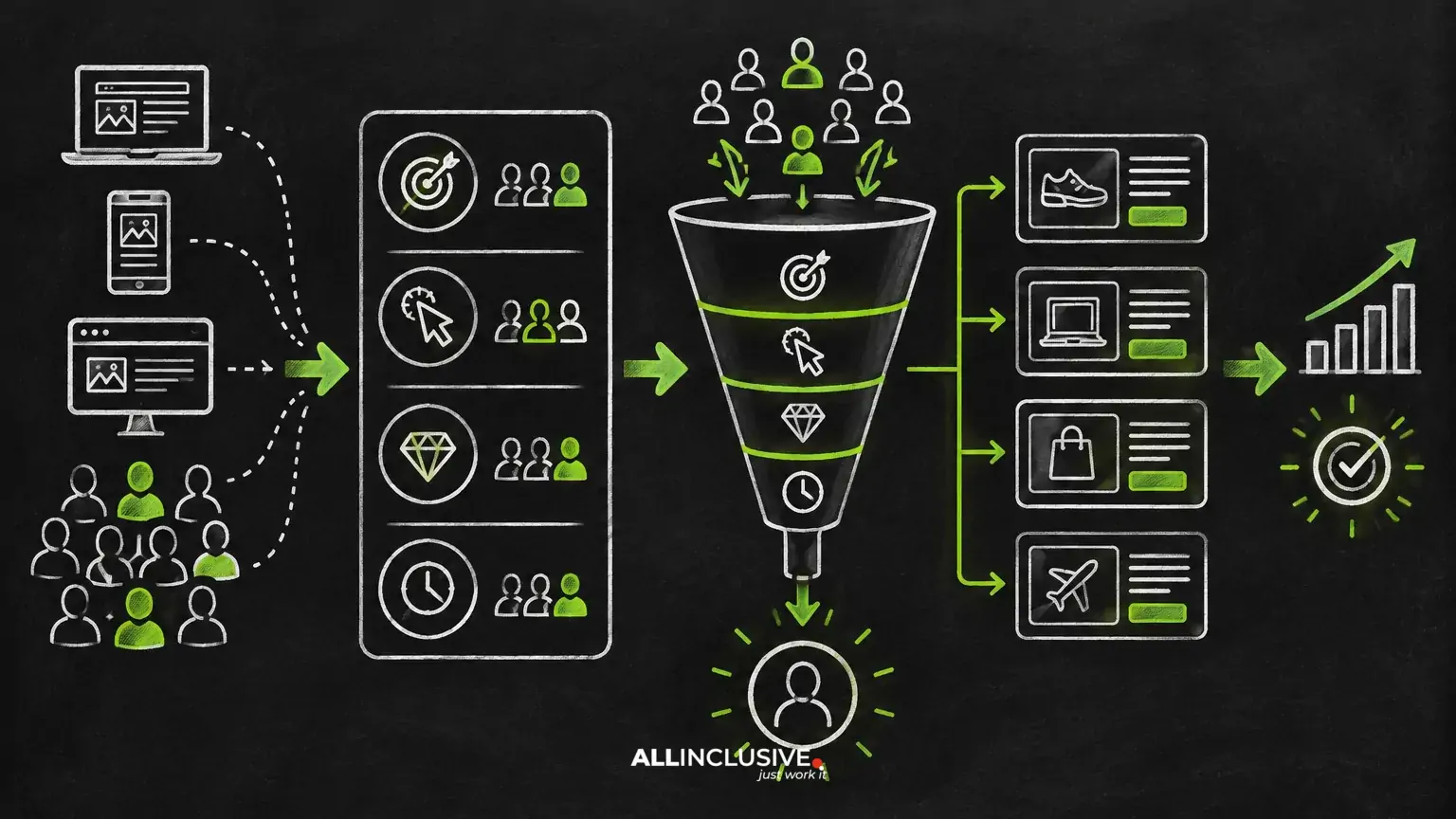
A durable structure usually has four layers:
- Base pools: all eligible visitors, engaged visitors, leads, and customers
- Intent groups: exploratory, evaluating, and high-intent actions
- Timing bands: recent, mid-window, and older interactions based on the buying cycle
- Exclusions: converters, ineligible users, existing customers, or people exposed beyond a defined limit
Keep the hierarchy understandable in both the audience names and documentation. A naming convention can include source, signal, recency, market, and status—for example, PricingView_Recent_NonConverter_US. Names should describe logic, not campaign ambitions.
Use mutually exclusive groups where overlap would distort reporting, bidding, or message sequencing. Overlap is not always wrong, but it should be intentional. If a person qualifies for both a general visitor audience and a high-intent audience, establish which one takes priority or exclude the higher-priority group from the broader pool.
Connect segments to messages and destinations
Segmentation only creates value when it changes the experience. Map each major audience to a message and destination before activation.
- Exploratory audiences: educational content, category explanation, or problem-focused proof
- Evaluating audiences: comparisons, use cases, customer evidence, implementation detail, or objection handling
- High-intent audiences: a direct next step, transparent process information, and a destination aligned with the action
- Form abandoners: reassurance about effort, privacy, response time, or what happens after submission
- Customers: onboarding, usage, renewal, expansion, or service messaging rather than acquisition claims
Do not assume the original landing page is always the correct destination. A person returning after several days may need a more focused page, a clearer proof point, or a different conversion path. For more guidance, see remarketing landing pages.
Exclusions are part of segmentation
Exclusions are not merely a cleanup step. They define who should stop receiving a message and protect budget, brand experience, and measurement quality.
Common exclusions include:
- Completed conversions when the campaign is acquisition-focused
- Unqualified or ineligible users
- Existing customers who should receive a different communication
- People outside the serviceable market
- Users who have exceeded a contact or frequency threshold
- Audiences whose consent or data-use status does not permit activation
Document the reason, owner, refresh logic, and expected effect of each important exclusion. A conversion exclusion may improve relevance, while a customer exclusion may prevent conflicting offers. Review remarketing exclusions as part of campaign design rather than after launch.
Measurement: evaluate segments by business contribution
CTR and conversion volume can help diagnose delivery, but they do not establish that a segment is valuable. Compare audiences using metrics that match the objective, such as qualified conversions, pipeline progression, revenue, retention, assisted outcomes, cost per incremental action where measurable, and frequency-related efficiency.
Keep attribution limitations visible. A remarketing audience can receive credit for people who were already likely to convert, particularly when users are selected based on strong intent. Review conversion paths, time to conversion, audience overlap, and holdout or incrementality evidence where the organization has a credible test design. Avoid declaring a segment successful solely because it captures conversions that other channels also influenced.
For a measurement-focused treatment, read remarketing attribution.
Remarketing Audience Segmentation: Implementation Checklist
- Define the business decision each segment is meant to improve.
- Choose a primary signal: intent, behavior, value, timing, or customer status.
- Add only secondary qualifiers that change the message, destination, bid, or exclusion.
- Set practical recency and eligibility rules based on the buying cycle.
- Map every important audience to a message, destination, and suppression rule.
- Check audience overlap and establish priority where groups compete.
- Validate consent, data quality, event logic, and conversion status before activation.
- Define success using qualified business outcomes, not delivery metrics alone.
- Review audience size, stability, frequency, spend, and downstream quality on a scheduled basis.
- Consolidate segments that do not produce a meaningful execution or measurement difference.
Final principle: segment for relevance and control
The strongest remarketing programs do not maximize the number of audiences. They create enough distinction to match a person’s likely need, timing, value, and relationship with the business—then use exclusions and measurement to keep the system disciplined.
Start with a small number of behaviorally meaningful groups, connect each to a clear next step, and expand only when the data or customer journey supports a real difference. That approach keeps remarketing useful for users and manageable for the team operating it.
For broader planning context, explore the remarketing strategy pillar and the wider paid media hub.