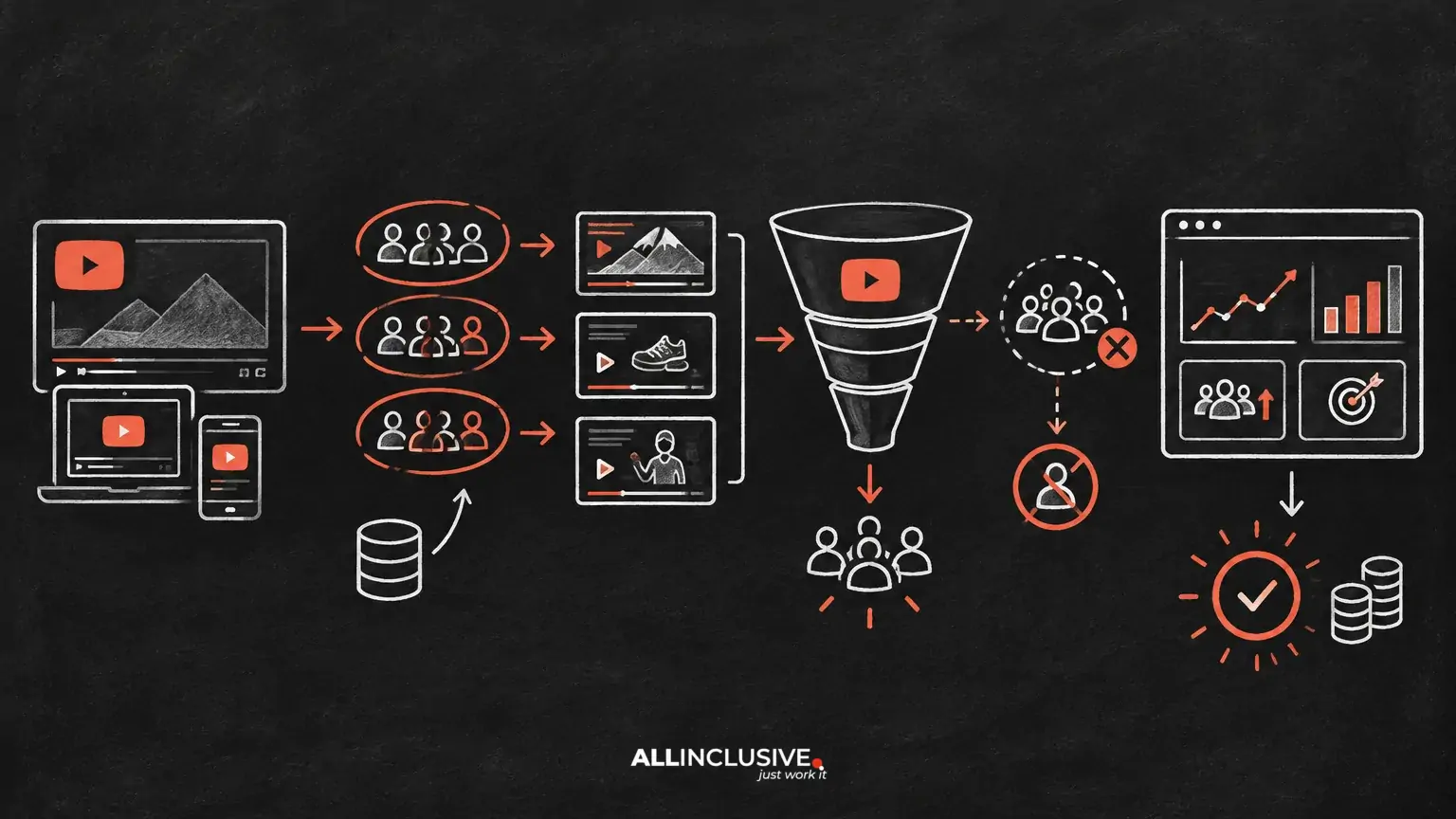
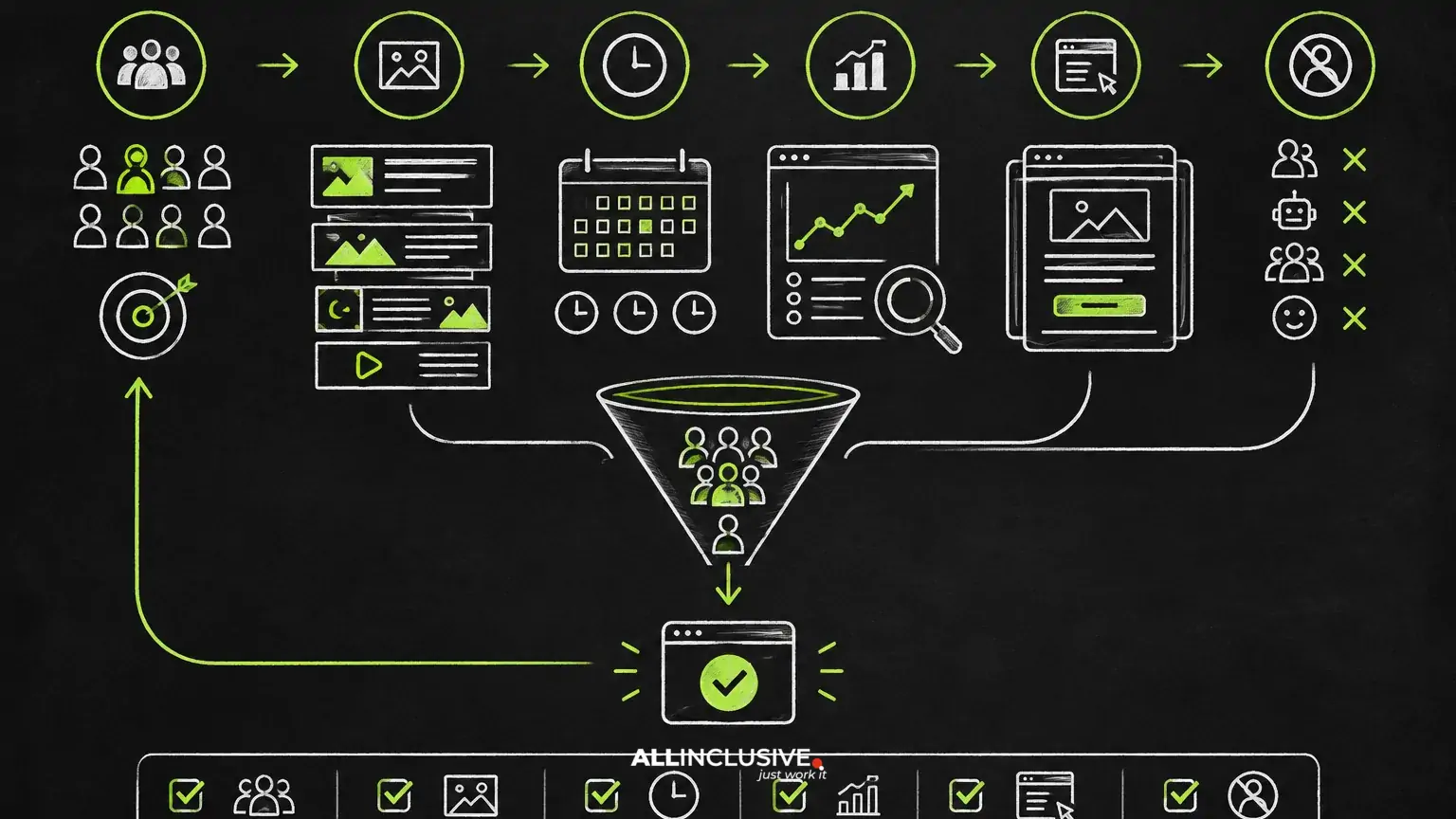
Remarketing landing pages are most effective when they help a returning visitor take the next logical step. They are not automatically better than sending someone back to the original page. The right destination depends on what the visitor already saw, what they did, how much intent they demonstrated, and what your remarketing ad is asking them to do now.
In practice, send visitors back to the original landing page when the offer and intent are unchanged, use a dedicated remarketing page when the follow-up message or conversion path is materially different, and avoid sending them to a new page when the audience or tracking logic is not specific enough to justify the added complexity.
What makes a remarketing landing page different?
A first-touch landing page introduces the offer. A remarketing destination should account for the fact that the visitor has already encountered your brand, offer, or category. That does not mean every returning visitor is highly qualified. It means the page can reduce repetition and address the next question in the decision process.
A useful remarketing page may therefore:
- Clarify an objection that was not addressed on the first visit.
- Provide proof, implementation details, or comparison information.
- Present a stronger or more relevant call to action.
- Continue a multi-step conversion path.
- Align the destination with a specific audience segment or ad message.
The page should not exist merely because a campaign is labeled “remarketing.” A new URL adds creative, analytics, QA, and maintenance requirements. It is justified when it creates a better experience or produces clearer measurement.
When to send visitors back to the original landing page
The offer has not changed
If the visitor saw a relevant offer but did not convert, the original landing page may still be the most appropriate destination. Returning to the same page preserves message continuity and avoids forcing the user to relearn the proposition.
This is especially reasonable when the page already contains the information needed to make a decision and the remarketing ad simply reinforces the original action. For example, a visitor who viewed a consultation page may be sent back to that page after seeing an ad that addresses availability or reminds them of the business problem being solved.
The visitor’s behavior does not reveal a distinct need
Broad site visitors, short sessions, and users who viewed only a general resource often provide limited evidence about intent. A highly specific landing page can overinterpret that behavior. In such cases, a well-structured original page or a relevant educational destination may be safer than a narrowly tailored conversion page.
The original page is already designed for returning users
Some pages naturally support repeat visits. They may include clear navigation, proof, FAQs, pricing context, and a strong primary action. Creating a separate remarketing page could create duplicate content and split conversion data without improving the experience.
Message continuity matters more than novelty
When the ad repeats or reinforces the original promise, a different destination can create friction. Visitors may wonder whether they clicked the wrong ad, whether the offer changed, or whether they are being asked to start over. Match the landing page to the ad’s promise rather than assuming a returning user needs a completely new experience.
When a dedicated remarketing landing page makes sense
The visitor has moved to a later decision stage
A returning visitor may now need proof rather than a basic introduction. A dedicated page can focus on case examples, implementation steps, security information, product comparisons, or answers to common objections.
For a B2B service, the first visit might explain the service category and invite an exploratory call. A later remarketing ad could offer a practical assessment or planning session. That ad should lead to a page that explains the assessment, who it is for, what the visitor will receive, and what happens after submission.
The follow-up offer is genuinely different
A new offer deserves a destination that explains its own value and requirements. A downloadable guide, product demonstration, consultation, webinar, and trial can all require different forms of proof and different conversion fields.
Do not disguise a new offer as a minor variation of the original page. Make the relationship clear: explain why the visitor is seeing this next step and how it relates to their earlier interaction.
The audience segment has a specific context
Visitors from a product page, pricing page, abandoned form, or high-value content page may have different information needs. A segment-specific destination can reflect that context without forcing every remarketing audience through the same generic page.
Segmentation should be based on meaningful behavior or declared information, not on assumptions. A visitor who viewed one blog post should not automatically receive the same page as someone who reviewed pricing and began a form.
The ad introduces a new promise
Landing-page relevance is primarily a message-matching problem. If the remarketing ad promises a checklist, assessment, comparison, or limited next step, the destination must deliver that promise immediately. A dedicated page is often appropriate when the new message cannot be supported clearly on the original page.
When not to create a separate remarketing page
The audience is too small or poorly defined
A separate page may be operationally attractive but strategically unnecessary when the audience definition is broad, unstable, or based on weak signals. Start with the clearest behavioral distinctions available. If you cannot explain why this audience needs different content, keep the destination simple.
The campaign is optimizing for a different problem
A new landing page will not fix weak audience quality, excessive frequency, poor creative, broken tracking, or an offer that lacks demand. Review the full remarketing system before adding another asset. Useful controls include audience exclusions, recency windows, frequency management, and post-conversion suppression.
For related planning, see the remarketing exclusions guide and the framework for choosing remarketing windows.
The destination would duplicate the original page
Changing a headline and button color does not necessarily create a meaningful remarketing experience. If the copy, proof, offer, and conversion path are essentially identical, maintain one strong page and concentrate effort on audience quality and message sequencing.
Measurement cannot distinguish the experience
If analytics, campaign naming, conversion events, or CRM handoff cannot identify which destination was used, the added page may create reporting ambiguity. Establish a measurement plan before launch, including the page view, primary conversion, assisted actions, lead quality signals, and any downstream qualification events.
A decision framework for choosing the destination
Use these questions before building or assigning a remarketing landing page:
- What did the visitor previously do? Separate a general visit, content view, product view, pricing visit, form start, and conversion.
- What is the ad asking them to do now? The destination should support that exact action, not merely provide a familiar URL.
- What information is missing? Identify the next objection or decision requirement rather than repeating introductory copy.
- Has the offer changed? If the offer, audience, or stage has materially changed, a dedicated page becomes more defensible.
- Can the page be measured and maintained? Confirm analytics, QA ownership, privacy considerations, CRM fields, and a review process.
A simple rule is useful: return visitors to the original page when continuity is the advantage; create a dedicated page when context, offer, or decision stage has changed.
How to structure a remarketing landing page
Confirm the context without overexplaining it
The page does not need to announce that the visitor is being remarketed to. Instead, use a headline and opening section that make the current value clear. A returning visitor should understand the page quickly, without being confronted with language that feels invasive or overly personalized.
Lead with the next decision
Move beyond a broad category description. Explain what the visitor can do now, who the step is for, and what will happen next. For a B2B conversion, include useful details about the process, expected preparation, participants, and follow-up.
Address the likely objection
Use prior behavior to form a hypothesis, not a certainty. If visitors often return after reviewing pricing, explain scope and implementation. If they return after consuming educational content, provide practical application and proof. Organize the page around the decision barrier rather than around internal product categories.
Keep the primary action focused
Remarketing pages can support secondary research, but too many competing actions weaken the next step. Use one primary call to action and make any secondary links clearly subordinate. Preserve enough navigation for trust and validation without turning the page into another broad site visit.
Match form friction to intent
A returning visitor does not automatically warrant a longer form. Request information that is necessary for routing, qualification, or fulfillment. Higher-friction forms should be supported by a clear reason to complete them and a credible explanation of what happens next.
Testing and measurement considerations
Evaluate the destination as part of the entire remarketing sequence. A higher click-through rate may indicate stronger creative alignment but does not prove that the landing page creates better business outcomes. Review conversion rate, qualified conversion rate, lead progression, revenue where available, and signs of user friction.
Compare like-for-like audiences and intent levels. A dedicated page used for high-intent visitors should not be evaluated against a broad site-visitor audience without accounting for that difference. Also document whether conversions are new, returning, assisted, or already influenced by another channel.
For a broader measurement perspective, use the guidance in remarketing attribution to reduce false confidence from duplicate or overstated credit.
Remarketing Landing Pages: Implementation Checklist
- Define the prior visitor action and recency range.
- State the new ad promise in one sentence.
- Choose the original page or document why a new page is necessary.
- Align the headline, proof, offer, form, and thank-you experience.
- Apply exclusions for converters, disqualified users, and audiences that should not receive the message.
- Verify tags, consent handling, conversion events, URL parameters, and CRM attribution.
- Set a review date for audience size, frequency, page performance, and lead quality.
Remarketing landing pages should make the second interaction more relevant, not simply more elaborate. Start with the visitor’s previous behavior, define the next decision, and only build a separate destination when it improves that path. That discipline keeps remarketing useful for audiences and manageable for marketing teams within a broader paid media strategy.
For broader strategic context, see our remarketing strategy resource.