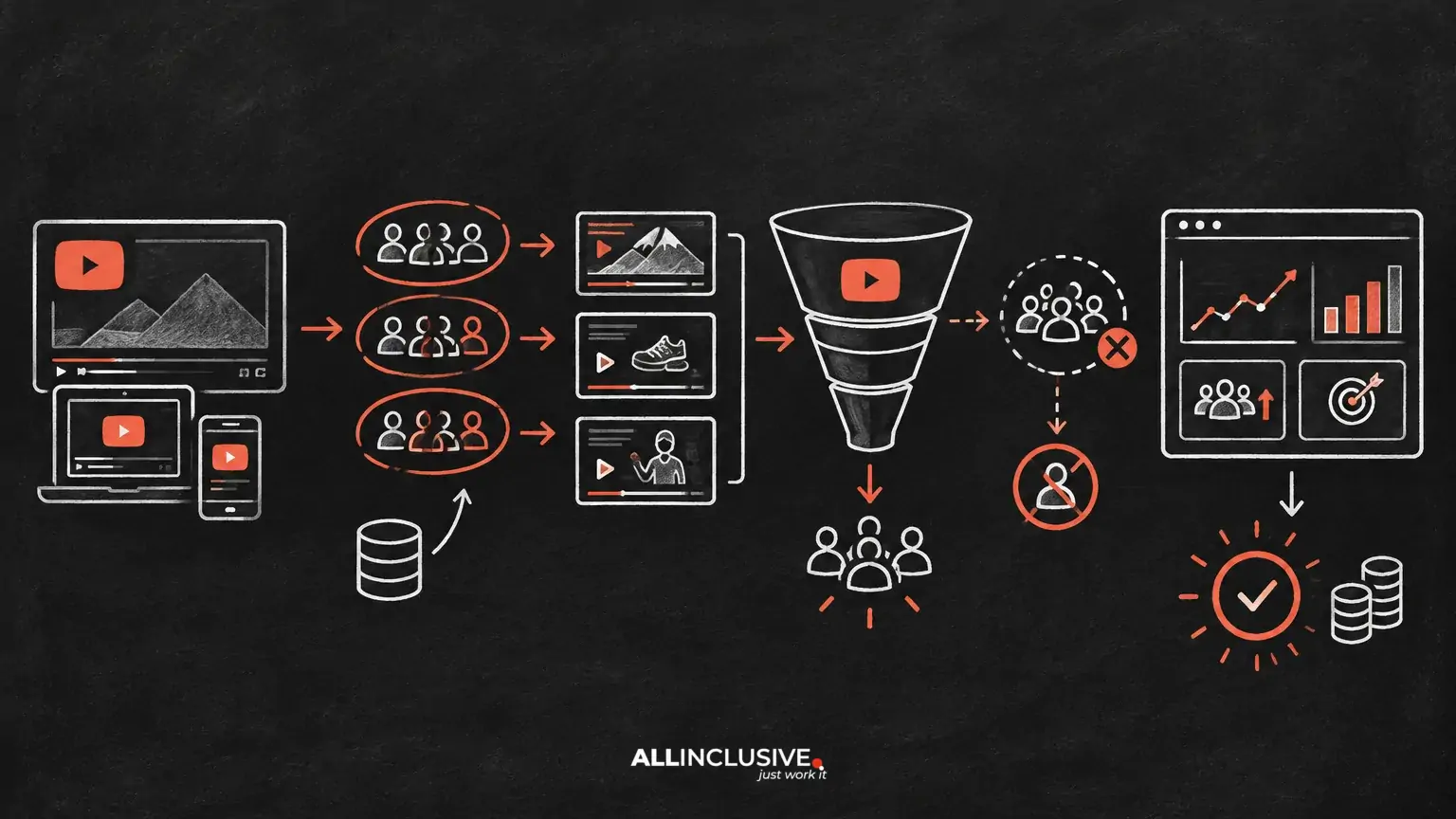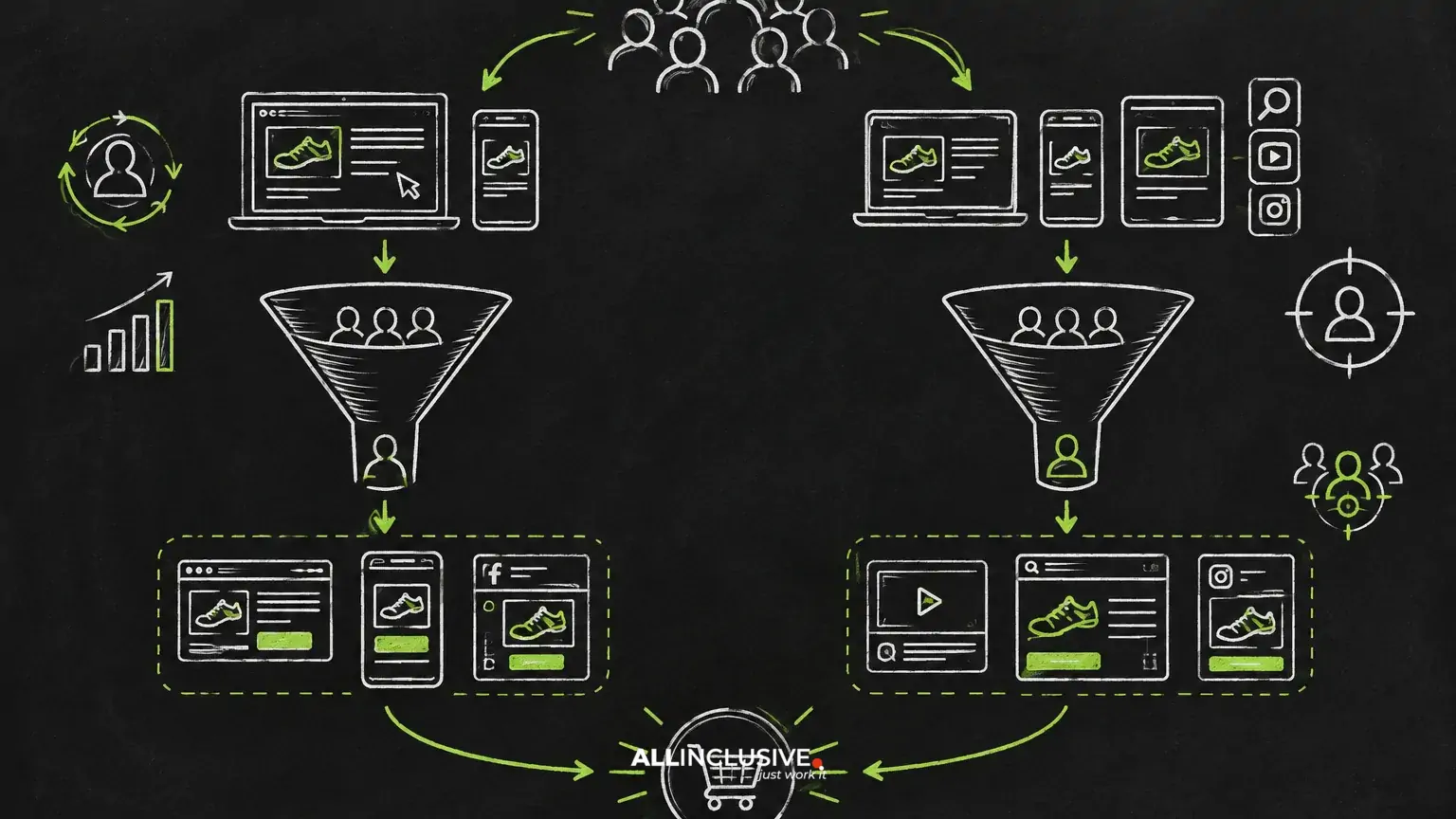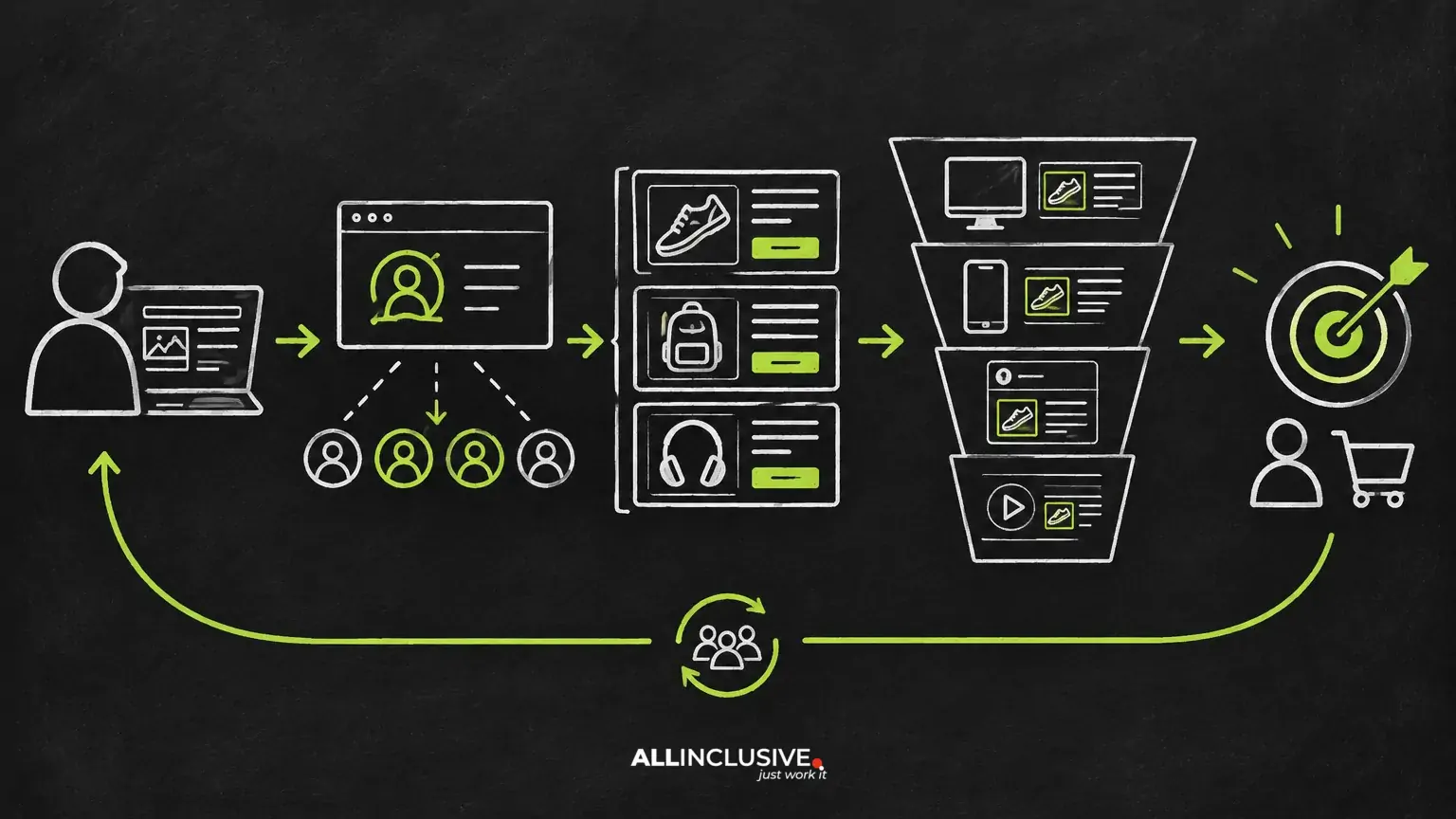
A strong remarketing creative strategy does more than show the same ad to everyone who visited your site. It uses available behavioral signals to decide what a returning visitor should see next: a reminder, proof point, product explanation, comparison, offer or conversation prompt.
The central rule is simple: match the creative to the visitor’s last meaningful action and the next reasonable step. Someone who viewed a homepage needs a different message from someone who configured a product, downloaded a guide or abandoned a form. Relevance improves the usefulness of the impression while reducing creative fatigue and wasted spend.
Start with the next action, not the ad format
Before selecting headlines, images or video, define the decision you want to support. Returning visitors may need to:
- Remember what your company offers.
- Understand how the product or service works.
- Resolve a specific objection.
- Compare alternatives or evaluate fit.
- Complete an unfinished conversion.
- Speak with sales or request a tailored recommendation.
The desired action should be proportionate to the evidence of intent. A broad visitor may be ready for a useful explanation, not an aggressive sales request. A repeat product-page visitor may be ready for a comparison asset, consultation or purchase path. Creative should reduce the next piece of uncertainty rather than force the final conversion immediately.
Build audience groups around behavior and intent
Audience segmentation does not need to be complex to be useful. Begin with groups that have distinct information needs and enough scale to support meaningful delivery. Common groups include:
General site visitors
These users have shown interest but may not have revealed a clear topic or buying stage. Use category-level messaging, educational content, problem framing and broad value propositions. Avoid claims that assume they viewed a particular product or are ready to buy.
Content readers and resource downloaders
These visitors have identified a problem or topic. Continue the conversation with a related checklist, implementation guide, webinar, case study or explanation of common mistakes. The follow-up should deepen the subject rather than repeat the original content title.
Product, solution or service-page visitors
These users have moved closer to evaluation. Show differentiators, use cases, proof, process clarity and answers to practical questions. If the page covers one solution, keep the follow-up specific enough to feel relevant without overstating what the visitor intends.
High-intent visitors
Actions such as starting a form, viewing pricing information, configuring a product or returning repeatedly can justify a more direct message. Creative may focus on consultation, trial, quote, demo or purchase completion. The landing page must continue the same promise and make the next step easy to understand.
Existing customers or converted leads
Exclude people who have already completed the intended action unless the campaign has a separate objective. Customers may need onboarding, expansion, renewal or cross-sell communications, but those are different creative jobs from acquisition remarketing.
Use a message ladder by funnel stage
A message ladder gives the campaign a sequence without requiring every visitor to receive the same narrative. The stages below are a practical starting point.
- Recognition: Restate the problem or category in language that connects with the visitor’s original interest.
- Education: Explain the approach, mechanism or evaluation criteria that help the visitor make progress.
- Validation: Provide evidence such as a relevant example, customer story, methodology, process detail or transparent explanation of fit.
- Conversion: Present the most appropriate action, including a clear expectation of what happens after the click.
- Re-engagement: If the visitor remains inactive, change the angle or offer useful new information rather than repeating the same appeal.
This ladder should not be treated as a rigid universal funnel. Some visitors enter with strong intent and can move directly to validation or conversion. Others need several exposures that clarify the problem before a commercial message is appropriate.
Choose creative angles that answer real objections
Creative variation should be strategic, not cosmetic. Changing a background color while preserving the same claim rarely creates a meaningful new message. Develop angles based on the questions a prospect must answer.
- Fit: Who is this for, and who is it not for?
- Outcome: What business problem does the offer help address?
- Process: What happens after someone submits a form, starts a trial or requests a conversation?
- Risk: What concerns exist around implementation, switching, cost, time or internal approval?
- Proof: What evidence can demonstrate credibility without making unsupported claims?
- Comparison: Which evaluation criteria help buyers distinguish suitable options?
- Urgency: Is there a legitimate reason to act now, or should the message prioritize planning and education?
For example, a returning visitor who read an operations article may respond better to a process explainer than to a generic “book a demo” message. A visitor who examined a service page may need proof of expertise, scope clarity or a concise explanation of the engagement process.
Adapt the offer to the visitor’s commitment level
Offers should create momentum without demanding more commitment than the audience is prepared to make. A useful progression might include:
- An educational article or checklist for broad, low-signal audiences.
- A detailed guide, recorded session or comparison resource for active researchers.
- A calculator, assessment or tailored recommendation for visitors evaluating fit.
- A consultation, quote, trial or purchase action for high-intent audiences.
Do not use a lead form as the default answer to every audience. If the visitor’s question is informational, sending them to a commercial form can create friction. Conversely, directing a high-intent visitor to another introductory article can delay action. The best offer is the one that removes the next barrier.
Design a creative matrix before production
A matrix prevents audience, message and destination from becoming disconnected. For each audience group, document:
- The triggering behavior or inclusion rule.
- The likely question or objection.
- The primary message angle.
- The proof or supporting detail.
- The call to action.
- The landing page or destination.
- The exclusion or suppression condition.
- The signal that indicates progression to the next audience.
A simple example:
- Viewed service page: explain the engagement process, show relevant proof, and invite a scoped conversation.
- Downloaded planning guide: offer an implementation checklist or related workshop.
- Started but did not submit a form: reduce uncertainty about timing, required information and follow-up.
- Visited multiple solution pages: provide a comparison or decision guide.
Keep the matrix focused. Too many narrow audiences can fragment delivery and make it difficult to learn which message is helping. Consolidate groups when their intent and creative needs are substantially the same.
Make the ad and landing page one experience
Remarketing performance depends on the transition from impression to destination. The landing page should reflect the ad’s promise, audience context and call to action. If an ad emphasizes implementation support, the destination should explain implementation rather than return the visitor to a generic homepage.
Review the full path for:
- Consistent terminology and offer framing.
- A visible explanation of what happens next.
- Proof placed near the decision point.
- Forms that request only information needed at that stage.
- Mobile-friendly reading and interaction.
- Clear alternatives for visitors who are not ready to convert.
Landing-page relevance is part of creative strategy, not a separate afterthought. A well-written ad cannot compensate for a destination that makes the visitor restart their research.
Plan formats around the message
Use the format that communicates the idea clearly. Static ads can make one focused claim. Short video can demonstrate a process, show a product experience or explain a common misconception. Carousel-style formats can organize related use cases or evaluation steps where the platform and campaign setup support them.
Regardless of format, prioritize one primary idea per asset. Use readable copy, a recognizable visual hierarchy and a call to action that matches the page. Avoid packing every benefit into one ad; returning visitors should be able to understand the message quickly.
Control repetition with sequencing and exclusions
Repetition becomes wasteful when the audience sees the same claim without a reason to change course. Create a small set of complementary messages and use audience rules, time windows or campaign structure to support progression where practical.
Important controls include:
- Exclude converters from acquisition remarketing.
- Remove users from an earlier message group after a meaningful next action.
- Separate customer, prospect and employee audiences when appropriate.
- Set a review process for signs of fatigue, declining engagement or negative feedback.
- Coordinate remarketing with active search, email and sales outreach to reduce contradictory messages.
Frequency management is related but distinct from creative strategy. The right exposure level depends on audience size, buying cycle, channel, objective and available controls. For a deeper treatment of exposure planning, see remarketing frequency caps.
Measure creative quality beyond clicks
Clicks can indicate interest, but they do not prove that the message improved the buying journey. Evaluate creative against the campaign objective and the audience stage. Useful measures may include:
- Qualified conversion rate rather than raw conversion volume.
- Completion rate for forms, trials or requested actions.
- Engagement with the destination page.
- Progression from one audience stage to another.
- Assisted influence on later conversions, interpreted carefully.
- Cost and quality of downstream opportunities where tracking supports it.
When comparing assets, keep the audience, offer, destination and delivery conditions as consistent as possible. A creative test that changes all of these at once cannot reliably identify what caused the difference. Platform reporting varies, so use conservative interpretations and connect ad data with validated analytics and business outcomes.
Common remarketing creative mistakes
Showing the same ad to every visitor
This ignores intent differences and often produces a generic message. Even a few behavior-based groups can make the experience more relevant.
Retargeting without a progression plan
Repeated reminders do not necessarily create momentum. Define what the visitor should learn or do next.
Using unsupported proof
Testimonials, performance claims and comparative statements need appropriate substantiation. If strong evidence is unavailable, use transparent process details, scope clarity and educational value instead.
Promoting an offer after conversion
Failure to suppress converted users wastes impressions and can create a poor customer experience. Build post-conversion paths separately.
Optimizing only for cheap traffic
Low-cost clicks can be misleading if they do not produce meaningful engagement or qualified outcomes. Judge creative in the context of the campaign’s business objective.
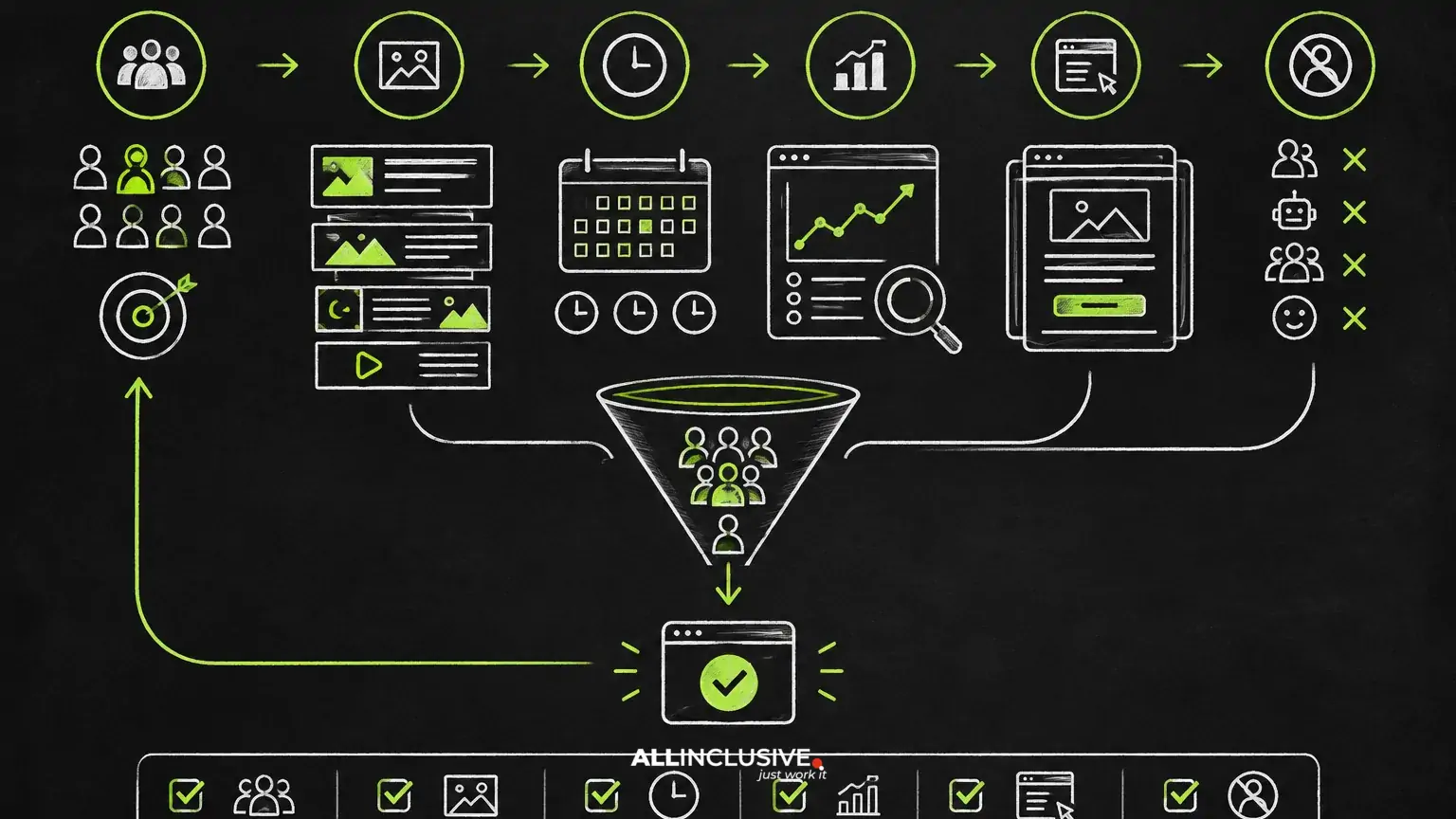
Remarketing Creative Strategy: Pre-Launch Checklist
- Define the campaign objective and the next action for each audience.
- Group visitors by meaningful behavior, not unnecessary micro-segments.
- Write one primary message angle and objection for each group.
- Choose a proportionate offer and matching destination.
- Prepare multiple genuinely different creative concepts.
- Set conversion exclusions and progression rules.
- Confirm tracking, consent requirements and destination-page functionality.
- Review performance by audience, message, format and downstream quality.
- Refresh the angle when repetition increases without progress.
For broader planning, connect this framework to your remarketing strategy and review how it fits within your overall paid media program. You can also compare approaches in custom remarketing strategies by funnel stage and explore remarketing funnel sequencing.
Remarketing Creative Strategy: What to Prioritize
Effective remarketing creative is a decision system, not a collection of banner variations. Use visitor behavior to identify the next unanswered question, choose a message that resolves it, send the visitor to a consistent destination and suppress or advance the audience when behavior changes. This approach makes returning visitors more relevant to serve and gives your team a clearer basis for testing and improvement.