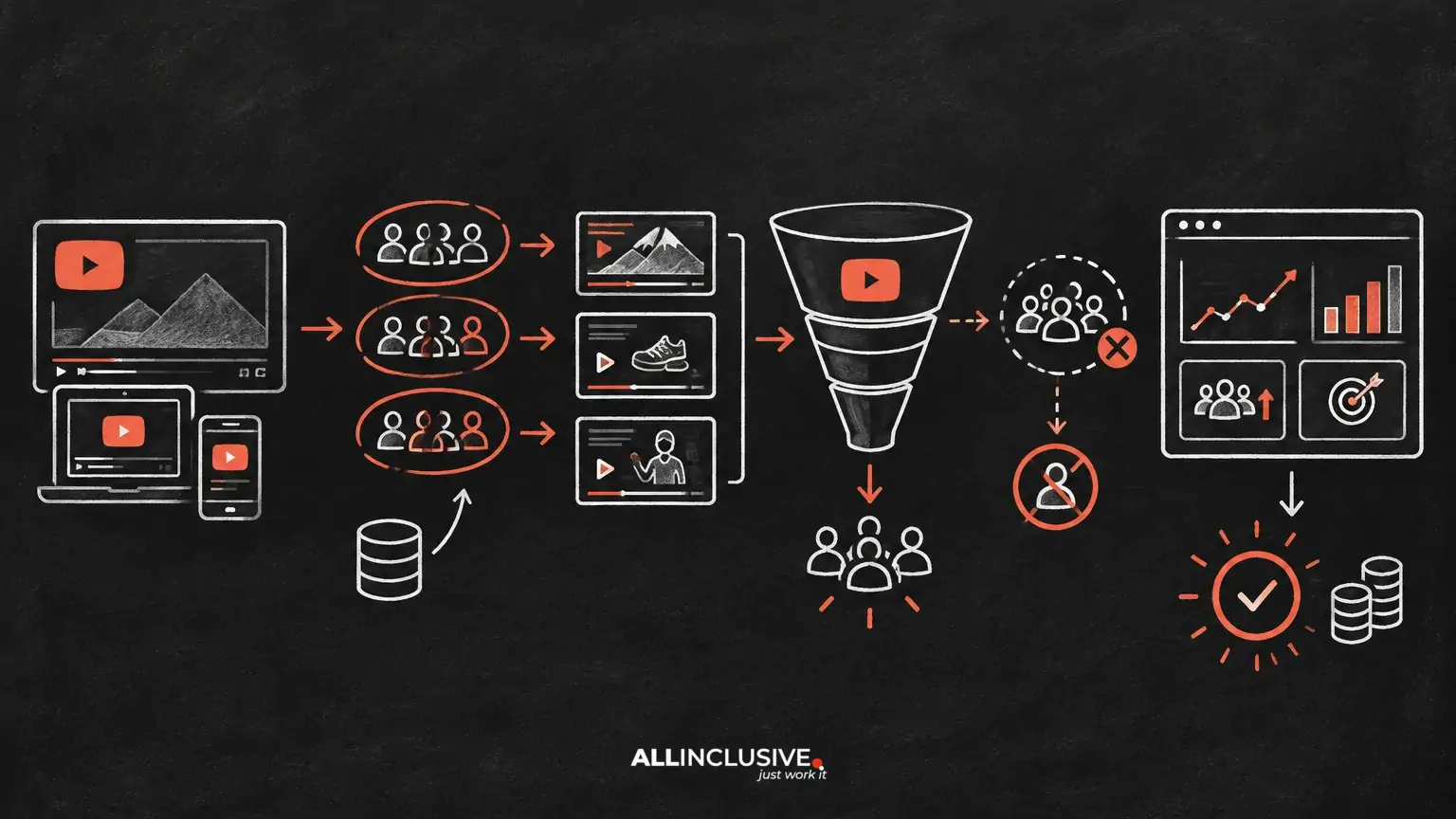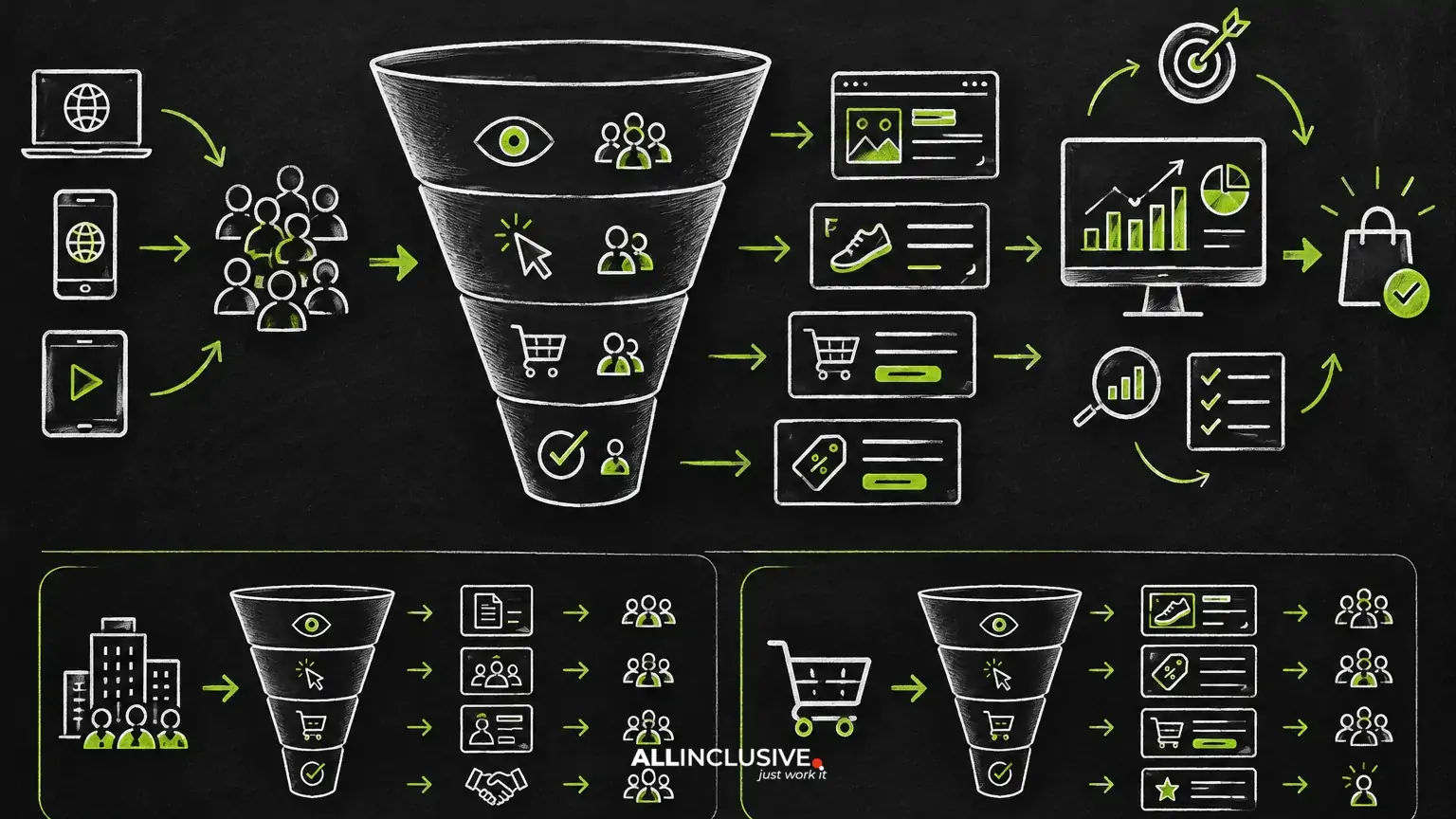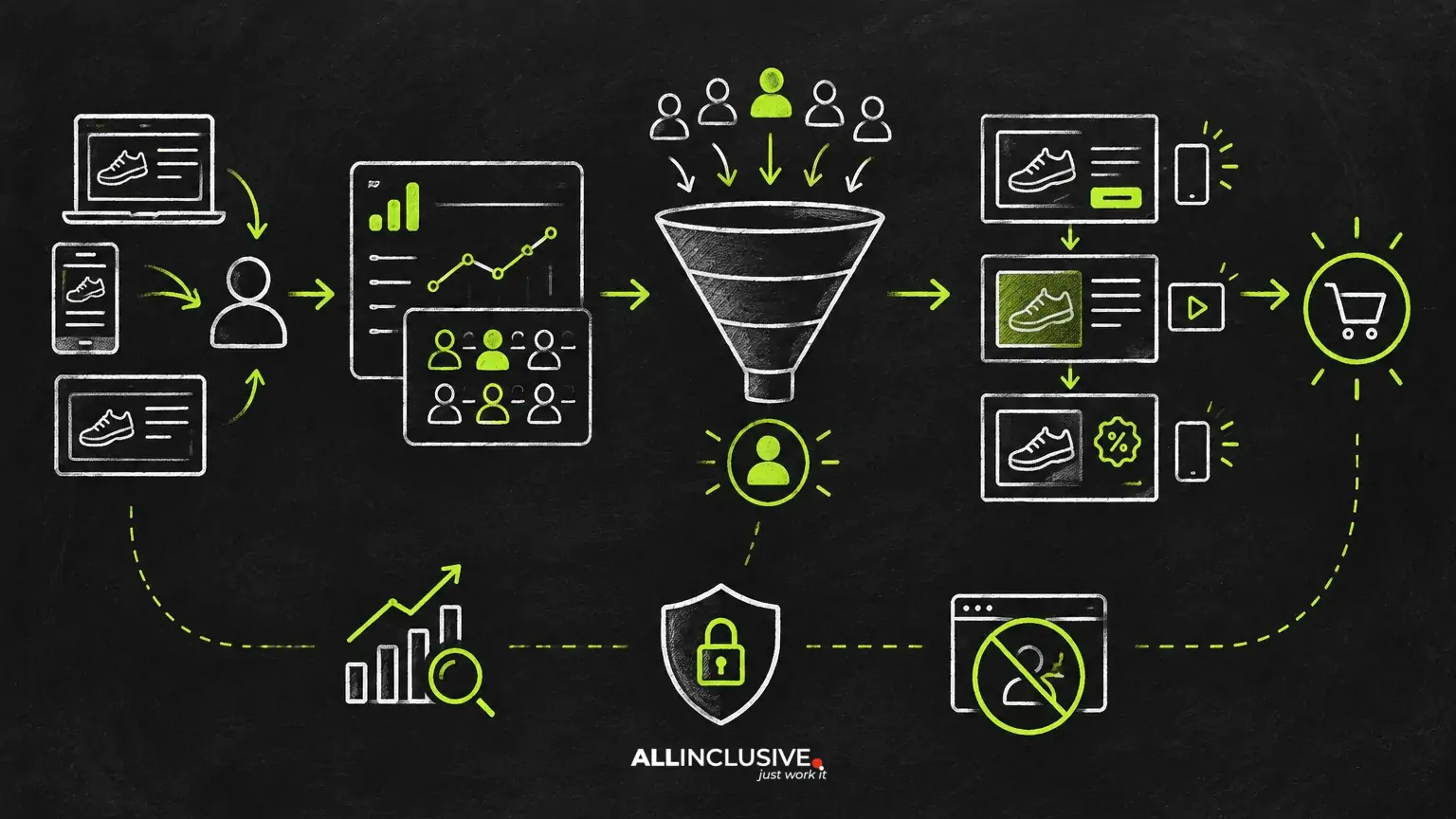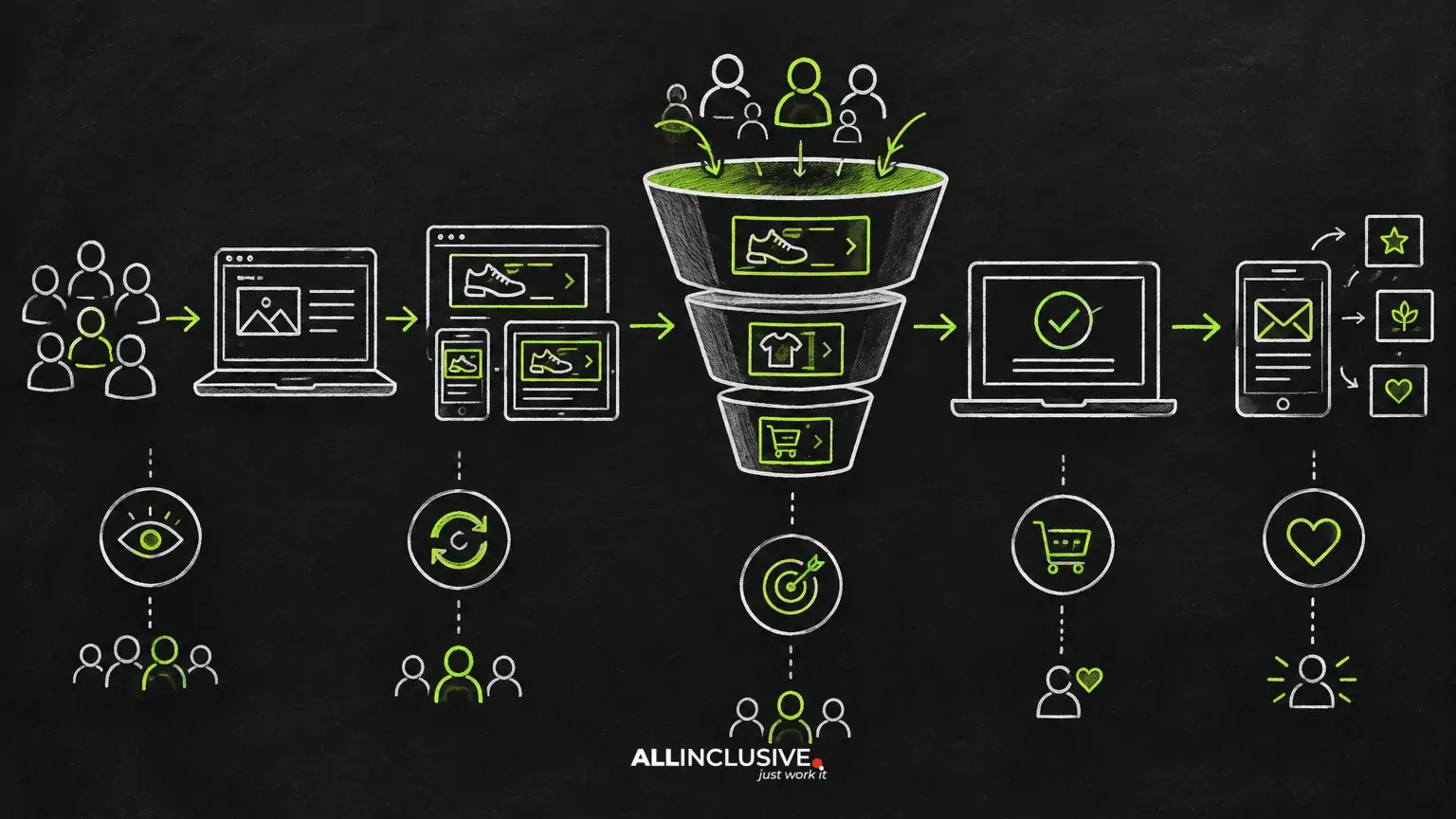
A remarketing funnel is more than showing the same ad to everyone who has visited your website. It is a system for matching follow-up messages to what a person already knows, what they have done, and what they are most likely to do next.
The most effective sequence usually moves from reintroduce to educate to reduce friction to convert. The exact stages depend on your sales cycle, offer and available first-party signals, but the principle is consistent: use behavioral intent to decide both the audience and the message.
This guide explains how to plan a remarketing strategy around funnel stages without treating every returning visitor as equally valuable.
What a remarketing funnel does
A remarketing funnel organizes audiences according to their relationship with your business. Someone who viewed a blog post once needs a different message from someone who visited pricing, started a form or requested a demonstration.
Instead of one broad “all visitors” audience, a funnel creates a sequence such as:
- Awareness and recall: reconnect with visitors who showed light interest.
- Consideration: provide proof, education or comparisons for people evaluating the offer.
- Decision: address objections and make the next step clear.
- Conversion and nurture: change the message after someone submits, purchases or becomes a qualified lead.
These stages are strategic, not fixed platform features. Advertising platforms differ in their audience tools, eligibility requirements, reporting and event configuration. Build the logic around your customer journey first, then translate it into the mechanics available in each channel.
Start with intent, not time alone
Time since a visit is useful, but it should not be the primary definition of intent. A recent visitor who read one general article may be less commercially valuable than a visitor from two weeks ago who reviewed pricing and a case study.
Rank signals by how directly they relate to the decision you want the person to make:
- High intent: pricing views, product or service pages, configuration activity, demo requests started, checkout activity or repeated visits to commercial content.
- Moderate intent: case-study views, comparison pages, webinar registrations, resource downloads or multiple sessions.
- Low intent: a single article view, a short session, an accidental landing-page visit or an audience created from broad campaign traffic.
Intent signals should be combined with business context. A returning visitor from a target account, a known customer segment or a relevant industry may deserve different treatment from an otherwise identical anonymous visitor.
A practical four-stage remarketing funnel
Stage 1: Reintroduce the value proposition
The first stage is for people who know your brand but have not yet demonstrated strong buying intent. The goal is not to force a conversion immediately. It is to make the next interaction useful enough to earn deeper consideration.
Appropriate messages include:
- A concise explanation of the problem your product or service solves.
- An educational guide related to the visitor’s original topic.
- A clear overview of capabilities or use cases.
- A low-friction invitation to explore a relevant resource.
For example, a visitor who read an article about improving paid acquisition could receive an ad leading to a practical planning guide rather than a generic sales pitch. The landing page should continue the same topic and make the next step obvious.
Stage 2: Build consideration with proof and relevance
Once a person has shown deeper engagement, shift from general explanation to evidence. This is where remarketing creative can help answer questions that block progress.
Useful assets include case studies, process overviews, product demonstrations, implementation guides, comparison content and answers to common objections. The right asset depends on the conversion path. A complex B2B service may need proof of expertise and a clear engagement process, while a lower-friction ecommerce offer may need product education, reviews or category guidance.
Do not assume that every engaged visitor needs the same proof. Use the content they viewed to create a plausible next step. Someone who visited a technical page may respond to implementation detail; someone who read an outcome-focused page may need evidence that the business can deliver that outcome.
Stage 3: Address decision friction
Decision-stage audiences have usually done enough research to recognize the offer. Their remaining barriers may involve uncertainty, effort, risk, timing or internal approval.
Ads at this stage should make the action easier to evaluate. Consider:
- A direct invitation to book a consultation, request a quote or start a trial.
- A concise explanation of what happens after the form is submitted.
- Answers to qualification, onboarding or implementation questions.
- Relevant proof for the segment, use case or buying committee.
- A reminder of the specific benefit associated with the page or action previously viewed.
Keep the claim aligned with what you can substantiate. Remarketing is not a reason to introduce unsupported urgency, guaranteed outcomes or vague superiority claims.
Stage 4: Convert, retain or suppress
The funnel should change as soon as the desired action occurs. A lead who has submitted a form should not continue receiving ads designed to make them submit the same form. A customer should not be treated as an unconverted prospect unless the objective is clearly different.
Post-conversion audiences can support onboarding, cross-sell, renewal or advocacy goals, but those are separate journeys. At minimum, exclude converters from prospecting remarketing sequences and define a new message for the next business objective.
How to sequence audiences and messages
A useful sequence combines four dimensions:
- Event: what the person did, such as viewing a page, downloading an asset or beginning a form.
- Recency: how long ago the action occurred.
- Depth: how many meaningful interactions occurred.
- Outcome: whether the person converted, qualified, purchased or disengaged.
One simple logic model is:
- Place a visitor into an initial audience after a qualifying interaction.
- Show educational or value-framing creative while the visitor remains in the early stage.
- Move the visitor into a consideration audience after a stronger engagement event.
- Prioritize decision-focused creative after a high-intent event.
- Exclude or transition the visitor after conversion.
Use mutually exclusive audience rules where practical. If a person qualifies for three stages at once, your reporting becomes harder to interpret and the person may receive conflicting messages. Priority rules can help: decision-stage audiences outrank consideration audiences, and converted users are excluded from both.
Example: a B2B service remarketing funnel
Suppose a B2B consultancy attracts visitors through educational content and wants to generate qualified conversations.
- Initial audience: visitors who read an educational article but did not reach a commercial page. Creative promotes a relevant planning resource.
- Consideration audience: visitors who viewed a service page or downloaded a guide. Creative highlights the process, relevant use cases and evidence.
- Decision audience: visitors who viewed pricing, contact or consultation content. Creative invites them to take the next step and explains what the conversation covers.
- Converted audience: form submitters are removed from acquisition remarketing and moved into a sales or onboarding workflow.
The funnel does not need a large number of stages to be effective. The important distinction is whether each stage reflects a meaningful change in intent and whether the message gives the person a reason to continue.
Creative rules for sequential remarketing
Sequencing works only when the creative changes with the audience. Rotating several versions of the same generic ad does not create a funnel.
For each stage, define:
- Message: what the audience should understand now.
- Proof: what supports the claim.
- Next action: the one step the visitor should take.
- Landing experience: the page that continues the ad’s promise.
- Exit condition: the event that removes or advances the person.
Early-stage creative can be broader and more educational. Later-stage creative should be more specific, but specificity should come from the person’s demonstrated interest rather than from assumptions about their identity or private circumstances.
Creative fatigue is a separate concern from funnel progression. A person may be in the correct stage but still see a message too often. Review frequency, creative variation and audience size together. For a deeper treatment of exposure management, see Remarketing Frequency Caps: How Often Should People See Your Ads?.
Measurement: evaluate movement, not only last-click conversions
Remarketing performance should be evaluated at both stage and funnel level. A narrow conversion report may over-credit lower-funnel ads while hiding whether early-stage audiences are producing qualified progression.
Useful questions include:
- Are qualified visitors moving from education to commercial pages?
- Which audience definitions produce meaningful downstream actions?
- Does decision-stage traffic convert at an acceptable quality level?
- Are converters being excluded promptly and accurately?
- Does increased remarketing activity create incremental value, or merely capture people who were already likely to act?
Track the events that matter to the business, not only clicks. Depending on the model, those may include qualified form submissions, accepted opportunities, purchases, retained customers or revenue. Attribution is imperfect, so interpret platform-reported results alongside analytics, CRM data and controlled testing where feasible.
Remarketing Funnel: Implementation Checklist
- Map the customer journey from first meaningful visit to conversion.
- List the site events that indicate low, moderate and high intent.
- Create audience definitions with clear inclusion, exclusion and priority rules.
- Assign one primary message and next action to each stage.
- Align every ad with a landing page that continues its promise.
- Define conversion and post-conversion exclusions before launch.
- Set a review cadence for audience size, delivery, creative fatigue and lead quality.
- Test one strategic variable at a time when possible: audience qualification, message, offer or landing experience.
Common remarketing funnel mistakes
Using one audience for every visitor
This removes the relevance advantage of remarketing. Separate visitors by intent and commercial context wherever the available data supports a meaningful distinction.
Changing the ad but not the journey
A new headline cannot compensate for a landing page that does not answer the visitor’s next question. Sequence the destination experience as carefully as the ad.
Ignoring negative signals
Repeated visits without engagement, invalid leads, existing customers and completed actions may require suppression or a different journey. More targeting is not always better targeting.
Overbuilding the funnel
Too many narrow audiences can fragment delivery and make learning difficult. Start with the fewest stages that represent real differences in intent, then add complexity only when it improves decision-making.
Remarketing Funnel: Strategic Perspective
A strong remarketing funnel treats advertising as a sequence of helpful decisions rather than a stream of repeated reminders. Define intent signals, assign each audience a realistic next step, change the message as intent deepens and remove people from the sequence when their relationship with the business changes.
For broader planning across acquisition channels, explore the paid media hub. If your main objective is lead quality, the guide to Remarketing for Lead Generation: From First Visit to Qualified Lead provides a more specific framework.