Remarketing for lead generation is most effective when it does more than remind someone that your company exists. The goal is to move a known visitor from early interest toward a credible next step—such as requesting a consultation, downloading a useful resource, starting an application, or contacting sales.
That requires more than placing the same ad in front of every non-converting visitor. A strong program connects audience behavior, funnel stage, message, offer, landing page, and lead-quality feedback. It also respects consent, privacy expectations, and the fact that some visitors should be excluded rather than pursued.
This guide presents a practical framework for planning and evaluating lead-generation remarketing across paid media channels. For broader planning context, see our paid media strategy resources and the related remarketing strategy guide.
What makes lead-generation remarketing different?
Remarketing for ecommerce often focuses on product consideration and purchase completion. Lead-generation campaigns have a longer and less visible conversion path. A visitor may need to understand your expertise, compare providers, obtain internal approval, and trust your company before submitting a form.
That means the first conversion is not always the final business outcome. A form submission can be incomplete, unqualified, duplicated, or unrelated to your sales criteria. The campaign should therefore be designed around a sequence of useful decisions:
- What did the visitor show interest in?
- What uncertainty is preventing the next step?
- What proof or information can reduce that uncertainty?
- Which action is appropriate for the visitor’s level of intent?
- How will the business determine whether the resulting lead is valuable?
The answer will differ for a high-consideration B2B service, a local professional practice, an education provider, or a software company. The shared principle is progression, not repetition.
Start with a funnel-based audience structure
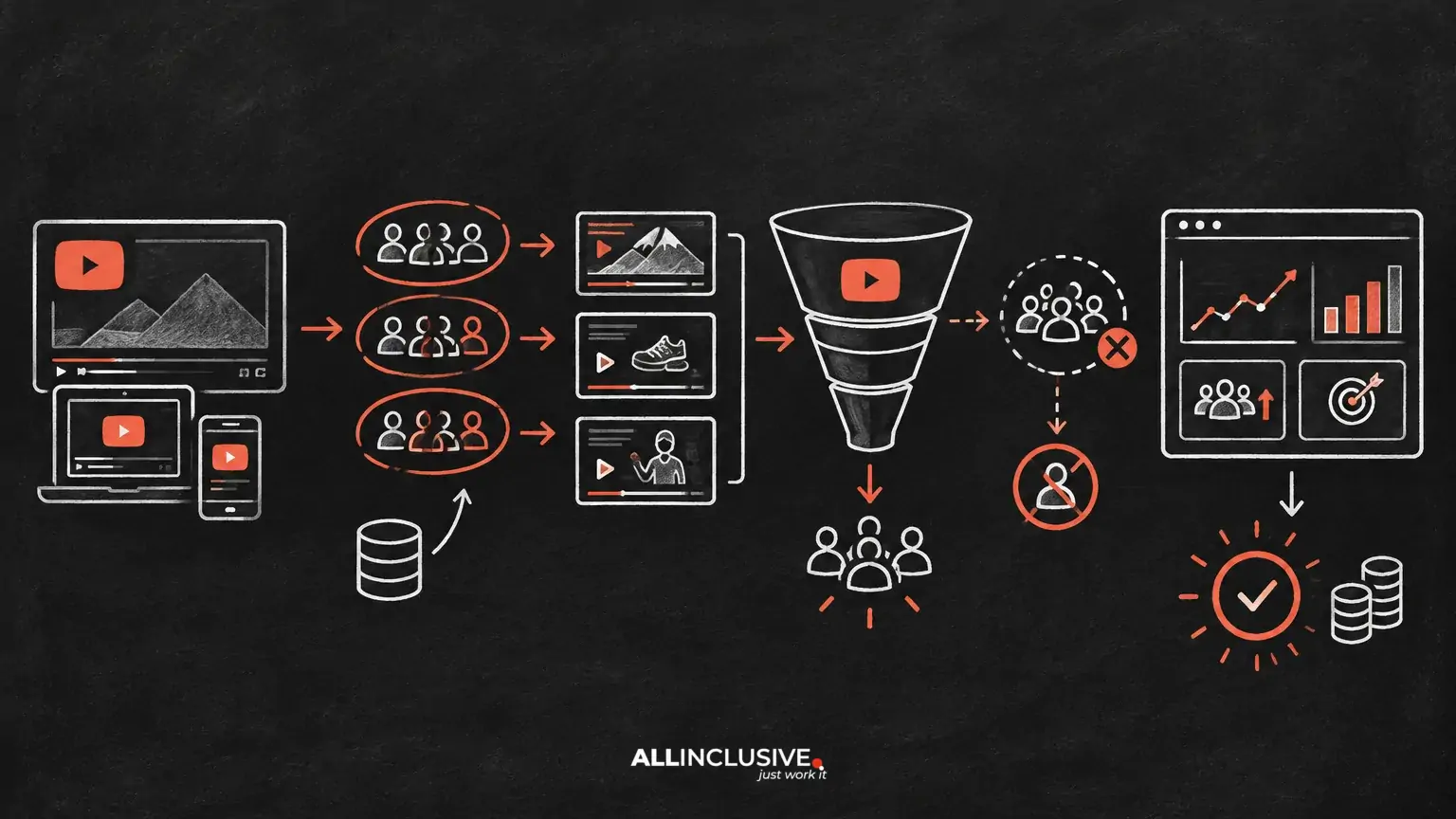
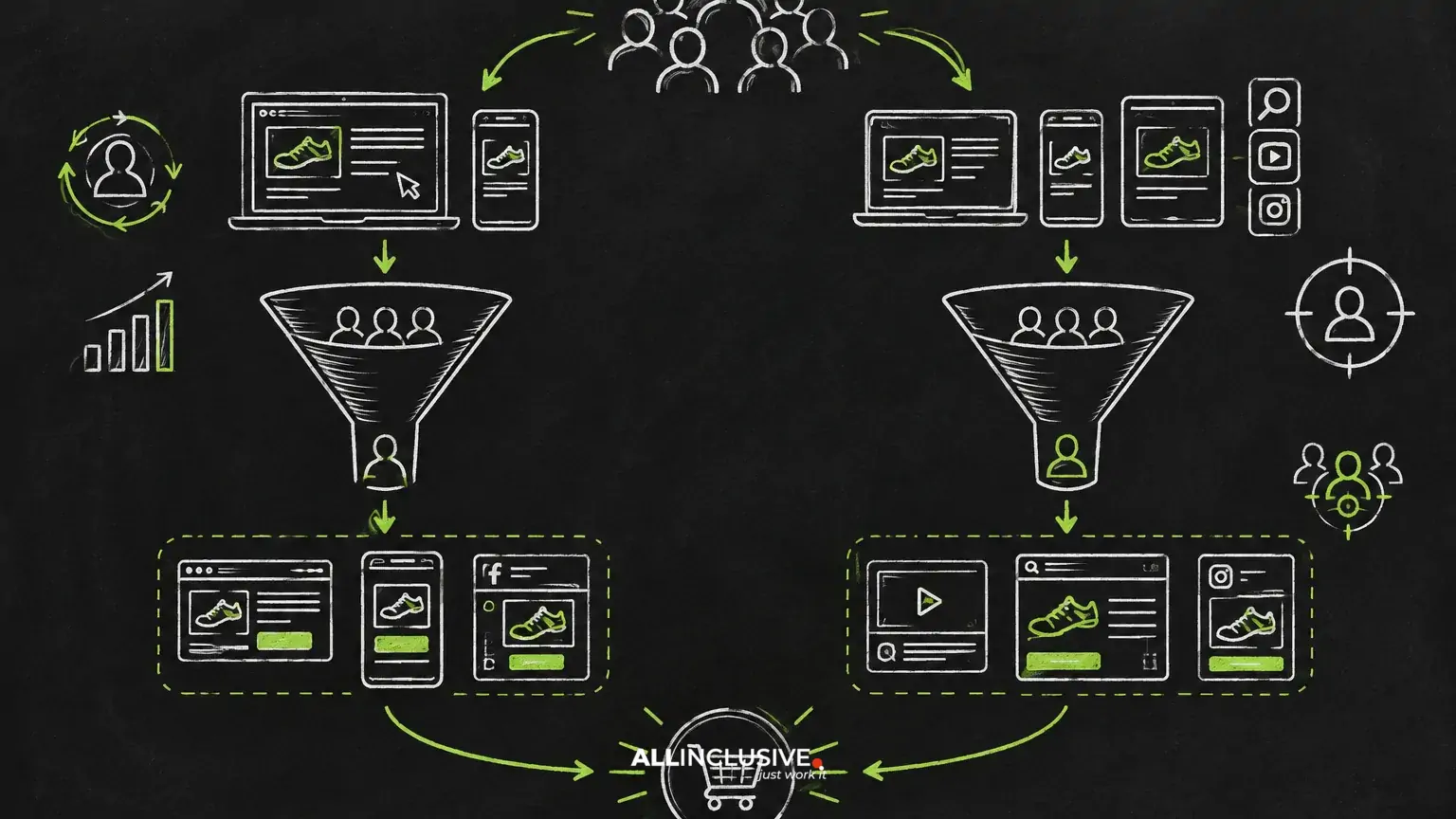
Audience design should reflect what people did, not simply how long ago they visited. A useful structure separates visitors by intent signals and excludes people who have already taken the desired action.
1. Early-stage visitors
These users may have read an educational article, visited a broad service page, or arrived through a non-brand search. They may not yet understand the problem you solve. Ads should emphasize useful education, clear positioning, and evidence that helps them evaluate the category.
Appropriate destinations can include a comparison guide, planning checklist, webinar, case study, or practical explainer. The call to action should be proportionate to the visitor’s likely readiness.
2. Engaged evaluators
This group has shown stronger interest through multiple page views, a return visit, time spent with important content, or visits to a service or solution page. Messaging can become more specific: explain your process, address common objections, show relevant expertise, or offer a diagnostic conversation.
Do not assume every engagement signal means buying intent. Use several signals together where possible, and test whether the audience produces meaningful downstream actions rather than simply inexpensive clicks.
3. High-intent visitors
Visitors who reached a pricing, contact, consultation, demo, eligibility, or application page may be appropriate for a direct conversion message. The ad can reinforce the next step, clarify what happens after submission, and reduce friction around the form.
High intent still requires exclusions and controls. Someone who abandoned a form may need reassurance, while someone who completed it should generally move into a different post-conversion or suppression path.
4. Existing leads and customers
Known contacts should not automatically receive the same acquisition message as anonymous visitors. Depending on the business model, they may need nurture content, cross-sell messaging, onboarding information, renewal communication, or exclusion from new-lead campaigns.
Use customer or lead lists only where the relevant consent, contractual permissions, platform requirements, and organizational policies support that activity. The strategy should be reviewed with the appropriate privacy and legal stakeholders.
Match the message to the visitor’s objection
Retargeting becomes inefficient when every audience sees an identical promise. Build messaging around the reason a prospect may hesitate.
- Unclear fit: explain who the service is for, who it is not for, and what problems it addresses.
- Low trust: use credible proof such as relevant expertise, transparent process information, customer examples, or independently supportable claims.
- Perceived complexity: show the steps from inquiry to delivery and set expectations about the initial conversation.
- Risk or commitment concerns: clarify what the first step involves without overstating guarantees or outcomes.
- Insufficient urgency: connect the offer to a real planning milestone, deadline, or business cost rather than inventing scarcity.
- Weak differentiation: make the comparison criteria explicit instead of relying on broad claims such as “best” or “leading.”
Creative should make the next decision easier. A visitor who has already read an introductory article may not need another generic awareness message; they may need a concise explanation of methodology or a relevant case example.
Choose conversion offers that fit lead quality goals
A lead magnet can increase response volume, but volume is not the same as pipeline value. Select the offer based on what your sales team can follow up on and what the prospect genuinely needs.
Lower-friction offers
Guides, checklists, templates, and educational sessions can work for early-stage audiences. They are useful when the buying cycle is long or when the market needs more context before a sales conversation. Keep the form proportionate to the value of the resource and make the follow-up expectations clear.
Mid-funnel offers
Assessments, planning calls, solution briefs, and comparison resources can help qualify interest. These offers should explain who benefits from them and what the prospect will receive. A vague “learn more” action gives the user little reason to submit information.
High-intent offers
Consultations, demos, estimates, audits, and applications are appropriate when the visitor has demonstrated meaningful intent and your team can respond appropriately. The landing page should explain the process, likely time commitment, and any information needed to make the conversation useful.
When lead quality is a concern, improve qualification deliberately. Ask only for information that supports routing or sales context, and test whether additional fields improve downstream value enough to justify added friction.
Build landing pages that continue the remarketing conversation
The ad and landing page should feel like two parts of the same argument. If the ad promises a practical assessment, the landing page should immediately explain what the assessment covers. If the ad addresses a specific service problem, the page should not force the visitor to navigate from a generic homepage.
Review the following elements:
- Message match between ad, headline, offer, and form.
- A clear explanation of who the offer is for.
- Useful proof placed near the decision point.
- Plain-language information about what happens after submission.
- Accessible form fields and a sensible mobile experience.
- A confirmation experience that sets expectations for follow-up.
Do not use a dedicated landing page to hide important limitations or qualification criteria. Transparency can reduce raw submissions while improving the usefulness of the leads that remain.
Set exclusions, windows, and frequency controls
Audience exclusions are a strategic requirement, not a cleanup task. At minimum, consider excluding recent converters from acquisition messages, suppressing irrelevant page visitors, and separating employees, existing customers, applicants, or unqualified contacts where appropriate.
Membership windows should reflect the buying cycle. A short window may be suitable for a time-sensitive consultation, while a complex B2B purchase may require longer nurture. Longer retention is not automatically better; older visitors may have changed priorities, and repeated exposure can create waste or fatigue.
Frequency management also matters. Excessive impressions can damage perception without creating additional intent. Monitor reach, repetition, conversion quality, and audience size together. If a narrow audience cannot support controlled delivery, broaden the audience thoughtfully or reduce spend rather than forcing high repetition.
Measure leads beyond the initial conversion
Lead-generation remarketing should be evaluated at multiple levels:
- Delivery: reach, impressions, frequency, spend, and placement or inventory quality where available.
- Engagement: clicks, landing-page visits, engaged sessions, and form starts.
- Lead capture: completed forms, calls, booked meetings, or other defined inquiries.
- Lead quality: valid contact details, fit, qualification status, response rate, and sales acceptance.
- Pipeline: opportunities, revenue influence, closed business, or another agreed commercial outcome.
Do not judge the program solely by the cheapest cost per form. A campaign that generates fewer but better-qualified inquiries may be more valuable than one optimized for maximum submissions. Conversely, a high-quality positioning strategy cannot compensate for weak tracking or poor follow-up.
Align marketing and sales on definitions before launching. Document what counts as a qualified lead, how quickly leads should be contacted, which statuses are returned to marketing, and which outcomes can be connected to campaigns. Where direct revenue attribution is incomplete, report the limitations rather than presenting inferred results as fact.
Test strategy, not just creative variations
Creative testing is useful, but the most important experiments often concern the audience and offer. Test one meaningful variable at a time where possible:
- Service-page visitors versus broader engaged visitors.
- Educational content versus consultation-led offers.
- Proof-focused messaging versus process-focused messaging.
- Shorter versus longer membership windows.
- Broad qualification criteria versus stricter audience rules.
- Instant lead forms versus dedicated landing pages, where the channel and privacy requirements permit both.
Use a decision period long enough to gather meaningful downstream feedback. Avoid declaring a winner from small differences in clicks or early form volume. Lead quality may emerge only after sales review, and that delay should be included in the measurement plan.
For examples of how the framework changes by business model, review our remarketing strategy examples. If your program depends on analytics-defined audiences, our guide to GA4 remarketing audiences covers implementation considerations and common mistakes.
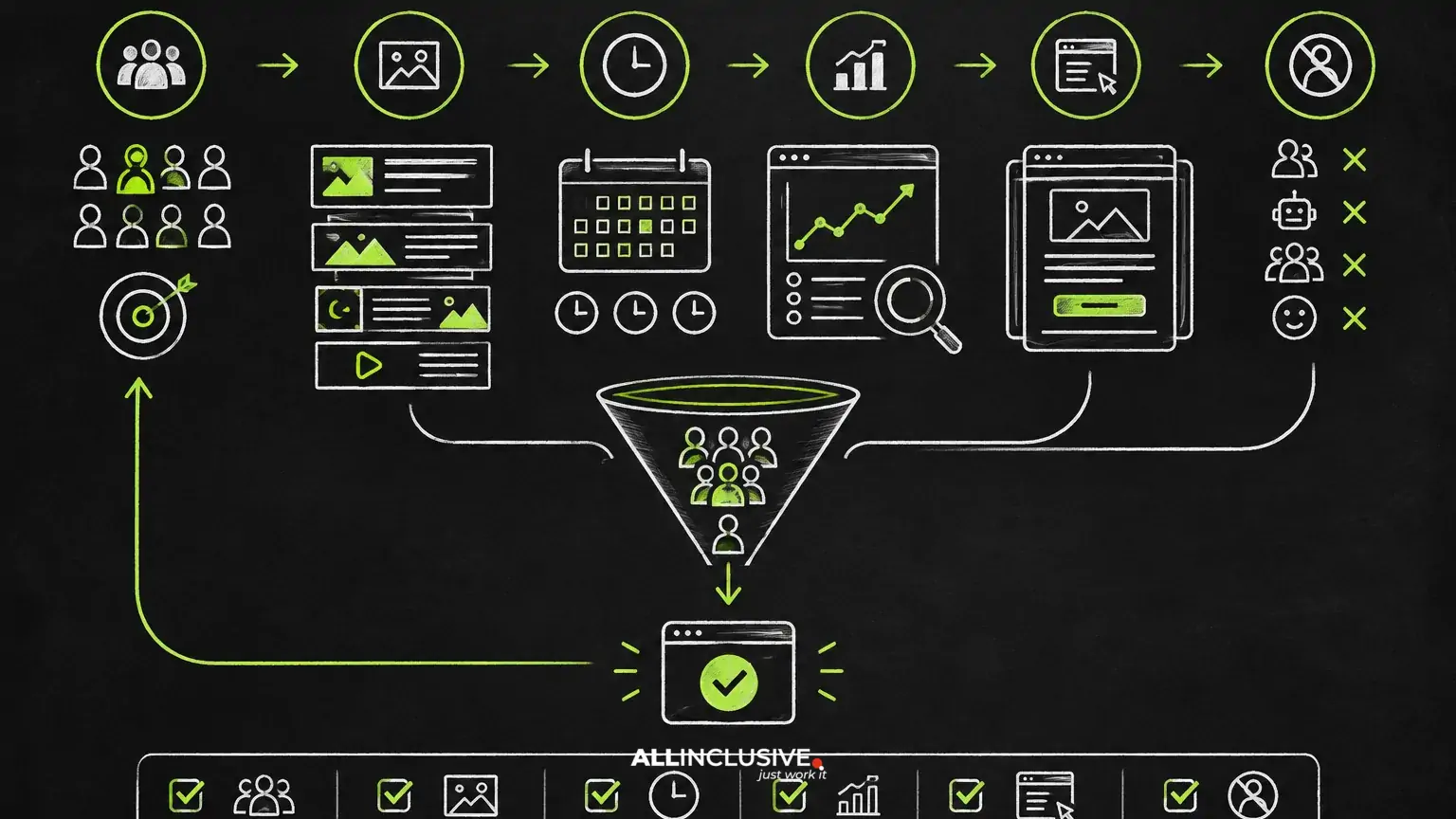
Remarketing for Lead Generation: Pre-Launch Checklist
- Define the business outcome and the lead-quality criteria.
- Map meaningful visitor behaviors to funnel stages.
- Choose an offer that matches intent and sales capacity.
- Create audience exclusions for converters and irrelevant users.
- Write stage-specific ads with a clear, supportable promise.
- Build or select a landing page that continues the ad’s message.
- Confirm consent, privacy, data-use, and platform requirements.
- Test conversion tracking, form handling, deduplication, and CRM routing.
- Set practical windows, frequency controls, budgets, and review points.
- Establish a feedback loop between campaign data and sales outcomes.
When remarketing is not the right next step
Remarketing may be premature if the website receives very little qualified traffic, the conversion offer is unclear, tracking is unreliable, or the sales team cannot follow up consistently. It is also a poor fit when the audience is too small to support responsible delivery or when privacy permissions do not support the intended use.
In those cases, improve the foundation first: clarify the value proposition, strengthen high-intent pages, define lead handling, and validate measurement. Remarketing can amplify a coherent acquisition and conversion system, but it cannot repair an unclear offer or an unmanaged sales process.
Remarketing for Lead Generation: Key Decision Point
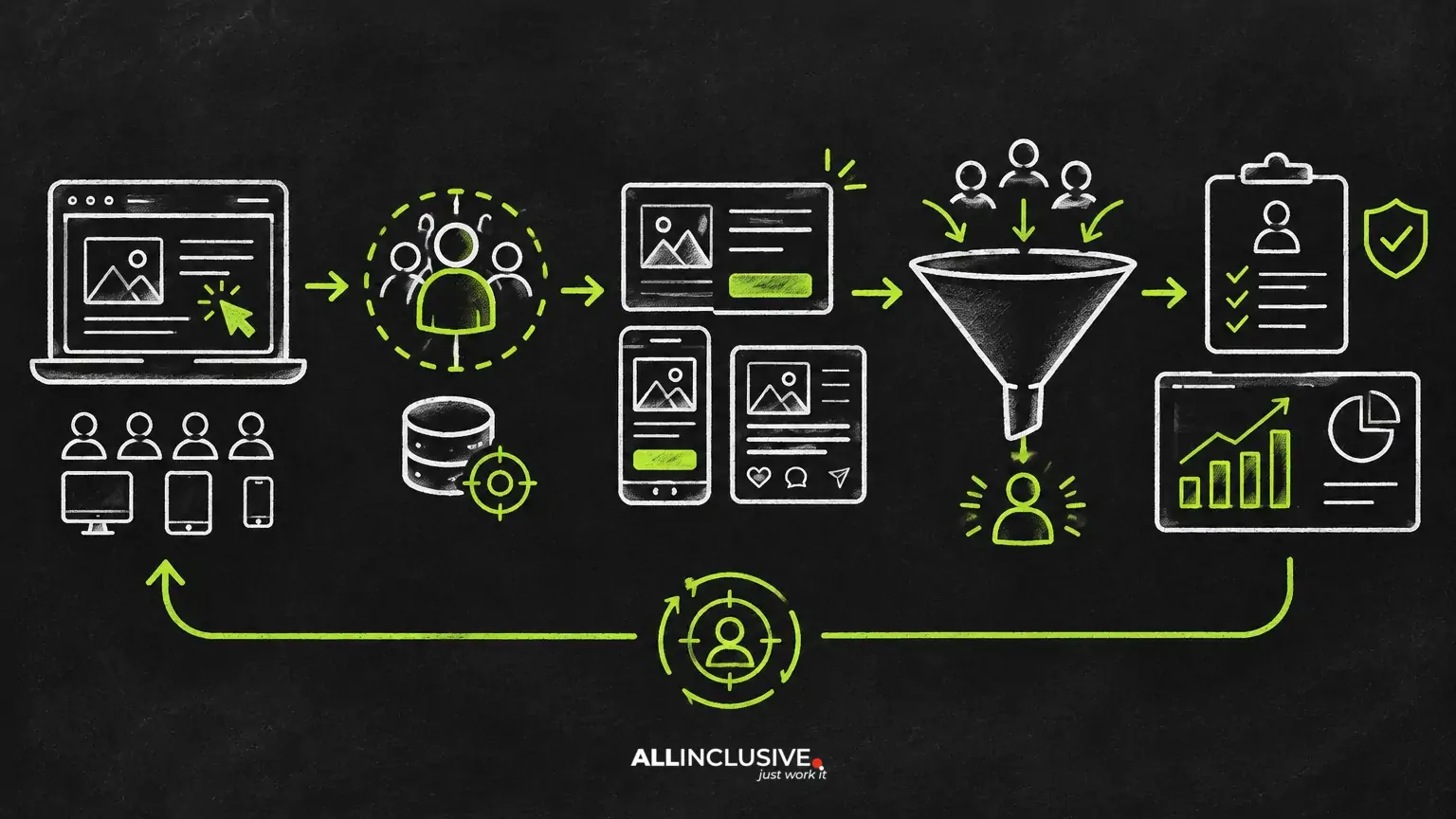
Effective remarketing for lead generation is a staged system. Segment visitors by meaningful behavior, give each stage a relevant reason to return, make the landing experience consistent, suppress people who should not receive acquisition messages, and measure qualified outcomes rather than form volume alone.
The strongest programs are disciplined about both persuasion and restraint. They know when to ask for a conversation, when to provide more information, and when to stop advertising altogether.