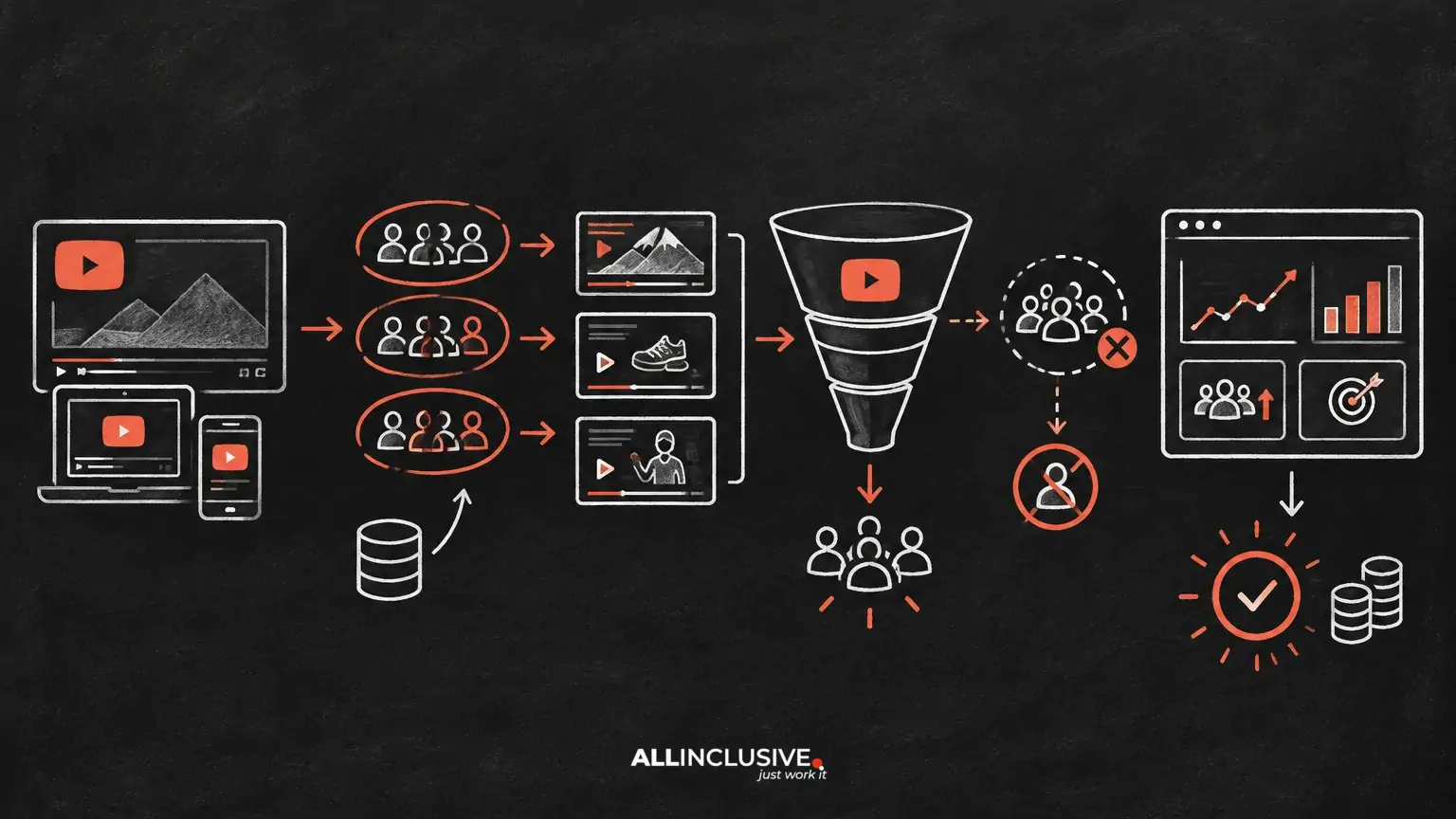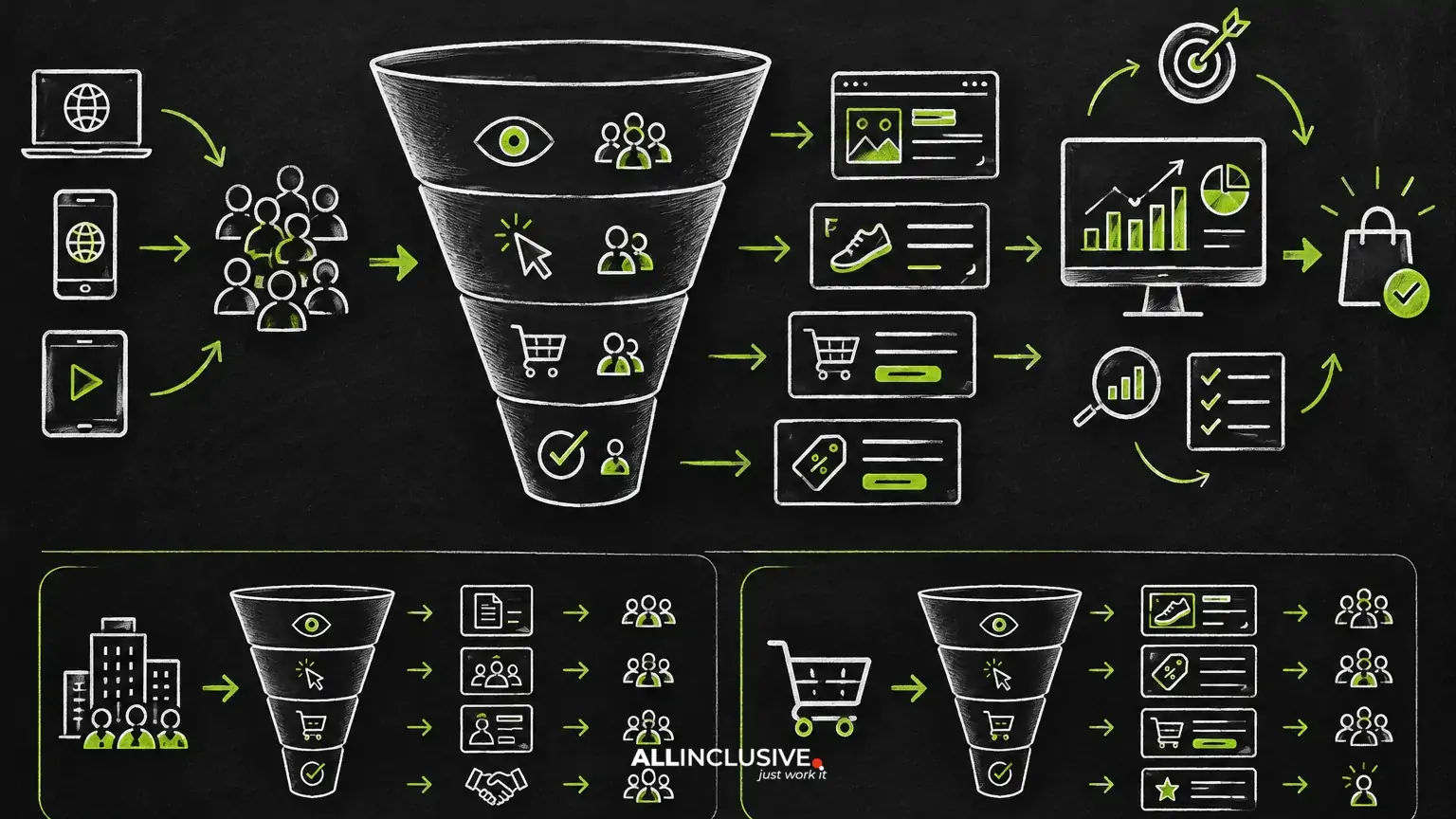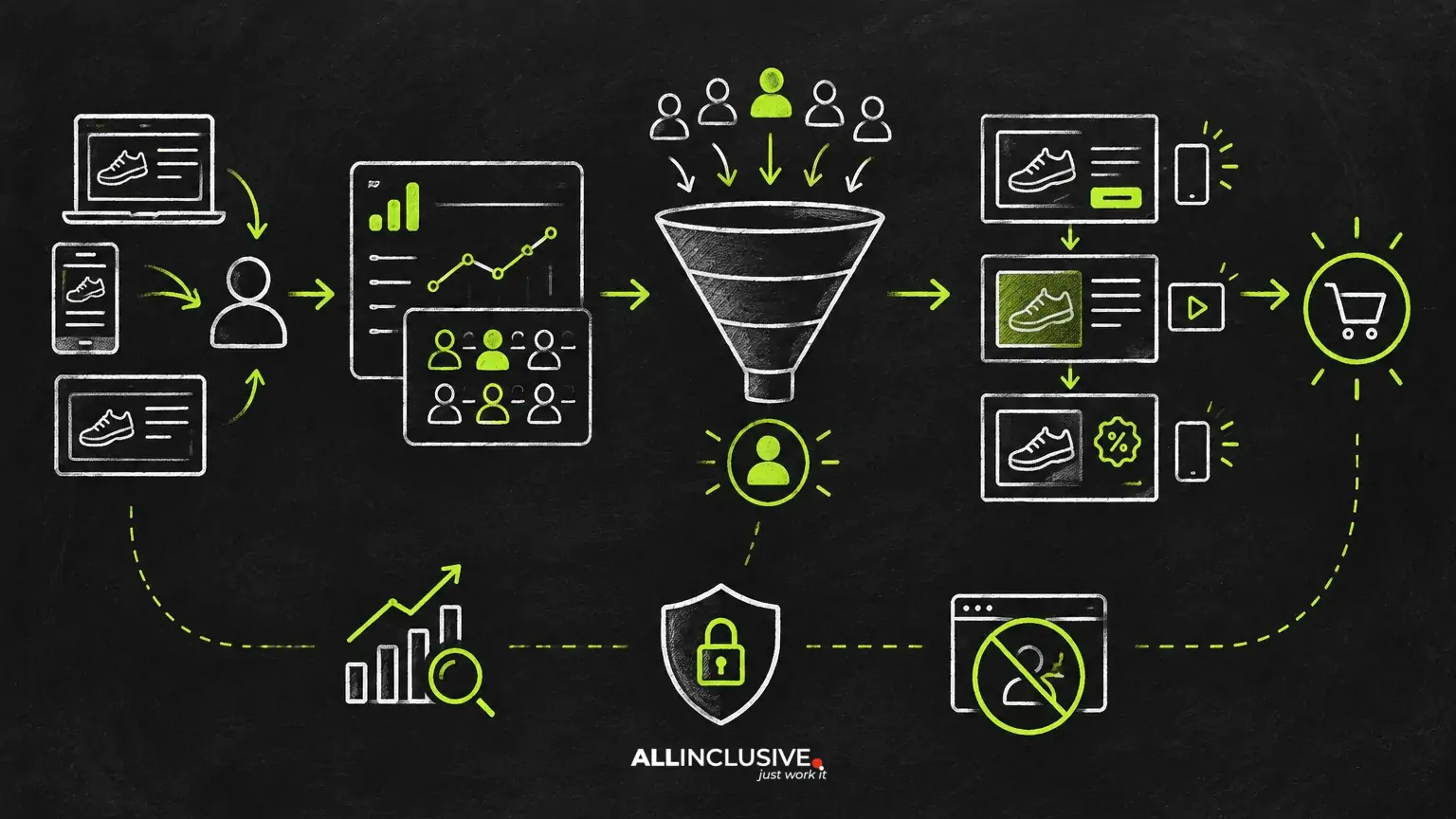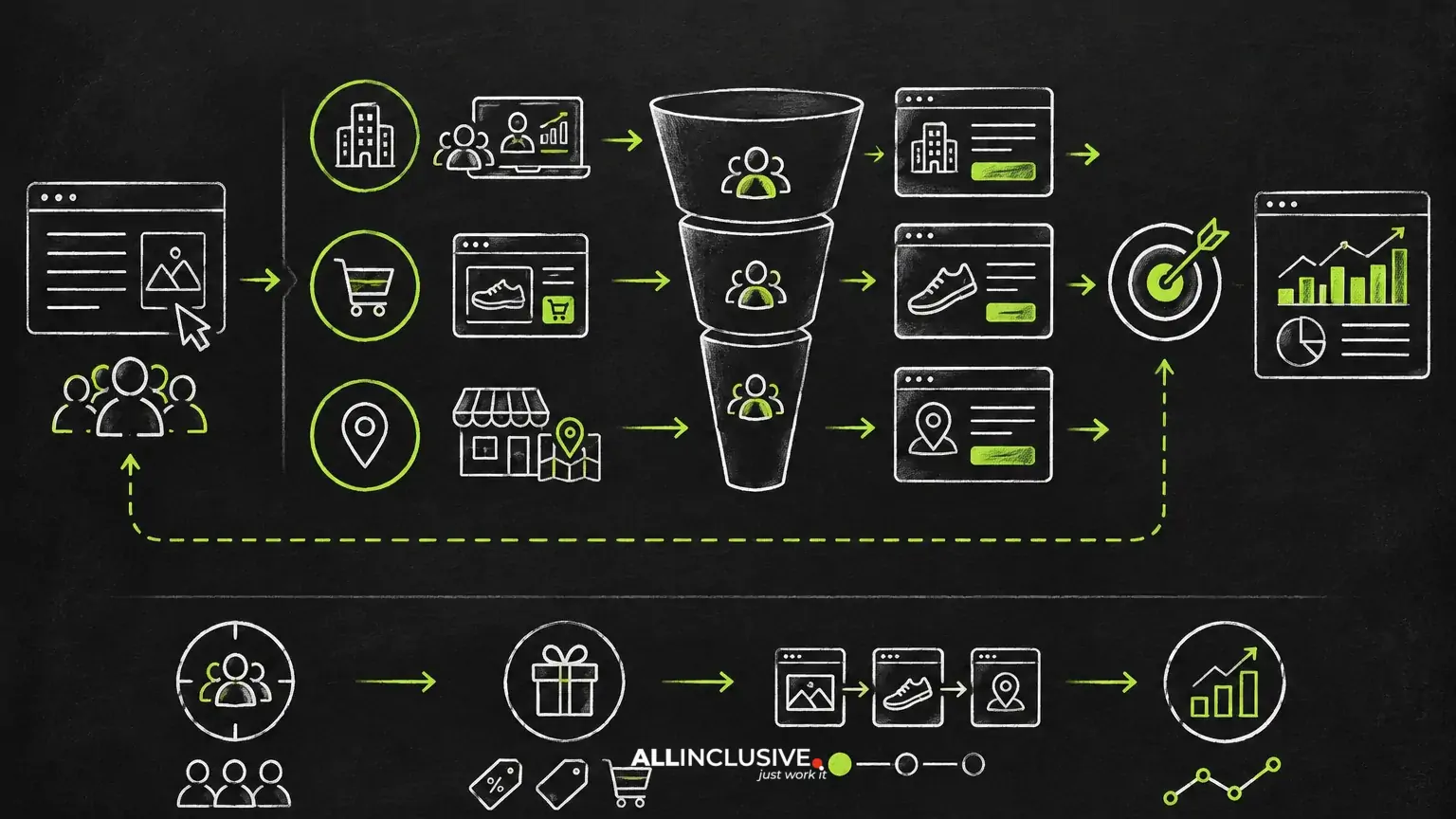
Strong remarketing strategy examples have one thing in common: they respond to what a visitor did, not simply to the fact that the visitor once reached a website. A product viewer may need proof and a reason to return. A high-intent B2B prospect may need a case study or consultation. A local-services visitor may need confidence, availability or an easy way to request an estimate.
The most useful way to plan remarketing is to connect four decisions: audience, message, offer and timing. This article applies that framework to B2B, ecommerce and local services, then shows how to turn the examples into a measurable campaign.
What makes a remarketing strategy effective?
Remarketing works best when it advances a user toward a logical next action. That action may be returning to a product page, booking a consultation, completing a checkout or consuming information that supports a later decision.
Before creating an audience, define the visitor’s likely stage:
- Awareness: the person consumed introductory content or visited a broad landing page.
- Consideration: the person viewed a solution, product, service or comparison page.
- Intent: the person started a form, requested pricing, added an item to a cart or visited a booking page.
- Conversion: the person completed the desired action and should usually be excluded from acquisition remarketing.
Then decide what would be useful at the next stage. Repeating the original ad is rarely enough. A better sequence may introduce proof, answer an objection, clarify the offer or reduce friction.
Remarketing strategy examples for B2B
B2B buying cycles are often longer, involve multiple stakeholders and require more evidence than a single conversion event can provide. B2B remarketing should therefore support evaluation instead of treating every visitor as ready for a sales conversation.
1. Content-engaged visitors to a proof asset
Audience: visitors who read an educational article, viewed a guide or spent meaningful time on a topic page.
Message: move from the problem to evidence. Promote a case study, implementation guide, product comparison or detailed resource related to the content topic.
Example: someone reads an article about reducing paid-media waste. The next ad offers a practical measurement checklist or a case study focused on reporting and optimization.
Why it works: the follow-up respects the visitor’s information-seeking behavior while giving the account a way to deepen engagement.
2. Solution-page visitors to a lower-friction conversion
Audience: visitors who viewed a service or solution page but did not submit a form.
Message: address the next likely objection—scope, process, fit, timeline or expected deliverables.
Offer: a consultation, audit, planning call, technical walkthrough or relevant checklist, depending on the business model and sales process.
Keep the destination aligned with the ad. If the ad emphasizes a diagnostic conversation, do not send the user to a generic homepage. The landing page should explain what happens next and what information the prospect should prepare.
3. High-intent visitors to a sales enablement sequence
Audience: people who visited pricing, implementation, demo or contact pages but did not complete the action.
Sequence:
- First, reinforce the specific solution and make the next step clear.
- Next, provide proof such as a relevant case study, process explanation or customer-facing FAQ.
- Finally, offer a direct conversion path, provided the audience remains eligible and the message is not becoming repetitive.
Use conservative frequency controls and short, intentional windows for high-intent segments. The goal is to remove uncertainty, not create pressure.
For more detail on moving prospects through stages, see how to sequence remarketing ads by intent.
Remarketing strategy examples for ecommerce
Ecommerce programs can often use more granular behavioral signals, but that does not mean every visitor should receive the same product ad. Product category, margin, availability, purchase status and recency all affect the appropriate strategy.
1. Product viewers to product-specific reassurance
Audience: people who viewed a product or category without adding an item to their cart.
Message: help the shopper evaluate the item. Depending on the product, this may include use cases, sizing guidance, specifications, reviews, care information or a comparison with alternatives.
Example: a visitor views a technical product but leaves without purchasing. A follow-up ad highlights compatibility and setup information rather than simply repeating the product name.
Product-specific creative is most useful when the catalog and tracking structure can support accurate matching. If that information is unreliable, use broader category or editorial messaging instead of presenting an incorrect item.
2. Cart abandoners to friction reduction
Audience: shoppers who added an item to a cart but did not complete checkout.
Message: remind them of the intended purchase and address practical barriers such as checkout complexity, delivery information, returns or payment options.
Do not assume that a discount is the correct response. A promotion can affect margin and may train customers to delay purchases. Test reassurance, clarity and convenience before making an incentive the central message. Exclude purchasers promptly enough to avoid advertising an item they already bought, subject to the quality and timing of available conversion data.
3. Previous customers to replenishment or cross-sell
Audience: customers grouped by product purchased, purchase recency or likely next need.
Message: support the next relevant purchase rather than showing the same acquisition creative.
Examples:
- Promote replenishment for products with a predictable usage cycle.
- Introduce compatible accessories after a core product purchase.
- Show a new category to customers whose previous order indicates an adjacent interest.
This strategy depends on sensible exclusions and customer data governance. Frequency, product availability and purchase timing should be reviewed before scaling.
Creative choices matter as much as audience rules. The guide to remarketing creative strategy covers how to adapt the ad itself to returning visitors.
Remarketing strategy examples for local services
Local-service decisions often depend on trust, urgency, geographic fit and the ease of contacting the business. Remarketing can support those decisions, but it should not imply that a business knows sensitive details about a person’s situation.
1. Service-page visitors to trust and clarity
Audience: visitors who viewed a specific service page but did not call, submit a form or book.
Message: explain the service process, qualifications, service area, preparation requirements or what the first appointment involves.
Example: a visitor reviews a home-maintenance service page. A follow-up ad directs them to a simple guide explaining the inspection process and how to request an estimate.
2. Booking-page visitors to an easier next step
Audience: people who reached a booking or contact page but abandoned before submitting.
Message: reduce friction with a clear phone option, shorter inquiry path, service-area confirmation or explanation of response expectations.
Make sure the destination reflects actual operational capacity. If appointment availability varies, avoid promising immediate service or a specific response time unless the business can reliably deliver it.
3. Past customers to seasonal or maintenance reminders
Audience: previous customers whose service history supports a relevant follow-up.
Message: provide a timely reminder, maintenance resource or related service based on a legitimate business relationship.
Use broad, respectful language in the ad. A useful reminder should feel like service, not surveillance. Review consent, privacy and audience policies before using customer lists or sensitive service categories.
How to turn an example into a campaign plan
Use this five-step process before launching any remarketing audience:
- Define the business outcome. Choose one primary action, such as a qualified inquiry, completed purchase, booking or return visit to a high-value page.
- Map eligible behaviors. Identify the pages, events or customer states that indicate meaningful intent. Avoid using every website visitor as one undifferentiated pool.
- Set exclusions first. Remove converters, recent purchasers, unqualified traffic and audiences that should not receive the message. Exclusions protect both efficiency and user experience.
- Build the message around the next objection. Ask what prevents the visitor from acting now. The answer should influence the proof, offer and landing page.
- Choose a review cadence. Monitor delivery, conversion quality, audience size, frequency and landing-page behavior. Adjust based on evidence rather than applying a universal rule.
Platform mechanics differ across advertising environments, and available audience signals depend on implementation, consent and account configuration. Treat the strategy as the durable layer; verify current platform requirements and measurement behavior before activation.
How to measure remarketing without misleading yourself
Remarketing audiences are often closer to conversion than prospecting audiences, so reported results can look attractive even when the program is not creating much incremental demand. Use several views of performance:
- Primary conversion rate: whether eligible users complete the intended action.
- Conversion quality: whether leads become qualified opportunities or purchases meet margin and retention goals.
- Assisted behavior: whether remarketing contributes to return visits, form starts or deeper engagement.
- Incrementality: where practical, compare against a suitable holdout or other controlled approach rather than relying only on attributed conversions.
- Experience signals: monitor frequency, negative feedback, unsubscribes, bounce behavior and complaints.
Do not judge an audience solely by low-cost clicks. A small, high-intent segment may produce fewer clicks but better business outcomes; a broad segment may produce volume without meaningful lift.
Common mistakes in remarketing programs
Showing the same ad to every visitor
Broad repetition ignores context. Separate at least the most important behaviors and tailor the next message to each one.
Ignoring recency
A visitor’s intent can change quickly. Build time windows around the actual buying cycle, then review whether the audience remains commercially relevant.
Failing to exclude converters
Serving acquisition ads to recent customers wastes budget and can make the brand appear careless. Keep conversion and customer exclusions current.
Using an offer before diagnosing friction
Discounts may solve a price objection, but they will not fix unclear positioning, weak proof, poor checkout usability or an inconvenient inquiry process.
Overlooking privacy and data quality
Reliable remarketing requires accurate event definitions, appropriate consent handling and transparent data practices. If the signal is uncertain, simplify the audience rather than pretending to have precision.
Building a practical remarketing system
The strongest program is not the one with the most audiences. It is the one that gives each meaningful visitor a relevant next step, limits unnecessary repetition and measures business value beyond platform-reported conversions.
Start with one high-intent audience, one clear objection and one destination that resolves it. Once the sequence is working, expand into lower-intent education, customer retention or cross-sell opportunities. For a broader view of planning and managing paid campaigns, visit Allinclusive’s paid media resources and review the remarketing strategy hub.