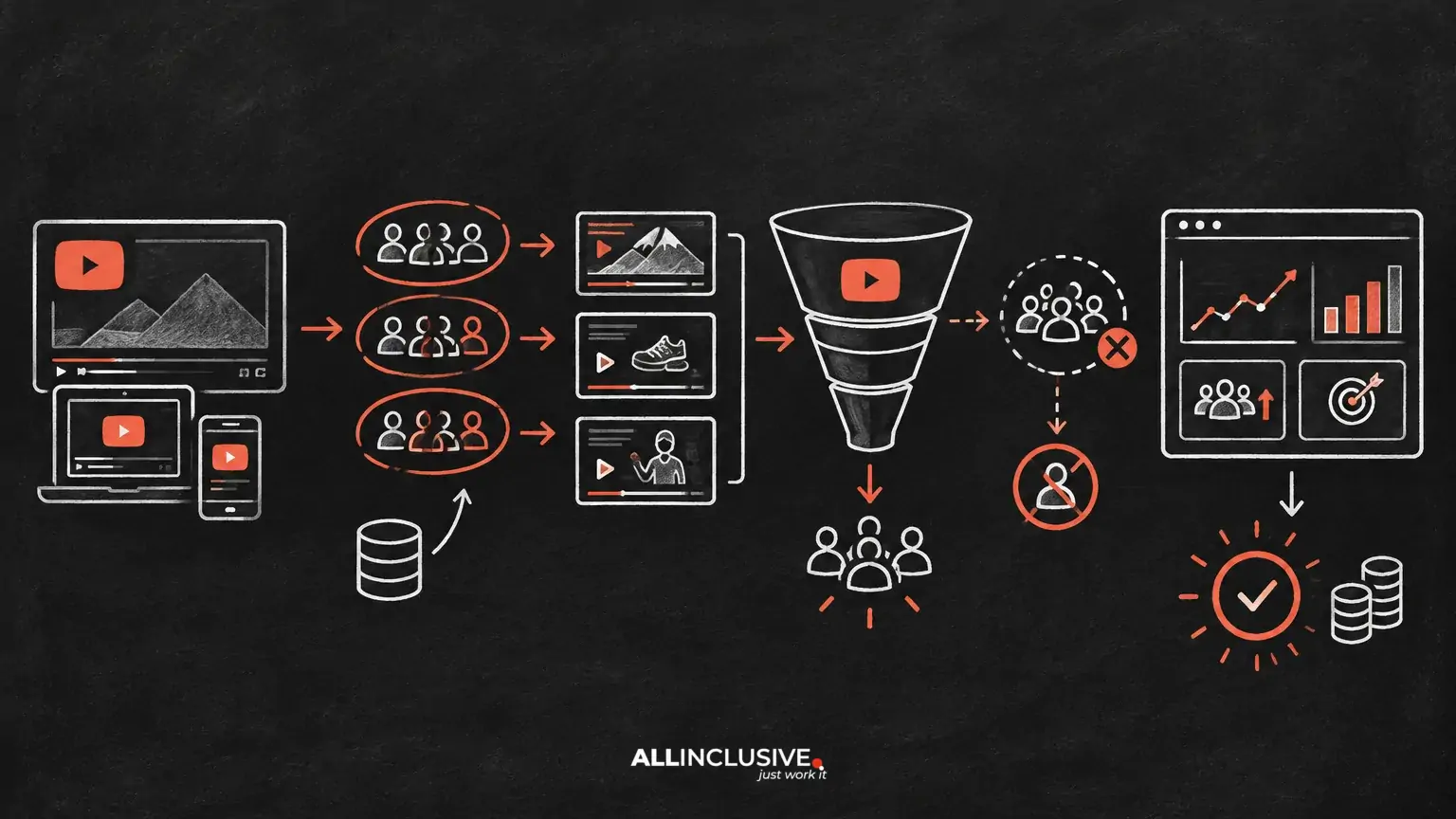
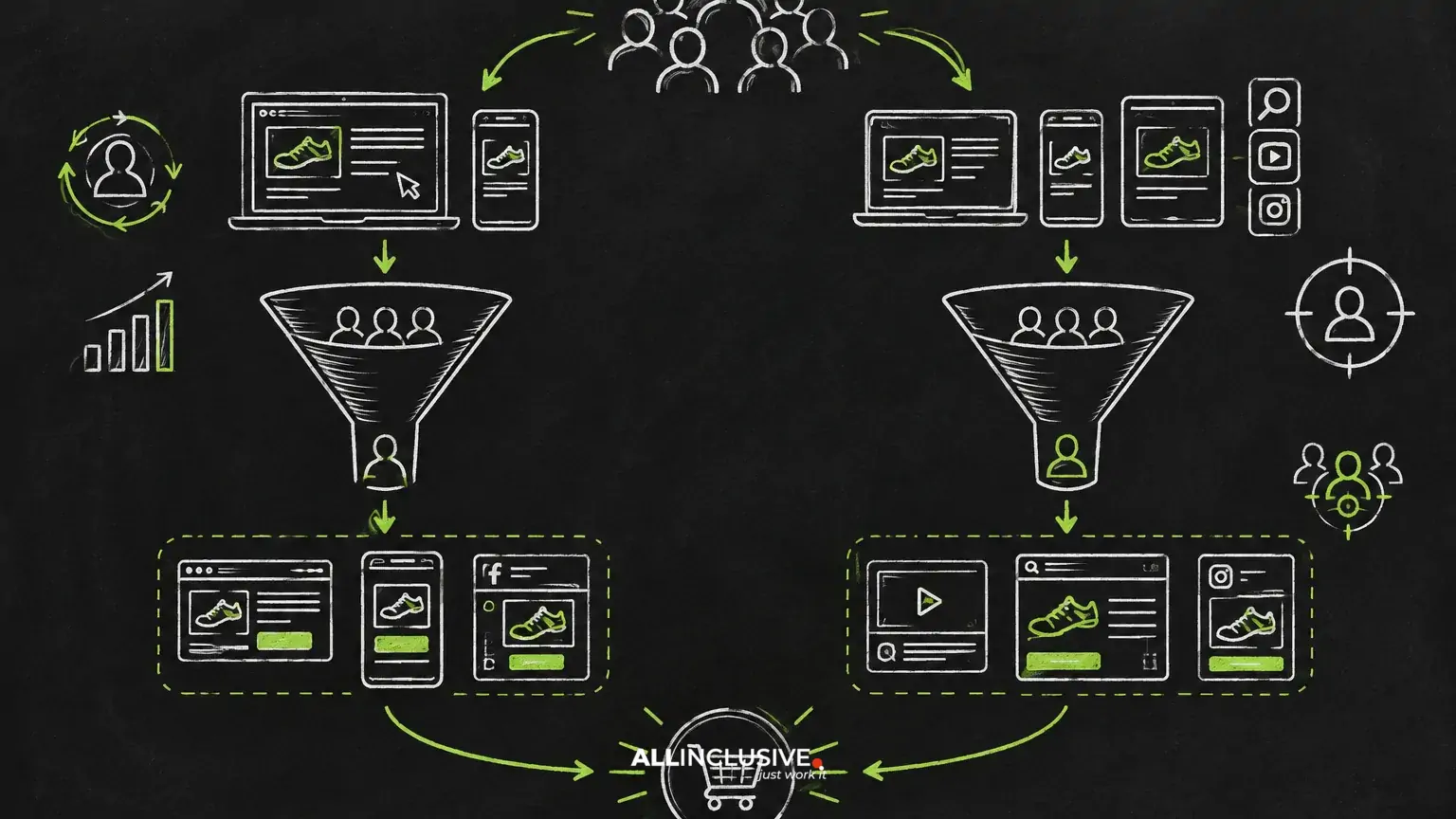
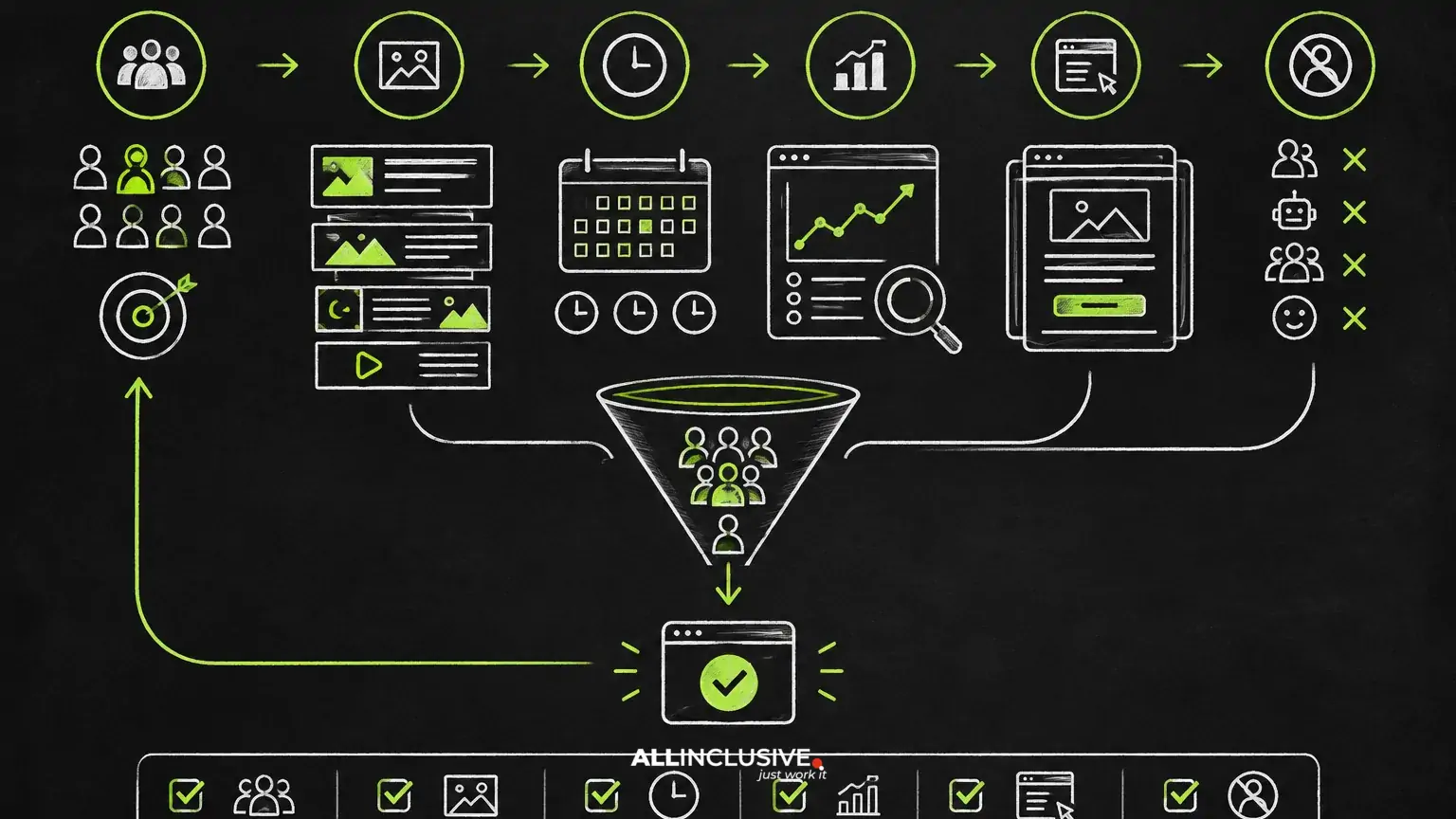
Remarketing for local businesses works best when it reflects how people actually make nearby purchasing decisions. A prospective customer may visit your website, compare alternatives, check availability, review services, and leave before contacting you. A well-designed remarketing campaign gives that person a relevant reason to return—without showing the same generic ad to everyone.
The strongest approach is not simply “target all website visitors.” It is a structured system that connects audience intent, time since the visit, offer, creative, landing page, and measurement. This guide outlines a practical framework for local service businesses, retailers, healthcare practices, professional firms, and other location-based companies.
What makes local-business remarketing different?
Local campaigns operate within a defined market, often with limited search volume and a finite pool of potential customers. That creates different priorities from national ecommerce or high-volume lead generation.
- Intent can be highly variable. Someone checking opening hours is not equivalent to someone viewing a pricing or booking page.
- Decision windows differ by category. Emergency services may require immediate action, while home improvement, healthcare, and professional services may involve research and consultation.
- Geography matters. Ads should support demand in areas the business can realistically serve.
- Frequency is more noticeable. A small local audience can see ads repeatedly, making exclusions and frequency controls important.
- Offline outcomes matter. Calls, appointments, visits, and completed jobs may happen outside the website.
For these reasons, local remarketing should reinforce a decision rather than attempt to create demand from every visitor.
Start with the customer decision, not the audience list
Before building audiences, define the action you want a returning visitor to take. The desired action should match the visitor’s likely stage and the business’s ability to respond.
- Local service: request an estimate, call, schedule an inspection, or submit a consultation form.
- Healthcare or wellness: book an appointment, verify a service, or call the location.
- Retail: return to a product category, check availability, use directions, or complete a purchase.
- Hospitality: review availability, compare room or package options, or complete a reservation.
- Professional services: download a useful resource, review capabilities, or arrange an introductory conversation.
This decision should determine audience rules, message, call to action, and conversion tracking. If the campaign has no clear next step, remarketing often becomes repeated brand exposure with limited commercial value.
A practical audience framework
Build audiences around behavior and recency. A smaller, high-intent audience is often more useful than a large pool of loosely related visitors.
1. Separate high-intent visitors
Create distinct groups for visitors who viewed pages associated with commercial intent, such as pricing, service detail, booking, contact, directions, or location pages. These users can receive stronger conversion-oriented messaging than visitors who only read an educational article.
2. Use recency windows that match the buying cycle
Organize audiences by time since the visit. A short window may suit urgent services; a longer window may be appropriate for considered purchases. Do not assume that every business needs the same membership duration. Test whether older visitors still respond or whether they consume budget without meaningful action.
3. Exclude completed actions
Remove people who completed the intended conversion, unless there is a legitimate retention or cross-sell reason to continue advertising. Exclude recent leads from acquisition messaging and move them into a separate follow-up or customer audience when appropriate.
4. Treat geography as a qualification layer
Audience membership alone does not establish that someone is currently in your service area. Apply location strategy carefully and align it with operational coverage, travel limits, and the business’s actual customer base. If a website attracts visitors from outside the service area, those users should not automatically receive the same budget allocation.
5. Segment by service or product interest
A visitor who viewed residential roofing should not necessarily see an ad for commercial roofing. Likewise, a visitor who explored one treatment or product category may need a different proof point from someone who browsed the broader site. Segment only when the distinction changes the message or destination; excessive fragmentation can make campaigns difficult to manage.
Choose the right remarketing objective
Local businesses commonly use remarketing for one of four objectives:
- Conversion recovery: encourage visitors who showed strong intent but did not complete a form, call, booking, or purchase.
- Consideration support: answer objections with reviews, process information, credentials, service details, or transparent next steps.
- Lead qualification: direct users toward a more suitable consultation, estimate, or service request.
- Retention and repeat business: bring existing customers back for replenishment, maintenance, seasonal services, or related offers.
These objectives should not be combined automatically. A campaign designed to recover abandoned booking journeys requires different creative and measurement from a campaign intended to reintroduce a business after an initial content visit.
Match the message to the reason for hesitation
Most visitors leave because they are not ready, uncertain, distracted, or unable to complete the next step. Remarketing creative should address the most plausible barrier rather than repeat a slogan.
For visitors who viewed services
Use concise explanations of what is included, who the service is for, and what happens after the inquiry. A clear process can reduce uncertainty more effectively than a broad brand claim.
For visitors who viewed pricing or estimates
Reinforce the next step, explain what information is needed, and set appropriate expectations about response or scheduling. Avoid implying guaranteed pricing if the final cost depends on an assessment.
For visitors who started but did not complete a form
Use a direct reminder with a low-friction path back to the form. If the form is long or requests information that is not necessary at the first stage, improve the experience rather than relying on more ads.
For visitors comparing providers
Use differentiators the business can substantiate: service coverage, process, availability, relevant experience, warranties, or customer support. Avoid unsupported superiority claims.
For returning customers
Promote an appropriate next service, maintenance reminder, replenishment, or seasonal need. Keep retention messaging separate from prospecting where possible so performance is not obscured.
Build a simple campaign structure
A practical starting structure may include the following groups:
- High intent, recent: commercial-page visitors within a short recency window, excluding converters.
- High intent, older: visitors who may need more reassurance or a different offer.
- Content or low intent: educational visitors who require softer messaging or may be excluded initially.
- Existing customers: a separate retention or cross-sell audience when consent and data use are appropriate.
Each group should have a defined bid or budget role, creative concept, landing page, and success metric. If volume is too low for separate campaigns, keep the logic in the audience and creative strategy rather than forcing many small ad groups.
For broader paid-media planning across acquisition and retention channels, see Allinclusive’s paid media resources.
Landing pages are part of the remarketing campaign
Sending every returning visitor to the homepage wastes the context created by the ad. Use a destination that continues the same conversation.
- Match the page to the service or product viewed.
- Repeat the relevant call to action near the top of the page.
- Make phone, booking, estimate, or direction options easy to find on mobile.
- Show location and service-area information where it helps qualification.
- Use proof that supports the decision, such as process details, reviews, FAQs, or clear policies.
- Reduce unnecessary form fields and friction.
When the campaign targets several services, create or use distinct destinations only where the content materially changes the decision. Otherwise, a well-structured service page may be more efficient than multiple thin landing pages.
Measurement: connect media to real business outcomes
Website conversions are useful, but they may not represent the full value of local remarketing. Depending on the business, track meaningful actions such as:
- qualified form submissions;
- calls from ads and landing pages;
- appointment requests or completed bookings;
- quote or estimate requests;
- directions or store-visit interactions, interpreted cautiously;
- repeat purchases or service requests;
- qualified leads accepted by the sales or operations team.
Define what counts as a meaningful conversion before launch. A form submission from outside the service area or an unqualified call should not necessarily be treated as equivalent to a booked appointment.
Use consistent campaign naming and distinguish remarketing from prospecting in reporting. Review performance by audience recency, service interest, device, geography, creative, and conversion type where volume supports analysis. The goal is not to maximize clicks; it is to determine whether returning users produce valuable business actions at an acceptable cost.
Frequency, exclusions, and budget controls
Local audiences can saturate quickly. Monitor whether impressions continue to generate incremental actions or simply repeat exposure to the same people. Set practical frequency controls where the buying environment and platform allow, rotate creative when repetition becomes excessive, and exclude converters promptly when the campaign’s objective has been completed.
Budget should generally follow intent and business capacity. A company that can handle only a limited number of appointments should not scale remarketing simply because an audience is available. Conversely, a high-value service may justify investment in a smaller audience if qualified conversions can be measured reliably.
Privacy and data-use considerations
Remarketing depends on audience signals and advertising technology that may be subject to consent requirements, regional privacy laws, browser limitations, and platform policies. Confirm that tracking, audience creation, customer data use, and measurement practices are appropriate for the markets served. Do not treat a technical implementation choice as a substitute for legal or privacy advice.
Where third-party audience availability is constrained, first-party relationships and contextual campaign planning can become more important. For a broader discussion of available approaches, see remarketing without third-party cookies.
A launch checklist for local remarketing
- Define the commercial action and business outcome.
- Map service areas, locations, and operational constraints.
- Separate high-intent visitors from general traffic.
- Choose recency windows based on the buying cycle.
- Exclude converters and irrelevant users.
- Write creative that addresses a specific hesitation.
- Connect each ad group to a relevant destination.
- Verify calls, forms, bookings, and other conversion events.
- Set budget and frequency safeguards.
- Review lead quality and offline outcomes, not just platform metrics.
For businesses generating inquiries rather than immediate purchases, the framework should connect advertising with follow-up and qualification. The related guide on remarketing for lead generation explores that handoff in more detail. You can also compare channel and audience approaches in the guide to remarketing strategy examples.
How to improve the campaign after launch
Start with the largest strategic uncertainty. If you do not know whether high-intent visitors respond, test audience quality before producing many creative variations. If audience quality is clear but conversions are weak, investigate the offer, landing page, response process, and tracking.
Useful tests may compare:
- different recency windows;
- service-specific versus general messaging;
- proof-oriented versus offer-oriented creative;
- short forms versus fuller qualification forms;
- phone-first versus form-first calls to action;
- recent visitors versus older visitors;
- separate budgets for prospecting and remarketing.
Change one meaningful variable at a time when possible, allow enough activity for a directional read, and avoid treating small fluctuations as proof. The most valuable insight may be that a low-intent audience should be excluded, a service page needs improvement, or the business’s follow-up process is limiting results.
Remarketing for Local Businesses: What to Prioritize
Effective remarketing for local businesses is a decision-support system, not a blanket reminder campaign. Segment visitors by intent and recency, match the message to the likely hesitation, send traffic to a relevant destination, and measure qualified business outcomes. When the campaign respects geography, capacity, privacy, and customer experience, remarketing can become a focused complement to search, social, and other acquisition activity.
For the broader strategic foundation, explore the remarketing strategy pillar.