Remarketing without third-party cookies is still possible, but the operating model has changed. Instead of relying on a single browser identifier to recognize visitors across the web, effective programs combine consented first-party data, authenticated audiences, contextual signals, platform-native tools, and owned-channel follow-up.
The practical implication is important: remarketing is becoming less about tracking every anonymous visitor and more about earning permission, creating useful audience definitions, and matching messages to a prospect’s stage in the buying journey. The strongest strategies also accept that some users will remain unaddressable and build measurement plans that do not treat every conversion as perfectly attributable.
What changed for remarketing
Third-party cookies historically helped advertising platforms connect activity across websites and support functions such as audience membership, frequency management, and conversion measurement. Browser restrictions, privacy regulations, consent requirements, and platform changes have reduced the reliability and availability of that approach.
These changes affect several parts of a campaign:
- Audience creation: anonymous cross-site audiences may be smaller or less persistent.
- Reach: not every site visitor can be recognized or reached later through the same mechanism.
- Measurement: conversion paths can contain more modeled, aggregated, or incomplete data.
- Frequency control: it may be harder to maintain a complete view of how often a person sees ads across environments.
- Consent management: lawful collection and use of personal data must be designed into the campaign, not added after launch.
This does not mean every remarketing feature has disappeared. Availability depends on the advertising platform, market, browser, consent status, account configuration, and campaign objective. Strategy should therefore be built around durable principles rather than assumptions about one specific platform mechanic.
What still works
1. Consent-based first-party audiences
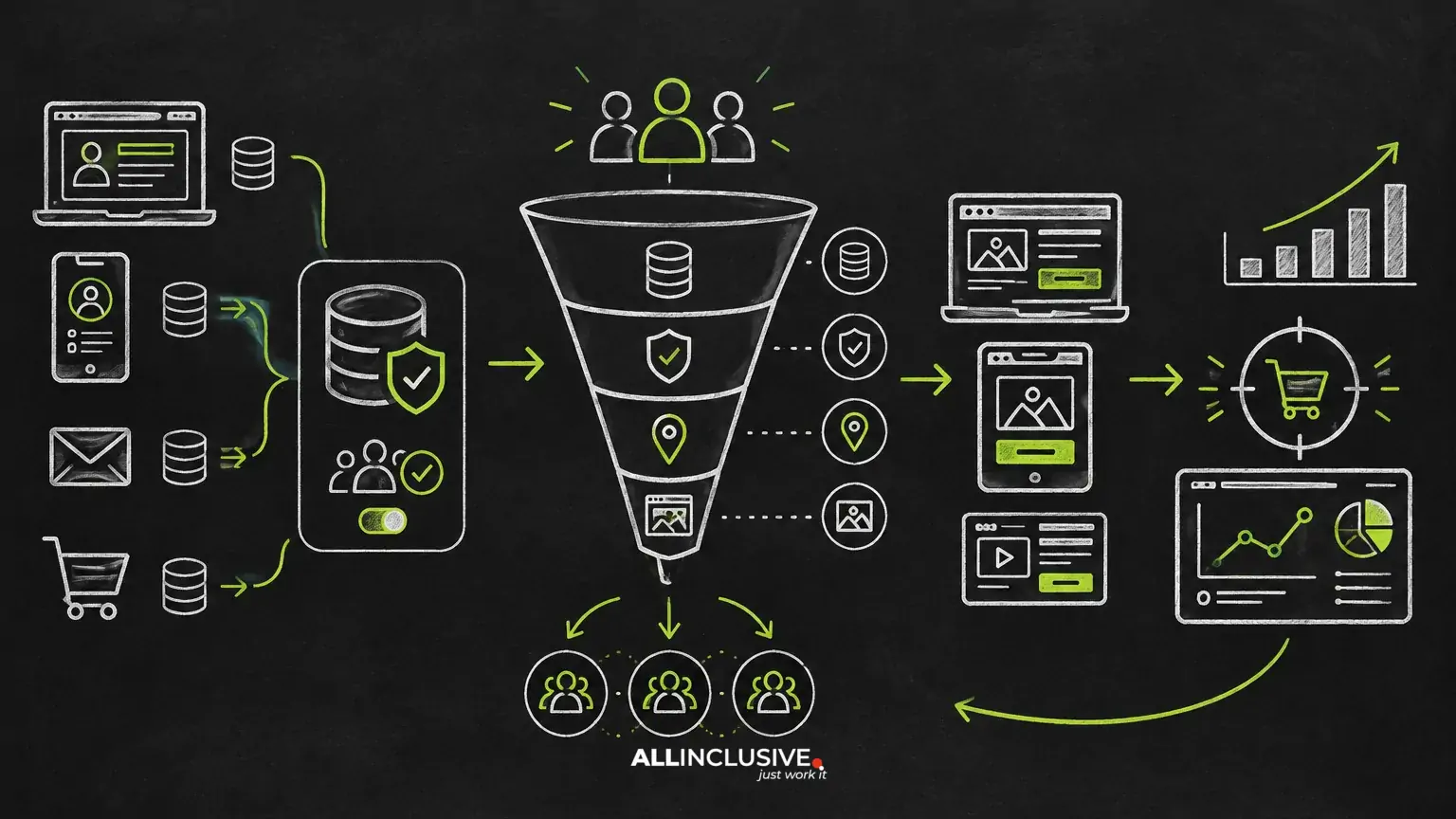
First-party data is information collected directly through a company’s own interactions with prospects or customers. Depending on the business and consent framework, it can include customer records, opted-in subscribers, lead forms, product users, event registrants, and known website visitors.
These audiences are generally more useful than broad anonymous pools because they can be connected to business context. A prospect who downloaded a pricing guide should not necessarily receive the same message as an existing customer, a trial user, or someone who only read an introductory article.
Use first-party audiences when you have:
- A clear reason for collecting and using the data.
- Appropriate consent or another valid legal basis for the intended activity.
- Accurate identifiers and a process for handling opt-outs.
- Audience definitions tied to business stages or customer value.
- Suppression rules for customers, converted leads, employees, or unsuitable accounts.
Data quality matters more than list size. A smaller, current audience with clear intent can be more actionable than a large list containing stale contacts and ambiguous permissions.
2. Customer and lead-list activation
Known customer or prospect lists can support remarketing when the relevant platform accepts the data, matches users under its own policies, and the business has permission to use the information for advertising. The platform may also apply minimum audience thresholds or restrict certain uses, so treat list activation as an operational process rather than a guaranteed delivery method.
Useful segments include:
- Open opportunities that need proof, education, or implementation detail.
- Qualified leads that have not booked a meeting.
- Past customers who may be eligible for an expansion or renewal conversation.
- Churned or inactive accounts that require a different reactivation message.
- Contacts who engaged with a high-value asset but did not complete the next step.
For a deeper treatment of list structure and use cases, see Customer Match Remarketing: Using First-Party Lists Effectively.
3. Contextual targeting
Contextual targeting reaches people based on the content or environment in which an ad appears rather than a persistent individual identifier. It can be particularly useful for upper- and mid-funnel activity, where the subject of the page provides a meaningful signal of current interest.
Contextual remarketing is not a literal replacement for a previous visitor audience. It is a way to recreate relevance through content, topics, keywords, placements, and page environments. For example, a cybersecurity provider might develop different creative for content about vendor risk, identity management, and incident response instead of showing one generic ad to all anonymous users.
To make contextual campaigns more precise:
- Map content themes to specific problems and buying stages.
- Exclude environments that are irrelevant, unsafe, or unlikely to support the brand.
- Use landing pages that continue the topic introduced by the ad.
- Test message relevance separately from audience scale.
4. Platform-native engagement audiences
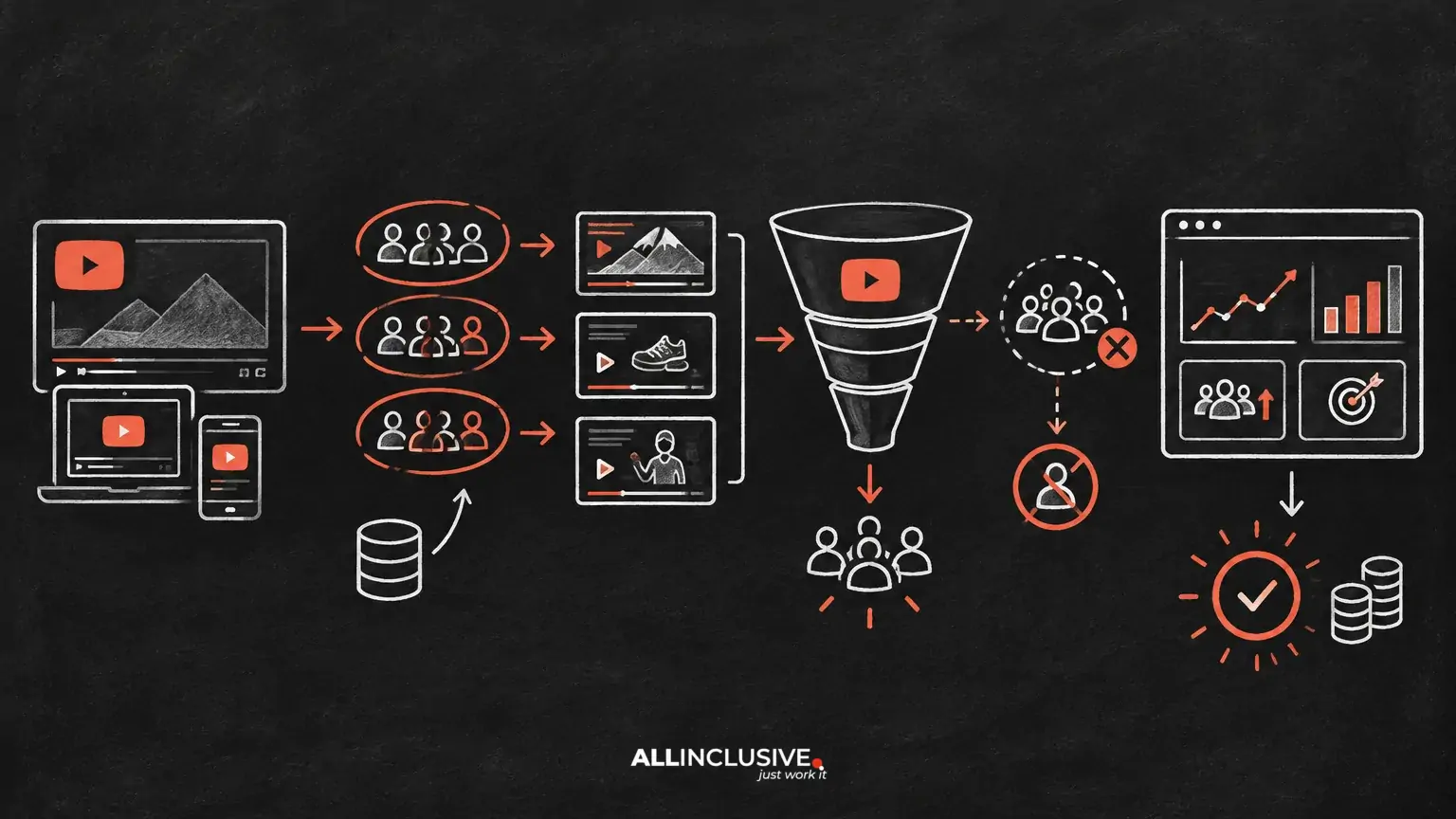
Many advertising environments can build audiences from engagement that occurs within the platform itself. Depending on the channel, this may include video viewers, form interactions, profile engagement, or other consented actions. These audiences are valuable because the platform can observe the engagement directly without depending on a third-party cookie across unrelated websites.
Use engagement audiences with clear sequencing. Someone who watched a short educational video may need a problem-definition asset next. Someone who opened a lead form but did not submit may need a lower-friction alternative, not repeated exposure to the same form.
5. Owned-channel follow-up
Email, marketing automation, sales follow-up, in-product messaging, and direct outreach are not paid-media substitutes in every situation, but they can extend the value of paid acquisition after a prospect identifies themselves. Owned channels also provide more control over message timing and audience logic.
A practical sequence might look like this:
- Paid media introduces a problem or point of view.
- A prospect exchanges information for a useful asset or requests a next step.
- Email or sales automation delivers relevant follow-up.
- Paid media supports the sequence with proof, education, or objection handling.
- Suppression rules remove the person from acquisition messaging when the opportunity changes stage.
The key is coordination. A prospect should not receive an acquisition ad promising an introductory guide after requesting a sales consultation.
How to design a durable remarketing framework
Start with business stages, not tracking features
Define what the audience means before choosing how to build it. A useful framework can include:
- Awareness: people who engaged with educational content.
- Consideration: people who visited solution, comparison, or pricing content.
- Intent: people who submitted a form, requested a demo, or began a high-value action.
- Opportunity: known prospects with an active sales process.
- Customer: people who should be excluded from acquisition or moved to expansion messaging.
This approach prevents the common mistake of treating every site visitor as one audience. It also makes it easier to use different addressability methods for different stages.
Use a signal hierarchy
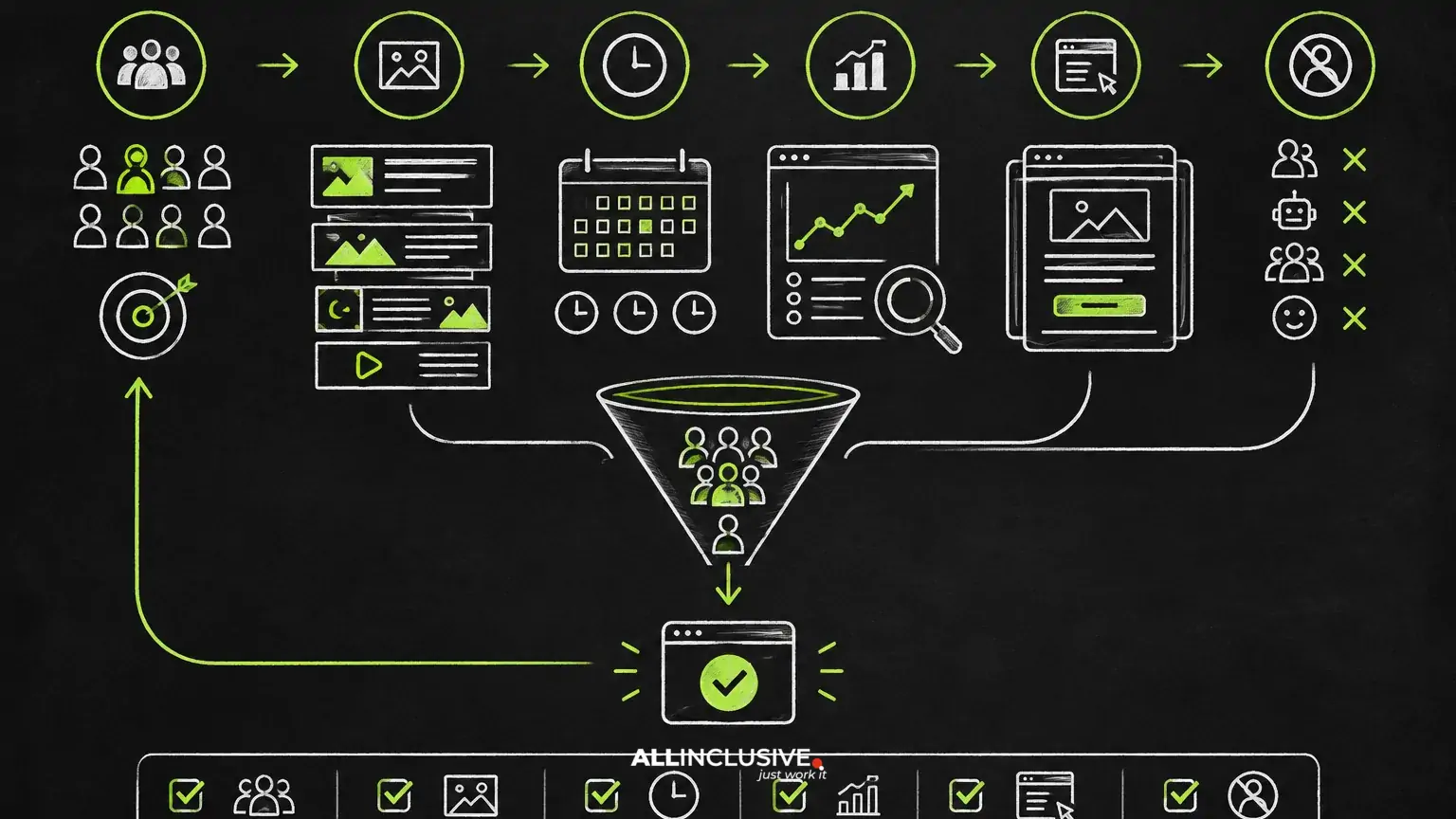
Not every signal deserves equal weight. A useful hierarchy is:
- Explicit intent: a request, application, booking, or form submission.
- Known relationship: an opted-in lead, account, customer, or subscriber.
- High-value behavior: repeated visits, pricing-page activity, product interaction, or meaningful content engagement.
- Contextual relevance: current content or topic aligned with the problem you solve.
- Broad reach: demographic, geographic, or general category signals used when stronger signals are unavailable.
Use stronger signals for higher-value actions and more specific creative. Use weaker signals for education and discovery rather than aggressive conversion messaging.
Build message sequences
Remarketing becomes less intrusive when each exposure has a purpose. A simple B2B sequence could be:
- Stage one: clarify the operational problem.
- Stage two: demonstrate an approach, framework, or relevant proof.
- Stage three: answer implementation and risk questions.
- Stage four: offer a specific next step.
Sequence logic can use available audience signals, time windows, content engagement, and known lifecycle stages. Avoid assuming that every person follows the same path or that a fixed number of impressions creates intent.
Measurement when user-level visibility is incomplete
Measurement should acknowledge what the data can and cannot prove. Platform-reported conversions, analytics events, CRM outcomes, and experiments each answer different questions.
Use several layers:
- Delivery metrics: reach, impressions, frequency where available, viewability or equivalent exposure measures.
- Engagement metrics: qualified visits, content consumption, form starts, and other meaningful actions.
- Business metrics: accepted leads, opportunities, pipeline contribution, revenue, retention, or expansion.
- Validation methods: holdout tests, geographic comparisons, time-based experiments, or other controlled analyses where practical.
Do not interpret an attributed conversion as proof that the ad caused the entire outcome. Conversely, do not dismiss a campaign solely because browser-level reporting is incomplete. Look for consistent evidence across platform data, analytics, CRM records, and controlled comparisons.
Before launch, document conversion definitions, reporting windows, consent behavior, identity rules, exclusions, and the difference between a reported conversion and a qualified business outcome.
Remarketing Without Third-Party Cookies: Mistakes to Watch For
- Replacing cookies with indiscriminate data collection: first-party does not automatically mean unrestricted or appropriate for every use.
- Overbuilding anonymous audiences: broad pools can create frequency, relevance, and measurement problems.
- Ignoring suppression: customers and converted prospects should not continue receiving acquisition messages by default.
- Using one creative for every stage: message relevance matters more when audience signals are less precise.
- Measuring only platform conversions: paid-media reporting should connect to downstream business quality.
- Assuming technical parity: a feature available in one account, market, or channel may not be available in another.
A practical implementation checklist
- Inventory the first-party data sources your business owns and document their permissions.
- Define lifecycle stages, audience membership rules, retention windows, and exclusions.
- Separate anonymous, authenticated, platform-engaged, contextual, and owned-channel approaches.
- Map a message and offer to each stage instead of repeating one ad.
- Confirm platform requirements, minimum audience conditions, consent behavior, and regional limitations before launch.
- Connect advertising audiences to analytics and CRM outcomes where possible.
- Set a measurement plan that includes both attributed reporting and incrementality-oriented validation.
- Review audience freshness, frequency, lead quality, and opt-out behavior on a regular schedule.
For broader planning across audiences, sequencing, and measurement, explore our B2B Remarketing Strategy: Audiences, Sequences and Measurement. If you are building the wider channel plan, the remarketing strategy service page provides a useful starting point, while our paid media hub covers adjacent acquisition and measurement topics.
The strategic takeaway
Remarketing without third-party cookies is not a single replacement tactic. It is a portfolio of methods: consented first-party data, known-customer activation, contextual relevance, platform engagement, owned-channel follow-up, and disciplined measurement.
The best program does not attempt to identify everyone. It prioritizes the signals that are most useful, respects user choice, adapts the message to the buying stage, and evaluates performance against real business outcomes. That makes remarketing more resilient—and often more strategically valuable—than a model built around anonymous repetition alone.