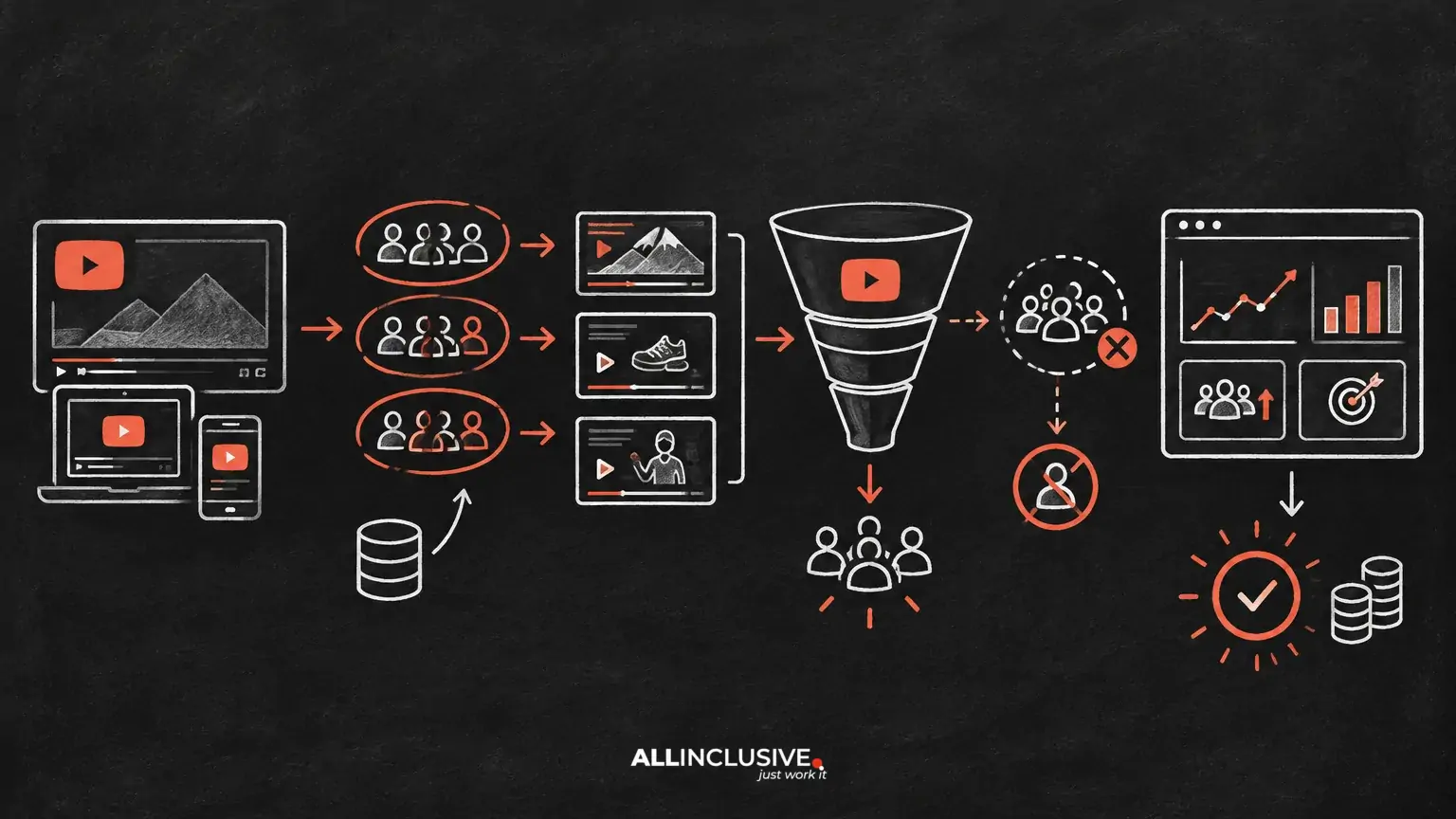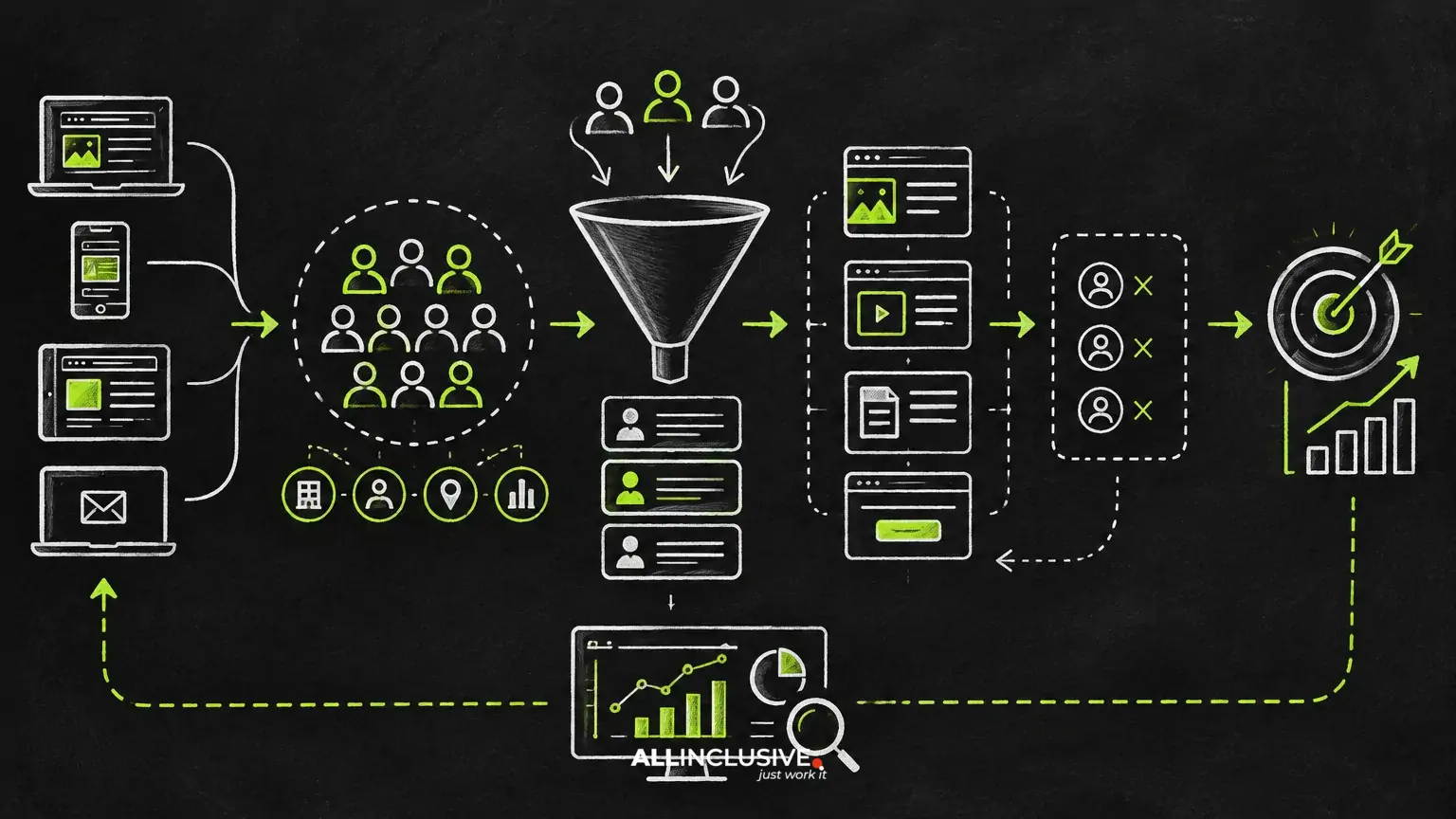
A strong b2b remarketing strategy does more than show the same ad to every previous website visitor. It identifies what a prospect has already done, estimates what they may need next, and coordinates paid follow-up with the rest of the buying journey.
That matters in B2B because conversions are often delayed, multiple people may influence one opportunity, and a return visit does not necessarily mean purchase intent. The most reliable approach is to build remarketing around audience quality, buying-stage signals, controlled message sequences and measurement that separates influence from coincidence.
What a B2B remarketing strategy should accomplish
Remarketing should reduce friction between an initial interaction and a commercially meaningful next step. Depending on the business model, that next step might be returning to a comparison page, downloading a technical resource, registering for a consultation or completing a qualified form.
A useful strategy should answer four questions:
- Who should be included? Define audiences using behavior, account context, consent and recency.
- What should each audience see? Match creative and offer to the information gap suggested by the prior interaction.
- When should the sequence change? Use time windows and qualifying actions to move people forward or stop advertising.
- How will contribution be evaluated? Measure progression and lead quality, not only view-through conversions or low-cost clicks.
These principles belong in the strategy layer. The exact audience features, match behavior and delivery controls depend on the advertising platform, account configuration, privacy choices and available first-party data.
Start with buying stages, not platform audiences
Before building audiences, map the journey you want to support. A simple B2B framework can include:
- Problem awareness: The prospect has interacted with educational content or arrived through a broad demand-generation campaign.
- Solution exploration: The prospect has viewed product, service, use-case or comparison content.
- Evaluation: The prospect has engaged with proof, technical documentation, pricing context or a consultation page.
- Conversion: The prospect has submitted a form, booked a meeting or completed another defined hand-raise.
- Sales progression: The resulting lead has been accepted, qualified or connected to an opportunity.
This structure prevents a common mistake: optimizing for the easiest observable action rather than the business outcome. A person who reads one article should not automatically receive the same message as someone who reviewed implementation details and returned several times.
Build audience tiers with clear inclusion and exclusion rules
1. Broad engaged visitors
These audiences can include visitors who viewed useful content but have not shown a strong commercial signal. Keep the message educational and use a controlled recency window. The goal is to earn another relevant interaction, not force a sales conversation prematurely.
2. High-intent content visitors
Create separate groups for people who viewed service, product, integration, comparison, pricing or implementation pages. These behaviors provide stronger evidence of active research, although they still do not prove readiness to buy.
3. Known prospects and first-party contacts
Where consent and platform requirements permit, first-party lists can support more deliberate account or contact strategies. Segment by lifecycle status, product interest, region, role or sales ownership rather than uploading one undifferentiated database. For related guidance, see Customer Match Remarketing: Using First-Party Lists Effectively.
4. Converted or active sales audiences
Exclude people who have already completed the desired action unless there is a legitimate post-conversion objective. Existing customers, open opportunities and recently contacted leads may require different communications from net-new prospects. Exclusions help control waste and reduce the risk of sending an inappropriate acquisition message.
5. Strategic account audiences
Account-based programs may use account lists, professional attributes, content engagement or site behavior, depending on the data available and permitted. Treat account membership as a prioritization signal, not proof that every individual at the account shares the same intent.
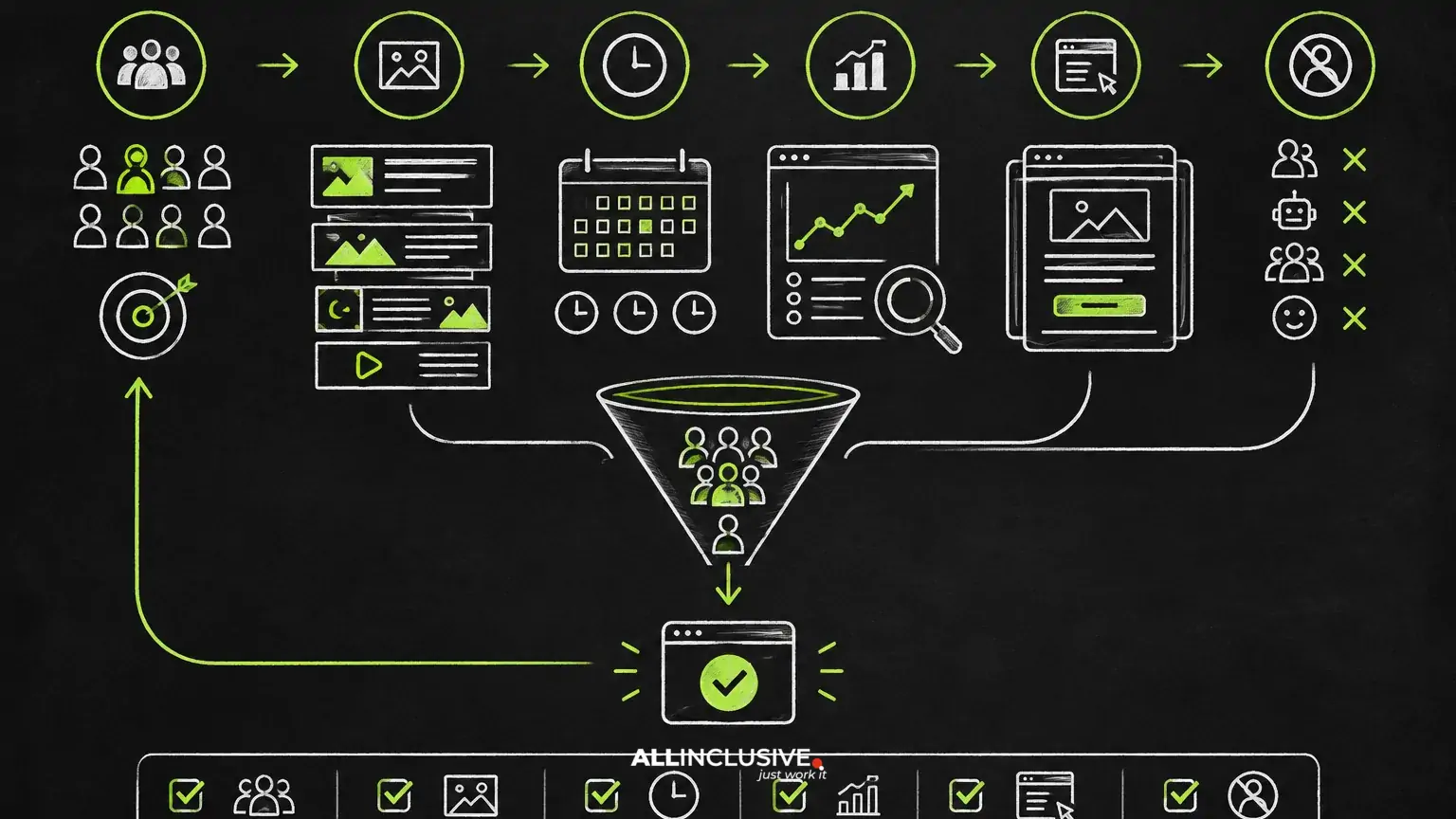
Document each audience with five fields: inclusion criteria, exclusions, recency window, intended message and success event. If the team cannot explain why an audience exists, it probably should not receive budget.
Use recency to reflect intent decay
Recency windows should reflect the sales cycle and the strength of the signal. A product-page visitor may deserve a shorter, more relevant follow-up window than someone who read an introductory article. A high-consideration purchase can justify a longer sequence, but longer does not mean indefinite.
Test windows based on business logic rather than adopting a universal duration. Review performance by elapsed time since the qualifying action and look for changes in lead quality, conversion rate, frequency and downstream progression. If later impressions no longer produce useful movement, reduce bids, narrow the audience or stop the sequence.
Design sequences instead of repeating one ad
Sequencing gives each touchpoint a job. A practical structure is:
Stage one: reinforce relevance
Immediately after the qualifying interaction, acknowledge the problem or use case without repeating the exact page headline. Helpful creative might clarify a common implementation question, introduce a relevant checklist or point to a related proof point.
Stage two: reduce uncertainty
After the prospect has had time to engage, address evaluation barriers. Depending on the offer, that might include methodology, technical considerations, integration information, security documentation, customer fit criteria or an explanation of the buying process.
Stage three: offer a proportionate next step
When behavior suggests stronger intent, present a clear action such as requesting an assessment, speaking with a specialist or reviewing a detailed solution. The call to action should match the likely commitment level. A high-friction form is rarely the right next step for a lightly engaged visitor.
Stage four: suppress, refresh or change objective
Stop a sequence when the person converts, becomes an active sales contact, reaches a frequency limit, exits the relevant time window or receives a new lifecycle treatment. If the prospect remains engaged but does not convert, refresh the value proposition rather than repeating the same creative indefinitely.
Sequence logic is easier to govern when each ad group or campaign has a documented audience state. Where platform sequencing controls are limited, approximate the logic through mutually exclusive audiences, campaign priorities, creative rotation and exclusions. Confirm actual delivery behavior in the platform rather than assuming that campaign structure guarantees an ordered experience.
Match message to the information gap
Effective B2B remarketing is less about reminding someone that they visited and more about helping them make the next decision. Consider these examples:
- Educational reader: Show a practical framework, diagnostic resource or use-case guide.
- Service-page visitor: Explain fit, process, deliverables or what happens after inquiry.
- Technical evaluator: Provide implementation detail, integration context or risk-reduction evidence.
- Pricing visitor: Clarify scope, commercial variables and qualification requirements without making unsupported claims.
- Form starter: Reduce friction with concise reassurance, clear expectations and an alternative contact route where appropriate.
Creative should also respect the audience’s role. An executive may need business implications, while an evaluator may need operational detail. Avoid implying knowledge that the person did not knowingly provide, and be especially careful with sensitive categories or personal attributes.
Coordinate remarketing with acquisition and sales
Remarketing should not operate as an isolated recovery channel. Align it with acquisition campaigns so that new prospects are not immediately pushed into a late-stage message. Coordinate with email, content, events and sales outreach to avoid contradictory offers and excessive contact.
Define handoff rules with sales. For example, a marketing-qualified lead might be removed from generic remarketing while receiving a role-specific nurture or account-level program. An open opportunity may need suppression from demand-generation ads altogether, unless a separate enablement objective has been agreed.
For broader channel planning, use the Allinclusive.llc paid media resource as the surrounding framework, then connect remarketing decisions to campaign objectives, budget allocation and measurement governance.
Measure progression, quality and incrementality
Report remarketing at multiple levels:
- Delivery: Reach, frequency, spend, viewability or platform delivery indicators where available.
- Engagement: Clicks, landing-page quality, return visits and meaningful content interactions.
- Conversion: Form submissions, bookings, downloads or other agreed actions.
- Quality: Valid leads, accepted leads, qualified opportunities, pipeline progression or revenue signals.
- Efficiency: Cost per qualified outcome and contribution relative to the broader media program.
Do not treat platform-attributed conversions as conclusive proof that remarketing created demand. Retargeted users are already selected for prior engagement, so they may have converted without the additional impression. Where feasible, use holdouts, geo-based tests, audience splits or other defensible comparison methods. If experimentation is not possible, label the reporting clearly as attributed performance and avoid presenting it as incremental impact.
Connect ad and analytics data to CRM stages when possible. A campaign that generates inexpensive form fills but few accepted leads may be less valuable than one with a higher visible acquisition cost and stronger downstream quality. Maintain consistent definitions for conversion, qualified lead and opportunity across reporting systems.
Common failure points to check before launch
- One audience contains every visitor, regardless of intent or lifecycle stage.
- Converters and active opportunities are not excluded.
- Recency windows are longer than the business logic supports.
- Creative repeats the same message without addressing a new objection.
- Frequency is monitored only after complaints or performance deterioration.
- Tracking does not distinguish primary conversions from secondary actions.
- Consent, list eligibility and regional privacy requirements are treated as implementation details.
- Sales has no process for acting on the leads the campaign generates.
For a deeper review of preventable issues, see Remarketing Mistakes That Waste Budget and Annoy Prospects. If your plan depends heavily on browser-based audiences, also review Remarketing Without Third-Party Cookies: What Still Works.
B2B Remarketing Strategy: Pre-Launch Checklist
- Define the commercial objective and primary qualified outcome.
- Map key buying stages and the behavior that indicates movement between them.
- Create audience definitions with recency, exclusions and ownership.
- Assign one message and one next step to each audience stage.
- Prepare multiple creative angles rather than one repeated reminder.
- Confirm consent, tagging, list governance and conversion definitions.
- Set frequency, budget and stopping rules before launch.
- Agree with sales how qualified responses will be handled.
- Review delivery, quality and progression on a regular cadence.
- Run a controlled test when you need to estimate incremental impact.
The best B2B remarketing programs are disciplined systems, not collections of retargeting ads. They use behavioral context without overinterpreting it, give prospects a logical path from research to action, and judge success by useful business progression. Start with a small number of well-defined audience states, build messages around real information gaps, and expand only when measurement shows that the additional complexity improves outcomes.
For broader strategic context, see our remarketing strategy resource.