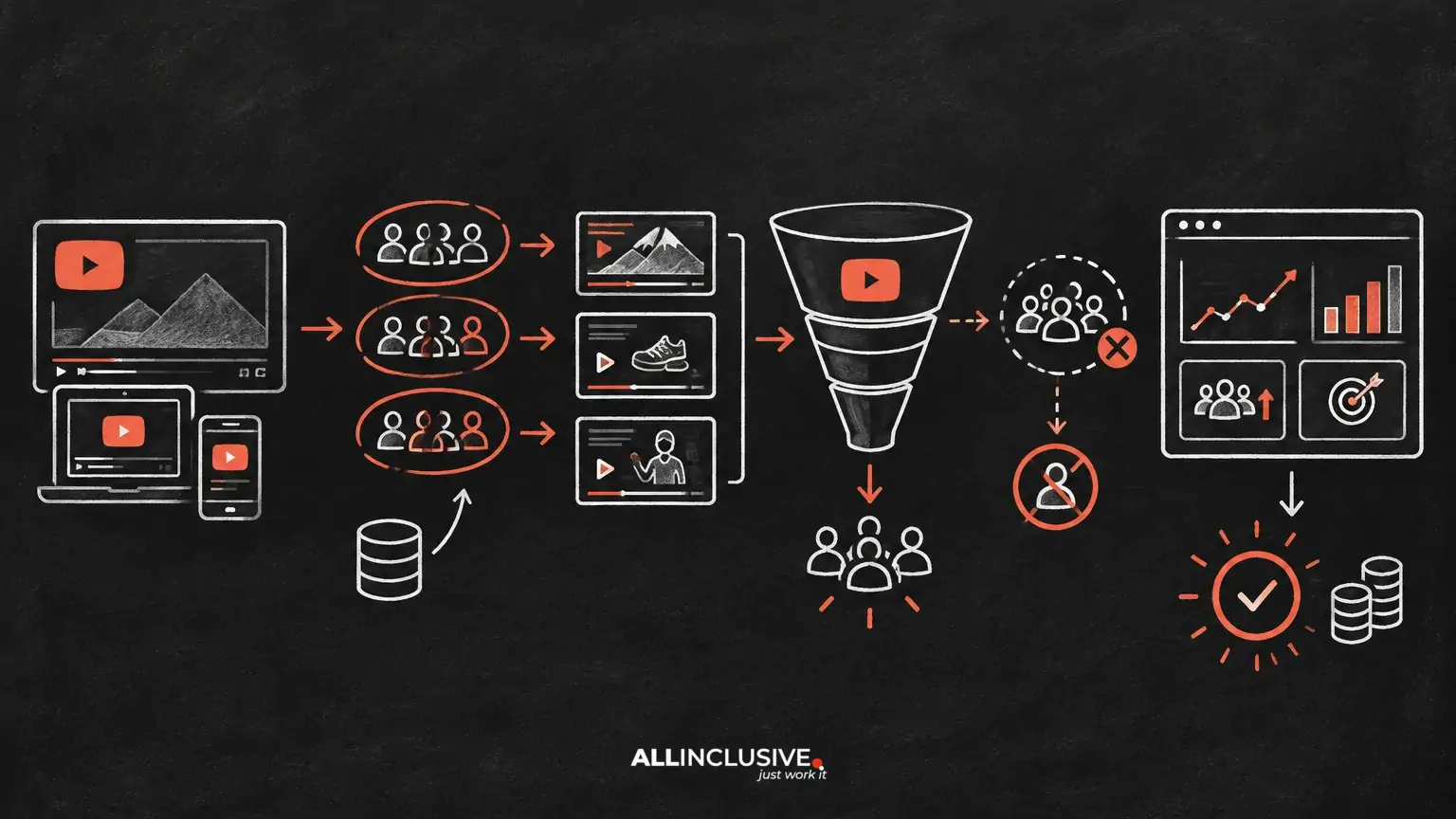
A remarketing campaign audit should answer one practical question: is additional spend likely to create incremental value, or will it simply buy more impressions from people who would have converted anyway?
Before increasing budgets, review the 20 checks below. They cover audience quality, consent and tracking, campaign structure, creative, bidding, landing pages and measurement. The specific controls vary by platform and market, but the underlying audit logic remains consistent.
How to use this remarketing campaign audit
Do not treat the checklist as a pass-or-fail exercise based on one metric. Review each item against your business model, sales cycle, conversion lag, margins and privacy obligations. A short purchase journey may support tighter windows and faster optimization; a complex B2B journey may require longer qualification periods and offline outcomes.
For each check, record the finding, business impact, owner and next action. Separate issues that block scaling from improvements that can be tested after the fundamentals are sound.
Audience and eligibility checks
1. Is the audience source clearly defined?
Document where each audience comes from: site visitors, product viewers, content readers, lead-form users, customer lists, app activity or another first-party signal. An audience label such as “all visitors” is not enough for analysis. You need to know the behavior, recency and data source behind it.
2. Are recency windows aligned with the buying journey?
Review whether the audience duration reflects how quickly prospects typically decide. A seven-day window may suit a fast ecommerce purchase, while a considered B2B purchase may require several stages and longer windows. Longer is not automatically better: stale users can dilute relevance and consume budget without representing current intent.
3. Are high-intent behaviors separated from low-intent visits?
Segment meaningful actions where volume allows. Product or pricing-page visitors, form starters, qualified leads and repeat users should not automatically receive the same message as someone who viewed a single informational page. If data is limited, begin with a simple intent hierarchy and expand it as volume supports testing.
4. Are converters and customers excluded appropriately?
Check exclusions for completed purchases, submitted leads, existing customers or other outcomes that make the original message irrelevant. Do not assume one exclusion fits every objective. A purchaser may be removed from acquisition remarketing but eligible for retention, cross-sell or renewal campaigns with separate consent and messaging requirements.
5. Are exclusions preventing audience overlap?
Map which campaigns can reach the same person. Overlap can create internal competition, inconsistent messaging and unclear reporting. Use mutually exclusive audience tiers where practical—for example, recent high-intent users, older site visitors and existing customers—with an explicit priority order.
Privacy, consent and measurement checks
6. Is the data collection appropriate for the market and business?
Confirm that audience creation, cookies, pixels, customer lists and consent signals are handled according to applicable law, internal policy and platform requirements. Requirements differ by jurisdiction and data type. In regulated categories, involve privacy, legal or compliance stakeholders before changing collection or activation.
7. Does the campaign measure the intended conversion?
Audit the primary conversion action rather than accepting the account default. A remarketing campaign optimized to a low-value micro-conversion can appear efficient while failing to generate revenue or qualified pipeline. Define the business outcome first, then confirm that the platform receives a reliable signal for it.
8. Are conversion events deduplicated?
Check whether browser, server, CRM or offline events are being counted more than once. Compare platform totals with analytics, ecommerce and sales systems while allowing for differences in attribution and reporting windows. A discrepancy does not automatically mean tracking is broken, but unexplained duplication is a scaling risk.
9. Is conversion value accurate?
Where value-based optimization is used, inspect revenue, margin, currency, refunds, lead values and offline qualification logic. A form submission may not have the same economic value across products, regions or lead sources. If values are modeled, document the assumptions and review them periodically.
10. Can reporting distinguish assisted influence from direct demand?
Remarketing often reaches people who already know the brand. Review reporting beyond the platform’s default attribution view. Compare click-through, view-through and post-click outcomes carefully, and use experiments or holdouts when feasible to estimate incrementality. Do not describe attributed conversions as purely created by remarketing without evidence.
Campaign structure and delivery checks
11. Is the campaign structure simple enough to learn?
Excessive segmentation can fragment delivery and make results unstable. Too little segmentation can hide important differences in intent, geography, product or customer status. Keep separate campaigns only when the distinction changes budget, bidding, creative, reporting or compliance requirements.
12. Are placements and inventory appropriate?
Review where ads appear, whether placements match the brand and whether exclusions are necessary. Evaluate placement quality using meaningful outcomes, not just impressions or cheap clicks. For sensitive brands or regulated offers, establish an inventory suitability standard before launch.
13. Are frequency and recency controls protecting user experience?
Check exposure by audience, placement, device and time period where the platform provides those controls. A high frequency can indicate strong intent, but it can also signal waste, fatigue or an overly narrow audience. Set a review threshold based on declining engagement, rising costs, complaints or conversion quality—not on a universal number.
14. Is the budget reaching the highest-value audience first?
Compare spend allocation across audience tiers. Recent high-intent users may deserve priority, but do not assume every additional impression is equally valuable. Establish a sequence for expansion: improve delivery to the most valuable segment, validate marginal returns, then test broader or older audiences.
15. Are bidding and optimization settings consistent with the data available?
Choose a bidding approach that the account can support with reliable conversion volume and appropriate values. If the signal is sparse, aggressive automation may be unstable; if the signal is robust, manual controls may limit useful optimization. Treat platform recommendations as inputs, not as a substitute for business judgment.
Creative and message checks
16. Does the message reflect the user’s last meaningful action?
Match creative to intent. Someone who abandoned a checkout may need reassurance about delivery, payment or support. Someone who read an educational article may need a relevant next step rather than a hard offer. Avoid implying knowledge that the user did not knowingly provide.
17. Is there a clear reason to return now?
Remarketing should add value, not merely repeat the brand name. Test a useful offer, proof point, product benefit, comparison, reminder or risk reducer. For B2B campaigns, that might be a relevant case study, implementation guide or consultation step rather than a discount.
18. Are creative rotation and fatigue being monitored?
Review performance by asset, audience age and exposure level. Refresh creative when engagement and conversion quality decline, not simply because a calendar date has arrived. Maintain consistent positioning while testing one meaningful variable at a time, such as proof, call to action, format or objection handling.
Landing page and commercial checks
19. Does the landing experience continue the ad’s promise?
Confirm that the destination matches the audience, offer and call to action. Check mobile usability, load experience, form friction, product availability, pricing clarity and conversion tracking. A strong ad cannot compensate for a page that forces users to restart their research.
20. Is there a credible scaling plan based on marginal returns?
Before raising spend, define what success and failure look like at the next budget level. Monitor incremental spend separately from historical averages, and allow enough time for conversion lag before drawing conclusions. Scale in controlled steps, protect the highest-value audiences and pause expansion when marginal cost or lead quality moves outside the agreed range.
What to do after the audit
Classify findings into three groups:
- Blockers: consent gaps, broken conversion events, duplicate counting, missing exclusions or materially misleading value data.
- Efficiency opportunities: audience overlap, weak recency logic, poor placement quality, excessive frequency or underdeveloped creative.
- Growth tests: new intent tiers, longer or shorter windows, sequential messaging, fresh destinations and controlled budget expansion.
Fix blockers before interpreting performance. Then establish a baseline by audience tier, including spend, reach, frequency, attributed conversions, qualified outcomes, revenue or pipeline value, and time to conversion. This makes it easier to distinguish a genuine improvement from reporting noise.
How remarketing fits into the broader paid-media plan
Remarketing is one layer of a demand-generation system, not a replacement for prospecting, strong conversion paths or lifecycle communication. Its role should be explicit: recover consideration, support evaluation, re-engage qualified prospects, retain customers or move users toward a defined next action.
For broader planning context, review remarketing strategy alongside the wider paid media framework. If your audit involves platform structure, the PPC remarketing strategy guide covers lists, organization and bidding considerations. For feed-based product campaigns, see the dynamic remarketing guide.
The goal of an audit is not to make remarketing appear larger or more efficient on paper. It is to determine whether the audience, message, measurement and economics are strong enough to justify the next dollar of spend.