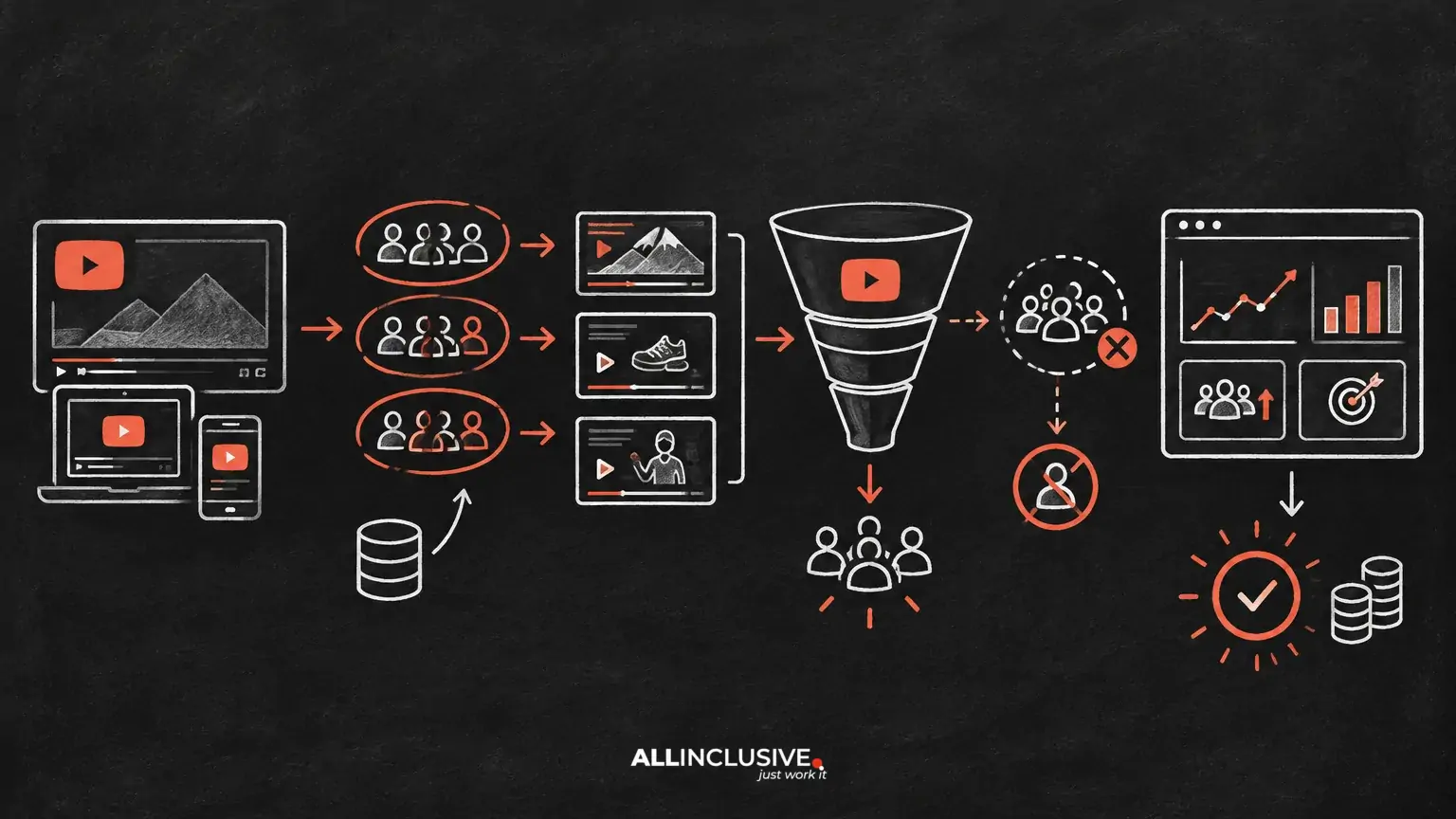
Abandoned-cart retargeting is useful, but it is only one application of ecommerce remarketing. A stronger program reconnects with shoppers at different stages of consideration, adapts the message to their product context and limits spend when the likelihood of a purchase is low.
The most effective approach is to organize remarketing around four questions: what did the shopper do, how recently did they do it, what product or category context matters, and what action should happen next? Those answers determine audience membership, creative, offer strategy, bidding priorities and measurement.
What ecommerce remarketing should accomplish
Remarketing should help an ecommerce business recover qualified demand without paying repeatedly for customers who would have converted anyway. That means the program needs to do more than show the last product viewed to every site visitor.
A useful remarketing system can:
- Bring high-intent shoppers back to complete a purchase.
- Move product viewers toward comparison, consideration or checkout.
- Introduce complementary products after a purchase.
- Re-engage existing customers according to replenishment or purchase cycles.
- Suppress people when an ad is no longer relevant or the desired action has already occurred.
These objectives are related, but they should not automatically share the same audience, message or success metric. A first-time category visitor may need proof and education. A recent cart abandoner may need a low-friction path back to checkout. A recent purchaser may be more valuable in a cross-sell or retention sequence than in another acquisition-oriented ad.
Build audiences around intent, not only page views
Page-view audiences are easy to create, but they are often too broad to guide a useful message. Start with behavioral events that indicate a meaningful level of interest, then separate them by recency and product context.
Core audience groups
- Category or collection visitors: Shoppers who showed interest in a product area but did not select a specific item.
- Product viewers: Visitors who viewed a product detail page, especially when paired with time on page, variant selection or other meaningful interaction.
- High-engagement visitors: Users who searched the site, used a size or product filter, watched product content, downloaded a guide or visited key policy pages.
- Cart and checkout users: Visitors who added a product or began checkout without completing the transaction.
- Past purchasers: Customers eligible for replenishment, accessories, upgrades or a new product line.
- Low-intent visitors: Users who visited once or landed on content without a strong commercial signal.
These groups should be treated as starting points rather than a fixed taxonomy. The right events depend on the buying journey, average consideration time, product margin, inventory position and customer value.
For a broader framework on audience design and sequencing, see our guide to advanced remarketing strategies. This article focuses specifically on applying that thinking to ecommerce journeys.
Use recency as a strategic variable
Recency is one of the clearest indicators of how much context a shopper still has. A visitor who viewed a product yesterday may respond to a direct return-to-product message. Someone who visited six weeks ago may need a different reason to reconsider—or may no longer deserve paid exposure.
Build recency windows that reflect the purchase cycle rather than copying a standard schedule. A practical structure might include:
- Immediate follow-up: Focus on continuity, product recall and a direct path back to the relevant page.
- Active consideration: Add reviews, specifications, comparisons, use cases or answers to common objections.
- Longer-term reactivation: Use new products, seasonal relevance, content or a broader category message.
- Suppression: Stop serving the sequence when a purchase, opt-out, return or other exclusion event changes the commercial context.
The windows should also vary by product. A fast-moving, low-consideration item may require a short sequence. Furniture, equipment, luxury goods or high-consideration subscriptions may justify a longer one, provided the creative remains relevant and the economics support it.
Match creative to the next decision
Remarketing creative should answer the next question in the buying process. Repeating the same product image and call to action across every audience wastes the information captured by the site visit.
For product viewers
Reinforce the product’s value and reduce uncertainty. Useful themes include product benefits, fit, specifications, materials, demonstrations, reviews and delivery or returns information. If the shopper viewed several products, a category-level message or comparison can be more appropriate than choosing one item arbitrarily.
For cart abandoners
Make it easy to resume the transaction. Keep the path to the saved product or cart clear, but avoid assuming that a discount is always the solution. Friction may come from shipping cost, delivery timing, payment concerns, sizing, unclear returns or an unresolved product question.
For past purchasers
Change the objective from conversion recovery to customer value. Promote compatible accessories, replenishment, upgrades, warranties or products that logically follow the original purchase. Exclude products the customer already owns unless replacement or repeat purchase is relevant.
For category visitors
Use creative that helps narrow the choice. A best-use-case message, product family overview, buying guide or comparison can move the shopper forward without prematurely forcing a single-product decision.
Dynamic product ads can support this work when catalog data, availability and product mapping are reliable. For the relationship between feeds, audiences and creative, see the dynamic remarketing guide.
Design sequences instead of isolated ads
A sequence gives each audience a reason to continue rather than seeing the same reminder indefinitely. The sequence does not need to be complicated; it needs clear stage changes and exclusions.
For example, a product-viewer sequence could work as follows:
- Stage one: Return the shopper to the viewed product with a concise value proposition.
- Stage two: Address a likely objection with reviews, specifications, comparison content or demonstration creative.
- Stage three: Introduce a relevant alternative, bundle or broader category solution if the original product is no longer the best fit.
- Exit: Suppress the shopper after purchase or when the audience reaches a defined frequency or time limit.
A cart sequence may be shorter and more direct, while a replenishment sequence should be based on expected product usage and purchase history. The important distinction is that sequencing should reflect a change in the shopper’s problem—not merely a change in ad format.
Set rules for offers and incentives
Discounts can recover some demand, but indiscriminate incentives may train shoppers to delay purchase or reduce margin on conversions that would have happened without an offer. Treat incentives as a decision, not a default setting.
Before adding an offer, evaluate:
- Whether the audience shows meaningful purchase intent.
- Whether the product has enough margin to support the incentive.
- Whether the barrier is price or something else.
- Whether the offer can be limited by audience, product, timing or customer status.
- Whether existing customers should receive different treatment from first-time buyers.
Non-price incentives may be more appropriate in some cases: clearer delivery information, financing details, product education, a bundle, a warranty explanation or access to customer support. Any promotion should also be checked against inventory, merchandising and margin priorities before launch.
Control overlap, exclusions and frequency
Audience overlap can make a remarketing program look larger than it really is and can create conflicting messages. A shopper may simultaneously qualify as a product viewer, cart abandoner, past purchaser and loyalty customer. Define which audience takes priority and which message should be suppressed.
A typical priority order might place checkout users above cart users, cart users above product viewers, and product viewers above general category visitors. Past purchasers may sit in a separate lifecycle program unless they are actively shopping for a new product.
Also establish exclusions for:
- Completed purchasers when the campaign objective is first purchase.
- Returned or cancelled orders where the original message is no longer appropriate.
- Unavailable, discontinued or materially changed products.
- Employees, internal traffic and low-quality activity where identifiable and appropriate.
- Users who have reached a frequency or exposure threshold without progressing.
Frequency controls vary by channel and platform, so treat them as campaign-management settings rather than universal rules. The strategic principle is consistent: exposure should be proportional to intent and expected value.
Connect remarketing with the wider paid-media plan
Remarketing should not be evaluated in isolation from acquisition, branded demand and customer retention. A user may enter a remarketing audience after interacting with paid search, shopping activity, social content, email or organic traffic. If channels are managed separately, the same person may receive duplicative messages while other valuable audiences receive little attention.
Map the role of remarketing within the broader paid media system. Decide which campaigns create demand, which campaigns capture existing intent, and which campaigns support retention. Then define how audiences move—or do not move—between those roles.
Platform mechanics differ, including available audience signals, privacy controls, attribution settings and inventory. Keep the strategy stable while adapting implementation to the platform and the consent, data-quality and policy requirements that apply to the business.
Measure incremental value, not just attributed revenue
Remarketing can receive credit for conversions that were already close to happening. Attributed revenue is therefore necessary but insufficient for evaluating the program.
Use a measurement framework that includes:
- Commercial outcomes: Revenue, contribution margin where available, new-customer rate, repeat purchase and average order value.
- Efficiency: Cost per purchase, return on ad spend or another business-aligned efficiency measure.
- Behavioral signals: Checkout completion, product engagement, return visits and movement between funnel stages.
- Quality controls: Frequency, audience size, reach, overlap, suppression performance and conversion lag.
Compare performance by audience type, recency window, product group, creative theme and customer status. Where possible, use holdouts, geo-based tests or other controlled comparisons to estimate incremental impact. If a rigorous test is not feasible, be explicit about the limits of platform-reported attribution and avoid presenting it as causal proof.
For campaign structure, list logic and bidding considerations specific to search environments, our PPC remarketing strategy guide provides a useful companion.
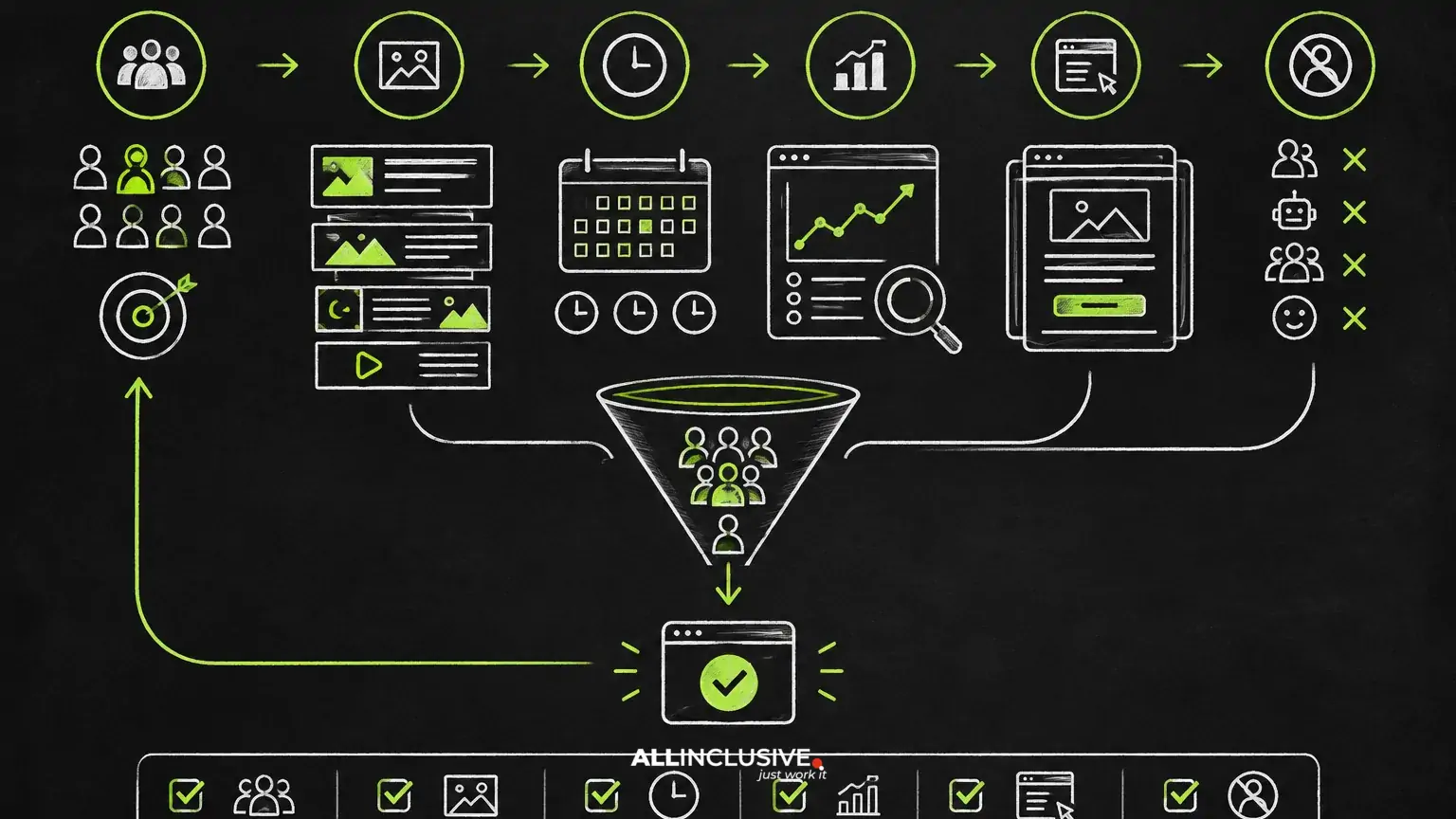
Ecommerce Remarketing Strategies That Go Beyond Abandoned Carts: Implementation Checklist
Before launching or restructuring an ecommerce remarketing program, confirm the following:
- Business objectives are defined separately for recovery, consideration, cross-sell and retention.
- Audience events are reliable, consent-aware and mapped to meaningful shopper actions.
- Recency windows reflect the product’s purchase and consideration cycle.
- Creative addresses the next decision rather than repeating a generic reminder.
- Product feeds, availability data, landing pages and merchandising are aligned.
- Audience priority and exclusions prevent conflicting messages.
- Offer rules protect margin and do not make discounts the default answer.
- Frequency and time limits are reviewed by audience and channel.
- Measurement includes business outcomes and the limitations of attributed reporting.
- Testing plans identify what will change, what will remain constant and how decisions will be made.
Ecommerce Remarketing Strategies That Go Beyond Abandoned Carts: Strategic Perspective
The best ecommerce remarketing strategies treat a site visit as context, not permission to show the same ad forever. By separating intent, recency, product relationship and lifecycle stage, advertisers can create messages that are more useful to shoppers and more accountable to the business.
Start with a small number of high-quality audiences, define the next action for each one, and build exclusions before adding complexity. Once the fundamentals are working, expand into product-aware creative, cross-sell, replenishment and controlled reactivation—always measuring whether the additional exposure creates value beyond what would have happened anyway.
For broader strategic context, see our remarketing strategy resource.