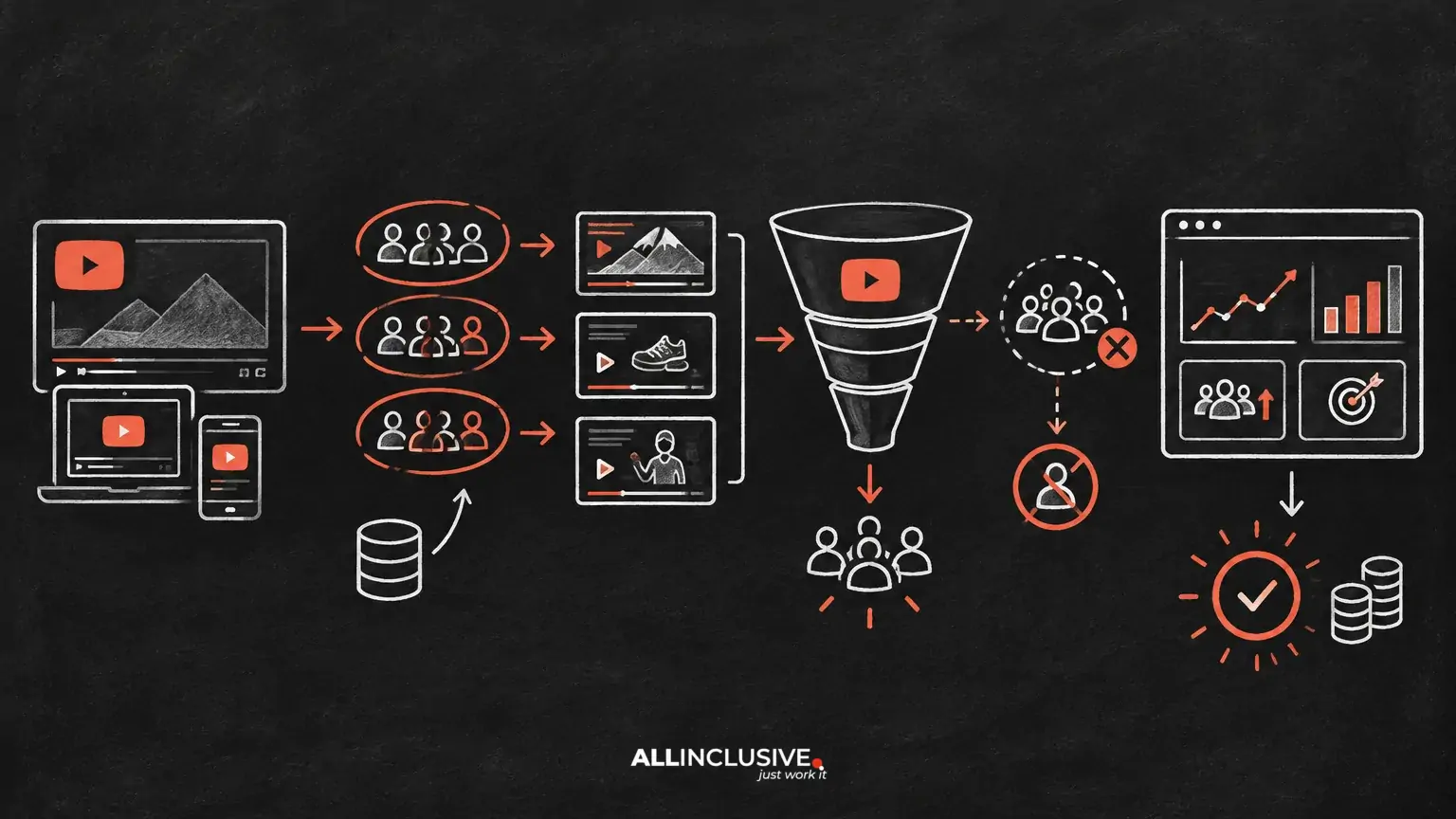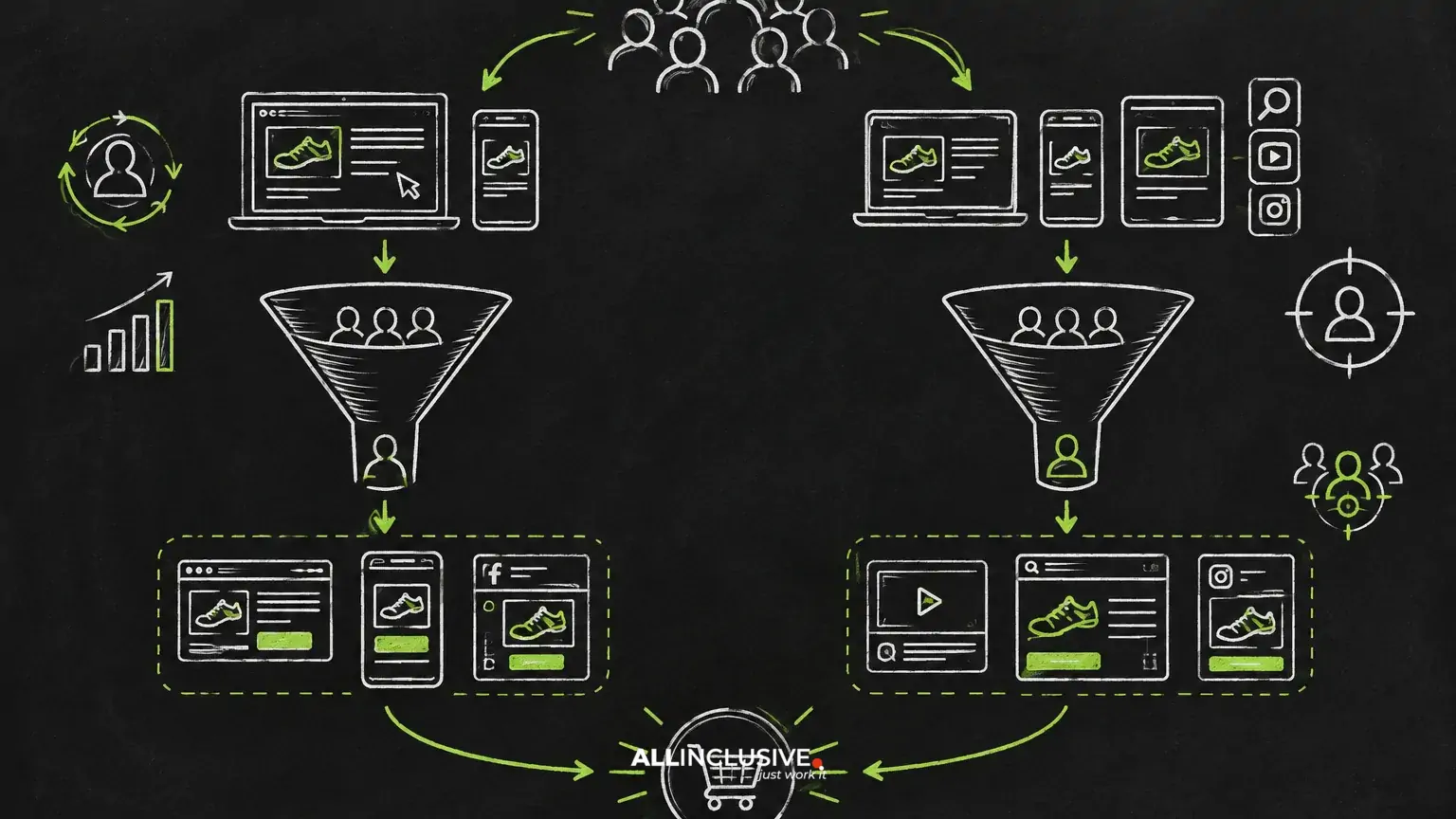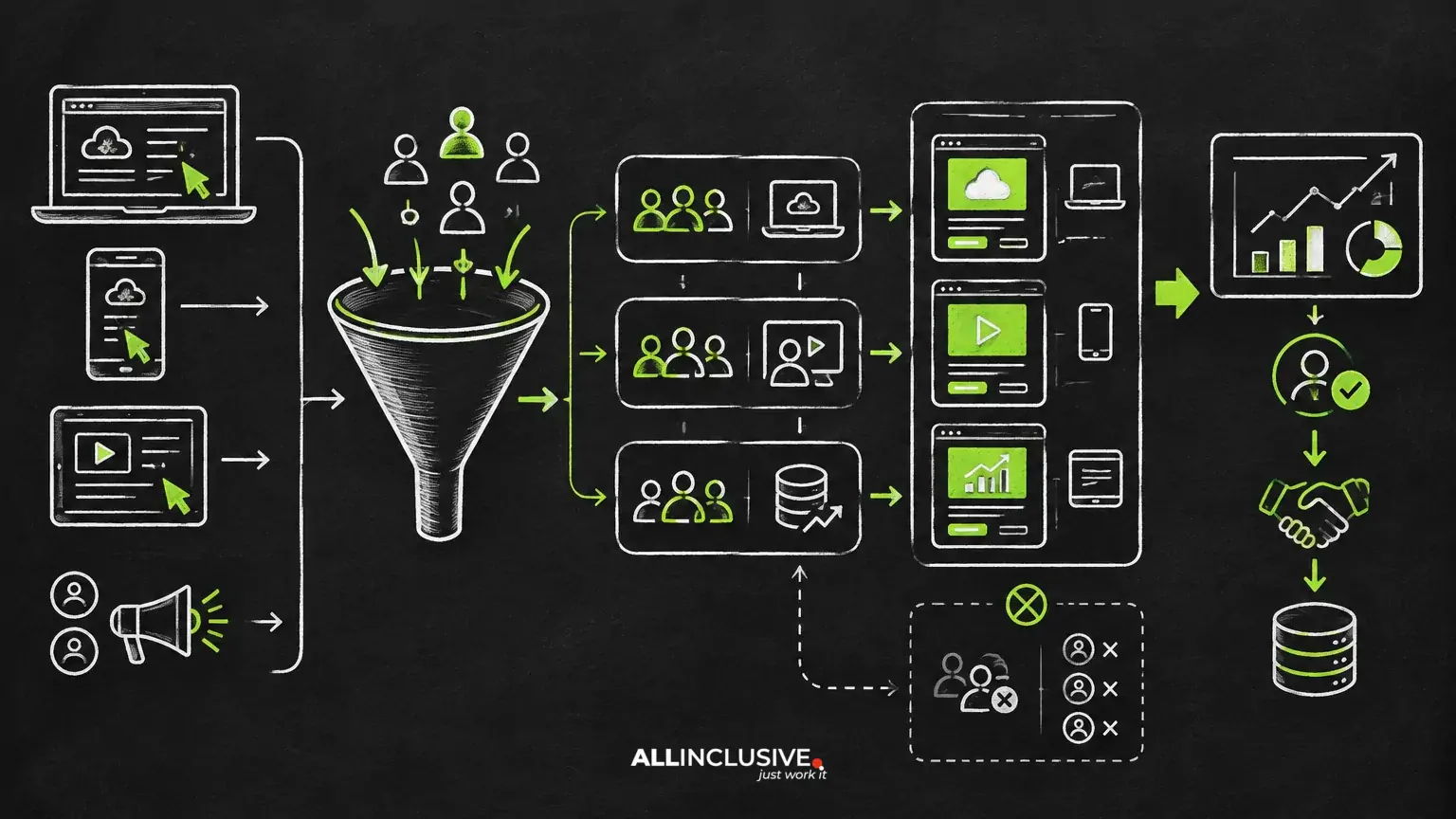
Remarketing for SaaS works best when it reflects the buyer’s current stage, not simply the fact that someone visited your website. A pricing-page visitor, an unactivated free-trial user and an opportunity already in sales should not receive the same message, offer or frequency.
The commercial challenge is to connect audience signals with useful next steps: return to a product evaluation, complete setup, book a qualified conversation, or keep an active opportunity moving. This guide shows how to structure SaaS remarketing around trial, demo and pipeline audiences, including segmentation, creative, exclusions, measurement and operational handoffs.
Why SaaS remarketing requires lifecycle segmentation
SaaS buying journeys are often longer and less linear than a single conversion event suggests. A visitor may read a comparison page before returning weeks later to view integrations. A trial user may be highly engaged but still fail to reach an activation milestone. A demo request may create a sales opportunity that should be nurtured differently from an anonymous site visitor.
Remarketing becomes more useful when each audience has:
- A defined business state: such as anonymous evaluator, trial user, booked demo, qualified opportunity or customer.
- A next-best action: the behavior you want the person to complete next.
- A relevant proof point: such as implementation guidance, product evidence, security information or customer fit.
- An exit condition: the event that removes the person from the audience or moves them to another sequence.
This approach also reduces wasted spend. People who have already converted should not continue seeing acquisition-oriented ads, while existing customers may require a separate expansion or adoption program.
Build the audience architecture before launching ads
Start with a lifecycle map rather than a list of platform audiences. The exact implementation will depend on your analytics, CRM, consent framework and media platforms, but the strategic structure can remain consistent.
| Audience | Likely intent | Useful next step | Typical message |
|---|---|---|---|
| High-intent website visitors | Evaluating fit or commercial terms | Return to pricing, comparison or product detail | Clarify fit, capabilities and buying requirements |
| Trial users | Testing product value | Complete setup or reach an activation milestone | Show practical onboarding and product guidance |
| Demo registrants | Seeking a deeper evaluation | Attend, reschedule or prepare for the conversation | Set expectations and reinforce relevant proof |
| Marketing-qualified leads | Showing repeated or meaningful interest | Accept a sales conversation or review a high-value resource | Address use case, risk and buying criteria |
| Sales opportunities | Active commercial evaluation | Advance the opportunity | Support the sales process without duplicating outreach |
Keep audience definitions operational. “Interested prospects” is too broad to govern creative or budget. A useful definition might combine a page or event signal with a recency window and an exclusion rule—for example, visitors to a product comparison page in the last 30 days who have not requested a demo.
Remarketing to SaaS trial audiences
Trial remarketing should focus on helping users experience meaningful product value. The appropriate conversion is rarely another website visit. It may be connecting data, inviting a teammate, creating a workflow, using a key feature or completing an implementation step.
Segment trials by behavior, not only by signup date
A single “all trial users” audience hides important differences. Consider separate groups for:
- Signed up but did not complete onboarding.
- Completed onboarding but did not reach an activation event.
- Reached activation but has not returned recently.
- Used a core feature and may be ready for a commercial conversation.
Each group needs a different intervention. An inactive trial user may need a concise reminder of the first step. A user who has already activated may respond better to collaboration, governance, integrations or plan-fit information.
Use creative that removes friction
Trial ads can direct users to setup checklists, short product demonstrations, documentation, templates or role-specific guidance. Avoid making every ad a generic “start your trial” message when the person has already signed up. The objective is to help the user progress, not restart the funnel.
Coordinate paid media with lifecycle email and in-product messaging. If onboarding email already explains a technical step, paid creative can reinforce the outcome or direct the user to a different resource. If a user completes activation, automatically exclude them from setup-focused campaigns and move them into the next stage.
Remarketing to demo audiences
Demo audiences contain several distinct moments: someone who viewed the booking page, someone who submitted the form, someone who attended, and someone who did not attend or needs additional evaluation. Treating these as one audience can create awkward or contradictory messages.
Before the demo
For people who have requested a demo but have not yet attended, ads can reinforce preparation and attendance. Useful themes include what the session will cover, which stakeholders should join, or what information helps the conversation become more productive. Do not continue pushing the same booking call to action after the meeting is scheduled.
After the demo
Post-demo remarketing should support evaluation. Depending on the product and buying process, this may include relevant use cases, implementation information, integration details, security documentation or an invitation to review a tailored plan. The message should align with the sales stage and the questions raised in the conversation.
No-show and reschedule audiences
No-shows should receive a distinct sequence from people who attended. A respectful reminder with a simple rescheduling path is more appropriate than bottom-of-funnel proof intended for an active opportunity. Set a clear time limit and suppress the audience once a new meeting is booked.
Remarketing to pipeline audiences
Pipeline remarketing requires closer coordination between marketing, sales and data operations. The goal is not to replace sales activity or expose sensitive account information in ad creative. It is to provide useful, stage-appropriate reinforcement while an opportunity is being evaluated.
Potential pipeline segments include:
- Open opportunity, early evaluation: emphasize problem clarity, product fit and credible proof.
- Technical or security review: direct attention toward documentation, architecture, controls and implementation planning.
- Procurement or legal review: avoid generic acquisition messaging and support confidence in operational readiness.
- Stalled opportunity: test a genuinely useful reason to re-engage, such as a relevant capability or updated resource, rather than repeating the original ad.
Use CRM stages, opportunity status and account-level rules where available. Confirm that the data is sufficiently current before using it for suppression or sequencing. A stale opportunity stage can cause an active customer or closed-lost account to receive the wrong message.
Sales alignment is essential. Define whether paid media should support all open opportunities, only selected segments, or a named-account program. Agree on exclusions for closed-won, closed-lost, disqualified and existing-customer records. Also determine how sales will report meaningful stage movement so media influence is assessed alongside direct conversion data.
Sequence messages across the SaaS funnel
Audience segmentation determines who sees an ad; sequencing determines what they see next. A practical sequence might look like this:
- Recognition: restate the relevant problem or use case without assuming a purchase decision.
- Evaluation: explain how the product works and provide evidence suited to the audience’s role.
- Risk reduction: address implementation, integrations, security, adoption or commercial concerns.
- Action: invite the next appropriate step, such as activating a trial, booking a conversation or returning to an evaluation.
The sequence should not be rigid if behavior changes. A person who visits security documentation may need a different path from someone who watches a feature demonstration. Use meaningful events to move people between groups where the data and consent framework support it.
For broader sequencing guidance, see our article on remarketing funnel sequencing. Creative decisions also deserve their own treatment; our guide to remarketing creative strategy covers what returning visitors may need to see at different stages.
Frequency, exclusions and message control
SaaS audiences are often small, which makes repetition noticeable. Set frequency controls appropriate to the channel, audience size and buying cycle, then monitor fatigue signals such as declining engagement, negative feedback, inefficient spend or sales-team complaints. Frequency is not a substitute for relevance: a poorly matched ad can become intrusive quickly.
Build exclusions into the campaign design:
- Exclude converters from acquisition and trial-start campaigns.
- Exclude activated users from setup-focused creative.
- Exclude booked demo users from booking prompts.
- Exclude closed-won customers unless the campaign supports adoption or expansion.
- Exclude closed-lost or disqualified records from sequences that assume active evaluation.
- Suppress people who have reached the intended next action.
Document audience ownership, membership duration, refresh frequency and the event that moves a person to the next stage. This prevents overlapping campaigns from competing for the same user with conflicting calls to action.
For more detailed controls, read remarketing frequency caps.
Measurement: connect media activity to SaaS outcomes
Measure remarketing at three levels. First, track the immediate action: trial activation, demo attendance, rescheduling, resource engagement or a return to a high-intent page. Second, track progression: movement from trial to qualified conversation, lead to opportunity, or opportunity to a later sales stage. Third, assess commercial quality through pipeline and revenue analysis where attribution and data availability allow it.
Do not judge every audience by the same conversion event. A trial audience may be evaluated on activation quality, while a pipeline audience may be evaluated on stage progression or opportunity engagement. Establish a primary objective and a small set of diagnostic metrics for each segment.
Use holdouts or controlled comparisons when feasible, but interpret results carefully. Small audiences, overlapping channels, CRM delays, consent restrictions and sales-cycle length can make short-term platform reporting incomplete. Document attribution windows and conversion definitions so stakeholders understand what the reported numbers represent.
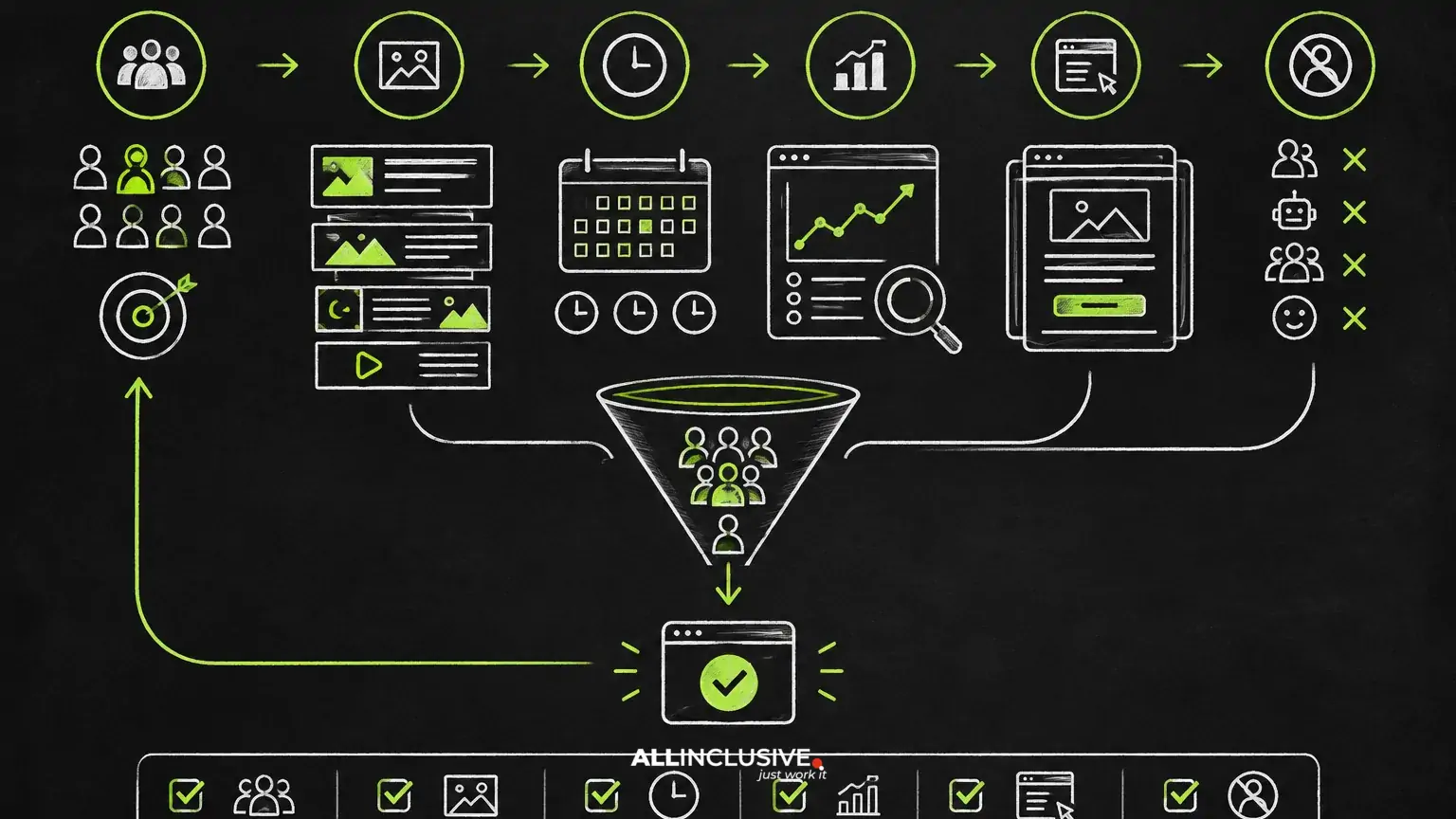
Remarketing for SaaS: Implementation Checklist
- Map lifecycle stages from anonymous visitor through customer.
- Define a business state, next action and exit condition for each audience.
- Connect site, product, CRM and consent signals where appropriate.
- Create separate trial, demo and pipeline segments instead of one broad remarketing pool.
- Write stage-specific creative and landing-page experiences.
- Coordinate paid media with email, in-product messaging and sales outreach.
- Apply conversion exclusions and frequency controls before launch.
- Assign an owner for audience quality, CRM freshness and campaign changes.
- Measure immediate actions as well as stage progression and commercial quality.
The broader remarketing strategy should make each interaction more relevant as a prospect moves closer to a buying decision. For context on paid acquisition planning and channel coordination, visit our paid media hub.
Remarketing for SaaS: What to Prioritize
Effective remarketing for SaaS is a lifecycle system, not a persistent banner campaign. Separate trial users from demo registrants, distinguish active opportunities from general evaluators, and give every audience a logical next step. When segmentation, creative, exclusions and measurement are connected, remarketing can support product adoption, sales progression and more disciplined use of media budget.