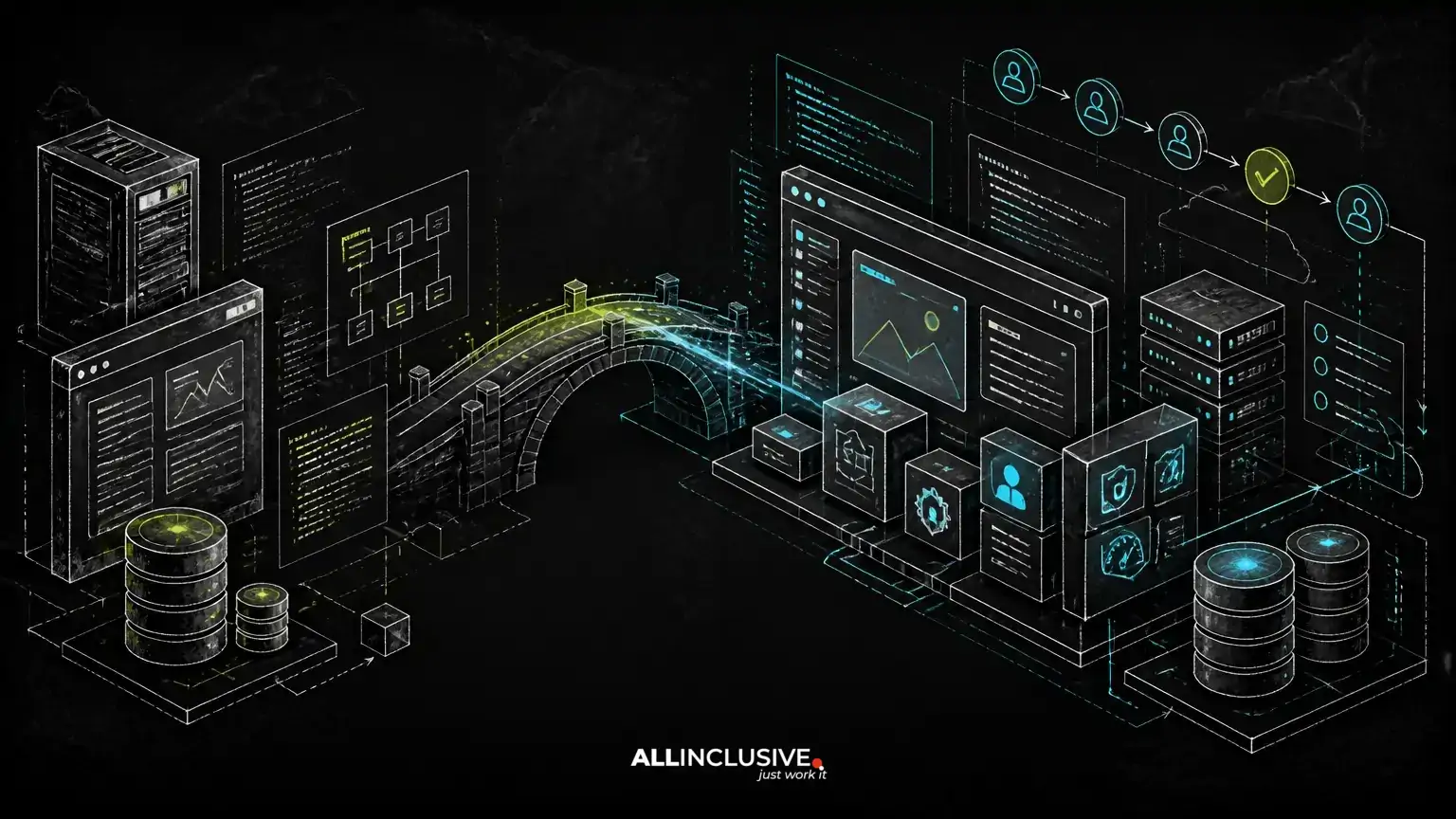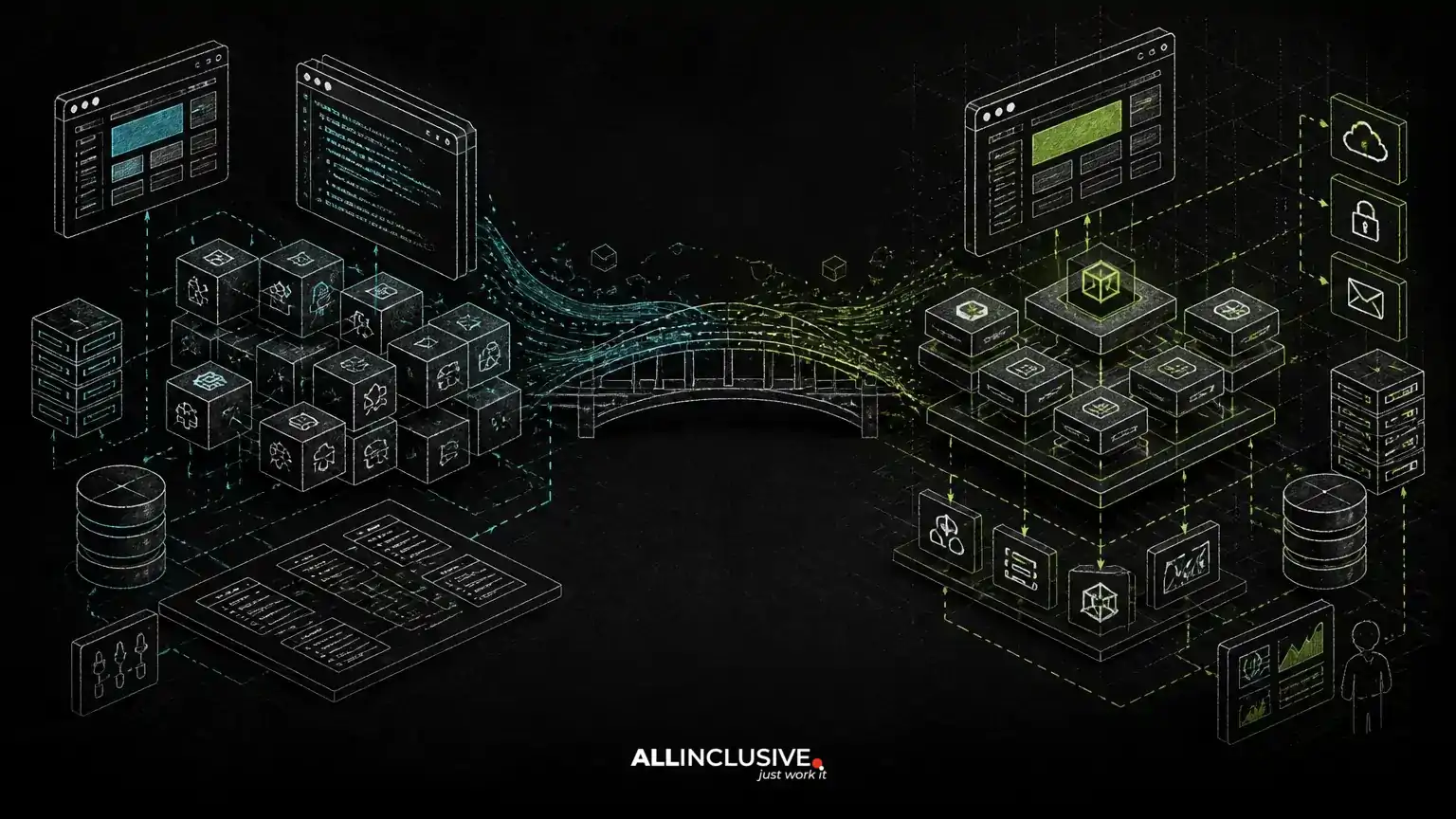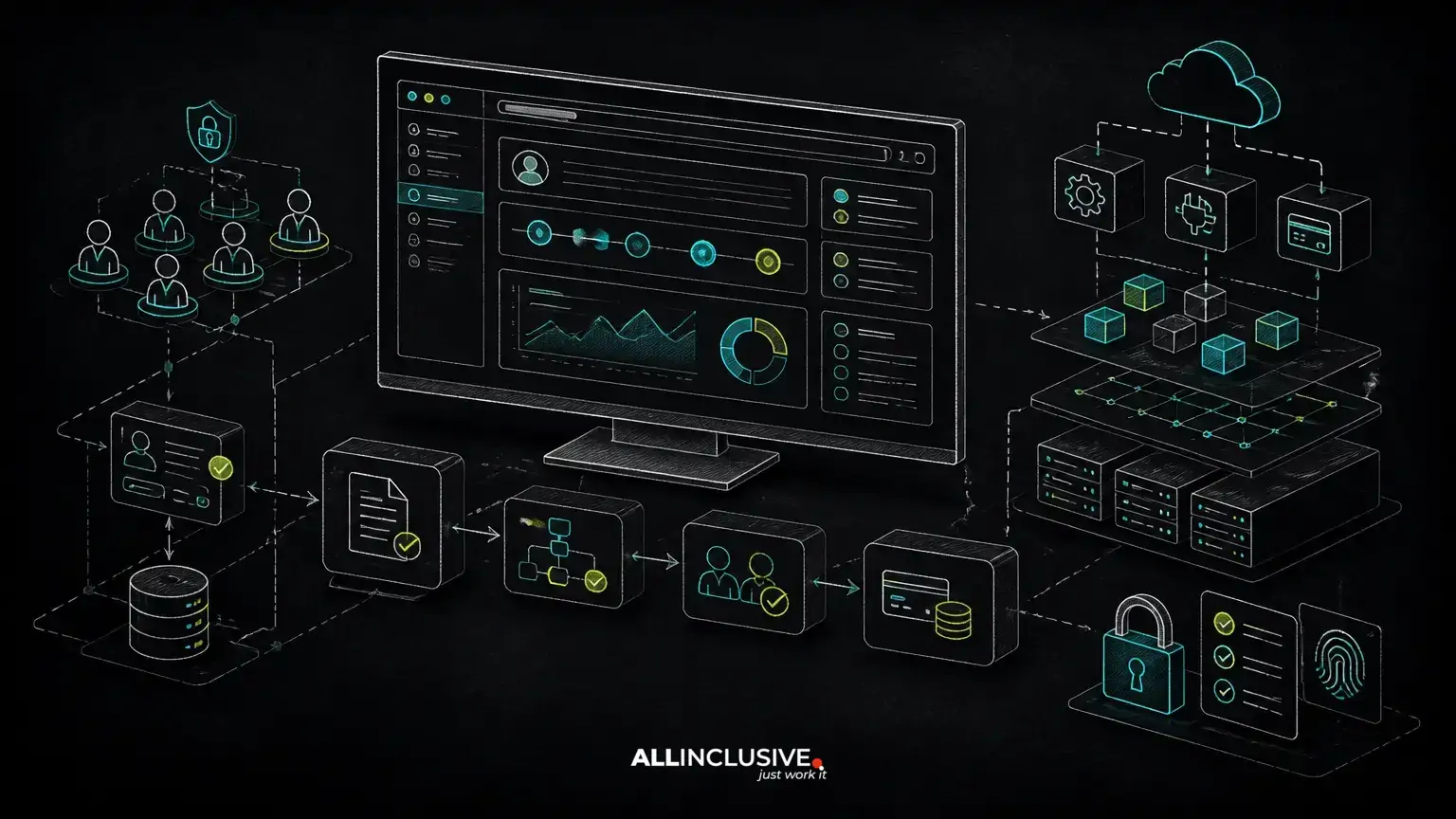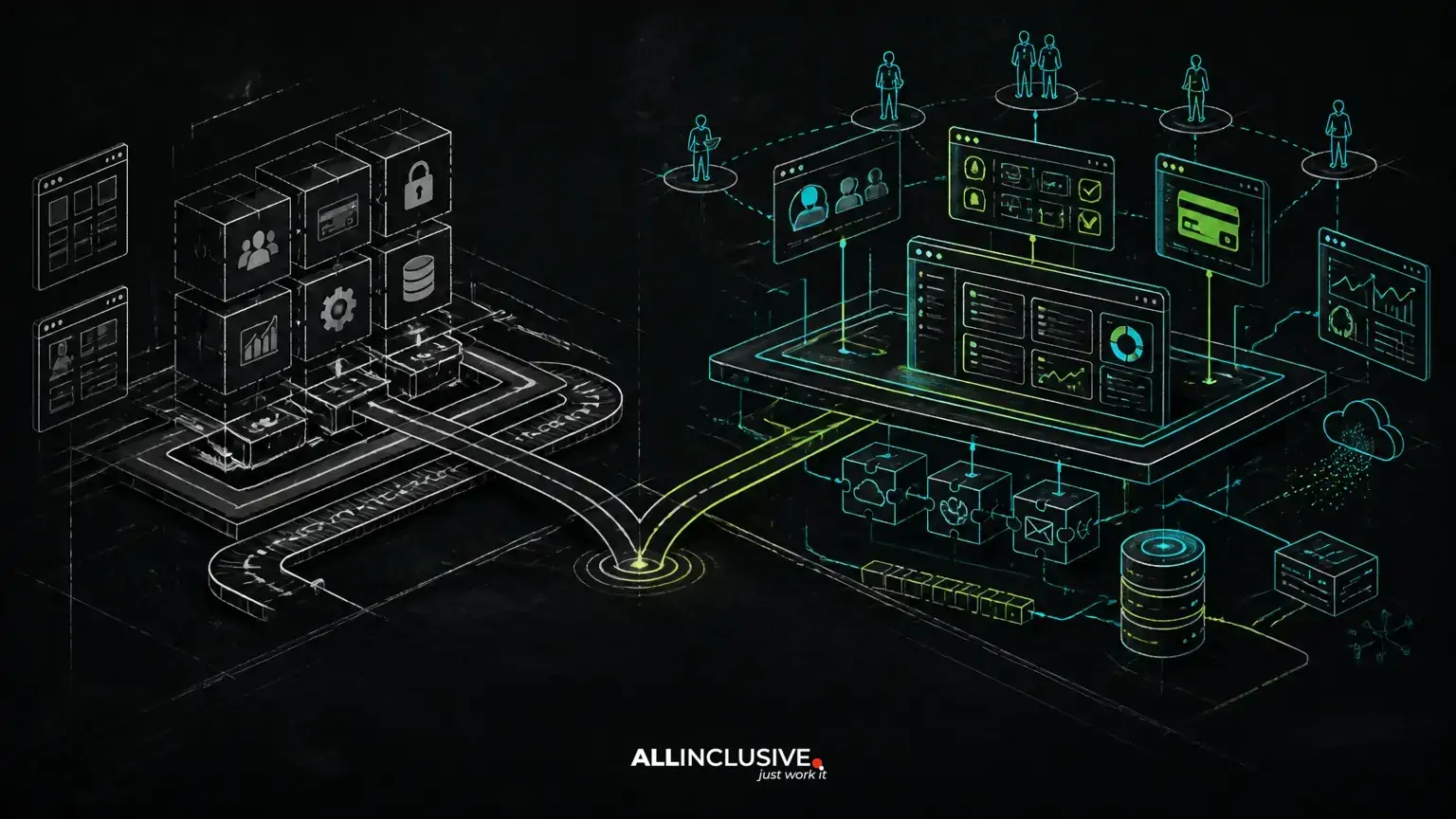
Choosing between a custom web app and off-the-shelf software is not simply a question of buying versus building. The better choice depends on how closely the product must match your workflows, how much control you need over data and source code, and whether the software will become part of your competitive advantage.
Off-the-shelf software is usually the better starting point when your processes are conventional, implementation speed matters most, and configuration can cover the required features. A custom web app becomes more compelling when the business depends on distinctive workflows, complex permissions, multiple user roles, specialized integrations, or a product that must evolve beyond a vendor’s roadmap.
This comparison explains where each model fits, what custom-made product engineering involves, and how to make a decision without treating either option as universally superior.
What separates a custom web app from off-the-shelf software?
Off-the-shelf software is designed for a broad market. It typically provides a predefined data model, user experience, permission structure and integration surface. Administrators may be able to configure fields, workflows, reports or branding, but the underlying product remains controlled by the vendor.
A custom web app is designed around a specific organization, product idea or operating model. It can take the form of a SaaS product, customer portal, internal system, marketplace, booking platform or B2B workflow. Its architecture, interface and business rules are shaped around the users and processes it must support.
The distinction is not absolute. Many successful systems combine both approaches: a custom application may use a third-party payment provider, identity service, communications platform or accounting system. The strategic question is which capabilities should be owned and which are better sourced from established software.
When off-the-shelf software is the stronger choice
Buying packaged software can be a responsible product decision rather than a compromise. It is often appropriate when the required capability is common and does not differentiate the business.
- The workflow is industry-standard. Accounting, basic project tracking, common help desk operations and routine document management may not justify a dedicated product.
- Time to adoption is the priority. A mature product can provide usable functionality without a discovery, design and engineering cycle.
- Internal ownership would create unnecessary burden. Software requires monitoring, updates, support processes, access management and ongoing maintenance.
- Integrations are already supported. A product that connects reliably to your existing systems may reduce technical risk.
- Requirements are stable and limited. If the process is unlikely to change and configuration covers the edge cases, custom development may add complexity without proportional value.
The key is to evaluate the full operating fit, not just the feature checklist. A product can appear affordable while creating manual work through duplicate entry, exports, workarounds or disconnected approvals.
Signals that a custom web app may be justified
Building your own software becomes more defensible when the application needs to express business rules that packaged products cannot represent cleanly.
Your workflow is a competitive capability
If the way you qualify opportunities, price services, manage fulfillment or coordinate partners is central to the business, forcing that process into a generic tool can dilute the advantage. A custom app can encode the workflow directly instead of requiring employees to translate it into unrelated screens and spreadsheets.
Multiple roles need different experiences
Portals and operational systems often serve administrators, customers, suppliers, contractors and internal teams at the same time. Role-based access control should define what each role can see and do, while the interface should reflect the tasks performed by that role. A generic permission model may be too broad, too rigid or difficult to audit.
Rules span several systems
Custom applications are useful when a process crosses CRM, inventory, billing, scheduling, identity or reporting systems. Rather than making users coordinate each system manually, the application can act as a workflow layer with explicit states, validation and integration handling.
The product itself is the business
For a SaaS product, marketplace, booking service or customer portal, the application is not merely an internal utility. It is the primary customer experience. Ownership of the source code and product architecture can provide more control over differentiation, release priorities and long-term product direction.
Vendor constraints create recurring operational cost
Repeated workarounds are a meaningful signal. Examples include exporting data for routine analysis, maintaining shadow spreadsheets, manually reconciling billing, duplicating records or asking staff to bypass the official workflow. These costs should be compared with the cost of building and operating a focused custom system.
Custom web app vs off-the-shelf software: the decision criteria
A useful comparison evaluates more than initial implementation cost. Review the following criteria with the people who will operate and depend on the system.
Workflow fit
Map the actual workflow from trigger to completion. Include approvals, exceptions, handoffs, notifications and audit requirements. A product that supports the happy path but fails on common exceptions may create more work than it removes.
Ownership and control
With packaged software, the vendor generally controls the product roadmap, hosting model, release schedule and data-handling practices. A custom system can provide greater control over source code, data structures and release priorities, but that control also creates responsibility for maintenance and technical decisions.
Integration depth
Ask whether integrations merely transfer records or whether they must enforce business rules. Basic synchronization may be well served by an existing connector. Complex orchestration may require an application layer that validates events, handles failures and preserves an auditable history.
Security and access model
Both approaches require careful security management. For a custom app, this includes authentication, authorization, tenant isolation where relevant, input validation, secrets management, logging, dependency updates and recovery procedures. For purchased software, review its available controls, administrator roles, audit capabilities, export options and contractual responsibilities.
Scalability and operational ownership
Scalability is not only about traffic. A growing system may need more tenants, locations, products, permissions, integrations or reporting volume. Decide who will monitor the application, respond to incidents, manage releases and maintain data quality. A custom architecture should support the expected growth without introducing unnecessary infrastructure complexity. Before launch, define a clear staging and production plan so testing and operational responsibilities remain controlled.
Five-year flexibility
Estimate how likely requirements are to change. A rigid but inexpensive product may be suitable for a stable process. A custom application may offer better long-term economics when the business expects new roles, pricing models, geographies, partner types or product lines.
Architecture choices that matter in a custom web app
Custom development should begin with the business workflow, not a preferred framework. The architecture should make important rules visible and testable.
Core domain and workflow states
Define the records and transitions that matter: an application submitted, an order approved, a booking confirmed, an invoice issued or a support request escalated. Explicit states reduce ambiguity and make reporting, permissions and notifications easier to reason about.
Role-based access control
RBAC should be designed from real responsibilities rather than a list of screens. Consider organization boundaries, delegated access, record-level restrictions and administrative actions. If the product serves multiple companies, tenant isolation must be treated as a core architectural concern rather than a late configuration task.
Billing and entitlement logic
SaaS products often need to distinguish plans, seats, usage, trials, invoices, payment status and feature entitlements. Keep payment processing with an appropriate provider where practical, while ensuring the application maintains a reliable internal representation of access and billing state.
Integration boundaries
External services fail, change response formats and enforce rate limits. Integrations should therefore have clear boundaries, retry and failure-handling policies, observability and a way to reconcile records. Treating an external API as if it were a local database is a common source of operational problems.
Technology selection
PHP and Laravel can be suitable for workflow-heavy business applications, portals and SaaS products where clear conventions and productive delivery are valuable. Python may be appropriate when data processing, automation or machine-learning services are central. The correct choice depends on the team, domain, integrations, hosting model and operational requirements—not on the popularity of a language.
Common failure modes in the build-versus-buy decision
- Building a feature list instead of a product workflow. A long list of screens does not explain the business rules, exceptions or operational outcomes.
- Underestimating ownership. Source-code ownership is valuable only when there is a plan for maintenance, security updates, monitoring and future changes.
- Customizing a purchased product beyond its design. Extensive workarounds, plugins and manual synchronization can create a fragile system that is neither truly standard nor properly owned.
- Replacing stable commodity capabilities unnecessarily. Building payments, email delivery or general analytics from scratch may introduce avoidable risk when dependable services already exist.
- Delaying data migration and integration analysis. A replacement project can fail operationally if historical data, identifiers, permissions and reconciliation are left until the end.
- Ignoring the exit strategy. For purchased software, understand export and portability. For custom software, document the architecture, deployment process and dependencies so the system remains maintainable.
A practical evaluation process for software buyers
- Document the current workflow. Record users, decisions, handoffs, exceptions, systems and manual work.
- Separate differentiating rules from commodity capabilities. Consider buying the latter and owning the former.
- Test packaged products against real scenarios. Use representative cases, including failed payments, rejected approvals, partial fulfillment and permission boundaries.
- Measure the cost of workarounds. Include staff time, errors, delayed decisions, reconciliation and dependency on individual employees.
- Define a smallest useful custom scope. A focused first release can validate the workflow without attempting to replace every system at once. The SaaS MVP development approach is relevant when the application is a new product rather than an internal replacement.
- Plan the operating model. Assign responsibility for releases, support, security, data quality and vendor relationships.
For a broader build-versus-buy framework, see build vs buy custom software. For implementation considerations, the custom web application development process can help structure discovery through launch.
When building your own wins
Building your own web application usually wins when the software must encode a distinctive workflow, support a differentiated product, integrate deeply with existing systems or provide control that vendors cannot offer. It is especially compelling when repeated workarounds are already consuming time and the process is expected to evolve.
That does not mean every requirement should be custom. A strong architecture often combines owned business logic with proven third-party services. The goal is not maximum customization; it is deliberate ownership of the parts that create business value.
Allinclusive approaches custom software as product engineering: start with the workflow, define the operating model, select technology that fits the system, and keep source-code ownership aligned with long-term responsibility. Explore custom web development and product engineering for that type of engagement, and review support and maintenance planning before committing to a system you will need to operate.