Custom PHP CMS development is justified when a publishing operation depends on editorial rules, approvals, content relationships or integrations that standard platforms handle poorly. The goal is not to build a CMS merely because PHP is familiar. It is to create a maintainable content system around the organization’s actual workflow while preserving valuable business logic and reducing operational risk.
For an existing PHP CMS, the first decision is usually not whether to rebuild. It is whether the system should be stabilized, refactored, upgraded, migrated or replaced. Those choices have different implications for delivery speed, data integrity, security, performance and long-term ownership. Another decision connected with custom php cms development is covered in when to use custom php development.
This article explains how to evaluate that decision, what a custom PHP CMS architecture should address, and when moving parts of a legacy system to Laravel is justified.
When a custom PHP CMS is a better fit than a standard platform
A standard CMS can be effective when content types, permissions, publishing states and integrations closely match its existing model. Custom development becomes more appropriate when the organization’s editorial process is itself a competitive or operational capability.
Common indicators include:
- Several content types share complex relationships that are difficult to represent safely.
- Editors need conditional review, legal approval, regional publishing or scheduled handoffs.
- Content is assembled from structured data rather than maintained as isolated pages.
- The CMS must coordinate with product catalogs, internal systems, subscriptions, search services or external APIs.
- Different teams require distinct permissions, queues, dashboards and audit records.
- Content must be delivered to multiple websites, applications or channels.
- Existing plugins or extensions create upgrade, security or data-quality risk.
The business case is strongest when the CMS directly affects publishing throughput, compliance, product operations or customer experience. A custom system should remove workflow friction, not simply reproduce familiar screens with a new codebase.
Start with the editorial model, not the PHP framework
The most important design work is defining how content behaves. A CMS may contain pages, articles, products, media, authors, locations, campaigns or reusable components, but those labels are less important than their relationships and lifecycle rules.
Before choosing an implementation approach, document:
- Content structure: Which fields are required, conditional, localized or versioned?
- Relationships: Which records depend on one another, and what happens when a referenced item changes?
- Workflow states: Who can draft, review, approve, schedule, publish, unpublish or restore content?
- Ownership: Which team owns each content type and who is accountable for corrections?
- Auditability: Which actions and changes need a durable history?
- Delivery: Is content rendered by the CMS, exposed through an API or delivered through both models?
This model protects the project from a common failure mode: building an attractive administration interface before understanding the rules that govern content. Business logic hidden in old forms, database triggers or ad hoc scripts must be identified before it is removed or rewritten.
Stabilize, refactor, upgrade, migrate or rebuild?
Legacy PHP CMS work becomes clearer when the available options are separated. These terms are not interchangeable.
Stabilize
Stabilization reduces immediate operational risk without changing the system’s fundamental design. It may include dependency review, backups, error monitoring, access-control fixes, deployment discipline, database maintenance and removal of unsafe production practices. Stabilization is often the right first step when the CMS is business-critical but poorly understood.
Refactor
Refactoring improves internal structure while preserving externally visible behavior. Examples include isolating domain rules from templates, replacing duplicated queries, introducing automated tests around critical workflows or separating integrations from request handling. Refactoring is valuable when the system’s behavior is broadly correct but difficult to change.
Upgrade
An upgrade moves PHP, libraries, runtime infrastructure or supporting services to maintained versions while keeping the application’s architecture substantially intact. Compatibility work may expose deprecated functions, changed database behavior, stricter type handling or unsupported extensions. An upgrade should be tested against real workflows, not only a successful application boot.
Migrate
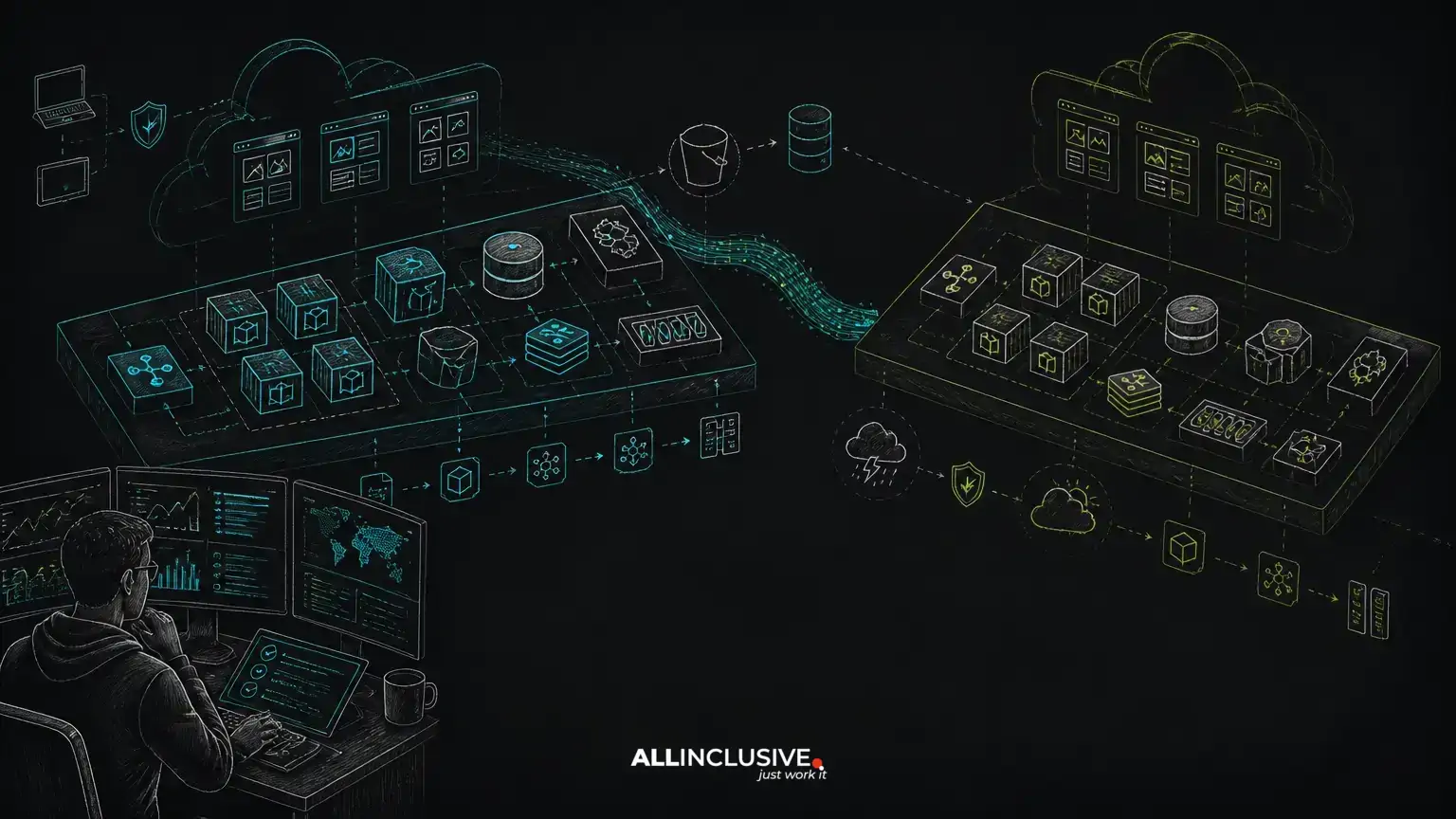
Migration moves selected capabilities, data or application modules to a new architectural foundation. A PHP CMS might retain its editorial database while introducing a Laravel application for authentication, APIs, administration or a bounded content domain. Migration is useful when the current system cannot support safe change, but a full replacement would create unnecessary data and workflow risk.
Rebuild
A rebuild replaces the application or a major subsystem. It can be appropriate when the existing code has no reliable ownership, its data model blocks required capabilities, or security and operational constraints cannot be addressed incrementally. Rebuilding still requires behavior discovery and data mapping; a new codebase does not automatically preserve old business rules.
Preserving business logic during PHP CMS modernization
The most expensive modernization mistakes often come from losing rules that were never documented. Editorial systems may encode important behavior in conditional fields, scheduled jobs, database constraints, import scripts, permissions and integrations.
A discovery process should examine:
- Application code, templates, command-line scripts and scheduled tasks.
- Database schema, indexes, foreign keys, triggers and stored procedures where applicable.
- Import and export routines, including handling for duplicate or incomplete records.
- Authentication, role mappings and exceptional permissions.
- Publishing, preview, rollback, caching and invalidation behavior.
- Third-party integrations and assumptions about response formats or timing.
- Operational runbooks, deployment steps and manual recovery procedures.
For high-value workflows, create characterization tests before changing implementation. These tests describe current behavior, including edge cases, so the team can distinguish intentional changes from accidental regressions. Where behavior is clearly unsafe or incorrect, document the proposed change rather than silently preserving it.
Database behavior is part of the CMS contract
A CMS database is not merely a storage layer. Its schema and query behavior often determine whether editorial work is reliable. A modernization plan should account for identifiers, nullability, collation, encoding, timestamps, ordering, soft deletion, version history and relationship integrity.
Data migration should be designed as a repeatable process. That usually means profiling source data, defining mappings, validating constraints, running rehearsals and planning reconciliation after cutover. A one-time script that works on a development snapshot is not sufficient for a live publishing system.
Teams should also test queries against realistic content volume and usage patterns. An administration screen may appear fast with a small dataset while becoming operationally expensive when filtering revisions, joining relationships or searching large media collections. Database indexes, pagination, query boundaries and caching should follow observed access patterns rather than assumptions.
Security and performance requirements for a custom PHP CMS
Security should be treated as a system property, not a final checklist. A custom CMS needs clear controls for authentication, authorization, session handling, input validation, output encoding, file uploads, secrets, dependency updates and administrative access. Permissions should be enforced on the server and at the domain boundary, not only hidden in the interface.
File handling deserves particular attention. Uploaded media should be validated by type and content, stored with controlled names and served through an appropriate delivery path. Administrative actions that alter publishing state, permissions or bulk data should be auditable and protected against accidental repetition.
Performance analysis should begin with the actual bottleneck. Slow PHP execution may be caused by inefficient queries, remote integrations, excessive rendering, cache misses, large media processing or infrastructure limits. Useful investigation includes request tracing, database query inspection, background-job analysis and measurement of representative editorial and public-facing flows. Adding servers before identifying the limiting component can increase cost without improving the experience.
For broader PHP architecture and delivery considerations, Another decision connected with custom php cms development is covered in PHP development services and engineering approaches. A custom CMS may also benefit from the wider practices described in web development for integrated business systems.
When Laravel migration is justified
Laravel can provide a more structured foundation when a legacy PHP CMS needs clearer application boundaries, dependency management, testing conventions, authentication components or API development. Those benefits matter when they solve a demonstrated maintenance or delivery problem.
A Laravel migration is more defensible when:
- The current codebase has inconsistent conventions that make changes risky.
- Dependencies and runtime assumptions prevent reliable security updates.
- New modules need consistent routing, validation, jobs, events or testing patterns.
- The team needs a supported framework foundation for ongoing development.
- A bounded domain can be migrated without forcing an immediate rewrite of every workflow.
Laravel is not automatically the right answer. A framework migration can add complexity if the existing application is stable, the team lacks framework experience or the proposed architecture does not match the CMS’s needs. The decision should compare the cost of improving the current system with the cost and risk of moving behavior, data and operations to a new foundation. The trade-offs between plain PHP and Laravel are explored in Custom PHP vs. Laravel.
Architecture patterns that support editorial operations
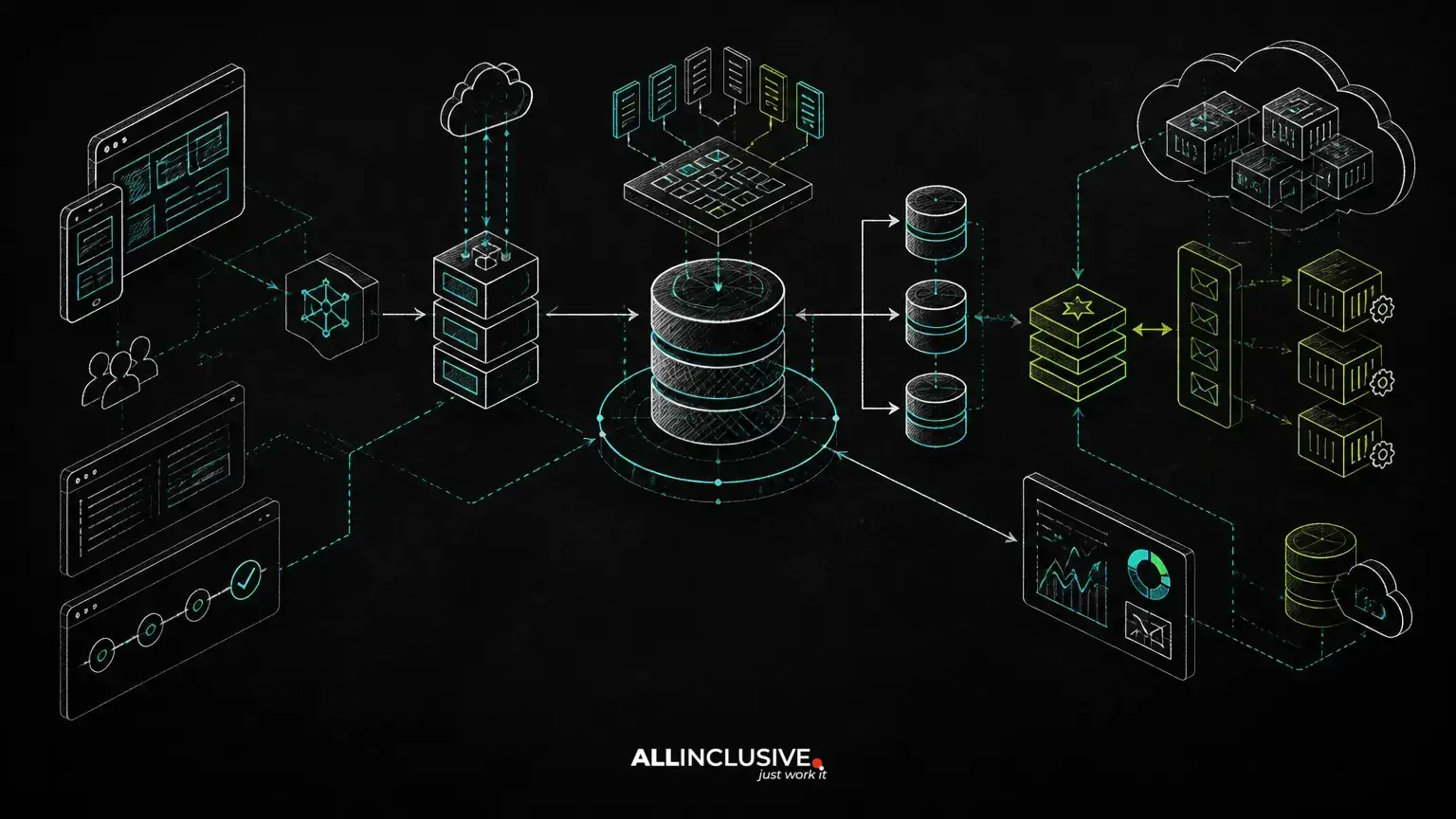
Custom CMS architecture should reflect how content is used. A server-rendered application may be the simplest choice for a tightly integrated editorial and public site. An API-backed CMS may be appropriate when several channels consume the same structured content. A hybrid approach can keep editorial screens server-rendered while exposing selected content through stable APIs.
Regardless of delivery style, separate concerns that change for different reasons:
- Domain rules: publishing states, permissions, validation and content relationships.
- Application services: workflows, imports, exports, notifications and orchestration.
- Infrastructure: databases, queues, storage, search, caching and external services.
- Presentation: administration screens, public templates and API representations.
This separation makes it easier to replace an integration, add a channel or migrate one bounded area without rewriting the editorial model. It also improves ownership: product and editorial stakeholders can discuss rules, while engineers can manage implementation boundaries and operational concerns.
A delivery plan for custom PHP CMS development
- Map workflows and dependencies. Identify users, content types, critical actions, integrations and operational constraints.
- Assess the existing system. Review code, dependencies, database behavior, security exposure, performance and deployment practices.
- Define the modernization boundary. Decide which capabilities will be stabilized, refactored, upgraded, migrated or rebuilt.
- Protect critical behavior. Add characterization tests, data validation and rollback procedures around high-risk workflows.
- Build a vertical slice. Prove one representative content lifecycle, including permissions, persistence, publishing and delivery.
- Migrate incrementally where possible. Use clear interfaces and repeatable data processes rather than an uncontrolled cutover.
- Operate the result deliberately. Monitor errors, queues, database health, security updates and editorial outcomes after release.
Maintenance is part of the architecture. Dependency updates, access reviews, backups, observability and incident procedures keep a custom CMS dependable after the initial delivery. See support and maintenance for web applications.
Questions to answer before commissioning a custom CMS
- Which editorial workflows create the most delay, rework or operational risk?
- Which business rules must remain unchanged, and which should be corrected?
- Can the existing database be trusted, migrated, or reconciled?
- What must be available during a phased migration?
- Which integrations are essential, and who owns their contracts?
- How will permissions, audit history, previews and rollback work?
- What monitoring and recovery process will support the CMS after launch?
The right custom PHP CMS is not the one with the most features. It is the system that represents editorial rules clearly, protects important data, supports secure change and gives the organization a sustainable path beyond legacy constraints. For teams evaluating custom software architecture more broadly, the development hub provides related guidance on planning and engineering decisions.