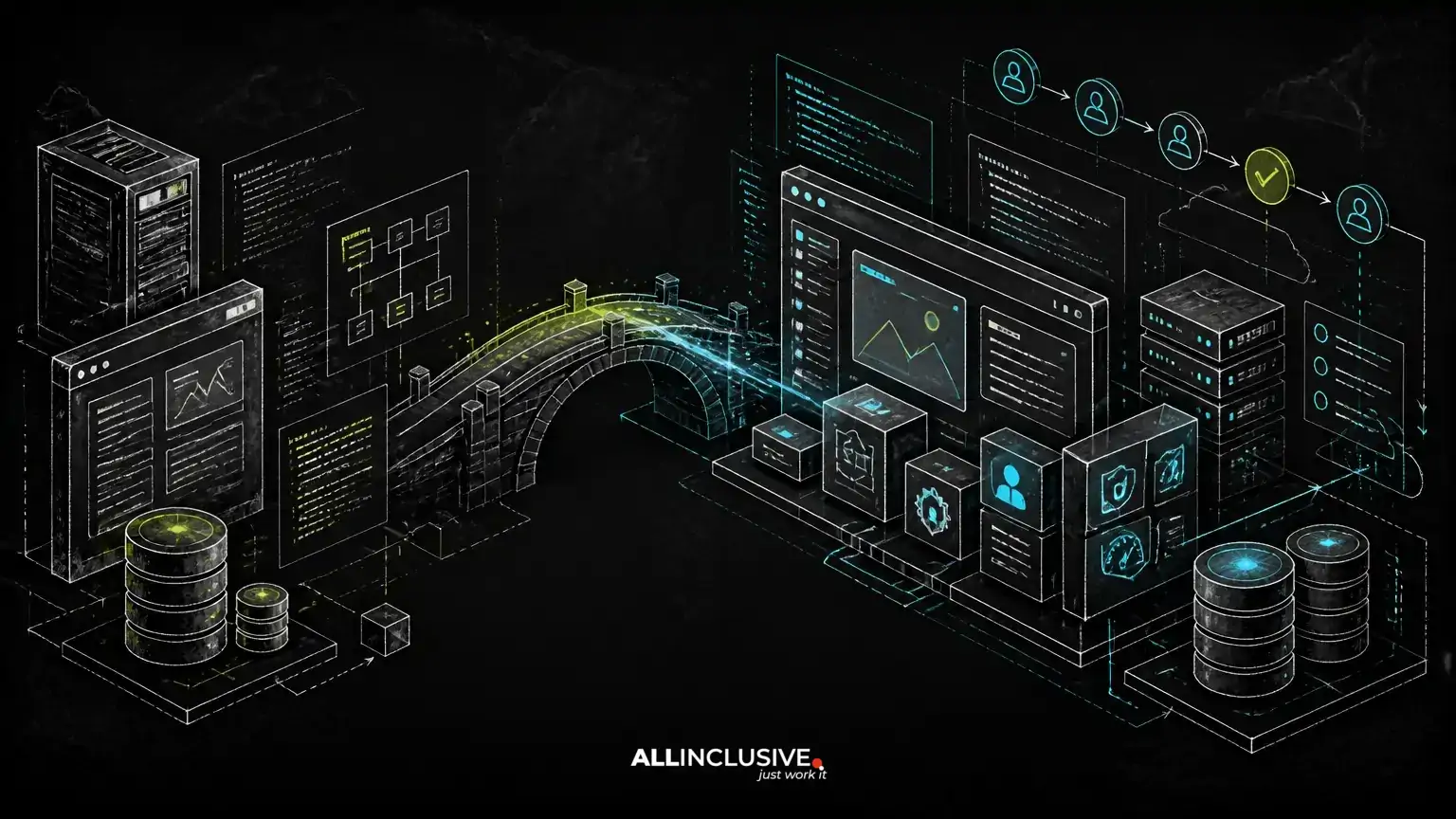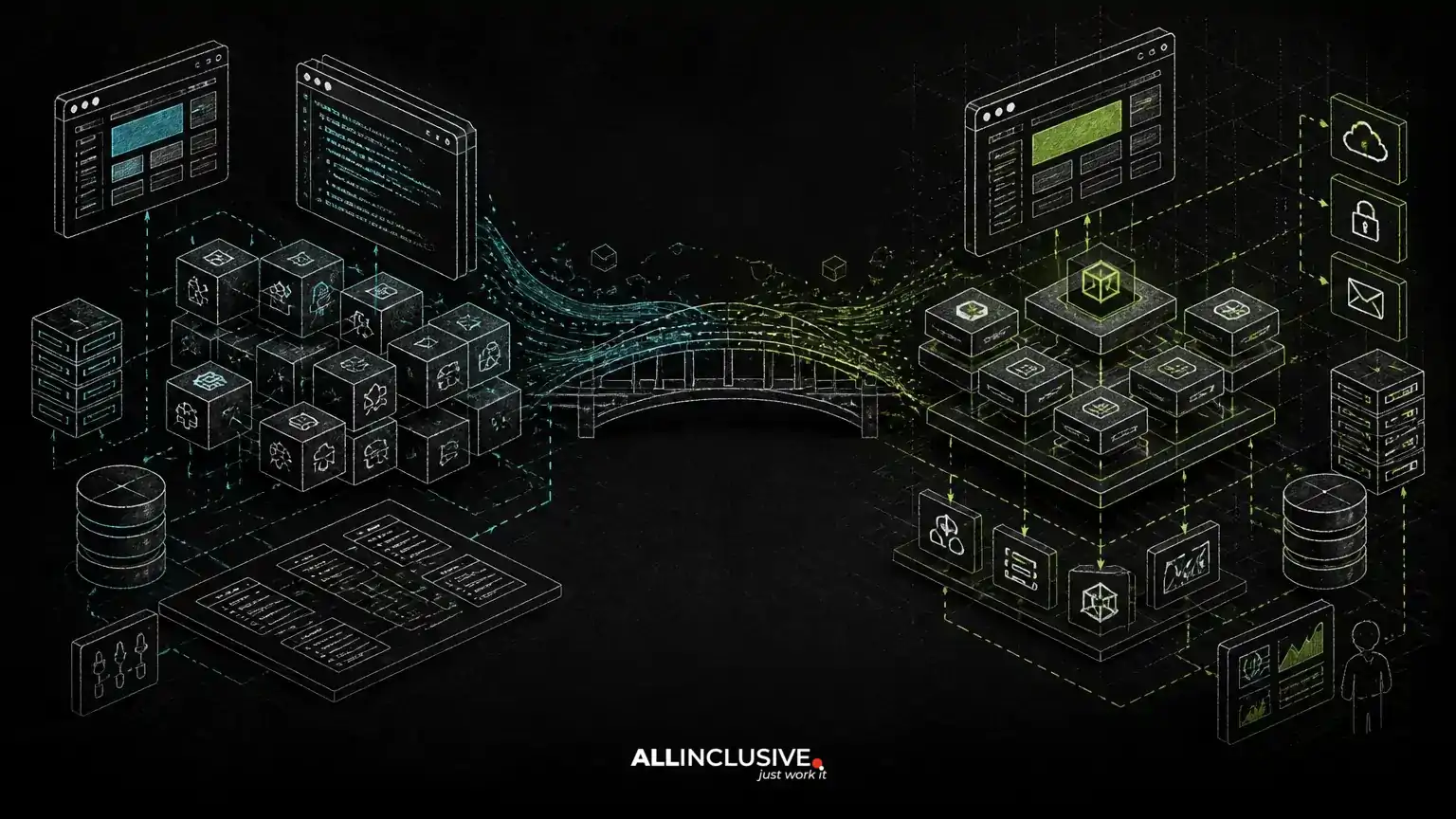
Companies rarely choose between “build” and “buy” in the abstract. They choose how much of a business workflow they want to own. Buying software can provide proven capabilities quickly, while custom software can fit processes, integrations and commercial rules that generic products cannot represent cleanly. For teams evaluating build vs buy custom software, this implementation detail is expanded in web development services.
The right decision depends on workflow fit, delivery urgency, total cost, integration complexity, operational risk and the strategic value of owning the product. A growing company may buy commodity capabilities such as email delivery or accounting, configure a platform for standard operations, and build the workflow that creates competitive advantage.
This framework helps product leaders and technical decision-makers evaluate those options without treating custom development as automatically superior or packaged software as automatically cheaper.
Start with the workflow, not the feature list
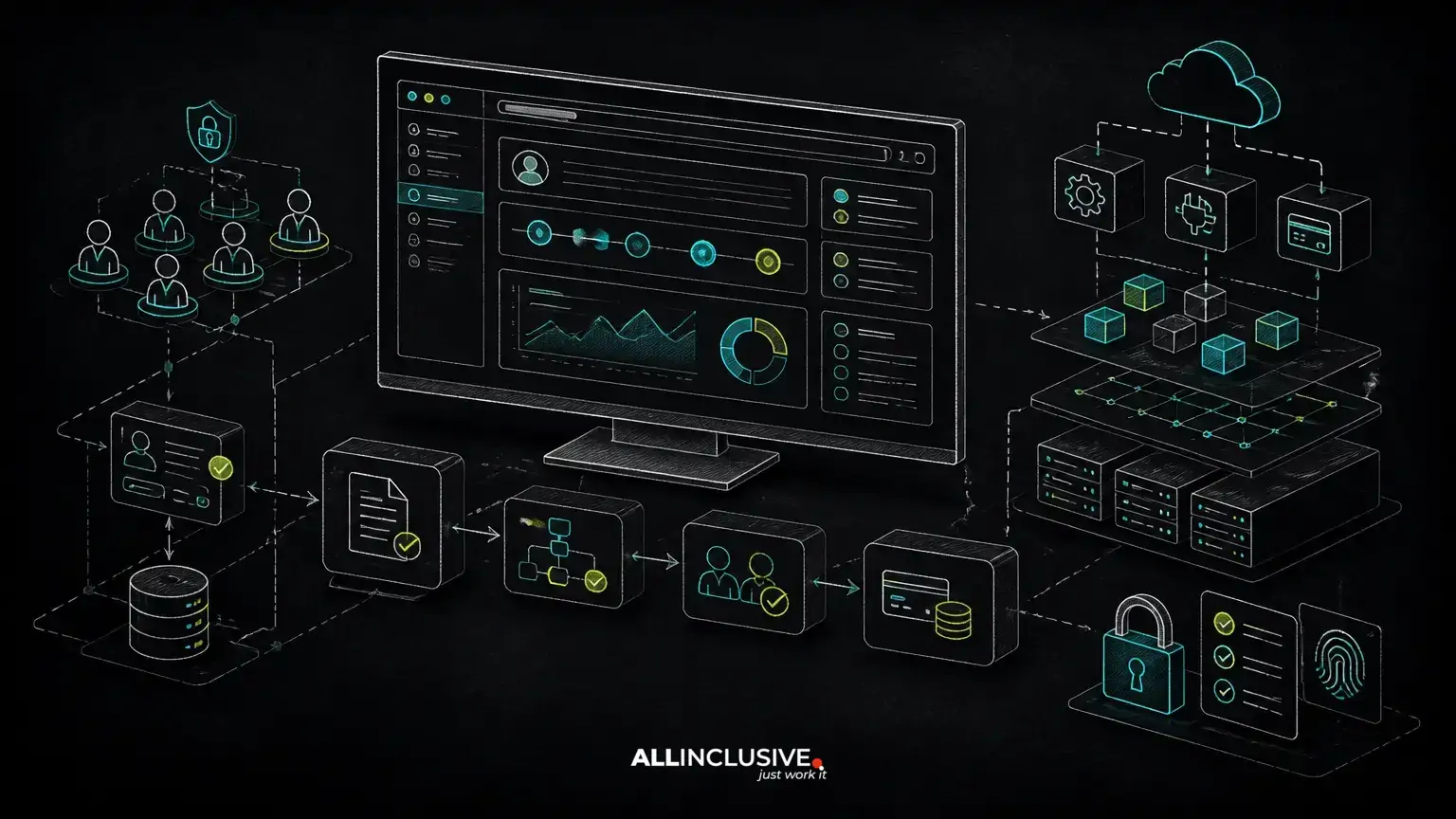
Feature comparisons can hide the most important question: how does work move through the business? Document the actors, decisions, approvals, records, exceptions and integrations involved in a real process.
For example, a customer portal may appear to require profiles, file uploads and messaging. The more consequential requirements may be permission inheritance, account-level access, approval states, audit history, notifications and synchronization with an existing CRM. Those workflow rules determine whether a product can be configured safely or whether custom engineering is justified.
A useful workflow map should identify:
- Roles: customers, staff, administrators, vendors or other participants.
- State changes: submitted, reviewed, approved, scheduled, paid, fulfilled or cancelled.
- Business rules: eligibility, pricing, approvals, limits and exception handling.
- Data ownership: which system creates, updates and remains authoritative for each record.
- Integrations: billing, identity, communications, inventory, analytics and external APIs.
- Operational controls: permissions, audit logs, retention, monitoring and support procedures.
When buying software is usually the stronger choice
Buying is often sensible when the capability is common, non-differentiating and available in a product that meets your security, integration and operational requirements. Payroll, standard accounting, transactional email and basic collaboration are examples where owning the underlying application may add little business value.
Packaged software can also be appropriate when speed matters more than process uniqueness. A company validating a new operating model may benefit from adopting a configurable tool before committing to a permanent architecture. This reduces initial engineering work and exposes real usage patterns.
Buying is less attractive when the product forces employees into workarounds, duplicates data across systems or makes important rules invisible. Subscription fees are only one part of the cost. Include configuration, data migration, integration maintenance, user training, administrative work and the cost of adapting the business to the tool.
When custom software earns its place
Custom software becomes more compelling when the workflow itself is valuable, unusual or central to revenue. Common examples include:
- Multi-sided marketplaces with specialized matching, commission or dispute rules.
- Booking systems with complex availability, resource allocation or cancellation policies.
- B2B portals that combine account hierarchies, approvals, documents and order workflows.
- Internal systems that coordinate teams, assets, compliance steps or field operations.
- SaaS products whose user experience and domain logic are the commercial offering.
The argument for building is strongest when existing products cannot model the workflow without fragile customization, manual reconciliation or multiple disconnected tools. Custom-made product engineering can also provide direct ownership of the source code and architecture, which matters when the software is a core company asset.
Ownership does not eliminate responsibility. A custom application requires decisions about hosting, backups, security updates, observability, support and future product development. Those obligations should be planned rather than treated as hidden costs.
Use configuration before custom code where it is safe
The choice is not always binary. A practical architecture may combine a purchased platform with custom services, integrations or a focused application layer.
Configuration is generally safer when it changes presentation, fields, straightforward approval steps or permissions already supported by the product. Custom code deserves greater scrutiny when it changes core data relationships, transaction behavior, billing logic or the product’s upgrade path.
Before extending a platform, ask whether the customization is documented, testable and reversible. Also ask who owns the resulting code, how it will be deployed, and whether a vendor update could break it. A low-code shortcut that cannot be tested or migrated may create more risk than a small, well-structured application.
Compare build and buy across the full cost model
Initial purchase price and development effort are poor standalone measures. Evaluate the total cost over the period in which the system will support the business.
Costs associated with buying
- Licenses, usage charges, implementation and premium support.
- Configuration, migration and integration work.
- Internal administration, training and process change.
- Vendor price changes, product retirement or plan restrictions.
- Manual work caused by workflow gaps and duplicate data.
Costs associated with building
- Discovery, product design, engineering, testing and deployment.
- Cloud infrastructure, monitoring, security operations and backups.
- Ongoing maintenance, dependency updates and support.
- Product management and future changes as the business evolves.
- Opportunity cost if the team builds low-value capabilities instead of buying them.
Custom software should be scoped around the smallest complete workflow, not an unlimited feature list. A focused first release can establish the data model, permissions and integration boundaries while postponing lower-value functionality.
Evaluate integration and data ownership before committing
Integration complexity frequently determines whether “buy” remains economical. Count not only the number of integrations but also the direction, frequency and consequence of data exchange.
A system that sends occasional notifications has a different risk profile from one that synchronizes inventory, payments and account permissions. Define the system of record for each important entity and specify what happens when an API is unavailable, a message is duplicated or two systems disagree.
For a custom application, an explicit integration layer can isolate vendor dependencies and make failures observable. For a purchased product, verify API availability, rate limits, export options, webhook behavior and permission boundaries before relying on it as a core system.
Assess security, permissions and operational control
Security requirements should be evaluated against actual workflows rather than broad labels such as “enterprise-ready.” Determine how the system handles identity, role-based access control, tenant isolation, audit history, sensitive data, session management and administrative actions.
Multi-tenant SaaS products need clear boundaries between organizations, users and records. A customer portal may need account-level permissions that differ from individual user permissions. A marketplace may need separate controls for buyers, sellers, operators and support staff.
With a purchased product, confirm which controls are configurable and which require vendor intervention. With custom software, define the controls during architecture and test them continuously. Neither path removes the need for access reviews, incident procedures, secure deployment and ongoing maintenance.
Decide whether the team can sustain the product
Building is not only a delivery decision; it is an operating model. Identify who will own the backlog, review technical changes, respond to incidents and maintain integrations after launch.
A small team can still build valuable software, but the scope and architecture must reflect its capacity. A modular monolith may be more maintainable than premature microservices. A conventional PHP or Laravel application can be a suitable choice for workflow-heavy web software when its ecosystem and team capabilities fit the requirements. Python may be appropriate for particular data, automation or service components. The technology should follow the workflow, deployment model and long-term maintenance needs.
External engineering support can help with discovery, implementation or maintenance, but ownership boundaries should be explicit. Source-code access, documentation, deployment credentials, testing practices and handover expectations are part of the commercial decision.
A scoring model for the build-vs-buy decision
Use a simple scorecard to make assumptions visible. Rate each option against the criteria that matter to your business, then document the reason for every score.
- Workflow fit: Can the option support the real process without harmful workarounds?
- Time to useful adoption: How quickly can users complete the target workflow reliably?
- Integration fit: Can data move between systems with clear ownership and failure handling?
- Security and permissions: Can the required controls be enforced and audited?
- Five-year cost: What are the direct and indirect costs under realistic growth assumptions?
- Strategic ownership: Does the option preserve control over source code, data and roadmap?
- Operational capacity: Can the organization support the product after launch?
- Reversibility: How difficult would it be to migrate away if the decision proves wrong?
Weight the criteria rather than giving every category equal importance. For a regulated workflow, permissions and auditability may outweigh launch speed. For a short-lived experiment, reversibility may matter more than extensive customization.
Common decision failures to avoid
- Comparing a finished product with an undefined custom scope: Define the smallest complete workflow before estimating a build.
- Ignoring the cost of workarounds: Count manual reconciliation, spreadsheet handling and support effort.
- Building commodity features: Buy or reuse stable capabilities unless they are part of the product’s differentiation.
- Assuming customization is permanent value: Unmaintainable code can become a liability rather than an asset.
- Choosing technology before architecture: Start with workflow, data, permissions and integrations.
- Skipping an exit plan: Preserve exports, documentation and clear ownership even when buying.
Turn the decision into a staged delivery plan
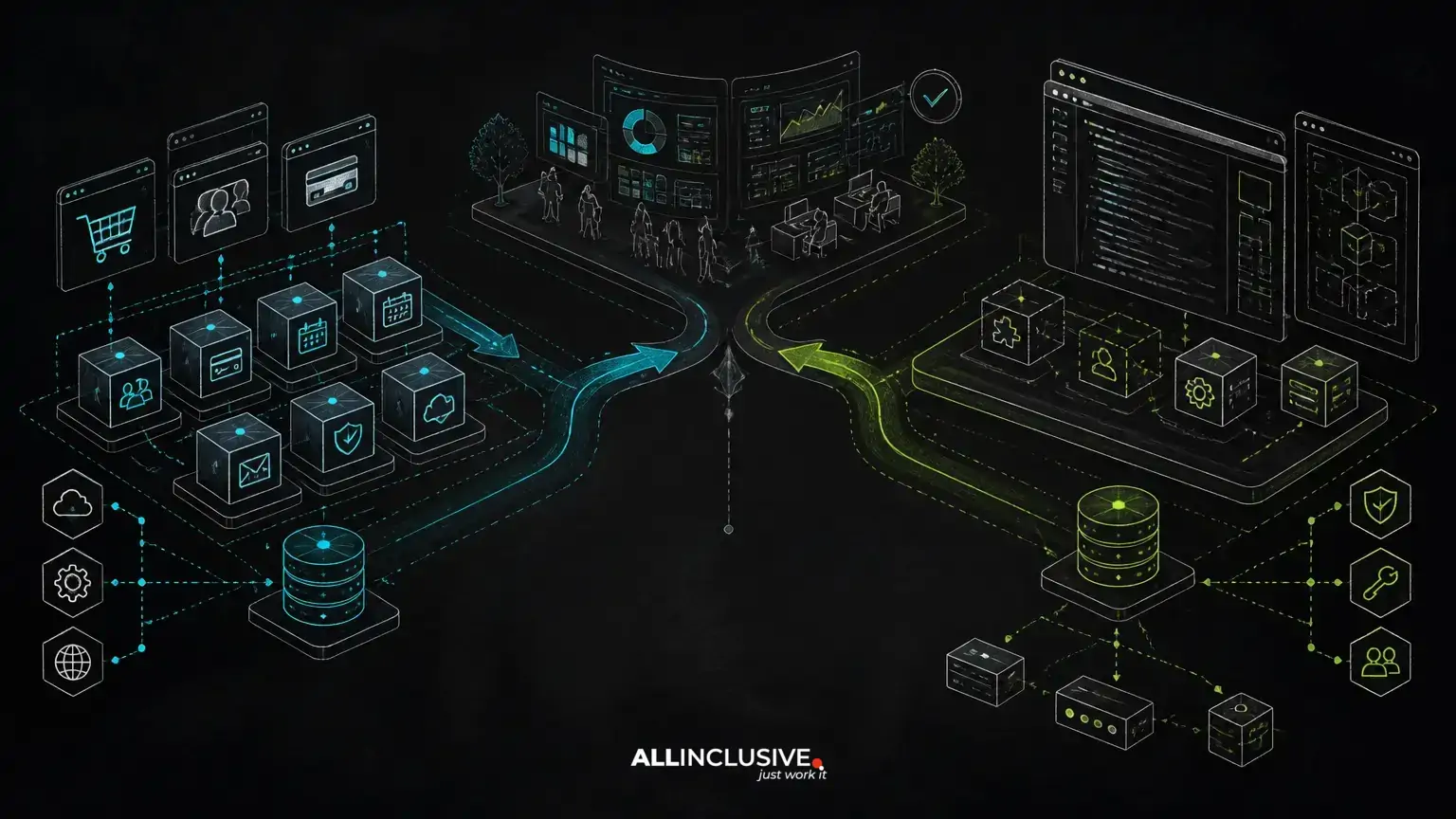
For many growing companies, the best answer is staged. Buy low-differentiation capabilities, validate the workflow with configuration or a narrow prototype, then build the parts that prove strategically important.
A staged plan should define the first users, the primary workflow, the minimum data model, role-based permissions, integration boundaries and measurable operational outcomes. It should also identify what is deliberately excluded. This keeps custom development focused while preserving room for later product evolution.
For broader guidance on selecting an implementation approach, see the custom software development services overview. If the decision leads to a web application, the custom web application development process provides a useful structure from discovery through launch. Teams evaluating portal workflows can also compare custom web apps with off-the-shelf software and review the considerations in B2B portal development.
After launch, maintenance is part of the product rather than an optional afterthought. Plan for dependency updates, monitoring, access reviews, integration changes and user feedback. The support and maintenance service page outlines the type of ongoing responsibility that should be included in the operating model.
The build-vs-buy decision is strongest when it separates strategic workflow ownership from commodity capability. Buy where a mature product fits the process and can be operated confidently. Build where the workflow, data model or user experience creates durable business value. In both cases, make ownership, integration, security and long-term cost explicit before committing.