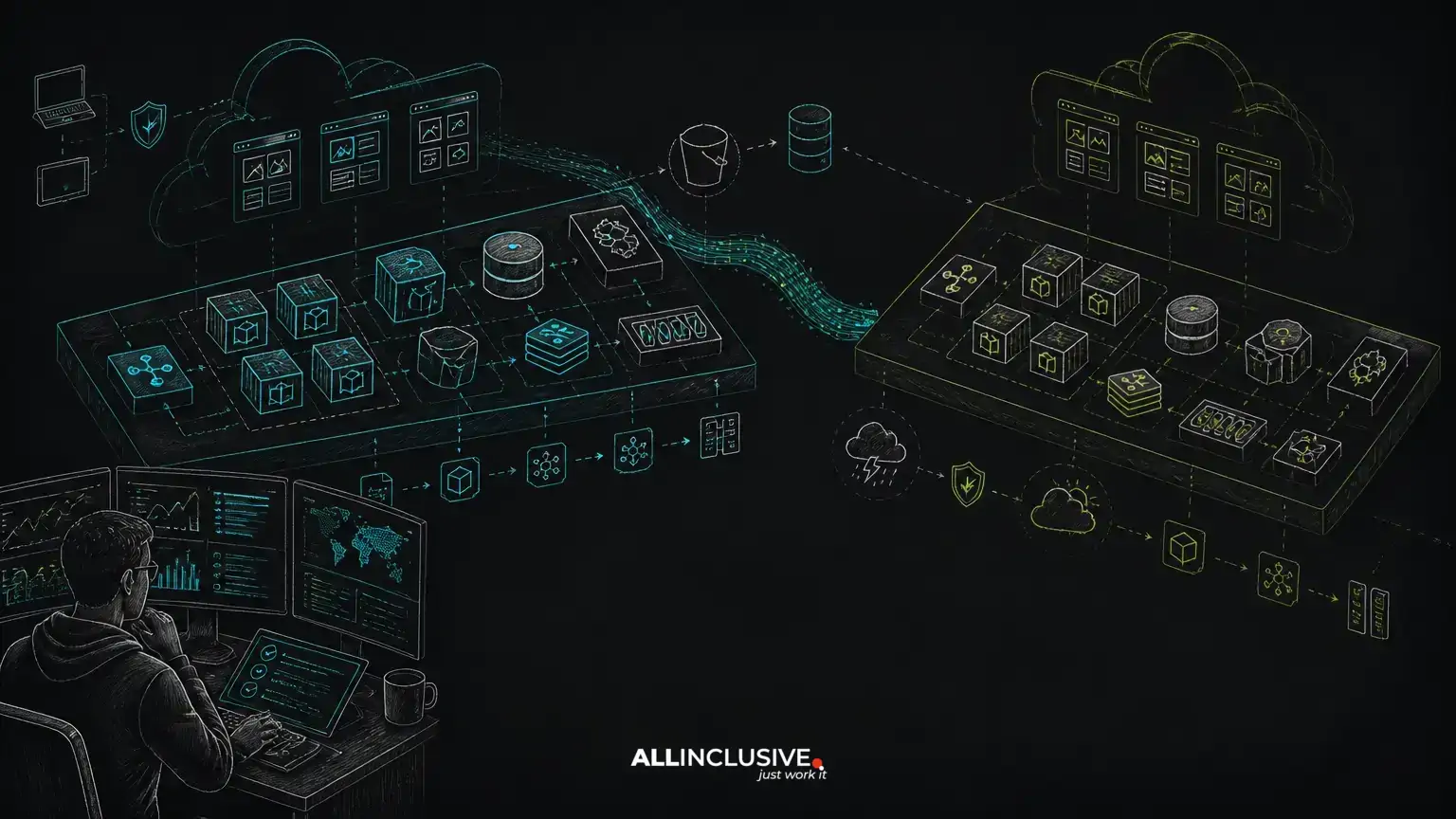
Python automation development is the process of turning repeatable operational work into software that can run safely, consistently and visibly in production. A script may be enough to rename files or generate a one-time report. A business system must also handle failures, retries, permissions, changing inputs, monitoring, deployment and ownership. When planning python automation development, the implementation context in ai development is also relevant.
The distinction matters because automation often becomes operationally important before it becomes formally engineered. A scheduled script may eventually process customer records, synchronize systems, trigger financial workflows or feed an AI application. At that point, reliability and maintainability matter as much as the original time savings.
This article explains how to move from isolated Python scripts to production-grade automation without treating Python as merely a scripting language. The right design may use FastAPI or Django for service interfaces, background workers for long-running tasks, queues for workload control, and data workflows for repeatable processing.
When Python automation needs production architecture
Not every automation task needs a full application. A small, infrequent process with limited business impact can remain a simple script if it has a clear owner and a documented execution method. More structured engineering becomes appropriate when one or more of the following conditions apply:
- The process runs on a schedule or responds to external events.
- It handles sensitive, valuable or customer-facing data.
- Failures require investigation, replay or manual approval.
- Multiple systems must remain synchronized.
- Several users or teams depend on the output.
- The workflow is growing in scope or becoming difficult to change safely.
- The process needs authentication, authorization, audit history or operational reporting.
A useful test is to ask what happens when the process fails halfway through. If the answer is “someone reruns the script and hopes it works,” the automation has probably outgrown its original form.
Design the workflow before choosing the framework
Framework selection should follow the workflow rather than define it. Start by documenting the trigger, inputs, transformations, side effects, outputs and failure states. This exposes whether the automation is primarily an API service, a background job, a data pipeline, a scheduled operation or a combination of these patterns.
API-driven automation
When another application needs to request an automation task, an API provides a controlled interface. FastAPI can be a suitable choice for typed Python services where clear request and response models are important. Django may be more appropriate when the automation is part of a broader business application that needs built-in administrative workflows, user management or a larger domain model.
An API should not perform every operation inside the request cycle. If a task may take significant time, call several external services or require retries, the API can validate the request, create a job record and place work on a queue. The client then receives a job status response instead of waiting for an uncertain process to finish.
Scheduled and event-driven jobs
Scheduled jobs are useful for recurring reconciliation, report generation, exports and maintenance. Event-driven jobs respond to events such as a new order, uploaded document or completed payment. In both cases, the design should define whether duplicate delivery is possible and how the system prevents unsafe repeated side effects.
Idempotency is central to reliable automation. An idempotent operation can be retried without producing an unintended duplicate result. For example, a synchronization job might record the source event identifier before applying a change, or use a stable business key when writing to the destination system.
Data workflows
Data-heavy automation needs explicit stages for extraction, validation, transformation, loading and reporting. Treating the workflow as a collection of unstructured scripts makes it difficult to determine which records were processed, which failed and whether a partial output is trustworthy. Python is well suited to these workflows, but the surrounding execution model must provide scheduling, state tracking, logging and recovery.
For more detail on this pattern, see the guide to Python data pipeline development.
Use queues and background workers for controlled execution
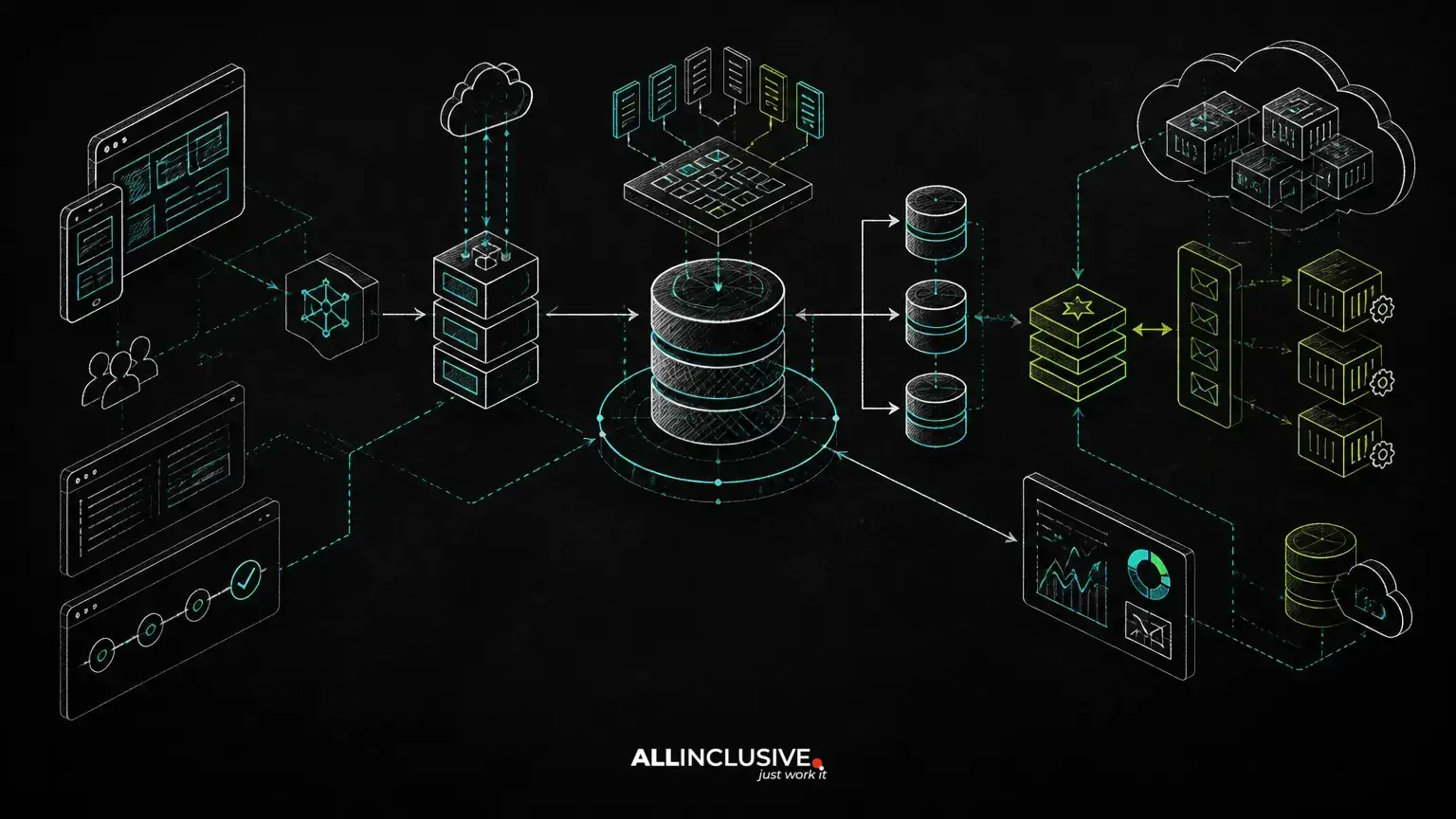
Queues separate the request to perform work from the worker that performs it. This creates room to absorb bursts, retry transient failures and scale processing independently from the web application. A typical architecture includes an API or event consumer, a durable job record, a message broker or queue, one or more workers, and a result or status store.
Queues do not automatically make a workflow reliable. The system still needs clear rules for retryable versus non-retryable errors, maximum attempts, backoff, timeouts and dead-letter handling. A failed request to a temporary third-party service may be retried. Invalid input or a rejected business rule usually needs correction rather than repeated execution.
Workers should also be designed for safe interruption. Long-running tasks may be terminated during deployment or infrastructure failure. Breaking work into checkpoints, recording progress and avoiding large all-or-nothing memory operations can make recovery more predictable.
Build boundaries around external systems
Automation frequently connects CRMs, payment services, storage platforms, internal databases and partner APIs. Each dependency introduces uncertainty: rate limits, schema changes, authentication failures, timeouts and inconsistent data.
Keep external integrations behind focused modules or adapters. This prevents vendor-specific request logic from spreading through the business domain and makes replacement or testing easier. Validate incoming data at the boundary, normalize it into internal models and preserve enough source information to investigate discrepancies.
Timeouts are essential. Without them, a worker can remain blocked indefinitely and consume capacity. Where supported by the dependency, use pagination, bounded concurrency and rate-aware retries. Do not retry every error indiscriminately; repeated requests can worsen an outage or duplicate an action.
Make automation observable and supportable
Production automation needs more than application logs. Operators should be able to answer what ran, when it ran, what input it processed, what it changed, and why it failed.
- Structured logs: Record job identifiers, workflow names, relevant entity identifiers and error categories in a searchable format.
- Metrics: Track execution counts, duration, failure rates, queue depth and retry volume where those measures help reveal operational problems.
- Job state: Store states such as queued, running, completed, failed and cancelled with timestamps and useful error context.
- Alerts: Notify the responsible team about actionable conditions rather than every expected transient event.
- Audit records: Preserve important changes when the workflow affects customer, financial or compliance-sensitive data.
Observability should support recovery, not just diagnosis. A support user may need to retry a failed job, download an error report, skip a known-invalid record or resume from a checkpoint. Those controls should be governed by permissions and designed around the business process.
Test the failure paths, not only the happy path
Automation tests should verify more than whether a function returns the expected value. The most costly defects often occur at system boundaries and during partial failure.
- Test malformed, missing and unexpected input.
- Test timeouts, rate limits and unavailable dependencies.
- Test duplicate events and repeated job execution.
- Test partial completion and interrupted workers.
- Test schema changes and records that cannot be transformed.
- Test permission failures and expired credentials.
- Test queue retry behavior and dead-letter handling.
Unit tests are valuable for transformations and business rules. Integration tests can verify database, queue and external-service boundaries. Contract tests can help detect incompatible changes between systems. A small representative fixture set also makes it easier to reproduce production issues without exposing unnecessary customer data.
Choose deployment and ownership deliberately
Python automation can run in a server process, a containerized worker, a scheduled platform, a managed job environment or a broader application deployment. The choice should reflect execution duration, dependency requirements, volume, security constraints and the team’s operating model.
Deployment discipline includes pinned and reviewed dependencies, environment-specific configuration, secret management, migrations where needed, health checks and a rollback approach. Credentials should not be embedded in source code or shared through informal channels. Separate development, staging and production access so testing does not accidentally affect live systems.
Ownership is equally important. Every workflow should have a technical owner, a business owner and a documented escalation path. Documentation should explain the trigger, expected inputs, downstream effects, retry procedure, data retention and conditions under which manual intervention is safe.
Know when to use Django, FastAPI or a simpler structure
FastAPI is often a strong fit for focused API services and automation endpoints that benefit from explicit schemas and asynchronous integration patterns. Django can fit automation embedded in a larger business application with users, permissions, administrative screens and substantial domain behavior. A lightweight package or command-line application may be more appropriate when there is no user-facing API and the workflow can be operated through a scheduler and worker.
These choices are not mutually exclusive. A Django application may publish jobs to Python workers. A FastAPI service may share domain packages with scheduled commands. A Laravel or PHP application may remain the primary business interface while Python handles data processing, automation or AI-specific workloads. The important boundary is the responsibility of each component, not the use of a single language everywhere.
For a broader framework comparison, read FastAPI vs. Django and Python backend development.
A delivery checklist for reliable Python automation
Before releasing an automation workflow, confirm that the team can answer these questions:
- What starts the workflow, and can the trigger be duplicated?
- What inputs are required, validated and retained?
- Which steps are safe to retry?
- How are partial failures detected and recovered?
- Where is job state stored?
- How are secrets, permissions and sensitive data handled?
- What logs, metrics and alerts support operations?
- How can an operator inspect, cancel or replay a job?
- What tests cover external dependencies and failure paths?
- Who owns the workflow after launch?
These questions turn automation from an individual productivity trick into a maintainable software capability. They also help product and engineering leaders decide whether to stabilize an existing script, refactor it into a service, or rebuild it around a clearer workflow model.
Build automation as a business system, not a disposable script
Python is valuable for automation because it can support APIs, integrations, data processing and AI-oriented workloads in one broad engineering ecosystem. Reliability does not come from the language alone. It comes from explicit workflow boundaries, controlled execution, recoverable jobs, tested integrations and operational visibility.
When automation becomes part of a customer or internal workflow, treat it as custom software with a defined lifecycle. A disciplined approach can preserve the speed of Python development while reducing fragile manual recovery and hidden operational risk. Explore the broader Python development practice, or review custom software development capabilities when the automation needs to become part of a larger product system.