Legacy Python modernization does not require stopping product development for a large rewrite. The safer approach is to understand the existing system, reduce operational risk, and replace or refactor parts of it in controlled increments. That can mean stabilizing dependencies first, extracting an API, moving background work to a queue, introducing tests around critical workflows, or rebuilding one bounded capability while the rest of the application continues to run.
The right path depends on what is actually failing: unsupported dependencies, fragile deployments, unclear ownership, slow delivery, an unsuitable architecture, or business logic that has become difficult to change. Modernization is a set of engineering decisions, not a single framework upgrade.
Start by separating stabilization, refactoring, migration and rebuilding
Teams often use “modernization” to describe several different activities. Separating them helps prevent an unnecessarily expensive rewrite.
- Stabilize: make the current system safer to operate by improving deployment repeatability, backups, monitoring, dependency control and incident response.
- Refactor: improve internal structure without changing the externally observable behavior. Examples include isolating business rules, removing duplicated code or introducing clearer module boundaries.
- Migrate: move a component, runtime, data store or workflow to a new implementation while preserving a defined contract.
- Rebuild: replace a capability or application when the existing design cannot support required product, security or operational needs at a reasonable risk.
A legacy application may need all four, but not in the same order. Stabilizing first often creates the conditions for safer refactoring and migration. Rebuilding everything immediately can increase delivery risk because the team must rediscover business rules while also designing a new system.
Identify the modernization risks before changing code
A useful assessment looks beyond Python version numbers. The most important questions are about behavior, ownership and operations.
- Which user and internal workflows are business-critical?
- Which modules change most frequently, and which have become effectively untouchable?
- How are releases built, reviewed, deployed and rolled back?
- What external services, scheduled jobs, file exchanges and database tables does the application depend on?
- Where are failures visible, and where do they remain hidden until a user reports them?
- Which parts of the system have reliable tests, and which are protected only by manual knowledge?
- Does the current Python runtime and dependency set remain supportable in the target deployment environment?
Architecture diagrams are helpful, but they are not enough. A short inventory of routes, jobs, integrations, data ownership and deployment steps can reveal risks that are invisible in source-code structure. For production backends, automation systems, data workflows and AI services, operational dependencies are part of the application whether or not they live in the main repository.
Make the current system observable before making it smaller or newer
Modernization without observability creates uncertainty. Before moving behavior, establish enough evidence to answer three questions: what happened, how long it took, and which dependency or input contributed to the result.
Useful baseline instrumentation can include structured application logs, request correlation, error tracking, deployment markers and metrics for latency, throughput, queue depth and job failures. Data workflows may also need record counts, validation failures and processing checkpoints. The goal is not to instrument every line of code. It is to make critical workflows measurable before their implementation changes.
Operational visibility also improves prioritization. A heavily used endpoint with low test coverage may deserve attention before an obscure module with cleaner code. Conversely, a rarely used component that blocks security updates or deployment may be a more urgent risk than its traffic suggests.
Protect behavior with characterization tests
Legacy systems often lack complete specifications. In that situation, characterization tests document what the system currently does, including behavior that may not have been intentional. These tests are not a declaration that every existing behavior is desirable. They create a reference point for changing implementation safely.
Begin with high-value workflows rather than attempting full coverage. Capture representative inputs, permission boundaries, validation rules, failure responses and side effects. For an API, this may include status codes, response fields and idempotency behavior. For a background job, it may include retry handling, duplicate input and partial failure. For a data pipeline, it may include schema validation, rejected records and restart behavior.
Tests should be complemented by explicit decisions about behavior that needs to change. Otherwise, a team can accidentally preserve a defect simply because it was observed in the old system. A useful test plan labels behavior as “must preserve,” “intentionally changing” or “not yet understood.”
Choose a modernization seam instead of rewriting by layer
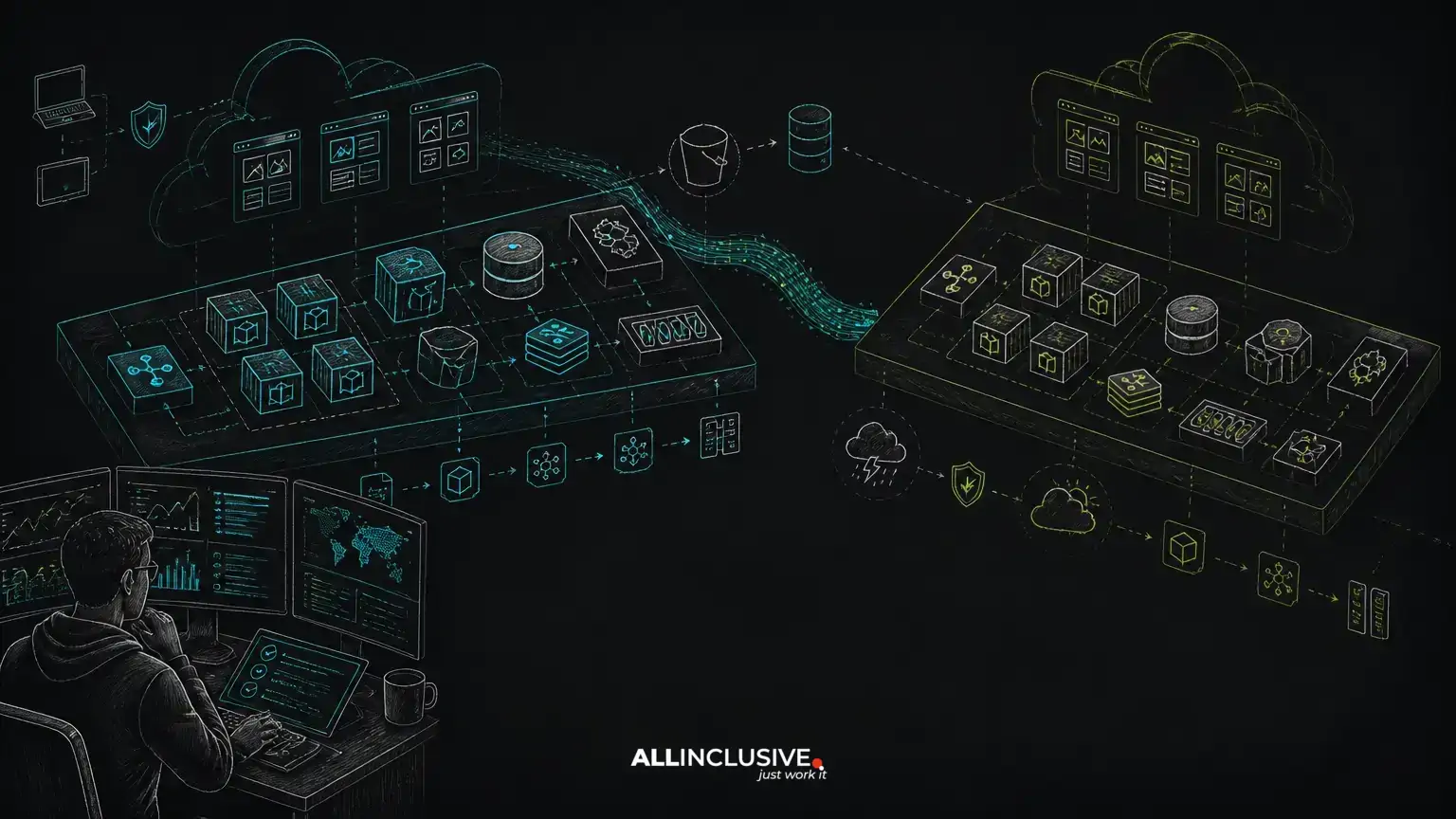
A modernization seam is a boundary where new code can interact with old code through a clear contract. Good seams often correspond to a business capability, API, job type or data workflow rather than a technical layer such as “all models” or “all utilities.”
For example, a team might extract document processing from a monolithic Django application into a separately deployable Python worker. The existing application can submit a job and read its status while the processing implementation evolves independently. Another system might expose a stable API around a billing capability before replacing its internal module.
This approach resembles a strangler migration: new behavior gradually takes responsibility for defined paths while the legacy path remains available until it can be retired. The boundary must be explicit about ownership, errors, retries, authentication and data consistency. A new service that still reaches into the old service’s database tables without a plan for ownership is not a clean seam; it is a distributed dependency.
Use FastAPI and Django where their roles fit the migration
There is no requirement to replace a mature Django application with FastAPI simply because a newer service is being introduced. Django can remain a strong choice for an application that benefits from an integrated web framework, established administrative workflows and a broad set of existing capabilities. FastAPI can be useful for focused APIs, internal services and typed interfaces where a smaller service boundary improves independent delivery.
The key decision is responsibility. A FastAPI service should have a defined domain, data contract and operational owner. A Django application should not become a permanent gateway to an uncontrolled collection of extracted services. Likewise, introducing a second framework only to make the architecture appear modern can increase hiring, deployment and maintenance overhead.
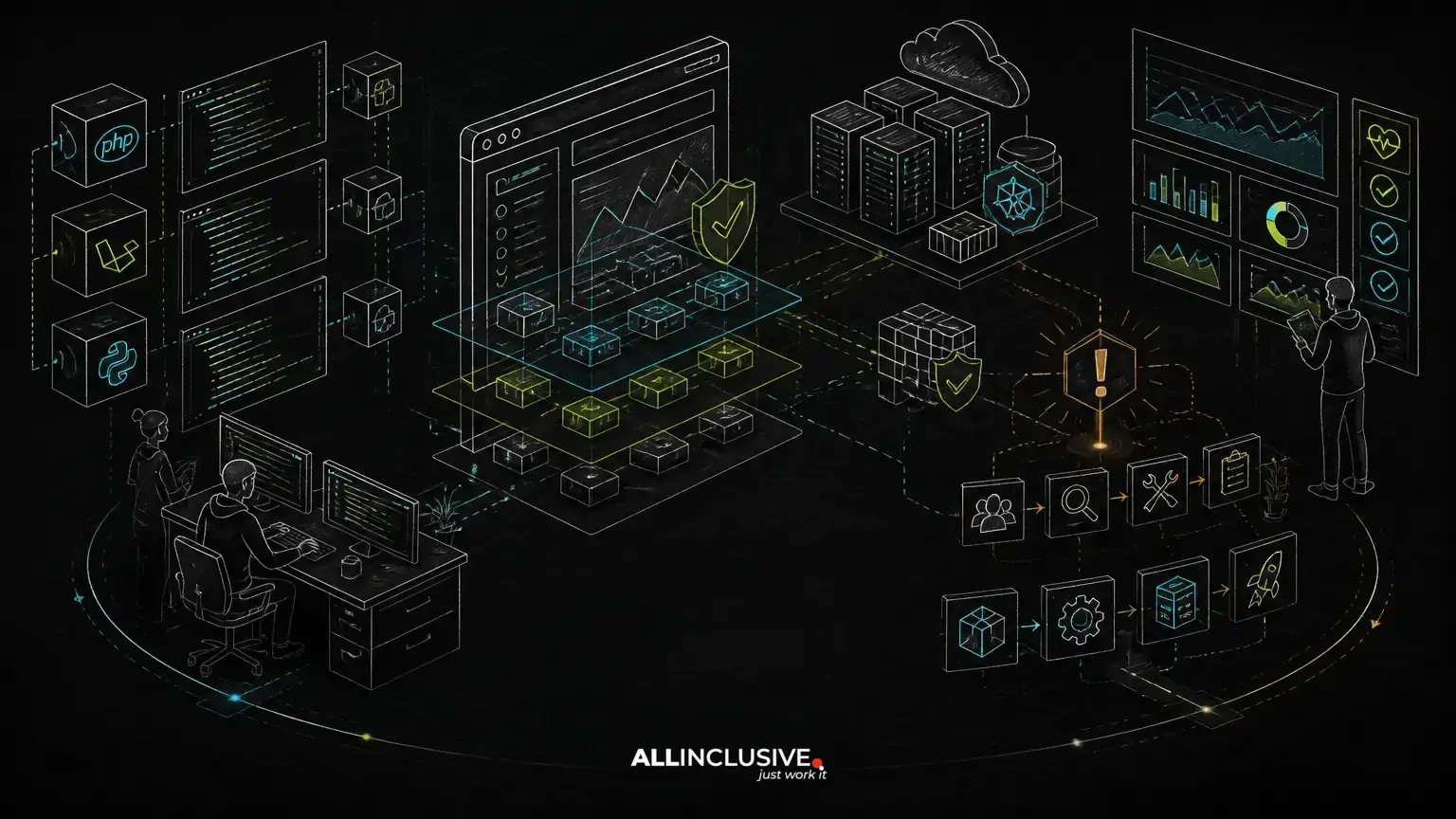
For teams with Laravel or PHP systems, Python does not need to replace the existing platform. A Laravel application can continue to own user-facing workflows while Python handles data processing, automation, machine-learning workloads or specialized backend services. A Laravel and Python hybrid architecture can be appropriate when the integration boundary is clearer and lower risk than a full rewrite.
Move slow and failure-prone work into explicit jobs
Legacy applications often perform email delivery, file processing, reporting, imports or external API calls inside a web request. This makes user-facing latency depend on third-party systems and increases the impact of transient failures.
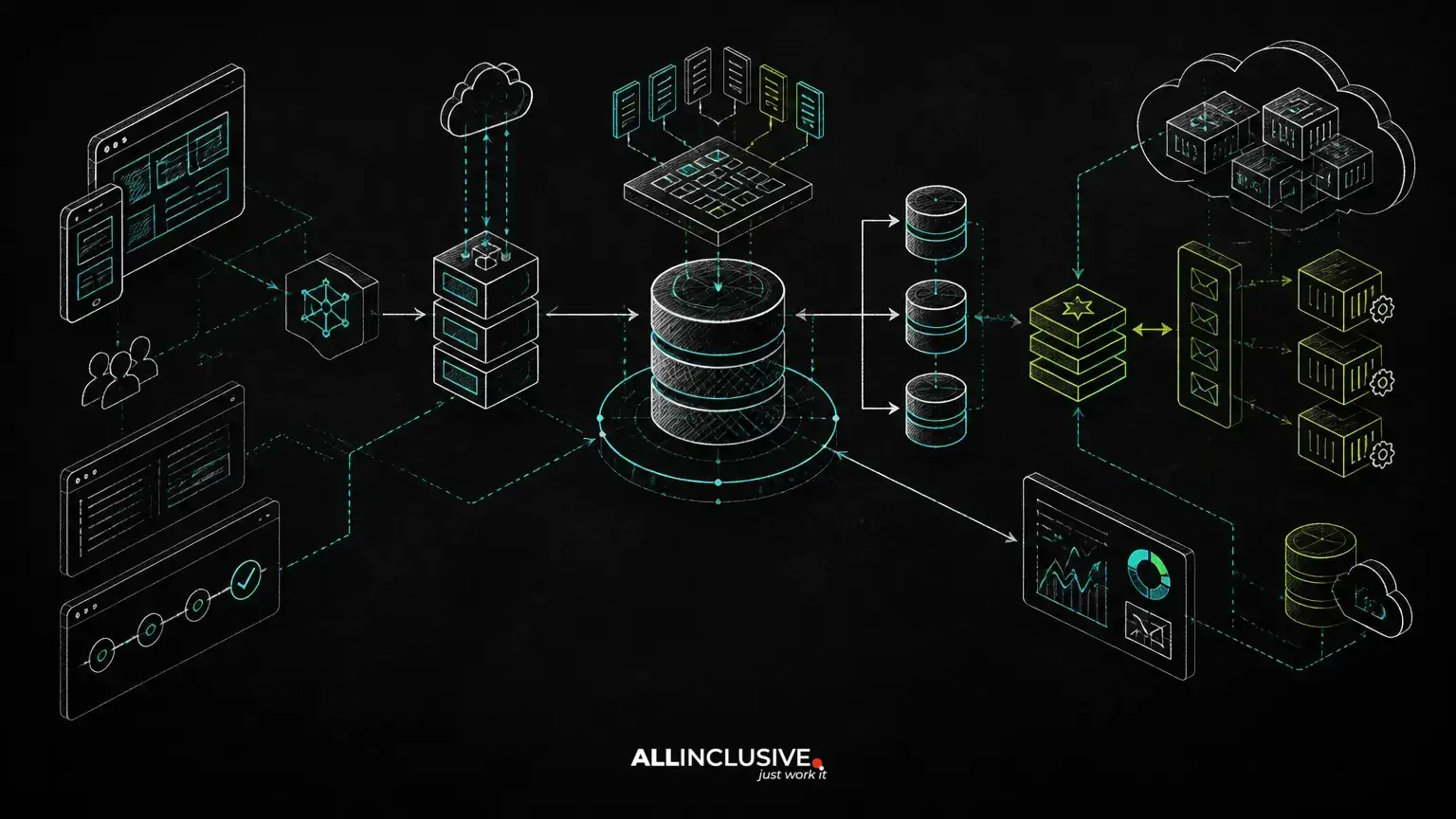
Modernization can separate request handling from execution through a background-job architecture. The request records an intended action, a worker processes it, and the system exposes status, retries and failure details. A queue is useful only when paired with operational rules: idempotent handlers, bounded retries, dead-letter handling, visibility into queue age and a way to reconcile incomplete work.
Do not move every task to a queue automatically. Some actions require immediate confirmation, transactional consistency or a simple synchronous path. The decision should reflect user workflow and failure consequences, not a general preference for asynchronous architecture.
Modernize data access without creating a split-brain system
Data is frequently the hardest part of legacy Python modernization. Application code can be replaced incrementally, but two implementations writing the same records can create conflicting assumptions about validation, transactions and ownership.
Before extracting a capability, define which system owns each important entity and which operations are allowed. Consider an incremental sequence such as:
- Document the existing schema, constraints and side effects.
- Introduce an access boundary around the capability.
- Route reads and writes through one owner where possible.
- Replicate or publish data deliberately for consumers that need it.
- Verify reconciliation and failure recovery before retiring the old path.
Database migrations should be backward-compatible when old and new application versions may run during deployment. Additive changes, staged backfills and separately verified cleanup are generally easier to roll back than a single destructive migration.
Upgrade dependencies and runtime as a controlled delivery stream
Dependency modernization is often treated as housekeeping, but it directly affects security response, deployment reproducibility and developer productivity. Create a reproducible environment, identify direct and transitive dependencies, and test the application against the intended runtime before combining the work with a major architectural change.
Separate mechanical upgrades from behavior changes where practical. A Python runtime upgrade, web-framework upgrade and database redesign in one release can make failures difficult to diagnose. Small compatibility steps also make rollback and ownership clearer.
Use automated checks appropriate to the application: unit and integration tests, static analysis, dependency review, migration checks and smoke tests against a production-like environment. The exact toolchain can vary, but the release process should make it clear what was tested and what remains uncertain.
Keep product development moving with migration slices
A modernization program should produce usable increments rather than a long period in which the team only works on infrastructure. A migration slice might improve one customer workflow, replace one high-risk job, or introduce one stable API contract. Each slice should have a measurable completion condition, such as retiring a deployment step, removing a duplicated code path, reducing manual intervention, or making a failure diagnosable.
Reserve capacity for product work, but avoid treating modernization as unrelated overhead. Product features can often be delivered through the new boundary when they touch the capability being migrated. This lets the architecture improve as part of normal roadmap delivery instead of creating a separate program with no business feedback.
For a broader view of production Python responsibilities, see Python application maintenance: dependencies, tests, monitoring and upgrades. If the modernization includes a new customer-facing service, Python backends for SaaS provides useful context on jobs, billing and multi-tenant data boundaries.
Recognize failure modes before they become migration debt
- Big-bang replacement: the team discovers undocumented behavior late, and the new system becomes a second legacy system under deadline pressure.
- Framework-first decisions: technology changes without a clear capability boundary, creating more operational components without reducing complexity.
- Shared database shortcuts: new and old services modify the same data with inconsistent rules.
- Compatibility without retirement: traffic moves to the new path, but old code, jobs and credentials remain permanently active.
- Testing only the happy path: retries, duplicate events, partial failures and permission boundaries break after cutover.
- Observability at the end: the team cannot distinguish a regression from an existing production problem.
When a rebuild is justified
A rebuild can be reasonable when the existing system has no safe extension points, its runtime or dependencies cannot be supported, its data model prevents required workflows, or the cost of understanding and operating it exceeds the risk of replacement. Even then, a rebuild should have a bounded scope and a migration plan.
Define the capabilities to preserve, the behavior to change, the data to migrate and the coexistence period. A custom-made software product can be rebuilt around clearer domain boundaries, typed interfaces, automated tests and observable deployment pipelines, but those improvements come from disciplined engineering rather than from Python version or framework choice alone.
When modernization crosses backend, frontend, integration or deployment boundaries, an experienced development partner can help turn the work into sequenced delivery increments. For Python systems that support automation, data products or AI features, production concerns such as queues, evaluation workflows and monitoring should be designed alongside the application rather than added after launch. The AI development practice is relevant when the modernization includes model-backed capabilities, while broader web development support may be useful for customer-facing application changes.
A modernization plan that protects delivery
- Map critical workflows, integrations, data ownership and deployment dependencies.
- Stabilize releases, backups, environments and observability.
- Write characterization tests around the highest-risk behavior.
- Select one business capability with a clear modernization seam.
- Define API, job, data and failure contracts before moving implementation.
- Deliver the new path alongside the old path with controlled routing or feature flags.
- Compare behavior and operational signals, then expand traffic gradually.
- Retire old code, jobs, credentials and infrastructure explicitly.
- Repeat with the next capability, incorporating what the first slice revealed.
The objective is not to make a legacy Python codebase look new. It is to make change safer, ownership clearer and product delivery more predictable. Incremental modernization gives teams a way to improve the production backend while continuing to serve users and learn from real operational behavior.