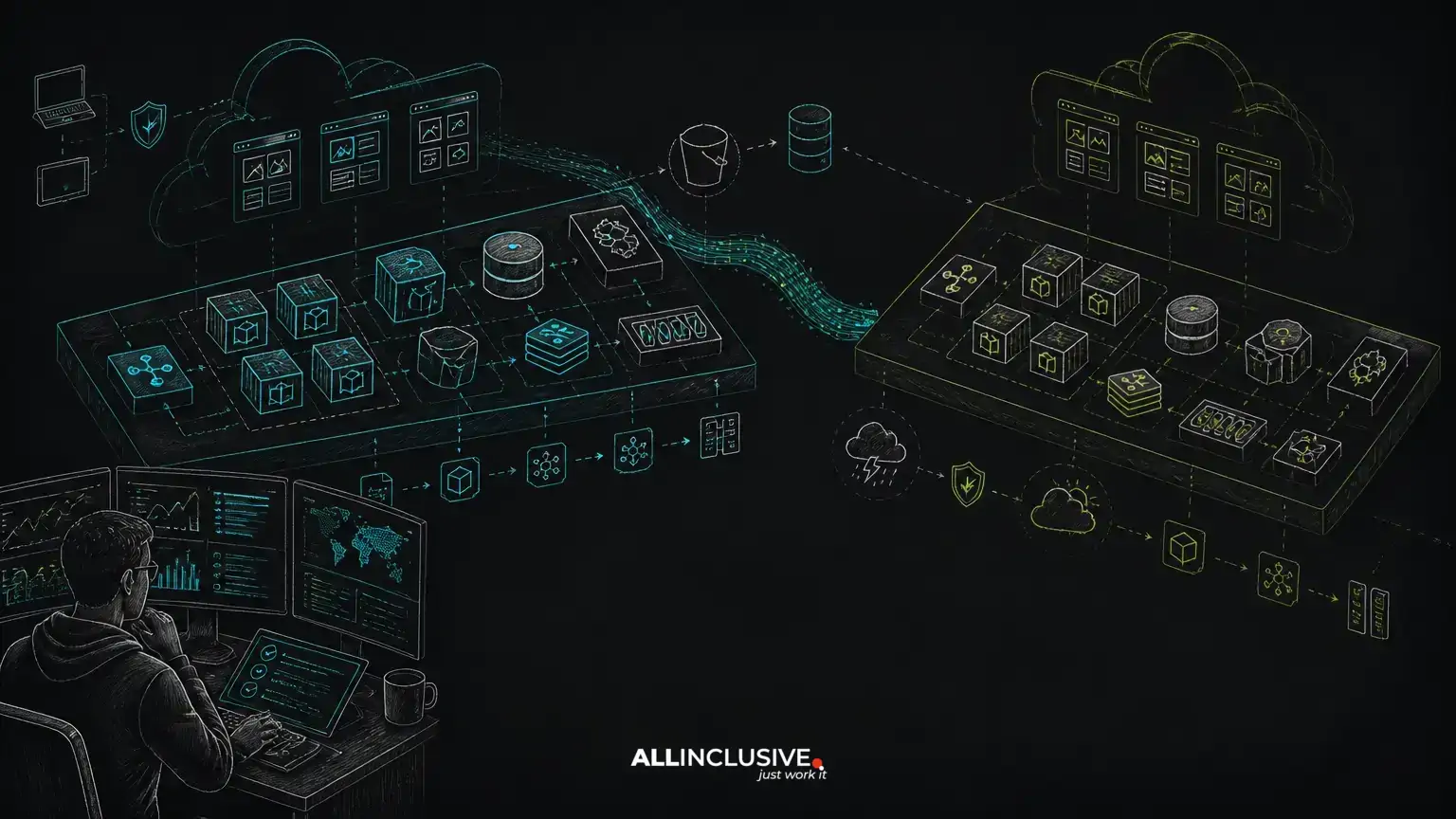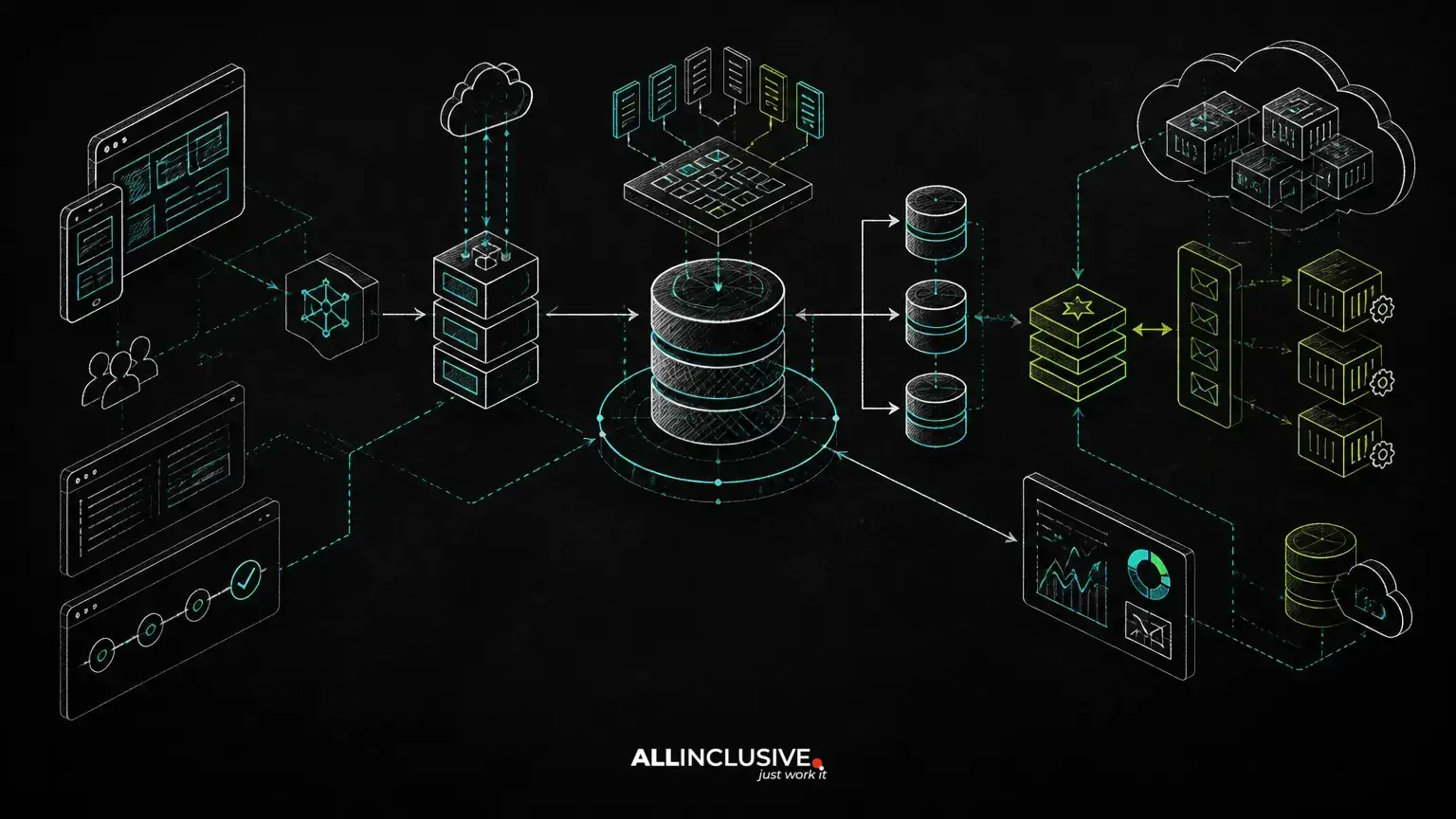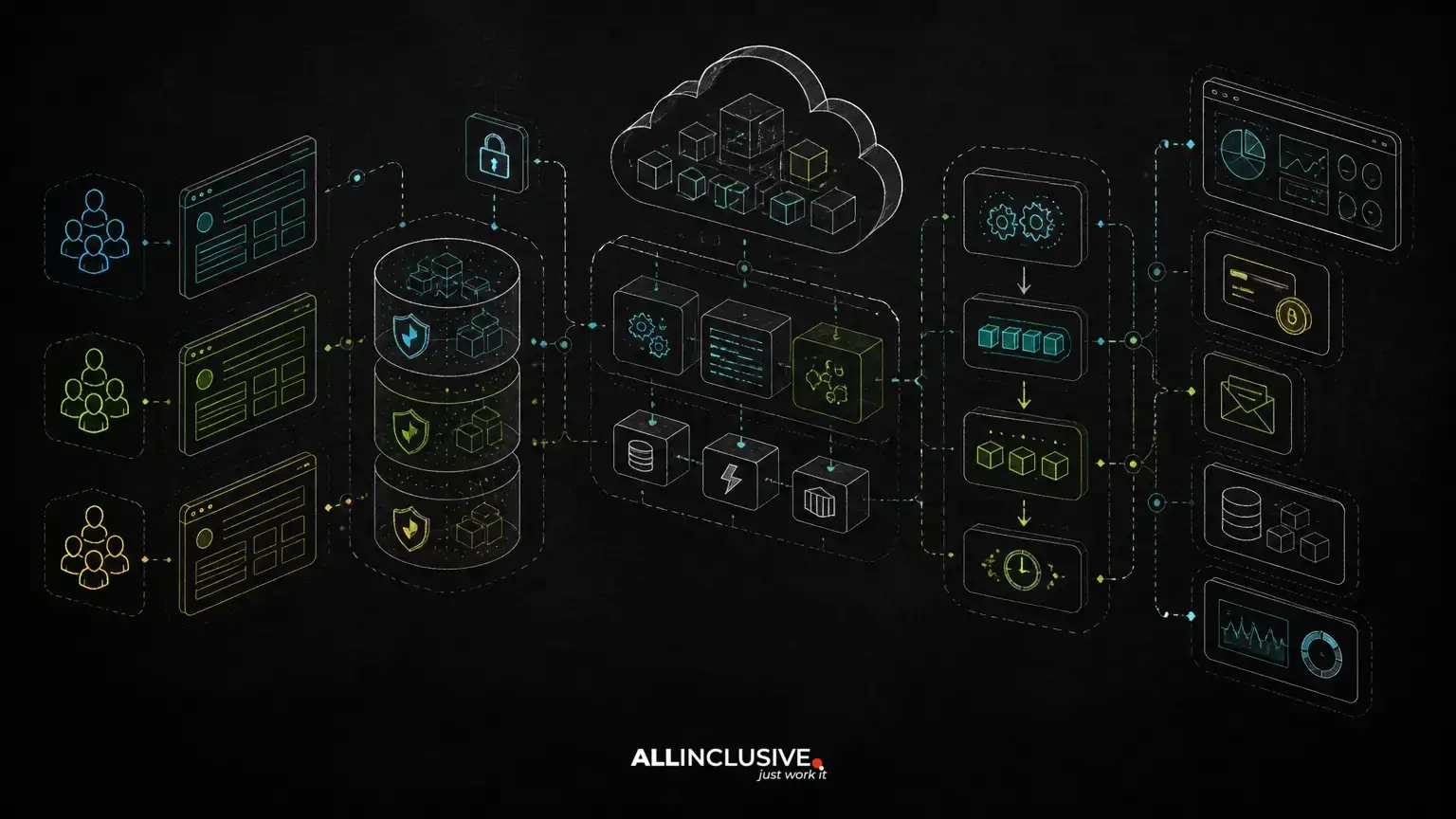
A python backend for saas applications needs more than a set of API endpoints. It must coordinate tenant access, subscription state, billing events, background jobs, data boundaries and operational visibility without making every new feature harder to release.
Python is well suited to this work because it can support structured web APIs, administrative workflows, automation, data processing and AI-enabled features in one engineering environment. FastAPI and Django are both viable foundations, but the framework is only one part of the decision. The durable architecture comes from clear domain boundaries, explicit tenant rules, reliable asynchronous processing and production discipline.
This guide explains the main design choices and failure modes to consider when building a custom SaaS product with Python.
Start with the SaaS operating model, not the framework
Before choosing FastAPI, Django or a combination of services, define how the product behaves:
- Which users belong to which organizations or workspaces?
- What subscription plans, usage limits or entitlements exist?
- Which actions happen synchronously during a request?
- Which work can be retried or processed later?
- What data must be isolated, exported, retained or deleted per tenant?
- Which administrative operations require auditability?
These answers shape the backend more than the choice between two popular Python frameworks. A SaaS product with complex administration may benefit from Django’s integrated conventions and administrative capabilities. An API-first product with independently designed frontend or mobile clients may prefer FastAPI’s explicit route and schema approach. Either can support a sound production system when authentication, authorization, data access and operations are designed deliberately.
Teams planning a broader product platform can also review the related Python development capabilities and architecture considerations.
Choose a modular backend boundary
A maintainable SaaS backend usually begins as a modular monolith rather than a collection of microservices. One deployable application can contain separate modules for identity, organizations, billing, product workflows, notifications and reporting while preserving transaction boundaries and a simpler operating model.
This structure helps a product team move quickly without allowing every feature to share undocumented tables and business rules. Modules should communicate through explicit services, commands or domain functions rather than direct access to one another’s internals.
FastAPI for API-focused products
FastAPI is a strong fit when the backend is primarily an API consumed by a separate web application, mobile client or external integration. Typed request and response models can make contracts clearer, while asynchronous endpoints can be useful for I/O-heavy operations when the surrounding libraries and workload support that model.
FastAPI does not remove the need for architecture. Teams still need to define transaction handling, dependency boundaries, authorization policies, migrations, job processing and observability.
Django for integrated product administration
Django can be effective when the product needs substantial server-side workflows, content management, administrative tooling or a convention-rich application structure. Its ecosystem can reduce the amount of infrastructure a team must assemble, but the application should still separate tenant-aware domain logic from presentation and framework-specific code.
A mixed approach is possible, but it should solve a real boundary problem. Adding multiple frameworks without clear ownership can increase deployment, testing and maintenance costs.
Model tenants and enforce isolation at every layer
Multi-tenancy is not simply adding a tenant_id column to every table. The team must decide how tenant context is established, carried through requests and enforced in queries, jobs, exports and administrative tools.
Common data models include:
- Shared database and shared schema: tenants use the same tables with explicit tenant keys. This is often operationally efficient, but missing a filter can expose records across organizations.
- Shared database with separate schemas: tenants have stronger logical separation, with additional migration and operational complexity.
- Separate databases: isolation and tenant-specific operations can be clearer, but provisioning, upgrades, reporting and cost management become more involved.
There is no universal choice. Smaller or more standardized tenants may fit a shared schema with strong controls. Regulated, unusually large or operationally distinct tenants may justify stronger separation.
Make tenant context explicit
Tenant context should come from a trusted authentication and membership decision, not from an arbitrary request parameter. Authorization should verify both the user’s role and the requested organization. Repository or service methods should require the tenant context where appropriate, and tests should deliberately attempt cross-tenant access.
Background jobs need the same protection. A job payload should carry a tenant identifier or another safe reference, and the worker should re-check access assumptions before changing data. Exports, scheduled reports, webhooks and support tools are common places where otherwise sound isolation rules are bypassed.
Design billing as a stateful integration
Billing should not be modeled as a single “paid” Boolean. A SaaS backend usually needs to represent customers, subscriptions, plans, entitlements, invoices, payment events, cancellations, pauses and access transitions. The exact model depends on the billing provider and product rules, but the application should own the business interpretation of those events.
Use provider webhooks as inputs to an internal state transition process rather than treating a browser redirect as proof of payment. Webhook handling should account for duplicate delivery, delayed events, out-of-order events and temporary provider failures. Store an event identifier or equivalent idempotency reference so a repeated notification does not create duplicate access, credits or invoices.
Separate billing state from product entitlements
A subscription record may indicate what a customer purchased, while an entitlement record determines what the product currently permits. Keeping those concepts distinct makes it easier to support trials, grace periods, plan changes, usage allowances and administrative overrides without embedding provider-specific logic throughout the application.
Billing changes can also trigger asynchronous work: provisioning features, sending notices, recalculating limits or generating documents. The request handling path should acknowledge validated events quickly and delegate nonessential processing to a queue.
Use background jobs for work that should not block requests
Web requests are a poor place for long-running or failure-prone work. Examples include importing files, sending email, processing uploaded media, generating reports, synchronizing external systems, running data transformations and invoking AI models.
A queue-based design separates the API from workers. The API validates the request and records the intended operation. A worker consumes a job, performs the work and records the result. Redis-backed queues, task libraries or cloud-managed messaging services can all be appropriate, depending on delivery guarantees and operational requirements.
Design jobs for retries and idempotency
Workers can fail after making an external call but before recording success. For that reason, jobs should be safe to retry or should use durable deduplication keys. A robust job design usually includes:
- A stable operation identifier.
- Explicit retry limits and backoff behavior.
- Timeouts for external calls.
- A recorded status such as pending, running, completed or failed.
- Dead-letter or manual-review handling for repeated failures.
- Tenant-aware logging and access checks.
Do not hide every error behind automatic retries. Validation failures, revoked permissions and malformed input often require a permanent failure state or user action.
Build API contracts around product workflows
A SaaS API should expose meaningful business operations rather than mirroring database tables. For example, “change subscription plan,” “invite member” or “generate report” communicates more clearly than a collection of unrestricted record updates.
Consistent validation, error formats, authentication rules and versioning reduce friction for frontend and integration teams. These concerns deserve their own design pass; the related guide to Python REST API best practices covers validation, errors, authentication and versioning in more detail.
For products with a separate React or Next.js frontend, define the API as a stable product boundary rather than allowing frontend assumptions to dictate database structure. See Python with React or Next.js for more discussion of full-stack boundaries.
Make data workflows and AI features operationally safe
Python often becomes the backend for data imports, analytics, recommendations or AI-assisted workflows. These capabilities should be isolated from core transactional paths when their latency, cost or failure behavior differs.
For an AI feature, the production design may need model routing, prompt or input versioning, evaluation data, usage limits, redaction, audit trails and fallback behavior. A prototype that returns a model response is not yet a dependable SaaS capability. The backend should record enough information to investigate incorrect outputs without storing sensitive data unnecessarily.
When data processing is substantial, use explicit pipeline stages and durable intermediate states. This makes partial failure recoverable and allows the team to reprocess a specific tenant, file or time range instead of rerunning an entire workflow.
For a deeper treatment of APIs, queues, models and evaluations, see Python backend architecture for AI features and the broader AI development practice.
Test the boundaries that create SaaS risk
Unit tests are useful for business rules, but SaaS reliability also depends on integration and workflow tests. Prioritize tests for:
- Cross-tenant reads and writes.
- Role changes and revoked membership.
- Duplicate billing events.
- Plan upgrades, downgrades and cancellation timing.
- Job retries after partial completion.
- Webhook authentication and malformed payloads.
- Data exports and deletion requests.
- Migration compatibility with existing tenant data.
Contract tests can help keep a frontend or external integration aligned with the API. Load testing may be useful before known demand events, but test scenarios should reflect actual workflows rather than relying on an arbitrary request count.
Operate the backend with visible failure modes
Production readiness includes more than deployment automation. The team should be able to answer which tenant was affected, which operation failed, whether data was changed and whether a retry is safe.
Useful signals include request latency, error rates, queue depth, job age, failed webhook counts, database capacity and external provider errors. Structured logs should include correlation identifiers and safe tenant or operation references without exposing secrets or sensitive payloads.
Deployments should include repeatable database migration procedures, environment-specific configuration, secret management, backups and a rollback or forward-fix plan. The right approach depends on the hosting environment, but ownership must be explicit.
Once the product is live, dependency updates, test maintenance, monitoring and framework upgrades become ongoing work. The Python application maintenance guide outlines these responsibilities.
Decide when Python should coexist with Laravel or PHP
A Python backend does not require a complete replacement of an existing Laravel or PHP product. A hybrid architecture can be sensible when the current application owns customer accounts, administration or transactional workflows while Python handles data processing, automation, machine learning or specialized APIs.
The boundary should be based on ownership and operational needs. Define which system owns each record, how events cross the boundary, how authentication is shared and how failures are reconciled. A hybrid design without these rules can create duplicated business logic and difficult support cases.
Teams evaluating this path can review Laravel and Python hybrid architecture rather than assuming that a rewrite is the only route.
A production checklist for a Python SaaS backend
- Choose FastAPI, Django or another approach based on product boundaries and team ownership.
- Define tenant context and enforce it in requests, queries, jobs, exports and administration.
- Model billing events and entitlements separately from provider callbacks.
- Make webhook handling idempotent and tolerant of retries.
- Move long-running work to workers with explicit retry and failure states.
- Use API contracts that represent product workflows and stable error behavior.
- Test cross-tenant access, billing transitions, migrations and partial job failures.
- Instrument requests, workers, integrations and database operations.
- Plan deployment, migrations, backups, secrets and ownership before launch.
- Keep room for data and AI workflows without coupling them to every transactional request.
The strongest Python SaaS backends are not defined by a framework alone. They make tenancy, billing, asynchronous work and operational ownership explicit. That discipline gives product teams a safer foundation for custom software, integrations and new data-driven capabilities as the product grows. For broader engineering and delivery considerations, explore software development services and guidance.