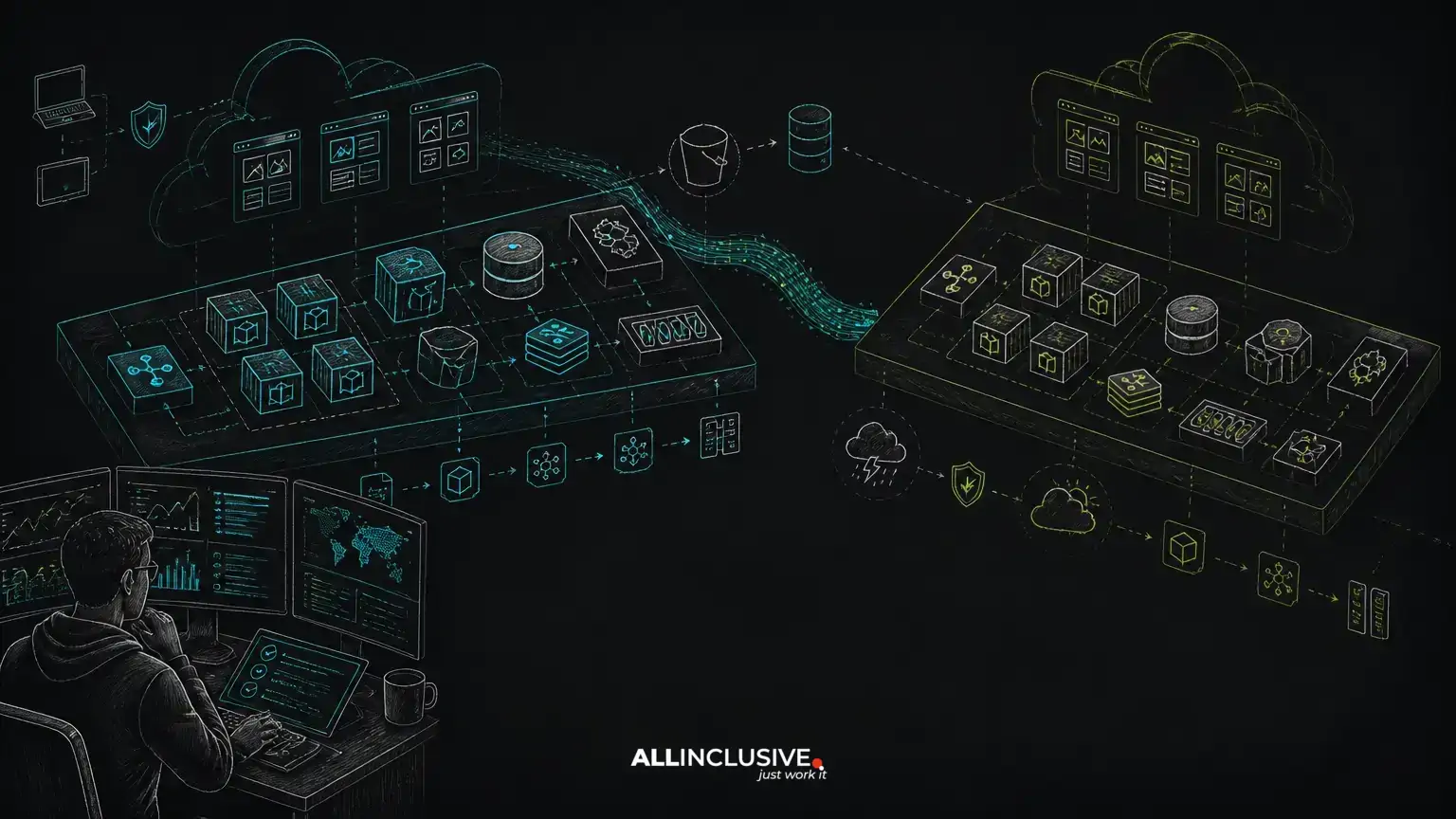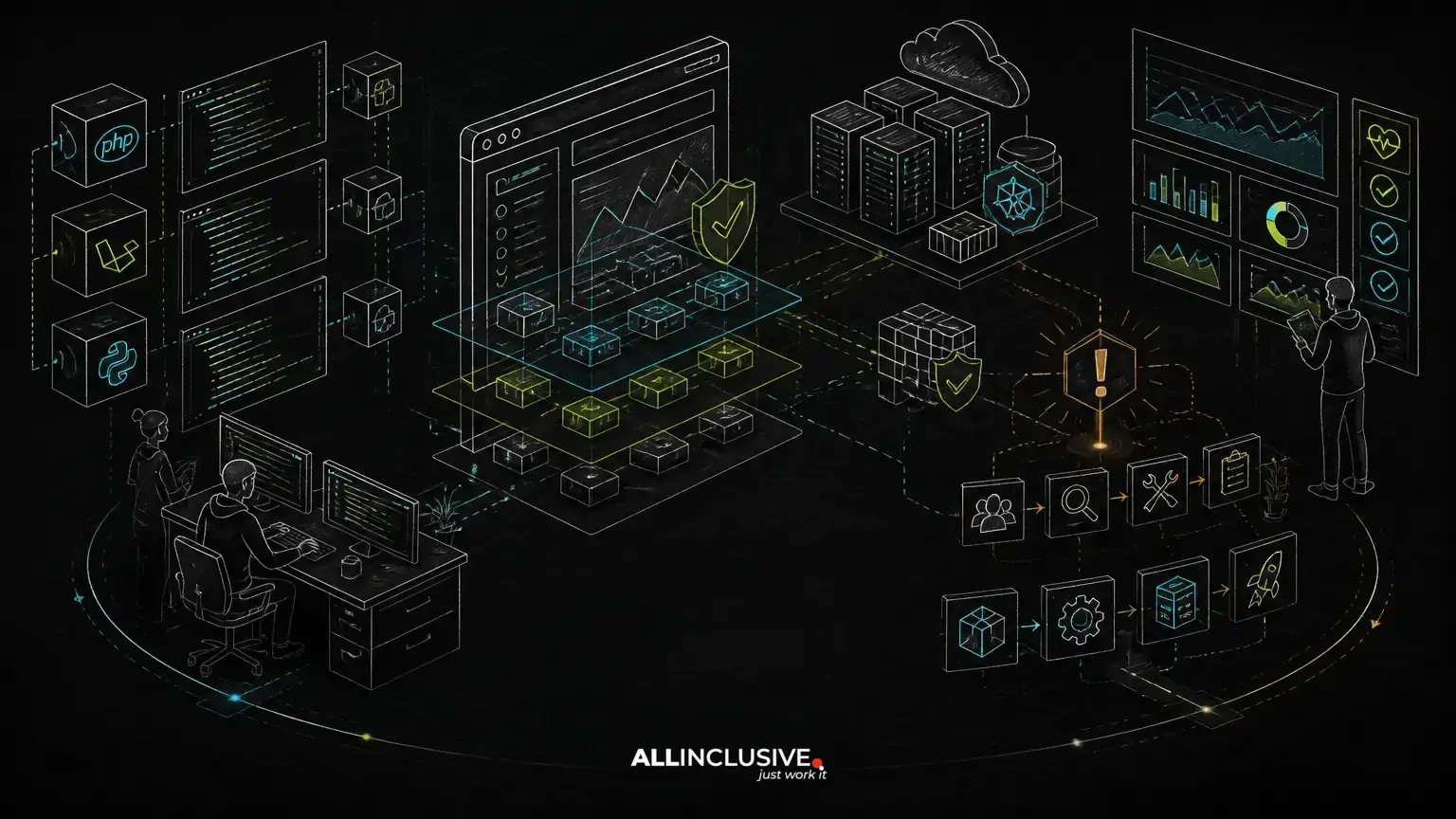
Python backend development is not limited to writing scripts or exposing a few API endpoints. Python can support production web applications, internal platforms, data workflows, automation services and AI-enabled products when the surrounding architecture is designed for reliability and ownership.
The framework choice matters, but it is only one part of the decision. Django, FastAPI and Flask occupy different positions in the Python ecosystem. Django provides a broad application foundation, FastAPI is well suited to typed API services and asynchronous workloads, and Flask offers a deliberately small core for teams that want to assemble their own architecture. The right choice depends on the product’s workflow, data model, integration needs, operational constraints and expected rate of change. A related decision for python backend development is covered in python automation development.
This article explains where each framework fits and how to evaluate a Python backend as a production system rather than a collection of endpoints.
What Python backend development includes
A backend is responsible for more than request handling. It usually contains business rules, authentication and authorization, persistence, integrations, background processing, validation, observability and deployment configuration. Python is often valuable when those responsibilities intersect with automation, data processing or machine-learning services.
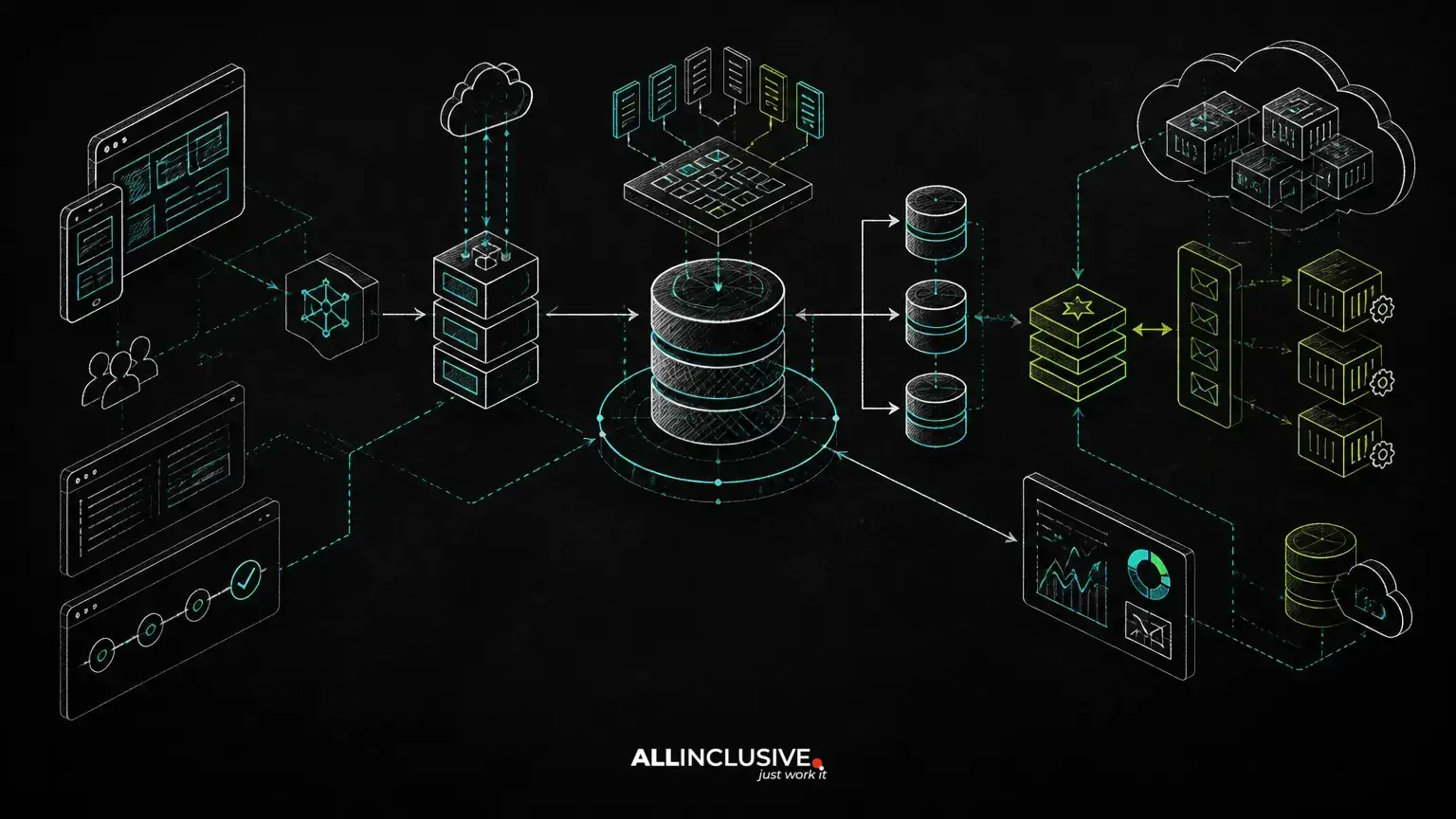
A typical architecture may include a web framework, a relational database, a cache, a task queue, object storage and external services. Some systems also require scheduled data workflows, document processing, model inference or event-driven integrations. These components should be selected based on actual product requirements rather than added because they are common in reference architectures.
For organizations planning broader custom software work, the software development practice should connect framework decisions to product ownership, release processes and operational responsibility.
Where Django fits in a Python backend
Django is a strong fit for business applications with substantial domain logic, relational data and established workflows. Its broad conventions can reduce the number of foundational decisions a team must make before delivering useful functionality.
Django commonly fits products such as:
- Operations platforms with accounts, roles, approvals and audit history
- Content-heavy applications with structured administration needs
- Customer or partner portals backed by relational business data
- Internal systems that benefit from consistent conventions and integrated tooling
Its value is less about producing a single endpoint quickly and more about providing a coherent application structure. A framework with conventions can help teams keep authentication, data access, administration and business workflows organized as the product grows.
Django trade-offs
Django may be more framework than a small, narrowly scoped service requires. Teams should also understand the boundaries between Django’s synchronous request model, asynchronous components and separate background workers. A Django application can participate in modern service architectures, but asynchronous execution, long-running work and data pipelines still require deliberate design.
For products where the web application is the main system of record, Django can offer a productive foundation. For a small service that primarily validates input and calls other systems, a more focused framework may reduce unnecessary structure.
Where FastAPI fits in a Python backend
FastAPI is commonly considered for API-first systems, typed service contracts and integrations that benefit from clear request and response validation. It can be a good fit when the backend is primarily consumed by web clients, mobile applications, other services or data and AI workloads.
FastAPI often fits:
- New API services with explicit schemas and contract-driven development
- Backend-for-frontend layers that aggregate several services
- Model inference or document-processing APIs
- Integration services that need clear validation and generated API documentation
- Services with I/O-heavy workloads where asynchronous patterns are useful
Its type annotations and validation approach can make service boundaries easier to communicate across engineering teams. That can improve coordination between backend, frontend and integration work, provided the contracts are treated as maintained product interfaces rather than temporary implementation details.
FastAPI trade-offs
FastAPI does not automatically provide the complete application platform that a larger business system may need. Teams may need to choose and integrate authentication, administration, database patterns, migrations, task processing and application conventions.
That flexibility is useful when the service boundary is clear. It can become a liability when each team assembles those concerns differently. A FastAPI codebase benefits from explicit standards for configuration, error handling, dependency boundaries, testing, logging and deployment.
For a deeper comparison of the two most common choices, see FastAPI vs. Django. The appropriate decision depends on the application shape rather than a general ranking of frameworks.
Where Flask fits in a Python backend
Flask provides a small web framework core and leaves more architectural choices to the team. That can be useful for compact services, prototypes that have a clearly bounded purpose or applications where the team already has strong internal conventions.
Flask may fit:
- Small internal services with limited domain complexity
- Adapters around an existing Python library or workflow
- Focused webhooks and integration endpoints
- Legacy applications that need incremental stabilization
- Teams that intentionally want to select each major component
The benefit is control over the stack. The cost is that the team owns more decisions and must prevent architectural drift. As a Flask application gains users, permissions, data models and background jobs, the initial simplicity can turn into a collection of locally reasonable choices that are difficult to operate consistently.
Flask trade-offs
Flask is not inherently unsuitable for serious software. The question is whether the team has the time and discipline to define the conventions that a broader framework would otherwise supply. Before choosing Flask for a growing product, document how the application will handle configuration, validation, persistence, migrations, authentication, task execution, errors, testing and observability.
Framework selection should follow the system boundary
A useful decision begins with the backend’s primary responsibility.
- Choose Django when the product is a cohesive business application with relational workflows, administrative needs and a significant amount of domain behavior.
- Choose FastAPI when the product is centered on APIs, typed contracts, integrations or services that must interact cleanly with data and AI components.
- Choose Flask when the service is intentionally small or the team has a strong reason to assemble a minimal, customized stack.
These are starting points, not rules. A Django application can expose APIs, a FastAPI service can support complex business logic and Flask can power a durable system. The important question is whether the framework’s default shape supports the product’s dominant risks.
Production architecture beyond the framework
Framework selection does not solve reliability by itself. Production Python backend development usually requires explicit decisions in several areas.
Data and transaction boundaries
Define which component owns each piece of data and where business transactions begin and end. Avoid placing critical rules only in route handlers or background tasks where they are difficult to reuse and test. Relational databases are often appropriate for transactional business data, while object storage, search systems or analytical platforms may serve different workloads.
Background jobs and queues
Tasks such as email delivery, file conversion, report generation, imports and model inference should not automatically run inside a user-facing request. A queue and worker model can improve responsiveness and make retries possible, but it also introduces idempotency, failure handling and monitoring requirements.
A job should be safe to retry or should record enough state to prevent duplicate side effects. Timeouts, dead-letter handling and operational ownership need to be defined before background processing becomes business-critical.
Data and AI workflows
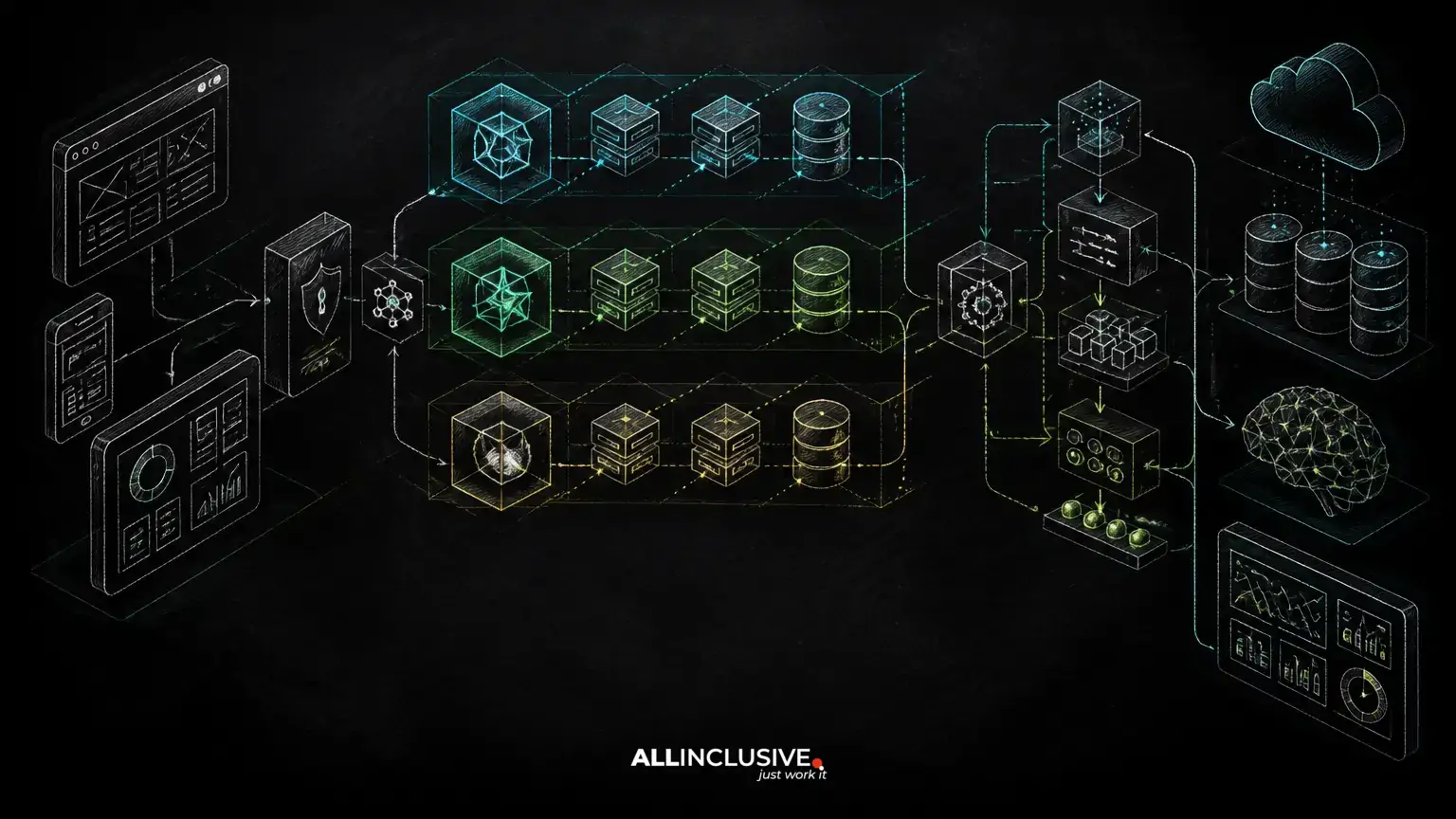
Python is particularly useful when a backend must connect application behavior with data processing or AI services. That does not mean placing an entire data pipeline inside a web request. Batch transformations, scheduled jobs, model calls and human review steps may need separate workflow boundaries.
When an AI feature moves beyond a prototype, production design should address input validation, model and prompt versioning, privacy, cost controls, failure responses, evaluation and auditability. The web framework is only the interface layer around those concerns. Related considerations are covered in AI development.
Observability and deployment
Logs, metrics and traces should help the team answer practical questions: Which requests are failing? Which jobs are delayed? Which integration is timing out? What changed in the release? Structured logging and correlation identifiers are useful when a single user action crosses an API, queue, worker and external provider.
Deployment should be repeatable across development, testing and production environments. Configuration belongs outside the code where appropriate, secrets require controlled handling, and database migrations should be reviewed as part of release planning. Containerization may help consistency, but it does not replace application-level health checks or operational runbooks.
Testing Python backends by risk
Testing should reflect the system’s failure modes rather than focus only on line coverage. Unit tests can protect business rules and transformations. Integration tests can verify database behavior, queues and external boundaries. API or contract tests can check that clients receive the expected schemas and error behavior.
Useful test cases often include:
- Permission differences between roles and organizations
- Duplicate requests and retried jobs
- Partial failures from external services
- Invalid or unexpectedly large inputs
- Schema and migration changes
- Timeouts, unavailable dependencies and recovery paths
A fast test suite supports frequent changes, while a smaller set of environment-level checks can validate deployment and integration assumptions. The right balance depends on the cost of failure and the criticality of each workflow.
When Python should coexist with Laravel or PHP
Python does not have to replace an existing PHP or Laravel application to add value. A mature product may keep its transactional web application in Laravel while introducing Python services for document processing, data workflows, automation or AI inference.
This can be a sensible approach when the existing application owns customer data and user workflows, while Python is better suited to specialized processing. The boundary should be explicit: define API contracts, authentication, ownership of records, retry behavior and monitoring. A loosely connected collection of services can increase operational cost, so a separate Python component should have a clear responsibility.
The same principle applies in the other direction. If a Python application already owns the core domain, adding Laravel only makes sense when it solves a specific product or organizational problem.
A practical review checklist for Python backend projects
Before committing to a framework, review the proposed backend against these questions:
- Is the primary system a full business application, an API service or a focused integration?
- Which data is transactional, and which data is processed asynchronously or analytically?
- What work must complete during a request, and what can be queued?
- How will authentication, authorization and tenant boundaries be enforced?
- Which failures are safe to retry, and how will duplicate side effects be prevented?
- How will API contracts, migrations and backwards compatibility be managed?
- What logs, metrics and alerts will support production ownership?
- Does the team have the skills and time to maintain the framework’s conventions and dependencies?
- Would a Python service integrate with an existing Laravel or PHP system more safely than replacing it?
The answers usually reveal whether the main requirement is an integrated application platform, a focused API framework or a minimal service foundation.
Choosing a maintainable Python backend
Django, FastAPI and Flask can all support production software, but they optimize for different starting points. Django reduces foundational assembly for broad business applications. FastAPI emphasizes typed, API-centered services and works well at the boundary between applications, data workflows and AI capabilities. Flask provides a small core for teams willing to define more of the architecture themselves.
The strongest choice is the one that makes the product’s important behavior easier to own. That includes data consistency, background processing, testing, deployment, observability and future changes—not just the first working endpoint. For teams evaluating a broader web application or a specialized Python service, the web development perspective can help connect backend architecture to user workflows and long-term product maintenance.