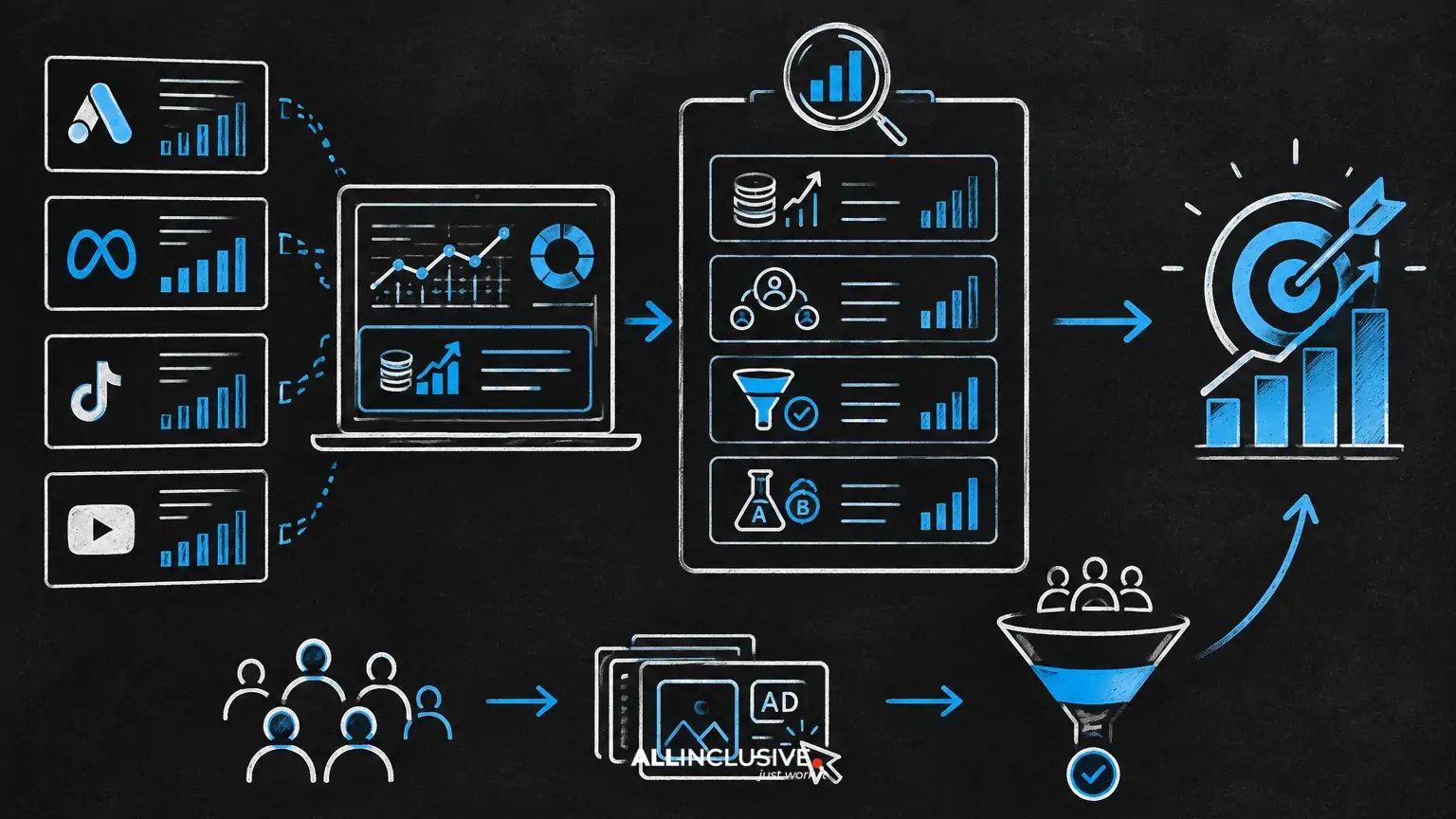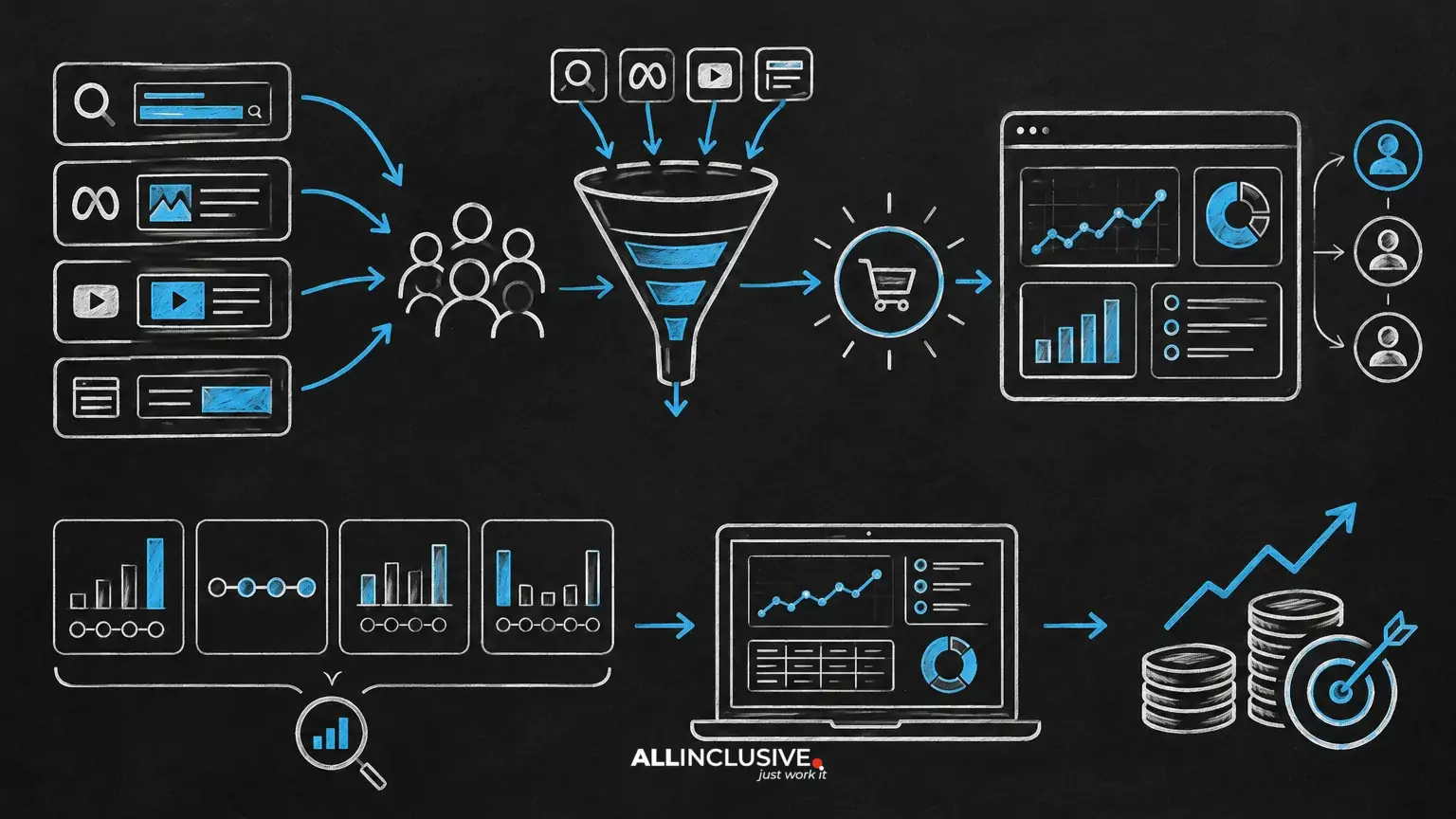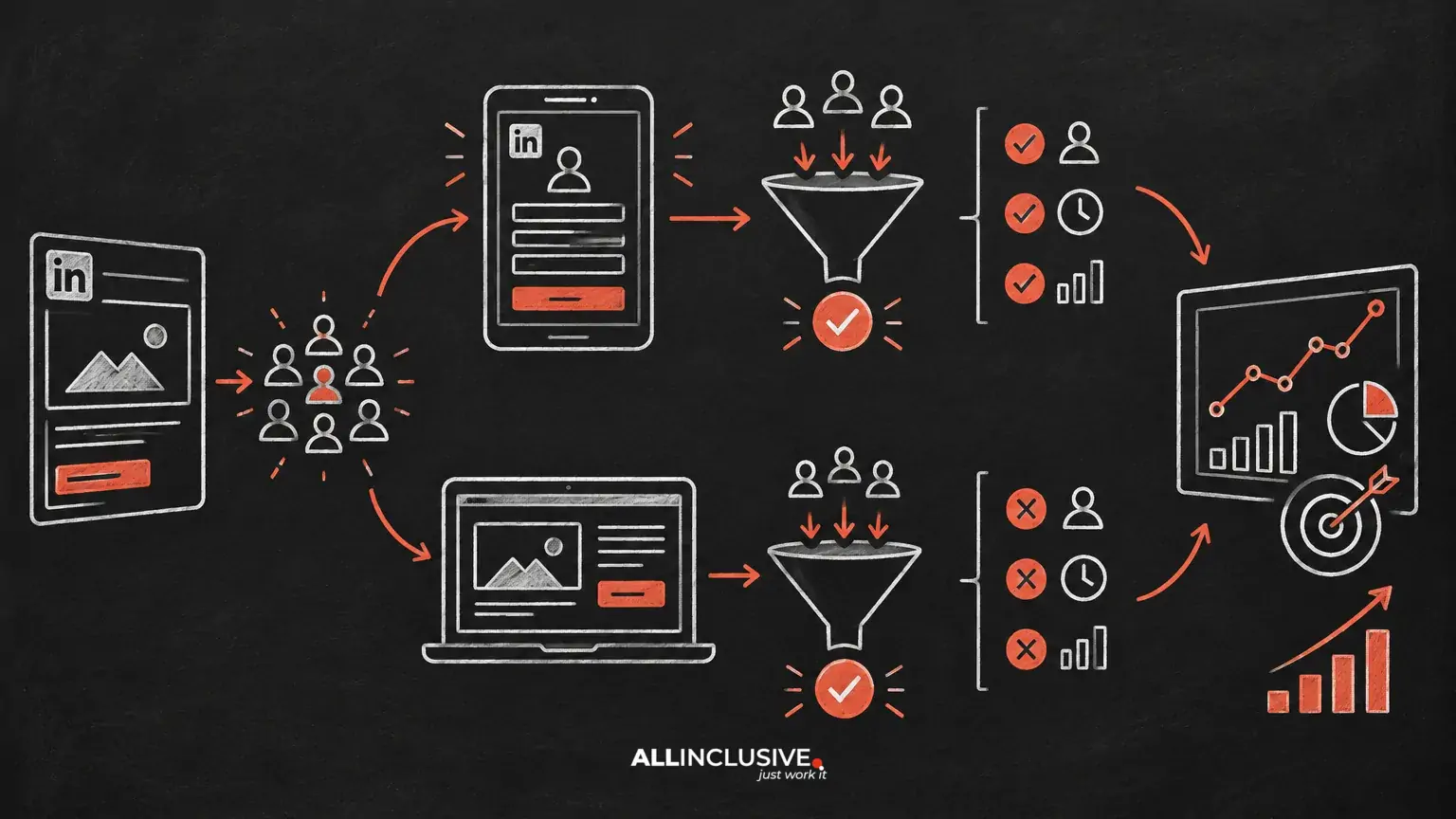
LinkedIn Lead Gen Forms can outperform landing pages when the offer is easy to understand, the audience is already qualified, and reducing conversion friction matters more than giving prospects a detailed web experience. They are less suitable when buyers need substantial education, product comparison, technical validation, or a multi-step qualification process before submitting information.
The best choice is not a permanent preference for forms or landing pages. It is a campaign-level decision based on intent, offer complexity, data requirements, sales capacity, and measurement quality.
What LinkedIn Lead Gen Forms change
A LinkedIn Lead Gen Form lets a prospect submit information within the platform rather than navigating to an external page. The form can use profile information to reduce manual entry, while the surrounding ad establishes the value proposition and call to action.
That shorter path can be valuable in B2B paid social, where prospects may be browsing between meetings, using a mobile device, or encountering a brand for the first time. Every additional step between the ad click and the conversion creates an opportunity for hesitation, slow page load, distraction, or abandonment.
However, removing steps does not automatically improve lead quality. A lower-friction conversion may produce more submissions without producing more qualified opportunities. The form should therefore be evaluated as part of the entire acquisition system, not as an isolated conversion-rate tactic.
When LinkedIn Lead Gen Forms are usually the better choice
1. The offer has immediate, specific value
Forms work best when a prospect can understand what they will receive and why it is relevant without extensive explanation. Suitable offers may include a focused guide, event registration, benchmark report, checklist, consultation request, or product update.
The more specific the promise, the easier it is for the ad and form to do their jobs. “Get the operations planning checklist” generally creates less uncertainty than a broad invitation to “learn more about digital transformation.”
2. The campaign targets a narrow professional audience
LinkedIn targeting can help advertisers reach people by professional characteristics and business context. When the audience definition is already disciplined, an in-platform form can make it easier to capture demand from a relevant segment.
This does not mean targeting alone guarantees lead quality. Job titles can be inconsistent, company data can be incomplete, and multiple people may influence a purchase. Use the form, ad message, and downstream qualification process together.
3. Mobile and low-attention environments matter
External landing pages require a page request, rendering, navigation, and a separate conversion experience. An in-platform form may be more convenient when the user is on mobile or has limited time.
Before assuming the form is superior, check actual campaign and CRM data by device, audience, placement where available, and offer type. A faster path is useful only if it produces leads your business can work.
4. The primary goal is lead capture, not extensive education
A form is a strong fit when the ad can communicate enough context to justify an initial exchange of information. It is less effective as a substitute for a page that must explain a complex product, establish technical credibility, answer objections, or support a considered buying decision.
5. The follow-up process is fast and relevant
Low-friction lead capture increases the importance of what happens after submission. If leads receive a generic message several days later, the convenience of the form may not translate into commercial value.
Define ownership, response expectations, routing, qualification criteria, and follow-up content before increasing spend. Marketing automation can help, but it should support a clear process rather than conceal an unclear one.
When a landing page is the stronger option
Complex products require explanation
Landing pages provide room for positioning, proof, use cases, FAQs, technical detail, and calls to action. They are often preferable for enterprise software, professional services, regulated categories, and offers that require trust before a prospect shares contact information.
The conversion requires meaningful qualification
If sales needs budget range, implementation timing, use case, team size, technical environment, or another set of qualifying details, a landing page may provide more control. A form can include qualifying questions, but excessive fields can undermine the friction advantage and may still provide less context than a well-structured page.
The offer depends on multiple actions
Some campaigns need a prospect to read a case study, compare plans, watch a demonstration, configure a solution, or book a meeting. A landing page can sequence these actions more effectively than a short in-platform form.
Measurement requires on-site behavior
External pages can provide useful behavioral signals such as content engagement, scroll depth, interaction with product information, and progression through multiple steps. These signals do not replace qualified pipeline measurement, but they can help diagnose where a campaign is losing intent.
A practical decision framework
Use the following questions before choosing the conversion path:
- Can the offer be understood in one sentence? If yes, a Lead Gen Form may be appropriate. If not, start with a landing page.
- Does the prospect need proof before converting? If proof, examples, or technical detail are central, favor a page.
- How much information does sales need? Use only fields that support routing or qualification. Avoid collecting data without a clear operational purpose.
- What is the buyer’s likely intent? Cold audience members may need education, while retargeted users may be ready for a lower-friction request.
- Can the team follow up consistently? If not, improving conversion volume may create operational waste.
- What is the real success metric? Compare qualified leads, meetings, opportunities, and revenue contribution—not just completed forms.
A simple test matrix can make the decision less subjective. Keep the audience and offer as consistent as possible, then compare an in-platform form with a dedicated landing page. Monitor both the immediate conversion metrics and the downstream stages that matter to the business.
How to design a stronger LinkedIn Lead Gen Form campaign
Match the ad, offer, and form
The form should continue the promise made in the ad. If the ad promotes a research report, the form headline and confirmation experience should make that delivery clear. If the ad offers a consultation, the form should set expectations about what happens next.
Message mismatch creates uncertainty and can attract submissions from people who misunderstood the offer. Consistency is especially important when several ads use the same form.
Use fields that earn their place
Start with the minimum information needed for delivery, routing, or meaningful qualification. Common fields may include name, work email, company, role, and a small number of context questions. The correct field set depends on the sales motion and the offer.
Additional questions should have a defined use. For example, a question about implementation timeline may support prioritization, while a question that no team reviews may only add friction.
Set expectations in the form and confirmation
Tell prospects what they receive, when they receive it, and what follow-up may occur. Clear expectations can protect trust and help sales distinguish an information request from a buying conversation.
Connect lead handling to campaign design
Map the form to a CRM or marketing automation workflow where appropriate, and document what happens when a lead arrives. Include source, campaign, creative, offer, and audience context in the handoff when the systems support it.
Do not assume a successful integration means the process is working. Test field mapping, ownership, notifications, duplicate handling, consent treatment, and reporting before relying on the data for budget decisions.
How to evaluate performance beyond cost per lead
Cost per lead is useful for diagnosing acquisition efficiency, but it is not a sufficient commercial metric. A form can produce an attractive cost per lead while reducing the proportion of leads that sales accepts.
Build a measurement chain that may include:
- Impressions and engagement indicators to understand delivery and message fit.
- Form opens and submissions to identify friction between the ad and conversion.
- Valid or accepted leads to account for incomplete, duplicate, or unsuitable records.
- Sales responses, meetings, opportunities, and pipeline to measure commercial progression.
- Revenue or another agreed business outcome when attribution and data volume support it.
Compare the full path against a landing-page campaign rather than judging either experience by its first conversion event. Also consider time lag: a campaign promoting an educational asset may generate value later than a campaign asking for a sales conversation.
Testing ideas that produce useful learning
Test one meaningful variable at a time where possible. Useful comparisons include:
- Lead Gen Form versus landing page for the same offer.
- Short form versus form with one carefully chosen qualifying question.
- Immediate content delivery versus a consultation-oriented call to action.
- Broad benefit-led messaging versus a role-specific pain point.
- Cold prospecting audience versus retargeted audience.
Preserve enough consistency to interpret the result. If the audience, offer, creative, form, and follow-up process all change together, the test may show that the package changed—but not why.
For broader planning context, see our guide to paid social budget allocation. If you are comparing channels for a B2B program, our overview of paid social for B2B provides a wider strategic frame, while the LinkedIn Ads cost guide covers the economics that influence budget decisions.
Compliance, consent, and data quality considerations
Lead capture should reflect the privacy, consent, and data-handling requirements relevant to your organization and markets. Make sure the form language, privacy notice, follow-up permissions, and CRM handling are reviewed by the appropriate internal stakeholders.
Also distinguish a person’s willingness to download an asset from their permission to receive unrelated marketing. Clear expectations reduce the risk of treating every submission as unrestricted sales consent.
LinkedIn Lead Gen Forms: Decision Summary
LinkedIn Lead Gen Forms beat landing pages when they remove unnecessary friction from a clear, credible offer aimed at a relevant audience—and when the business can qualify and follow up effectively. Landing pages win when the decision requires explanation, proof, richer qualification, or a more controlled buying journey.
The practical approach is to test both paths against qualified outcomes. Use the form for speed where speed helps, and use the landing page where information and trust are part of the conversion.
For a broader view of channel strategy and measurement, explore our paid social resources and the wider paid media hub.