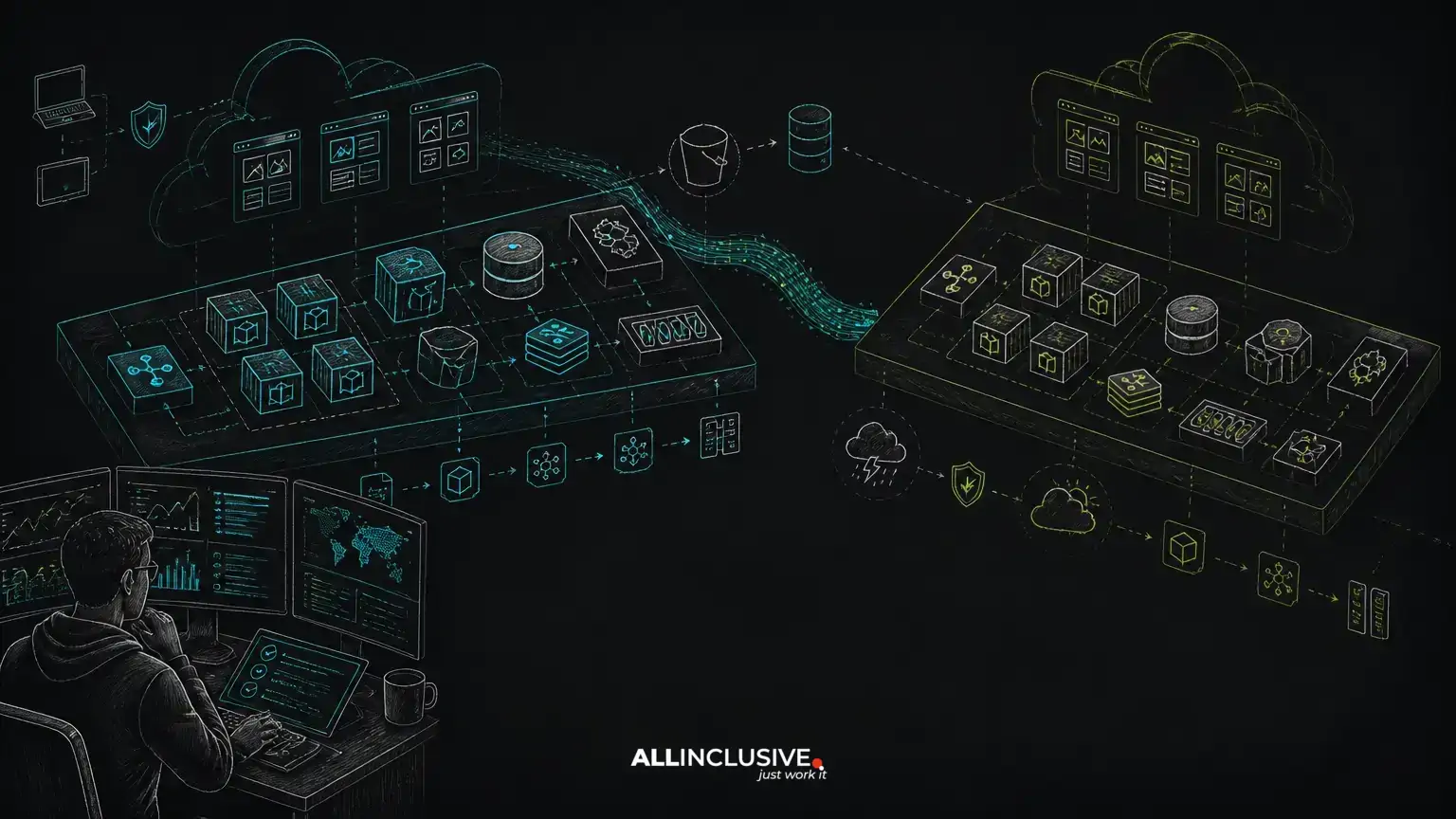
Vector database selection for retrieval-augmented generation (RAG) should start with the retrieval system you need to operate, not a benchmark table. A database that performs well on an isolated similarity test may still be a poor fit if it cannot enforce document permissions, support useful filters, handle updates cleanly, expose operational signals or fit the rest of your application architecture. For vector database selection, an adjacent technical consideration is explained in custom software development.
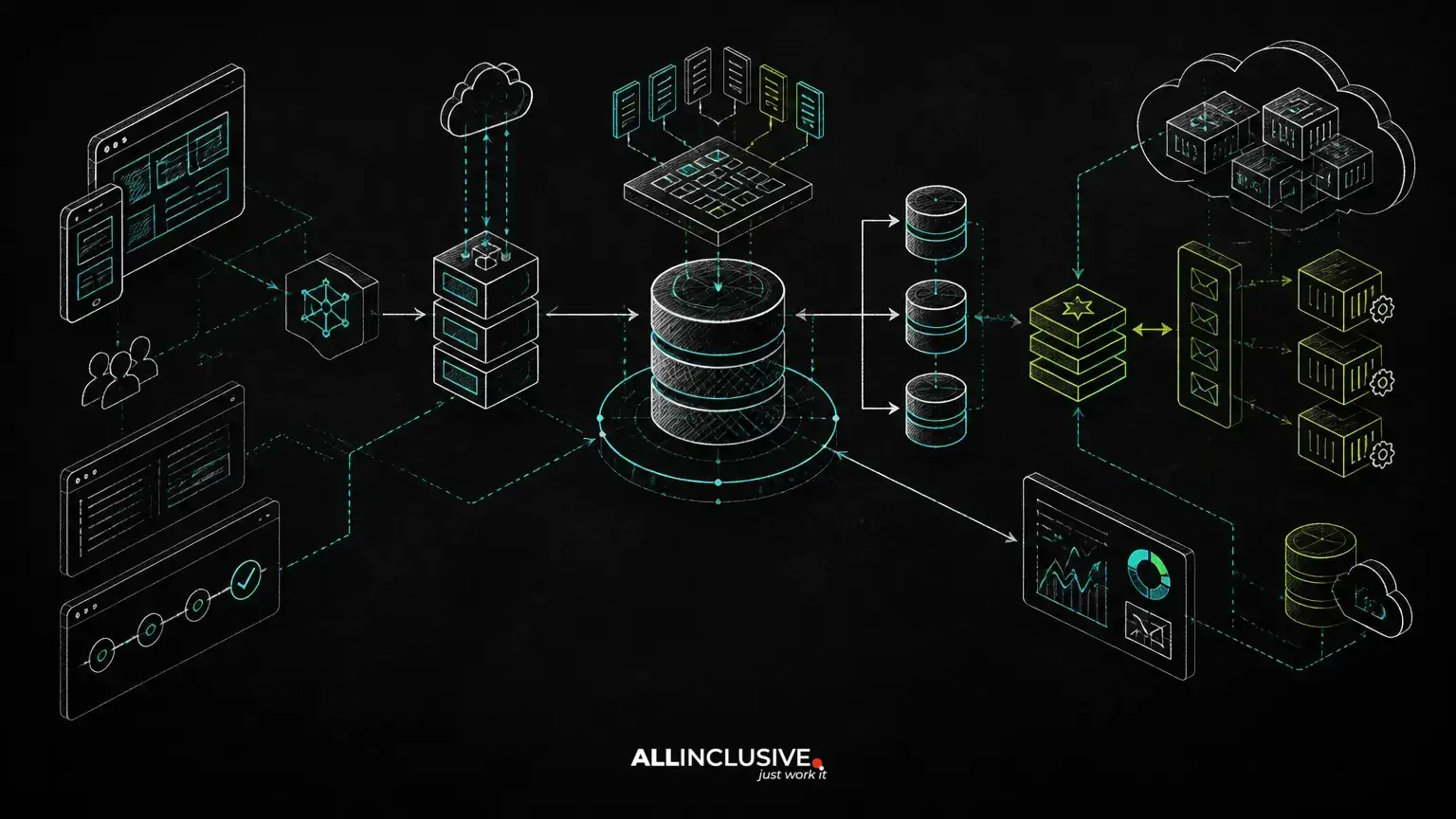
For production RAG, the vector store is one component in a larger path: content ingestion, parsing, chunking, embedding, indexing, query rewriting, filtering, retrieval, reranking, prompt assembly, generation, evaluation and user feedback. The right choice is therefore the one that meets the end-to-end constraints of your product while keeping failure modes visible and manageable.
This guide explains the criteria that matter beyond raw nearest-neighbor performance and shows how to compare dedicated vector databases with vector-capable relational and search systems.
Start with the retrieval contract, not the database product
Before comparing systems, define what retrieval must guarantee. A useful retrieval contract describes the data, query patterns and application rules that sit around similarity search.
- Corpus: document types, expected volume, tenant boundaries, language mix and update frequency.
- Queries: semantic search, question answering, related content, recommendations or hybrid keyword-and-vector retrieval.
- Filters: tenant, department, product, language, publication state, date range and document type.
- Security: whether access restrictions must be applied before results reach the language model.
- Freshness: how quickly changes, deletions and permission updates must affect results.
- Service expectations: acceptable latency, availability, traffic patterns and recovery objectives.
- Ownership: which team will operate the system, tune indexes, monitor quality and respond to incidents.
This contract prevents a common mistake: selecting a database for an imagined future scale while overlooking current requirements such as reliable metadata filtering or straightforward deployment.
Compare retrieval quality, not only vector search speed
Nearest-neighbor speed is useful, but it is not the same as answer quality. RAG quality depends on whether the system retrieves the passages that contain the evidence needed for a response.
Evaluate the full retrieval pipeline with representative queries and a labeled test set. Include ambiguous questions, short queries, long questions, terminology variations, multilingual content and queries whose answer depends on metadata. Measure retrieval recall and ranking quality at the depth your prompt can realistically accept, then evaluate the generated answer for grounding and citation behavior.
Also test hybrid retrieval where appropriate. Exact terms such as product codes, legal clauses, error messages and account identifiers may be poorly represented by semantic similarity alone. Combining keyword retrieval with vectors can improve coverage, but it introduces additional ranking and tuning decisions.
Reranking deserves separate attention. A vector database may return a broad candidate set, after which a reranker selects the most useful passages. This can improve relevance while adding model cost and latency. Compare complete retrieval paths rather than attributing every quality difference to the database.
Metadata filters and permissions are production requirements
Many enterprise RAG systems need more than “find similar text.” They need “find similar text that this user is allowed to access, from this tenant, in this product area, during this date range.” The database must support those constraints in a way that is correct and operationally predictable.
Ask how the system represents metadata, which filter operators are available, how filters interact with approximate search and what happens when a filtered candidate set is small. Test realistic combinations rather than a single label. A filter that works in a demonstration may become difficult when combined with tenant isolation, document status, language and time-based constraints.
Permissions should be enforced before retrieved content is assembled into the LLM context. Treating access control as a prompt instruction is unsafe. Depending on the architecture, authorization may be implemented through tenant-specific collections, metadata filters, an application policy layer or a combination of these. The important requirement is that the policy is explicit, testable and applied consistently across search and question-answering paths.
For systems with complex authorization, a relational store may be attractive because permissions and business records already live there. A separate vector service can still work, but it creates synchronization and policy-coordination responsibilities.
Choose between a dedicated vector store and an existing data platform
There is no universal winner between a dedicated vector database and a system that adds vector search to an existing database or search engine.
Dedicated vector databases
A dedicated service may offer retrieval-focused indexing, horizontal scaling patterns and APIs designed around embeddings and metadata. It can be a strong fit when vector retrieval is a central workload, the corpus is large or the team wants to isolate search infrastructure from transactional data.
The trade-offs include another operational dependency, another security boundary, data synchronization and potentially separate backup, monitoring and cost management. The team must also understand how the service handles imports, updates, deletes, replication and recovery.
Relational or general search platforms with vector support
Using an existing platform can simplify the architecture when the dataset is moderate, application records and embeddings change together, and the team already understands the platform’s backup, access control and deployment model. It may also make transactional workflows easier to reason about.
The trade-off is that vector retrieval may compete with other workloads or offer fewer specialized tuning options. Scaling characteristics, index maintenance and filter performance must be validated for the expected workload instead of assumed from the platform’s feature list.
For many custom applications, starting with the simplest platform that satisfies the retrieval contract is sensible. Move to a specialized service when measured constraints justify the added operational surface.
Test freshness, updates and deletion behavior
RAG data is rarely static. Documents are revised, access rights change, records are withdrawn and source systems may send duplicate or out-of-order events. A production comparison should include the complete document lifecycle.
- How long does it take for a newly indexed document to become searchable?
- Can an updated document replace old chunks without leaving stale versions?
- Are deletes and permission changes propagated reliably?
- Can ingestion be retried safely without duplicating records?
- What happens when embedding generation succeeds but indexing fails, or the reverse?
- Can the system identify which source version produced a retrieved chunk?
Use stable document and chunk identifiers, retain source references and record embedding-model versions. If embeddings are regenerated later, plan how old and new representations coexist during migration. A data pipeline with explicit states—discovered, parsed, chunked, embedded, indexed and verified—usually makes recovery easier than a single opaque ingestion job.
Evaluate latency as a complete request path
Database latency is only one part of RAG latency. A user request may include query rewriting, embedding generation, authorization checks, vector retrieval, keyword search, reranking, context assembly and LLM generation. Optimizing one database operation may not improve the user-visible result.
Measure at least:
- Embedding generation time and queueing.
- Network and service overhead.
- Filtered vector-search latency at realistic result depths.
- Hybrid retrieval and reranking time.
- Tail latency under concurrent load, not only the average.
- Time to first response and total answer time.
Consider graceful degradation. If a reranker or vector service is unavailable, can the application use keyword search, a cached result or a clear human-support workflow? A fallback should preserve security and communicate uncertainty; silently returning unrelated content is worse than returning no answer.
Model cost as a system cost
Vector database pricing is only one cost category. A realistic model includes storage, indexed data, replicas, queries, network transfer, backups, ingestion compute, embedding generation, reranking and operational labor. Some workloads are inexpensive at low volume but become difficult to predict as query traffic, replicas or retained versions grow.
Estimate costs across the expected workload shape: ingestion bursts, steady-state queries, reindexing, model migration and disaster recovery. Separate hot operational data from archives when appropriate. Avoid reducing cost by removing metadata that is necessary for authorization, traceability or debugging.
Cost also includes engineering complexity. A cheaper service that requires custom synchronization, difficult debugging or manual recovery may be more expensive over the life of the product than a platform the team already knows.
Demand observability and evaluation hooks
Production RAG needs to explain why an answer was produced and where retrieval failed. Capture request-level traces that connect the user query to query transformations, filters, retrieved identifiers, scores, reranking decisions, prompt context, model output and user feedback. Apply privacy controls and avoid logging sensitive content indiscriminately.
Useful operational signals include indexing backlog, ingestion failures, stale documents, query latency, empty-result rates, filter errors, service saturation and cost by workflow. Retrieval evaluation should track changes when you alter chunking, embedding models, filters, index settings or reranking.
Quality checks can combine curated test questions, document-level relevance labels, citation verification, answer refusal tests and review by domain experts. Human review remains important for high-impact workflows, especially when retrieval quality affects compliance, financial decisions, customer commitments or internal access boundaries.
For broader guidance on retrieval design and failure modes, see semantic search with embeddings. If the system is part of a larger enterprise knowledge experience, the enterprise knowledge assistant architecture provides a useful adjacent perspective.
Plan the application boundary around ownership
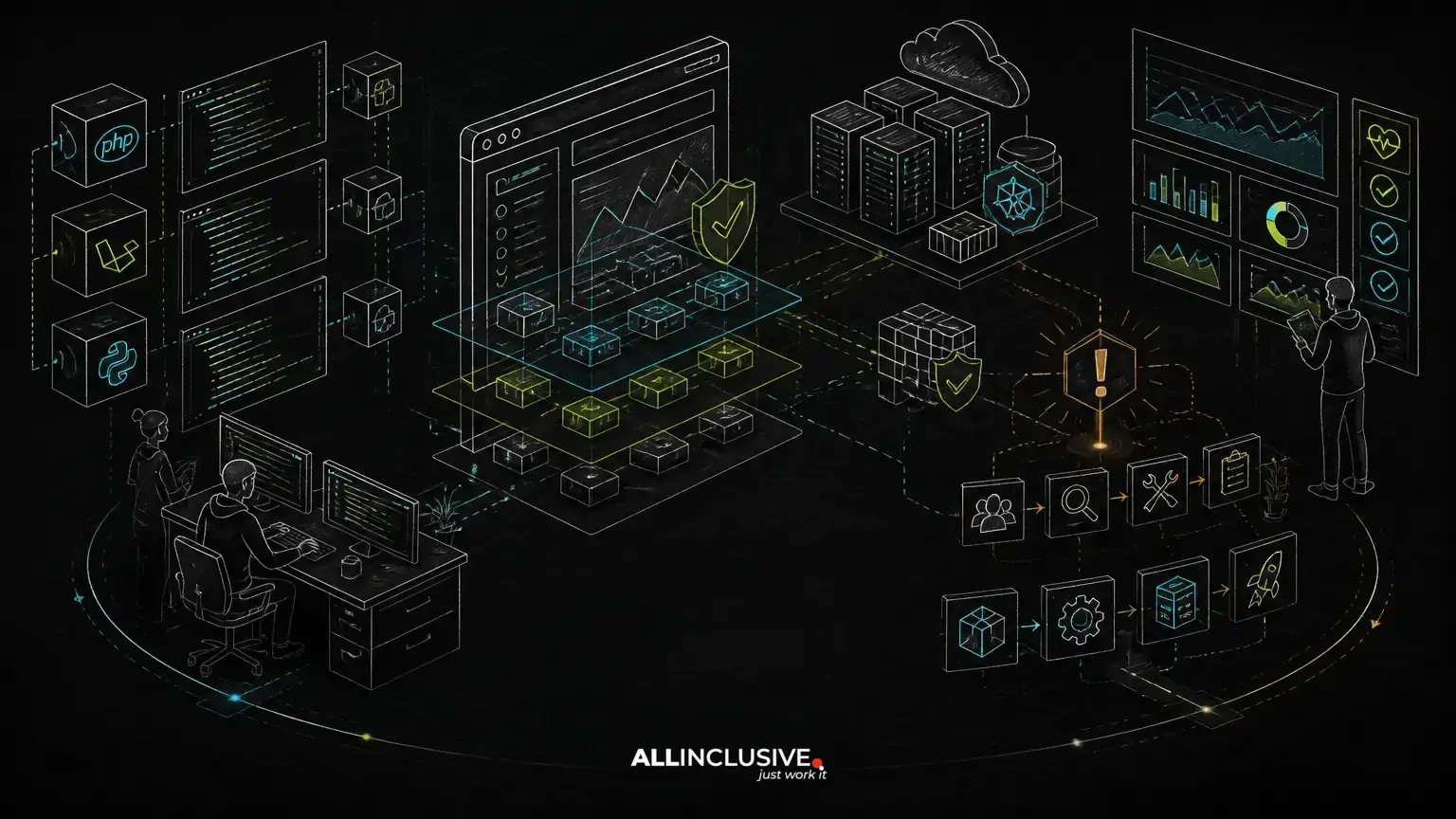
A practical architecture often separates AI workloads from product workflows. Python may own ingestion, embedding, retrieval orchestration, evaluation and model integrations, while Laravel or another application layer owns users, billing, workflows, administration and business records. The boundary can be an internal API, a queue-based pipeline or an event-driven interface.
Keep the contract explicit: query identity, tenant, authorization context, retrieval options, citations, confidence signals and failure states. Do not let a web controller contain every indexing and retrieval detail. That makes testing harder and couples product releases to model or database changes.
When designing the surrounding product, the Python development capability is relevant for AI services and evaluation pipelines, while web development supports the application workflows that make retrieval useful to employees or customers. The broader AI development practice connects these pieces into a production system rather than an isolated search demo.
A selection checklist for a production pilot
- Write representative queries and label the passages that should be retrieved.
- Define tenant, permission and metadata-filter requirements before testing relevance.
- Compare at least one dedicated vector service with the simplest existing platform that could satisfy the contract.
- Load realistic document sizes, update rates, deletes and duplicate events.
- Measure filtered retrieval, hybrid search, reranking and end-to-end tail latency.
- Test backup, restore, reindexing, model migration and partial-failure recovery.
- Trace retrieval decisions and connect them to offline evaluations and user feedback.
- Estimate total cost, including ingestion, model calls, operations and future growth.
- Document fallback behavior and require human review for consequential workflows.
The strongest choice is usually the database that makes the whole RAG system easier to secure, evaluate, operate and change. Benchmarks can help narrow the field, but they cannot decide whether your team can maintain permissions, freshness, recovery and observability once real users depend on the answers.