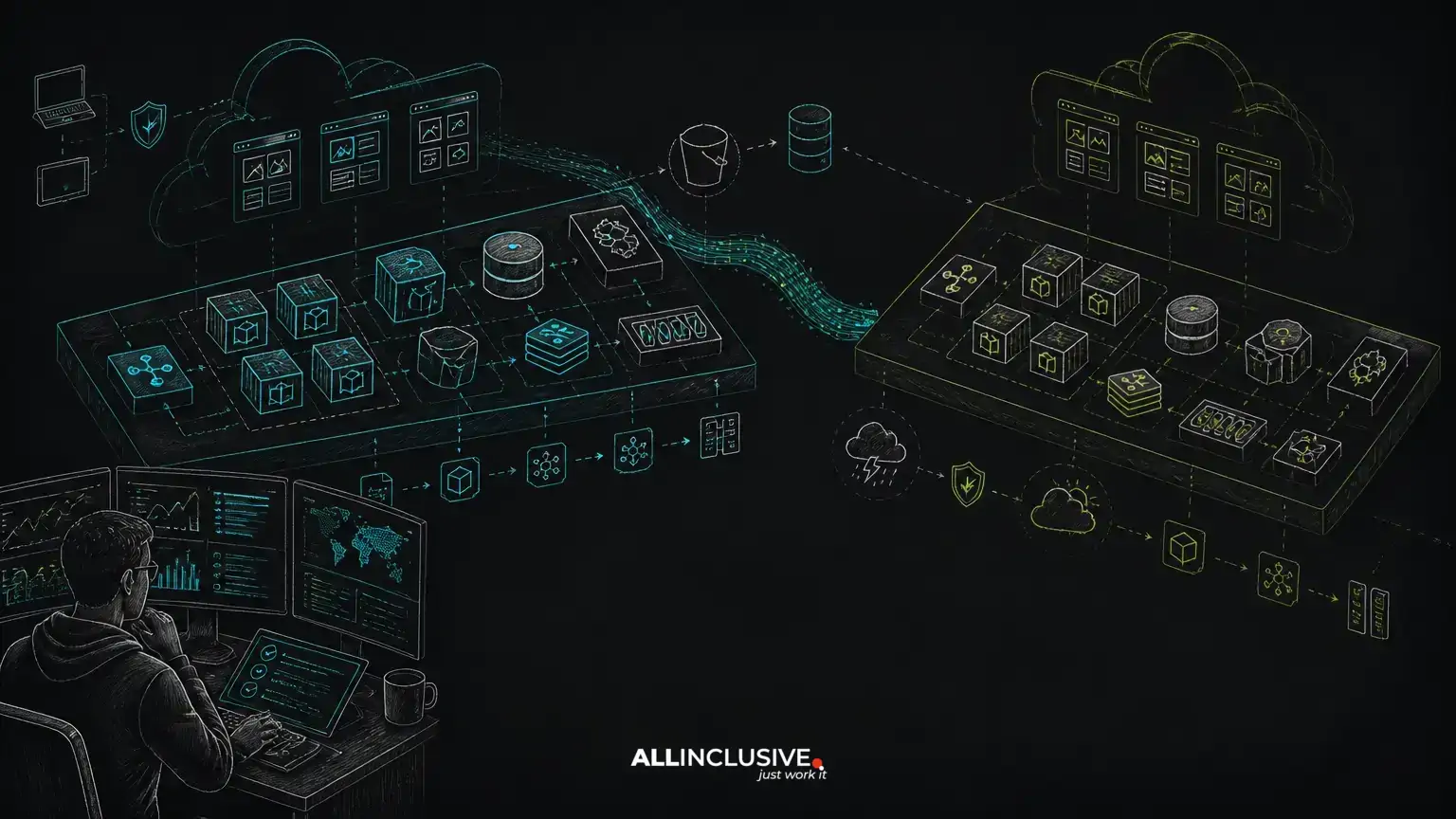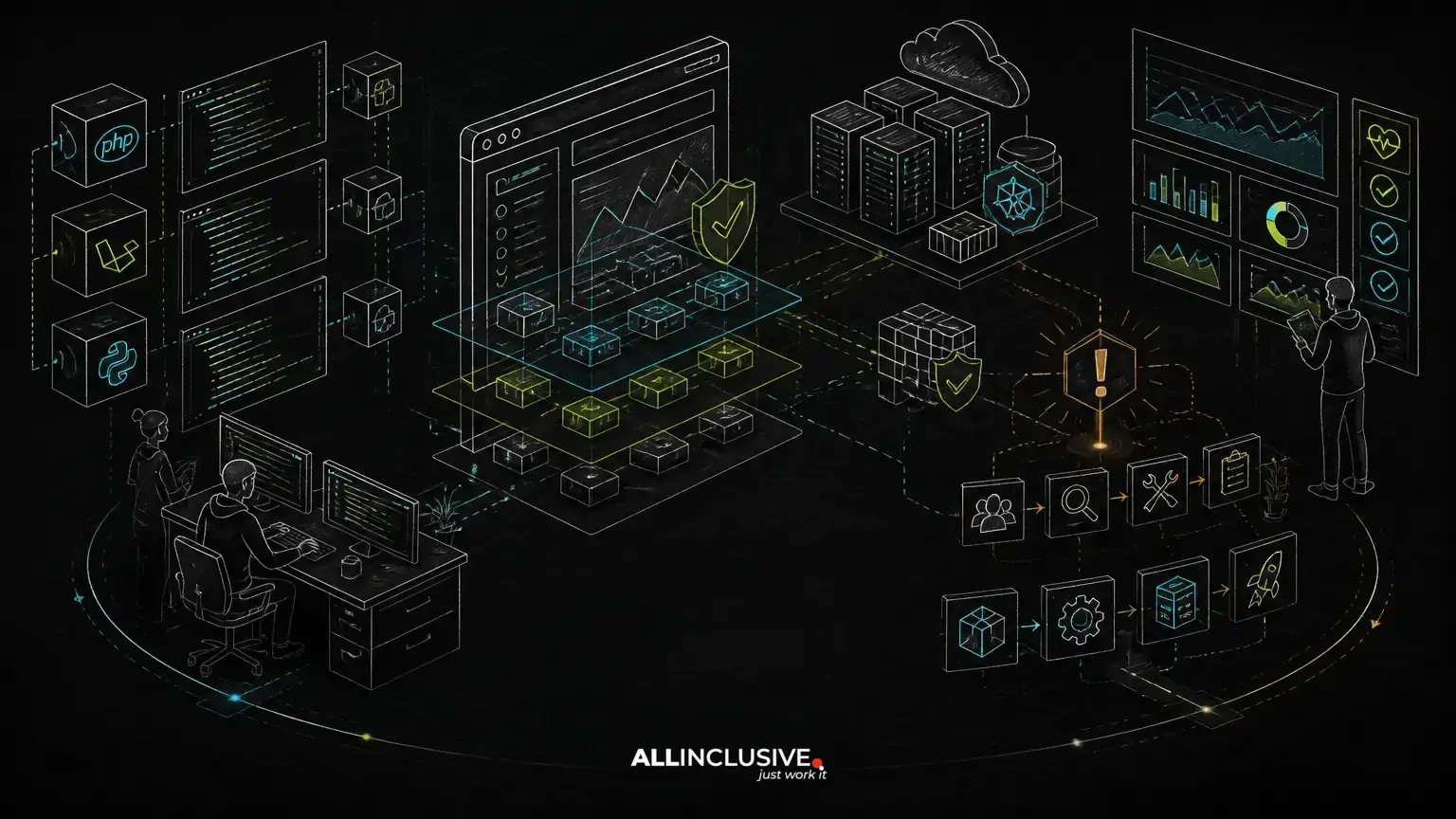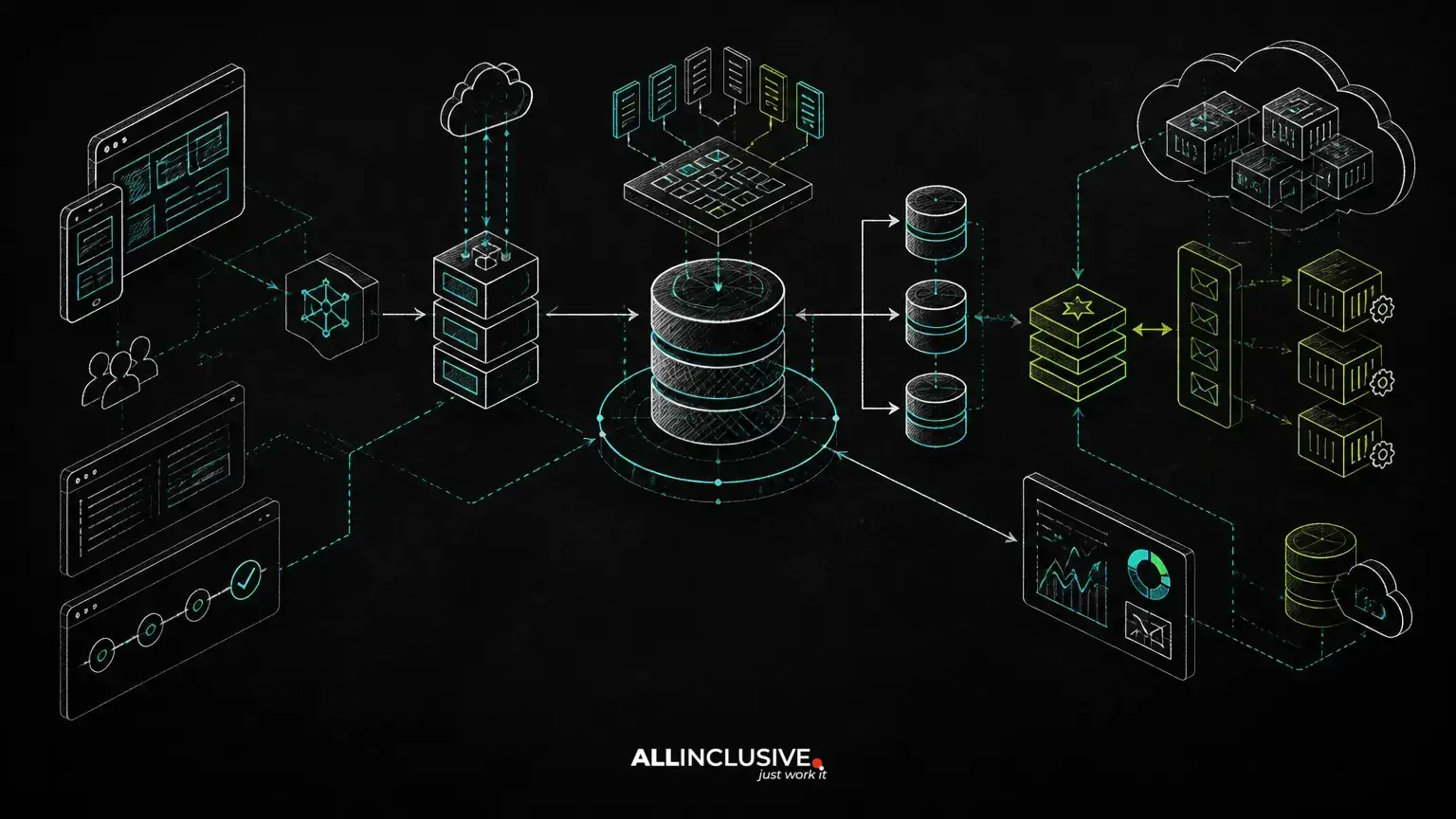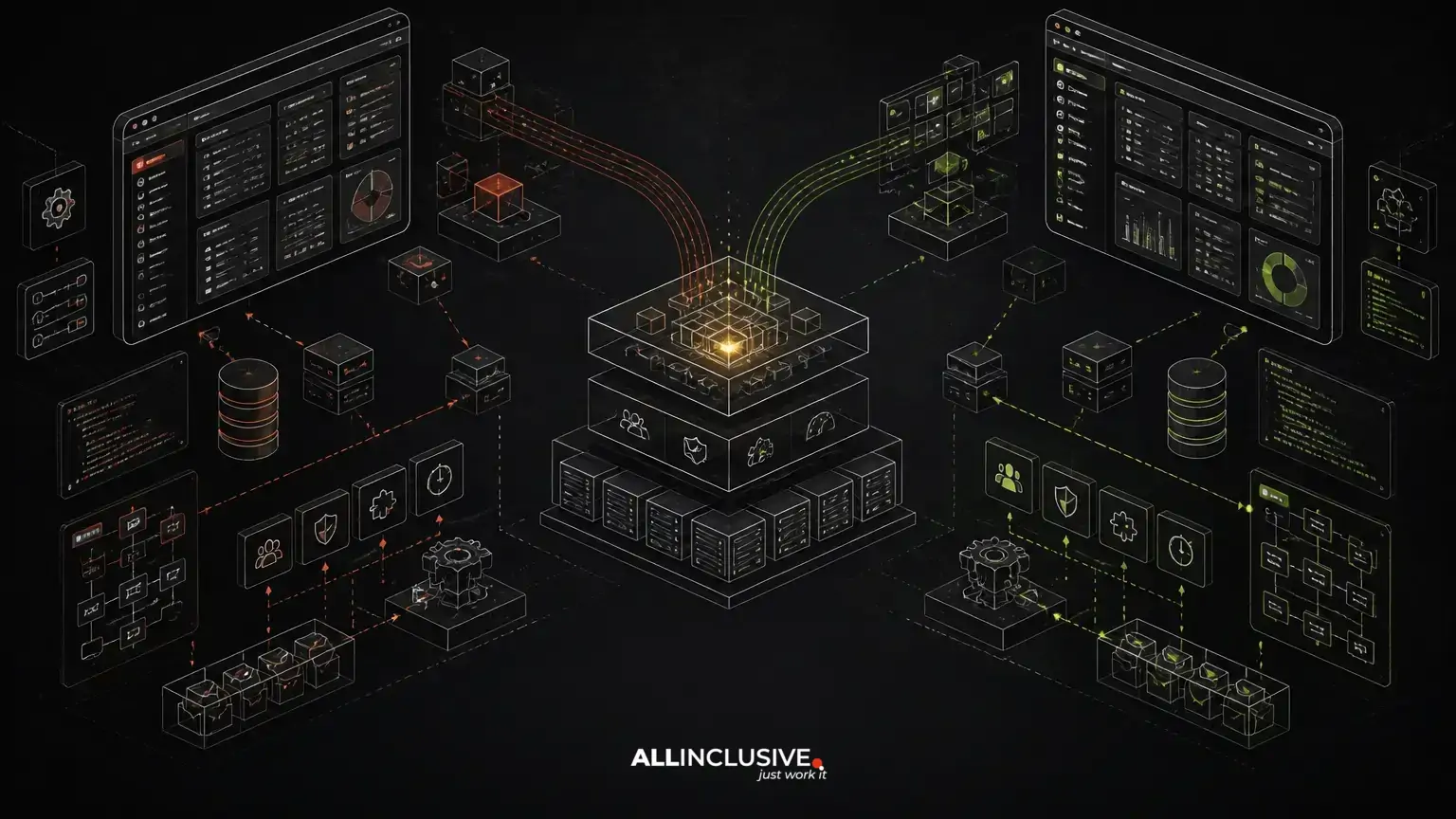
Choosing between Laravel Nova vs Filament is less about selecting a prettier dashboard and more about deciding how your team will own an internal application over time. Both can provide a strong starting point for managing models, users, workflows and operational data in a Laravel application. The better choice depends on how much customization your platform requires, how your team evaluates licensing and dependencies, and whether the admin panel is a simple back office or a core product surface.
Nova is a focused, official Laravel administration product with a deliberately opinionated approach. Filament is an open-source toolkit for building Laravel panels and interfaces from composable resources, fields, tables, actions and related components. Neither replaces application architecture. Domain rules, authorization, data modeling, APIs, queues, billing, testing and deployment still belong in the application itself.
This distinction matters when a custom platform is expected to grow beyond CRUD. An admin panel should expose business capabilities safely; it should not become the place where critical business logic is hidden in UI configuration.
How Nova and Filament differ at the architectural level
Nova generally offers a more packaged administration experience. Its conventions can help a team move quickly when the primary requirement is a polished interface for managing Eloquent-backed resources. This can reduce the amount of panel infrastructure a team needs to assemble and maintain.
Filament takes a more toolkit-oriented approach. Teams define panels and compose resources, forms, tables, actions and widgets around the application’s needs. That flexibility can be valuable when a platform has multiple operational areas, custom workflows or separate staff experiences.
The practical difference is not simply “closed versus open source.” It is the degree of control your engineering team wants over the panel’s behavior, structure and upgrade path. A packaged solution may reduce initial decisions. A composable toolkit may provide more room to shape the interface, while also requiring stronger architectural discipline.
When Laravel Nova is a strong fit
Nova is often a sensible option when an organization wants a Laravel-native administration layer without building every panel concern from first principles. It can fit teams that value a coherent product experience, prefer official ecosystem alignment and have requirements that remain close to resource management.
Typical use cases include:
- Managing users, organizations, catalog records or operational entities.
- Providing staff with searchable tables, filters, forms and resource actions.
- Creating a back-office interface for a SaaS product while the customer-facing application uses a separate frontend.
- Standardizing common administrative patterns across a Laravel codebase.
Nova’s conventions can also be useful when delivery speed matters and the team does not need extensive changes to the panel’s underlying interaction model. However, “faster to start” should not be confused with “appropriate for every workflow.” Highly specialized approvals, multi-step operations, real-time interfaces or unusual navigation may require careful evaluation before adoption.
When Filament is a stronger fit
Filament can be a better fit when the panel itself is a substantial product surface. Its component-oriented approach supports teams that need more control over panel composition, custom pages, multiple panels or specialized administrative workflows.
It may suit a platform that requires:
- Separate staff, partner or operations panels with different navigation and permissions.
- Custom forms and tables that do more than represent a single database resource.
- Action-driven workflows such as review, approval, reconciliation or exception handling.
- Dashboard components that combine data from several domain areas.
- A preference for inspecting, extending and owning more of the panel’s implementation.
That flexibility introduces responsibility. A team still needs to define a clear boundary between Filament components and the application domain. If an action contains billing rules, approval policy or data-integrity logic directly in a panel class, the same rule may be difficult to reuse through an API, queued job or command-line process.
Customization: interface flexibility versus domain design
Admin-panel customization usually falls into two categories. The first is presentation: fields, tables, filters, navigation, dashboards and layout. The second is behavior: authorization, state transitions, side effects, validation and integration with other systems.
Nova and Filament can both support substantial presentation customization, but the important engineering question is where behavior lives. A maintainable Laravel platform should put core rules in services, policies, domain objects or other deliberately designed application boundaries. The panel should call those capabilities rather than become their only implementation.
For example, an order approval action may need to verify user permissions, check inventory, record an audit event, notify another system and dispatch a fulfillment job. A robust implementation should make that operation available to the appropriate interfaces, not only to a button in an admin table.
Filament may appeal when the panel requires unusual workflows and the team is comfortable composing those experiences. Nova may appeal when the desired interface is closer to conventional resource administration. In either case, customization is successful only when it preserves a clear domain model.
Authorization, security and operational controls
An admin panel concentrates sensitive capabilities, so authorization must be designed as an application concern rather than treated as a visual feature. Authentication identifies the operator; authorization determines which records and actions that operator may access.
Evaluate how each option fits your existing approach to:
- Role and permission management.
- Tenant isolation in a multi-tenant SaaS platform.
- Record-level and action-level authorization.
- Mass assignment, validation and destructive operations.
- Audit logging for sensitive changes.
- Session security, password policies and administrative impersonation.
- Rate limits and controls around exports, imports and integrations.
Do not assume that a resource definition alone establishes a complete security boundary. Policies, queries, service-layer checks and database constraints may all be necessary. Test unauthorized access directly, including requests that bypass the intended interface.
Teams building an API-backed platform should also keep panel authorization aligned with API authorization. A user who cannot approve an invoice in the admin panel should not gain that capability through an alternative endpoint simply because the endpoint was implemented separately.
Licensing, ownership and dependency decisions
Commercial licensing can be an advantage when it provides a clear product boundary and a supported official offering. Open-source tooling can provide greater visibility into implementation and may fit organizations with policies favoring inspectable dependencies. These are business and governance considerations, not automatic indicators of technical quality.
Before choosing, review the current license terms, permitted deployment model, commercial obligations, dependency policy and upgrade process. Confirm that the decision fits the organization’s procurement requirements and the expected lifetime of the platform.
Ownership also includes more than source availability. Ask who will diagnose a difficult upgrade, address a package conflict, document custom extensions and maintain the panel after the original implementation team changes. A low-friction initial choice can create operational cost if the team lacks a plan for upgrades and dependency review.
Testing and maintainability in a production Laravel application
Admin panels often receive less testing than customer-facing features, even though they may control billing, data exports, account access and operational state. That is a risk regardless of whether the project uses Nova or Filament.
A practical test strategy should cover:
- Authorization for roles, tenants, records and actions.
- Validation and error handling for complex forms.
- Domain behavior invoked by panel actions.
- Database changes and relationships used by resources.
- Queued jobs, notifications and external integrations triggered by administrative work.
- Critical workflows through browser or higher-level integration tests.
Keep tests focused on business outcomes rather than internal component details wherever possible. If a resource action approves a supplier, test the resulting state, audit record and integration behavior. This makes tests less brittle when panel configuration changes.
Maintainability also depends on limiting panel-specific duplication. Shared form rules, query scopes, policies and domain services should remain reusable. When a panel becomes a second application with duplicated logic, future API, mobile or automation work becomes more expensive.
Performance, queues and large operational datasets
Neither admin panel automatically solves data-volume problems. A table displaying millions of records still requires appropriate indexes, bounded queries, pagination, filtering strategy and careful relationship loading. Exporting a large dataset may need a queued process rather than a synchronous browser request.
Evaluate how your chosen panel will handle:
- Search and filtering across large tables.
- Sorting on indexed and non-indexed columns.
- Relationship-heavy views and avoiding N+1 queries.
- Bulk actions with authorization per record.
- Long-running imports and exports.
- Cache invalidation and stale operational data.
These concerns belong in the broader Laravel architecture. Eloquent modeling, database design, queues, caching and observability matter more than the label on the panel when operational load increases.
A decision checklist for Nova versus Filament
Use the following questions before committing:
- How complex is the workflow? Conventional resource management may favor a packaged experience; custom operational processes may benefit from a more composable toolkit.
- Who owns the code? Assess the team’s Laravel experience, appetite for framework-level customization and ability to maintain extensions.
- What is the licensing posture? Review current terms and internal procurement requirements rather than relying on assumptions.
- How many panels are needed? Staff, partner, support and tenant administration may have different navigation and authorization needs.
- Where will business rules live? Document domain services, policies and state transitions before building panel actions.
- What must be tested? Identify billing, permissions, imports, exports, approvals and destructive workflows early.
- How will upgrades be managed? Include Laravel, PHP, panel, frontend and package compatibility in the maintenance plan.
- What happens if the panel is replaced? A healthy architecture should allow another interface to call the same application capabilities.
How the choice changes across common platform scenarios
Internal back office for a straightforward SaaS
If the panel mainly manages accounts, plans, records and support operations, Nova may provide an efficient path when its conventions align with the product. Filament can also work well if multiple operational areas or custom dashboards are expected.
Multi-tenant operations platform
Tenant boundaries, staff roles and auditability should drive the decision. The panel must make it difficult to expose one organization’s records to another. Model tenant scoping and authorization before comparing interface features.
Complex approval and exception workflows
When users must coordinate reviews, escalations, reconciliation or policy-driven decisions, evaluate how naturally each option supports custom pages and action flows. Prototype the hardest workflow, not the easiest CRUD screen.
API-first product with an administrative interface
The panel should consume the same domain capabilities as other interfaces. If the API architecture is central to the product, keep authorization, validation and state transitions independent from panel-specific code. For related API authentication decisions, see Laravel Sanctum vs Passport and the broader guide to Laravel API development.
Making the decision without locking in poor architecture
A short technical spike is more useful than a feature checklist. Build one representative resource, one complex workflow, one authorization boundary and one asynchronous operation. Include a realistic data relationship and a failure path. Then review code organization, testability, query behavior, auditability and upgrade implications.
Document which concerns belong to the panel and which belong to the Laravel application. This boundary protects the platform if the admin interface changes later. It also helps product and engineering teams estimate work based on business capability rather than the number of screens.
For organizations planning a broader custom platform, the admin panel should be evaluated as one part of a production application architecture. Our Laravel development work can include domain modeling, APIs, authentication, billing, testing and deployment—not just interface assembly. For broader software delivery context, see custom software development.
Once the platform is live, upgrades, dependency review, security fixes, monitoring and operational support become part of ownership. A defined support and maintenance plan can help keep the panel aligned with the Laravel application it serves.
There is no universal winner in the Laravel Nova vs Filament comparison. Choose Nova when its focused conventions match the required administration experience and governance model. Choose Filament when composability and panel-level flexibility justify the additional architectural responsibility. In both cases, the durable decision is to keep domain logic, authorization and operational behavior testable outside the interface.