Custom PHP e-commerce development is justified when a standard platform cannot represent the way a business actually sells, fulfills, prices, or integrates products. The goal is not to replace established software simply because it is old. A better approach is to identify which business rules create competitive value, stabilize the system around them, and modernize only where the technical risk or operating cost warrants it.
That may mean securing and stabilizing an existing PHP application, refactoring selected modules, upgrading its runtime and dependencies, migrating parts of the system to Laravel, or rebuilding specific capabilities. Each option has different effects on delivery risk, data integrity, maintainability, and ownership. The right decision depends on the application’s behavior—not on whether its codebase is fashionable.
For broader context on choosing an implementation approach, see when custom PHP development is the right choice for a business application and Allinclusive’s PHP development services.
Why standard e-commerce platforms eventually stop fitting
Standard platforms provide valuable capabilities: product management, carts, checkout, customer accounts, promotions, payment integrations, and order administration. They are often the sensible starting point when business processes match the platform’s model.
Fit begins to deteriorate when important rules become exceptions layered over the platform. Common warning signs include:
- Pricing depends on contract terms, account history, geographic rules, inventory conditions, or combinations that the platform cannot model cleanly.
- Products require configuration, bundling, substitutions, approvals, or compatibility checks beyond ordinary variant selection.
- Order workflows differ by customer, channel, fulfillment method, or regulatory requirement.
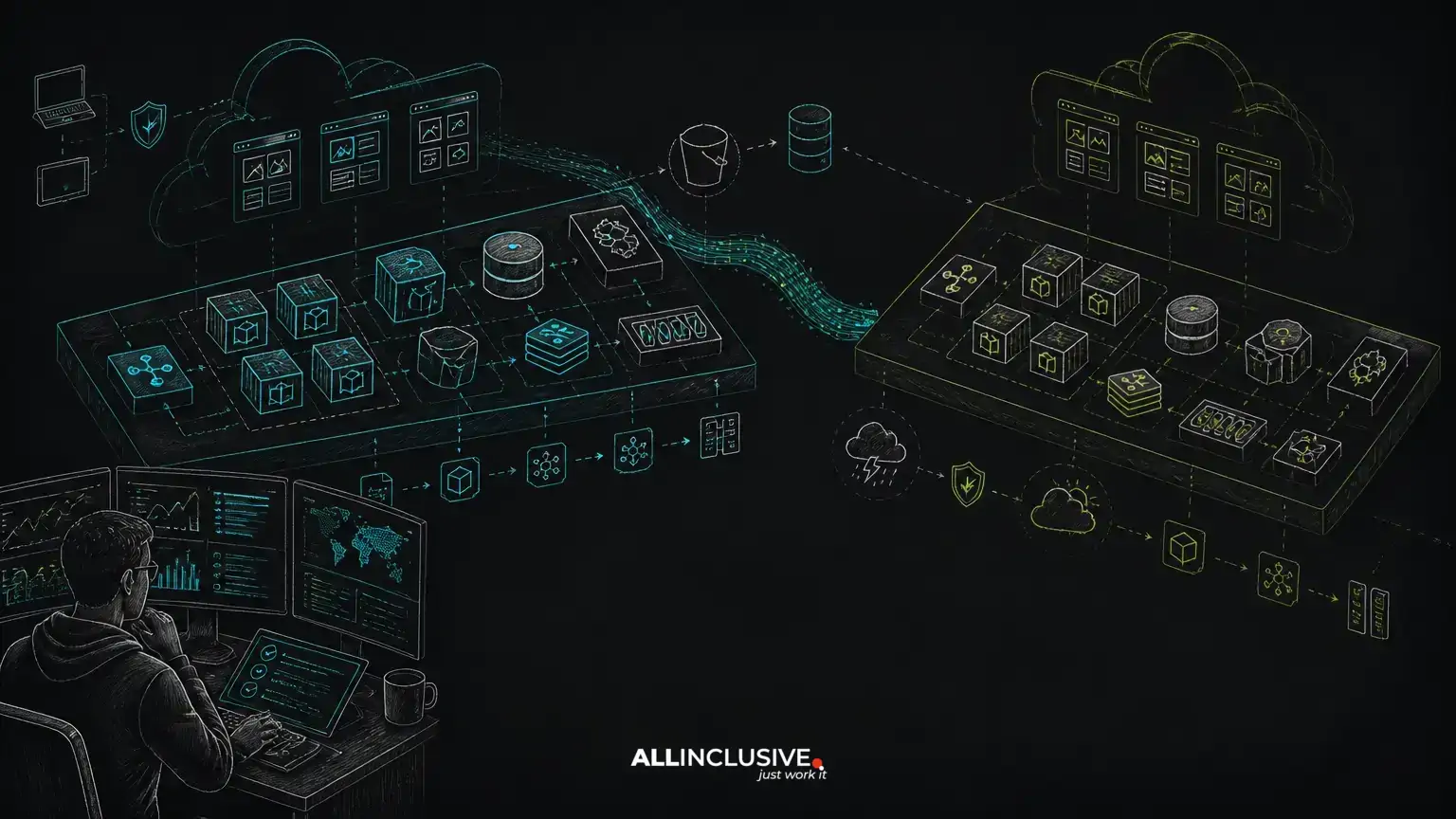
- The store must coordinate with ERP, warehouse, subscription, marketplace, procurement, or legacy systems that have conflicting data models.
- Marketing or operations teams depend on manual workarounds because core workflows cannot be changed safely.
- Platform upgrades repeatedly break customizations or make critical extensions difficult to maintain.
These symptoms do not automatically justify a rebuild. They indicate that the commerce model needs to be examined separately from the platform that currently hosts it.
What custom PHP e-commerce development should preserve
A custom system should preserve business intent, not every historical implementation detail. The first task is to make implicit rules explicit. This usually requires reviewing application code, database schemas, scheduled jobs, integrations, administrator workflows, and production incidents alongside product and operations teams.
Business rules and transaction boundaries
Pricing, tax treatment, inventory reservation, discounts, refunds, and order state transitions should have clear ownership. A rule buried in a controller, database trigger, import script, or administrator procedure may be business-critical even if it is poorly documented.
Order processing also needs defined transaction boundaries. For example, creating an order, reserving inventory, recording payment status, and sending fulfillment instructions may not belong in one inseparable operation. If an external service fails, the system should have a deliberate retry or reconciliation path rather than leaving ambiguous state.
Data relationships and historical meaning
Legacy databases often contain years of operational knowledge. A seemingly redundant field may support reporting, reconciliation, customer service, or a downstream integration. Before changing schemas, teams should identify which records are authoritative, which values are derived, and which historical states must remain immutable.
Migration planning should account for identifiers, foreign-key relationships, null behavior, currency precision, time zones, deleted records, duplicate customers, and old order states. Treating data migration as a simple export and import is a common source of expensive defects.
Integration behavior
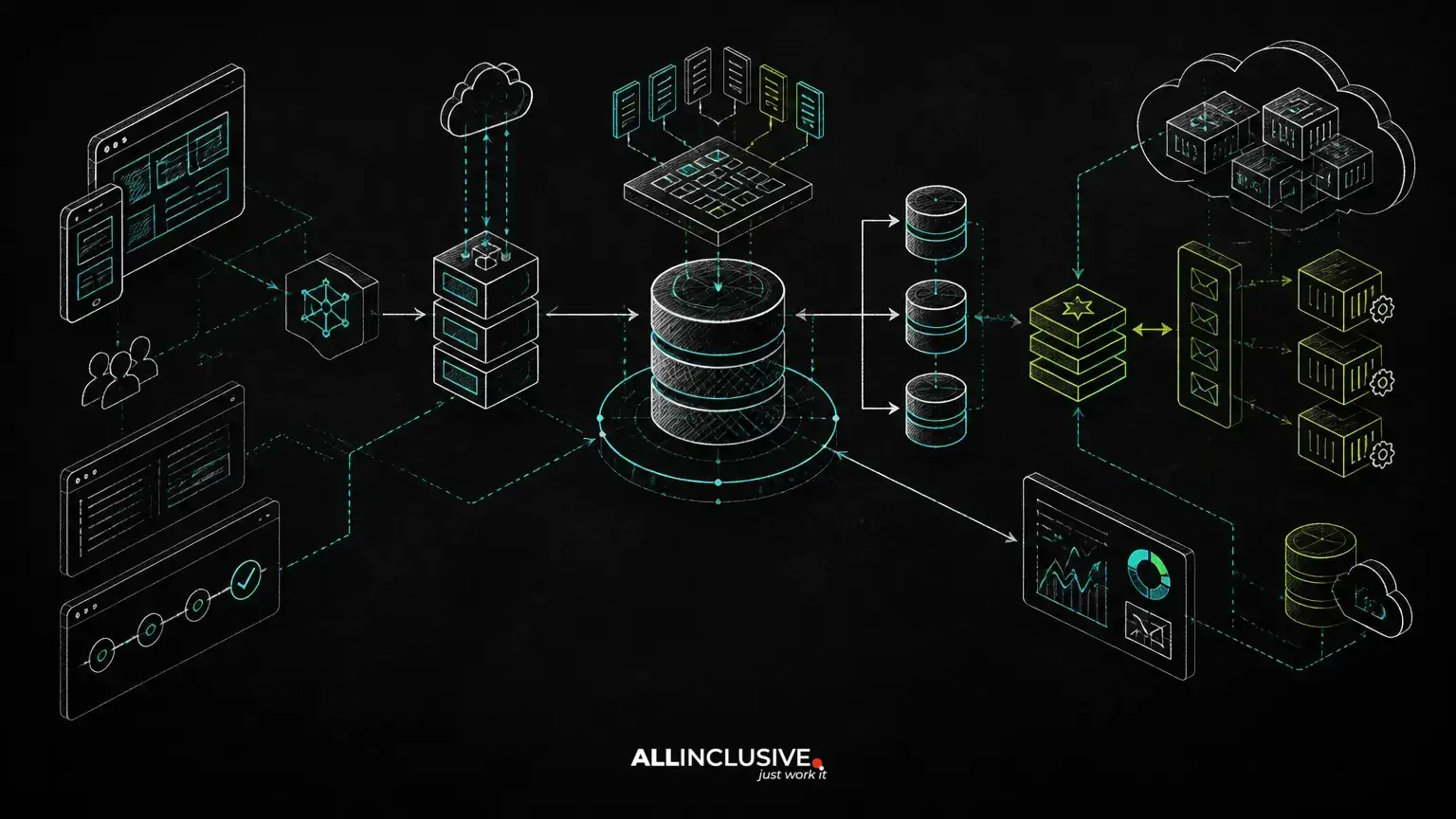
Commerce systems rarely operate alone. Payment providers, tax services, fulfillment tools, accounting platforms, CRM systems, marketplaces, and internal applications may depend on specific payloads or timing. A modernization effort should inventory these dependencies and document whether each integration is synchronous, asynchronous, retryable, idempotent, or manually reconciled.
Stabilize, refactor, upgrade, migrate, or rebuild?
These terms describe different engineering actions. Confusing them can lead to an unnecessarily broad project or an upgrade that leaves the underlying risks untouched.
Stabilize the current application
Stabilization addresses immediate operational risk. It can include error monitoring, backups, deployment controls, dependency review, access restrictions, test coverage around checkout, and documented recovery procedures. Stabilization is appropriate when the business needs safer operations before making architectural changes.
Refactor selected areas
Refactoring changes internal structure while preserving externally observable behavior. A team might isolate pricing calculations, introduce service boundaries around order processing, remove duplicated queries, or replace fragile global state. Refactoring works well when the business logic is valuable but the code is difficult to change.
It requires regression tests that describe meaningful behavior. A test suite focused only on code coverage may miss incorrect totals, inventory races, authorization errors, or invalid order transitions.
Upgrade PHP and dependencies
Runtime and dependency upgrades can improve security support, tooling, compatibility, and maintainability. They should not be treated as a mechanical version change. Older applications may depend on deprecated language behavior, abandoned packages, implicit type conversions, or framework conventions that changed over time.
A responsible upgrade plan inventories dependencies, identifies incompatible behavior, updates automated tests, validates background jobs and integrations, and provides a rollback strategy. The target version should be selected according to supportability and application compatibility rather than novelty alone.
Migrate selected capabilities to Laravel
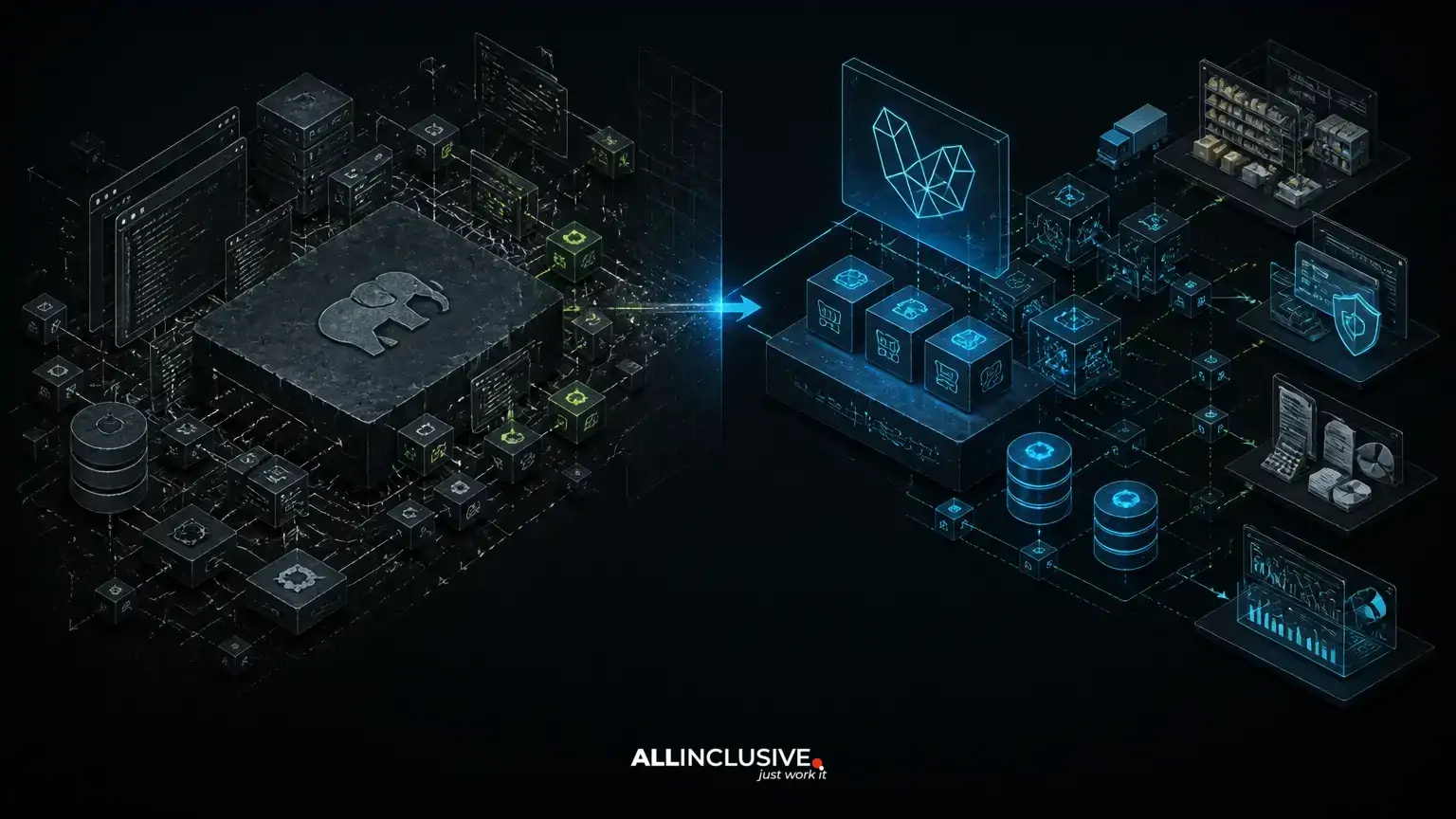
Laravel can provide conventions and components for routing, validation, queues, authentication, database access, testing, and application organization. A migration may be justified when the team needs a more consistent development model or when a bounded domain can be separated from legacy code.
Laravel should not be chosen merely to relabel an old application. Migration adds value when its conventions reduce complexity, improve team ownership, and support the application’s operational requirements. A modular or strangler-style approach may allow a new catalog, pricing service, account area, or administrative workflow to coexist with the legacy system while behavior is validated incrementally.
For a more detailed comparison of architectural trade-offs, read Custom PHP vs Laravel.
Rebuild a bounded domain or the whole system
A rebuild is appropriate when the current architecture prevents essential change, its security posture cannot be brought to an acceptable level, or its data and workflows are no longer understood well enough to maintain safely. Rebuilding everything at once is usually the highest-risk option because it combines domain discovery, data migration, integration replacement, and user retraining.
In many cases, rebuilding a bounded capability is safer than replacing the entire commerce system. The boundary should follow a coherent business responsibility, such as product configuration or pricing, rather than an arbitrary technical layer.
Architecture decisions that matter in custom PHP commerce
Custom development does not mean creating an entirely novel architecture. It means choosing boundaries that reflect the business and can be operated reliably.
- Separate domain rules from delivery mechanisms. Pricing and order policies should not be inseparable from HTTP controllers, templates, or a particular admin screen.
- Define authoritative data. Decide which system owns products, customer identity, inventory, payment status, and fulfillment state. Synchronization without ownership creates conflicting records.
- Use asynchronous processing deliberately. Email, search indexing, exports, and some integration tasks may be queued, but order confirmation and payment state need clear consistency rules.
- Make retries safe. Webhooks and scheduled jobs can run more than once. Idempotency keys, event identifiers, and reconciliation tools help prevent duplicate orders or shipments.
- Protect administrative capabilities. Back-office actions can change prices, refunds, inventory, and customer data. Authorization should be explicit and auditable.
- Measure the real bottleneck. Slow performance may originate in database queries, external APIs, session handling, queue backlogs, or inefficient catalog operations. Adding servers does not correct every cause.
Performance work should be tied to user and operational journeys: category browsing, search, checkout, order administration, imports, and fulfillment synchronization. For teams evaluating custom php ecommerce development, this implementation detail is expanded in PHP performance optimization.
Security and operational controls cannot be postponed
E-commerce applications handle valuable identities, order data, payment-related information, and administrative privileges. Customization increases the need for disciplined security because the team owns more of the application behavior.
Review authentication and authorization boundaries, input validation, output encoding, file handling, secrets management, dependency exposure, logging, and administrator access. Payment card data should be handled according to the selected payment provider’s integration model and applicable compliance obligations; an application should avoid storing sensitive payment data unless there is a compelling, properly governed reason.
Operational readiness matters just as much. Deployments should be repeatable, database changes reversible where practical, logs useful without exposing sensitive data, and alerts connected to actionable failure conditions. Ongoing support and maintenance is part of the system’s risk model, not an optional postscript.
A decision checklist for a custom PHP e-commerce project
Before selecting a modernization path, stakeholders should be able to answer the following questions:
- Which workflows create business differentiation, and which are ordinary platform capabilities?
- Which system is authoritative for each important data object?
- What rules are hidden in code, database procedures, imports, or manual operations?
- Which integrations can tolerate delay, retries, or temporary inconsistency?
- What failures would cause financial, regulatory, customer-service, or fulfillment harm?
- Can the current application be stabilized and tested sufficiently to support incremental change?
- Would Laravel conventions reduce maintenance risk for a bounded area, or would migration add unnecessary churn?
- What data must be preserved exactly, and what historical behavior can be intentionally retired?
- How will new and legacy paths be compared before traffic or responsibility is transferred?
The answers should produce a phased technical plan rather than a technology slogan. A useful plan identifies the first risk to reduce, the behavior to protect, the boundary to change, and the evidence required before proceeding.
Choosing custom PHP without creating avoidable complexity
Custom PHP e-commerce development is most valuable when it gives a business precise control over distinctive workflows while keeping the system understandable and operable. It is not a justification for ignoring established components, nor is it a requirement to discard a functioning application.
The strongest projects preserve validated business logic, expose hidden dependencies, improve security and observability, and introduce framework structure where it earns its place. Sometimes that means carefully maintained PHP. Sometimes it means a Laravel migration. Sometimes the correct answer is a limited rebuild surrounded by stable legacy services.
The practical objective is a commerce system that can evolve without putting orders, customer trust, or operational continuity at unnecessary risk. For broader application architecture and delivery support, explore Allinclusive’s custom software development capabilities.