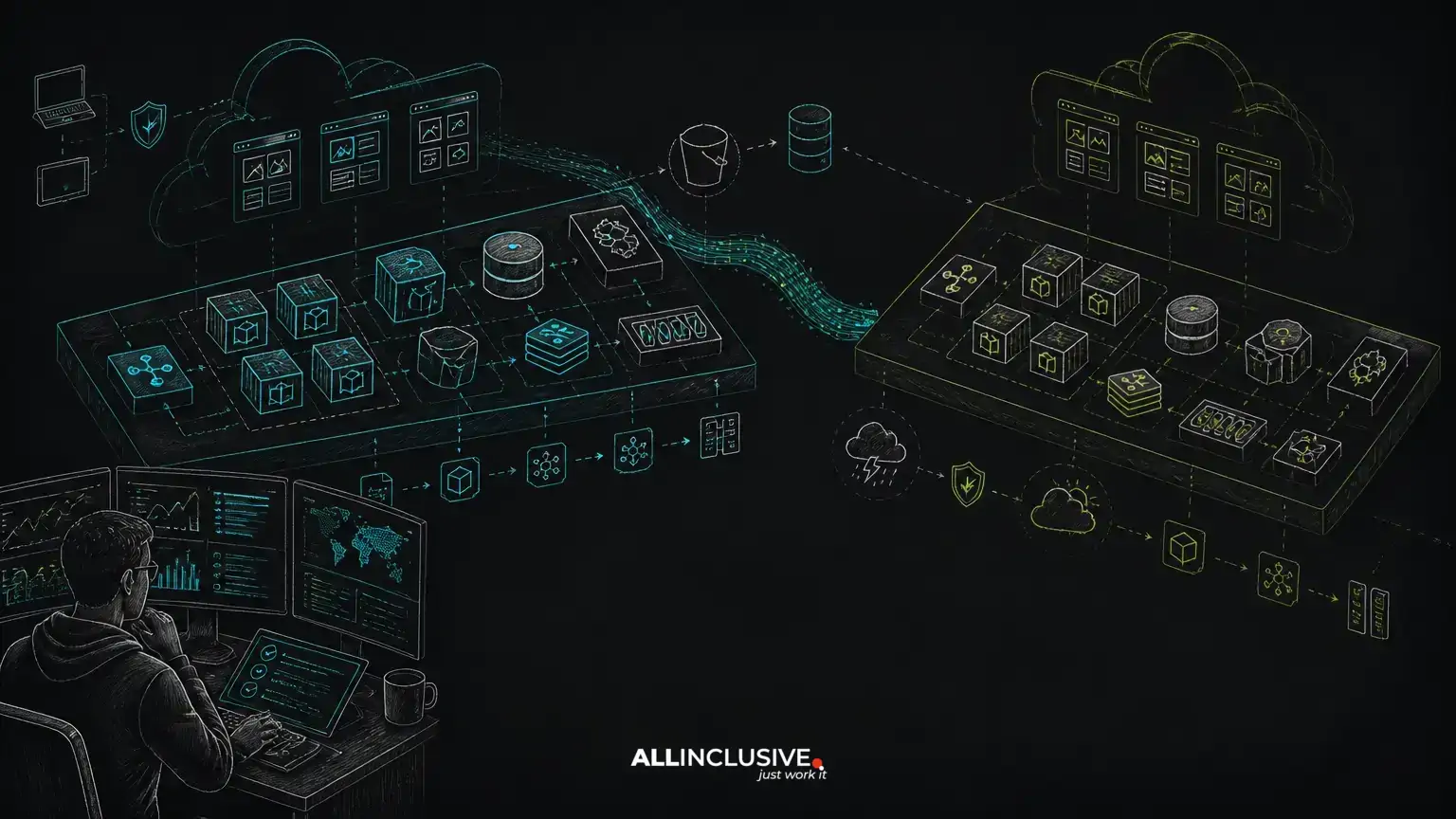
Laravel e-commerce development makes sense when commerce is more than a catalog, cart and checkout. If your business depends on complex pricing, account-specific purchasing, subscriptions, marketplace workflows, operational integrations or unusual fulfillment rules, a custom Laravel application can provide a more maintainable foundation than forcing those requirements into a template-driven store.
That does not mean every online shop should be rebuilt from scratch. Standard commerce platforms can be appropriate when requirements are conventional and speed to launch matters most. The decision becomes more nuanced when the store is becoming a core operating system for sales, inventory, customer service and partner workflows.
This article explains where Laravel is useful, which architecture decisions matter, and how to evaluate whether custom commerce engineering is justified.
When an off-the-shelf storefront starts creating constraints
Prebuilt platforms reduce the amount of infrastructure a team must design and operate. They often provide familiar features such as product management, orders, payments and customer accounts. Their limitations tend to appear when business rules do not fit the platform's assumptions.
Common warning signs include:
- Pricing varies by customer, contract, region, quantity, eligibility or sales channel.
- Customers need approval workflows, purchase orders, budgets or account-level permissions.
- Products are configurable, bundled, rented, serialized or governed by domain-specific rules.
- Inventory and fulfillment depend on multiple warehouses, suppliers, reservations or external systems.
- The storefront must support subscriptions, usage-based billing or a hybrid of one-time and recurring charges.
- The product experience needs to share data and workflows with a SaaS application, mobile app or partner portal.
- Plugins and customizations have made upgrades, testing and debugging increasingly difficult.
These symptoms do not automatically require Laravel. They do indicate that the core problem is application engineering rather than visual storefront customization.
Why Laravel can fit a custom commerce platform
Laravel provides a PHP application framework for organizing domain logic, data access, authentication, background processing, APIs and scheduled work. Its value in commerce comes from giving an engineering team a structured place to model the business rather than treating every exception as a theme or plugin modification.
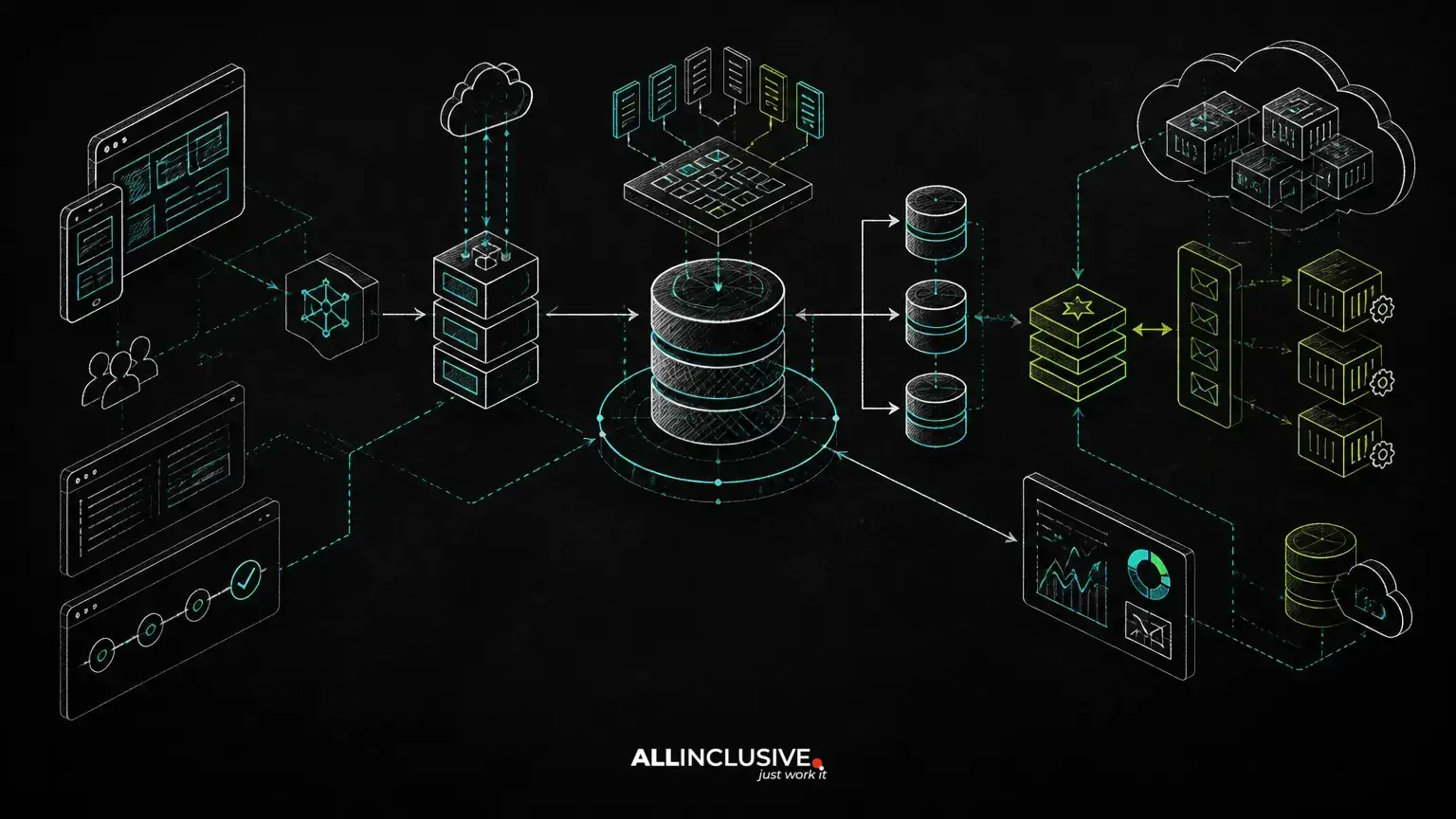
A custom Laravel commerce system might separate concerns such as:
- Catalog: products, variants, attributes, bundles, digital goods and availability rules.
- Pricing: price lists, promotions, customer groups, contract terms, taxes and currency behavior.
- Commerce: carts, checkout sessions, orders, refunds, returns and invoices.
- Accounts: customers, organizations, buyers, approvers, roles and permissions.
- Fulfillment: inventory reservations, warehouse allocation, shipping, pickup and status transitions.
- Integration: payment providers, accounting systems, ERP platforms, shipping services and external marketplaces.
This separation helps teams change one business capability without making the entire storefront harder to understand. It also creates clearer ownership boundaries for testing, deployment and future product development.
Model the commerce domain before designing the interface
The most expensive mistakes in custom e-commerce often begin with an oversimplified data model. A product is not always just a name, image and price. An order is not always a single transaction that moves directly from pending to complete.
Before implementation, map the states and relationships that affect the business. For example, a product may have sellable variants, regional availability, supplier lead times and inventory held for an order but not yet shipped. A customer account may contain multiple buyers with different purchasing limits. An order may require approval before payment, split shipment after payment or partial refund after fulfillment.
Laravel's Eloquent ORM can make common data relationships productive to implement, but ORM convenience should not replace domain design. Teams still need explicit rules for:
- Which records are authoritative when data comes from multiple systems.
- How prices are calculated and persisted at checkout.
- When inventory is reserved, released or considered sold.
- Which order transitions are legal and who can initiate them.
- How refunds, cancellations and adjustments affect financial records.
Persisting the relevant decision context is especially important. An order should generally retain the price, discount, tax and shipping values applied at the time of purchase rather than recalculating historical data from today's catalog rules.
Choose an architecture that matches the commerce workflow
A Laravel commerce application can be built as a server-rendered web application, an API-first backend, or a combination of both. The right choice depends on the number of clients and the level of channel independence required.
Server-rendered commerce
A server-rendered Laravel application can be a strong option for a primary storefront managed by one product team. It keeps the request flow relatively direct and can reduce the amount of frontend infrastructure required. This approach is often suitable when SEO, content-rich product pages and conventional account workflows are priorities.
API-first commerce
An API-first design becomes more useful when the same commerce capabilities must serve a web storefront, mobile application, sales portal, partner channel or internal tool. The API should expose business operations rather than merely mirroring database tables. For example, a checkout endpoint should enforce the rules for validating a cart and creating an order instead of allowing each client to implement those rules independently.
API design also requires deliberate decisions about authentication, authorization, versioning, idempotency, error responses and rate controls. For a deeper comparison of Laravel API architecture and consumer reliability, see Laravel API development.
Modular application design
Not every custom commerce platform needs microservices. A modular Laravel monolith can keep related workflows in one deployable application while maintaining boundaries between catalog, pricing, orders, accounts and integrations. This can be easier to test and operate than splitting a young product into independently deployed services before the boundaries are proven.
Integrations are part of the product, not a final task
Commerce systems rarely operate alone. Payment processing, accounting, ERP, tax, shipping, inventory, marketing and customer support systems may all participate in a transaction. Treating these connections as late-stage plumbing creates operational risk.
Define integration ownership and failure behavior early. Questions include:
- Which system owns product, customer, inventory and financial data?
- What happens when payment succeeds but an order write fails?
- Can a webhook be delivered twice without duplicating an order or refund?
- How are delayed or rejected updates reconciled?
- Which actions require a human review queue?
Laravel queues can move tasks such as email, export, synchronization and webhook processing out of the request cycle. That improves workflow resilience, but queued jobs still need retries, timeouts, idempotency and observability. A queue is not a substitute for a defined recovery process.
Security and access control require commerce-specific thinking
An online store handles identity, personal information, order history and potentially payment-related data. A B2B platform may also expose contract pricing, budgets, purchase approvals and internal account relationships. Security therefore extends beyond protecting the login form.
Important controls include:
- Clear authorization policies for customers, buyers, approvers, support staff and administrators.
- Server-side validation of prices, discounts, quantities, shipping choices and order transitions.
- Protection against unauthorized access to organization, order and invoice records.
- Secure handling of payment-provider tokens and webhook verification.
- Audit records for sensitive administrative actions and changes to commercial data.
- Dependency updates, secret management, secure deployment practices and vulnerability review.
Authentication technology should reflect the clients being supported. A first-party web application may have different requirements from a public partner API or mobile client. Another decision connected with laravel ecommerce development is covered in Laravel Sanctum vs. Passport.
Testing should cover money, state and failure paths
Commerce testing cannot stop at whether a product page renders. The highest-risk defects often occur where money, permissions and asynchronous processes intersect.
A useful test strategy can include:
- Unit tests for pricing rules, eligibility, tax calculations and state-transition logic.
- Feature tests for checkout, account access, approvals, refunds and administrative workflows.
- Integration tests for payment, shipping, accounting and inventory boundaries.
- Contract tests for APIs and webhook payloads shared with other systems.
- Browser tests for critical customer and operational journeys.
- Failure-path tests for duplicate requests, timeouts, partial fulfillment and rejected payments.
Test data should represent realistic combinations without exposing production customer information. Teams should also decide how to verify migrations, reindexing, imports and reconciliation jobs before those operations affect live commerce records.
Performance and scalability begin with workflow analysis
Commerce performance is not only a matter of adding cache layers. Product browsing, search, checkout, account dashboards and administrative reporting have different access patterns and consistency requirements.
Caching can help with stable catalog or content responses, while pricing, inventory and checkout often require fresher data. Database indexes, eager loading, pagination and query review can address common application bottlenecks. Queues can handle non-urgent work, but they introduce eventual consistency that the user interface must explain.
Plan for operational visibility as well. Logs, application metrics, failed-job tracking and alerts help a team distinguish a slow query from a payment-provider outage or an inventory synchronization delay. Scaling infrastructure without this feedback can increase cost while leaving the underlying workflow unclear.
When custom Laravel e-commerce development is not the right choice
Custom engineering is not automatically superior. An off-the-shelf platform may be the better choice when the business has conventional requirements, limited integration needs, a small catalog, a short validation window or no team prepared to own application operations.
A hybrid approach may also be sensible. A standard commerce engine can handle basic catalog and checkout functions while Laravel powers a custom account portal, integration layer, pricing service or operational application. The key is to define system boundaries clearly so that customer, order and inventory data do not become inconsistent across products.
Consider custom Laravel development when the cost of platform constraints is recurring and material: manual workarounds, fragile upgrades, duplicated data, slow product changes or inability to support a differentiating workflow. Consider a standard platform when those constraints are minor and the primary need is a dependable conventional storefront.
A practical evaluation checklist for a custom commerce platform
Before selecting an implementation path, document the following:
- Business rules: pricing, eligibility, approvals, tax, inventory, fulfillment, returns and billing.
- System boundaries: authoritative sources for catalog, customer, order, inventory and financial records.
- Client channels: storefront, mobile app, sales tools, partner portals and administrative interfaces.
- Operational ownership: who handles failed payments, synchronization errors, refunds, disputes and support access.
- Quality requirements: test coverage, auditability, security review, deployment controls and upgrade policy.
- Change expectations: which workflows are likely to evolve as the business, product catalog and integrations grow.
Documenting these decisions exposes whether the project is primarily a storefront, a custom commerce application or a broader business platform. It also creates a more credible scope for delivery and long-term maintenance.
Build for ownership beyond the first release
The first release of a commerce platform is only the beginning of its cost profile. Maintainable Laravel code should make domain rules discoverable, keep integrations replaceable where practical, and make risky changes testable. Teams should establish conventions for migrations, configuration, queues, logging, permissions and deployment before the codebase becomes difficult to change.
Ongoing support should include dependency and framework upgrades, monitoring, security fixes, performance investigation and controlled improvements. Allinclusive's support and maintenance services address the operational work that keeps custom software reliable after launch.
For organizations evaluating broader application engineering needs, Laravel development can support custom web applications, APIs and business platforms where commerce is one part of a larger product. The wider development practice also provides context for selecting an architecture around business requirements rather than starting with a template.