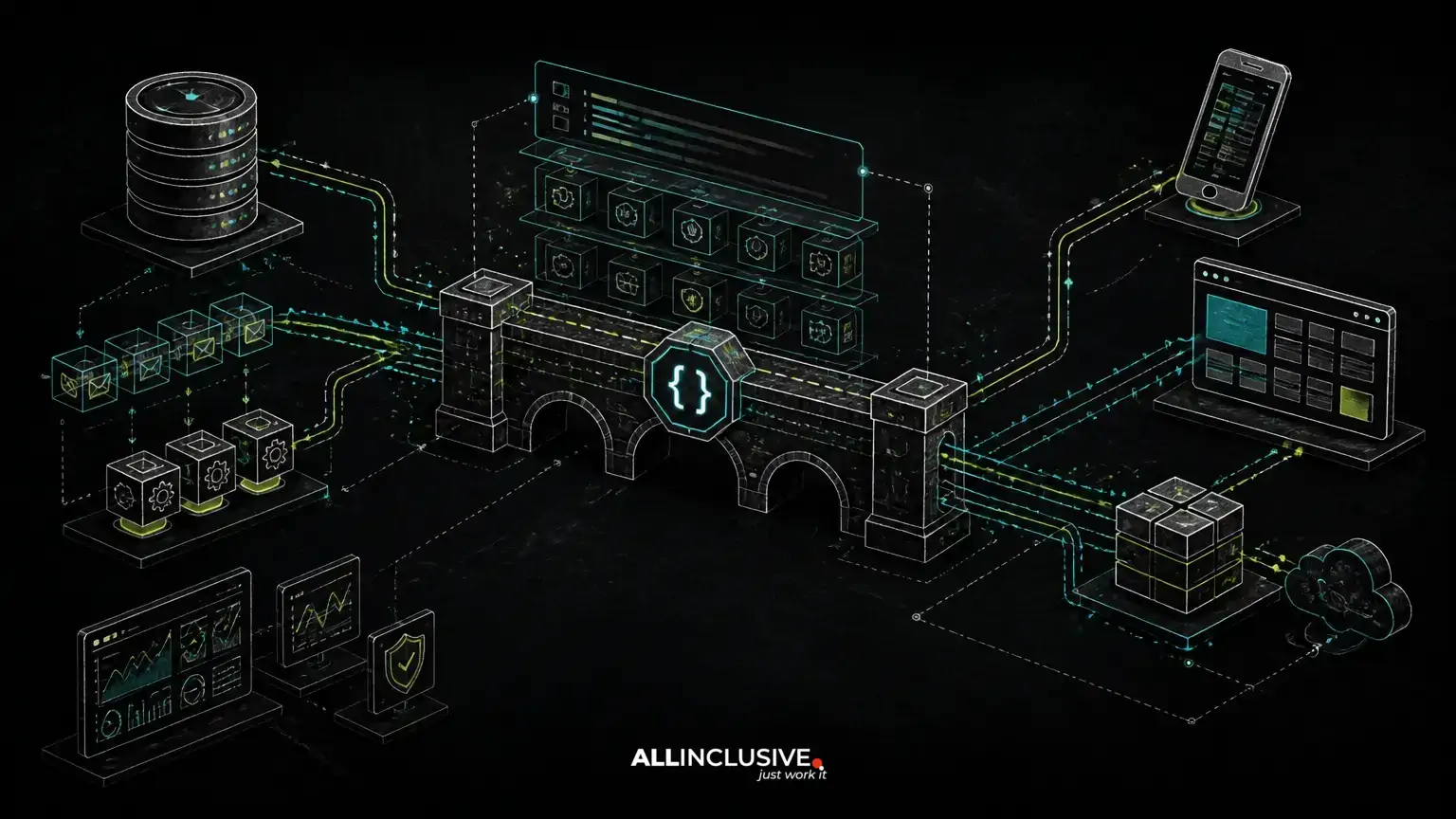
Laravel API development is not simply a matter of adding JSON responses to a web application. A production API is a product boundary: mobile clients, front-end applications, partner integrations, internal tools and automated workflows depend on its behavior remaining understandable and dependable.
The strongest Laravel APIs separate business rules from transport concerns, expose deliberate resource contracts, protect data at every boundary and include testing and operational practices from the beginning. Laravel provides useful building blocks for this work, but reliability still depends on architectural decisions, data modeling and disciplined engineering.
This guide explains how to design a Laravel API that other products can consume without forcing every client to understand the internals of your application.
Start with the domain, not the routes
A reliable API begins with the business capabilities it needs to expose. Before defining controllers, identify the domain operations, important entities, ownership rules and state transitions behind the product.
For example, an order API may need to support creation, payment authorization, fulfillment and cancellation. These are not merely CRUD operations. Each action has rules about who can perform it, which states are valid and what side effects should occur.
Keeping those rules in application or domain services rather than embedding them across controllers makes the system easier to test and change. Controllers should coordinate HTTP concerns—input, authentication, response formatting and status codes—while the underlying application logic remains usable from queues, scheduled jobs or other interfaces.
Define an API contract clients can depend on
Clients need predictable behavior more than they need a large number of endpoints. A useful contract should make the following clear:
- Which resources and actions are supported
- What fields are required, optional, writable or read-only
- How validation errors are represented
- Which HTTP status codes can be returned
- How pagination, filtering and sorting work
- How authentication and authorization affect access
- How breaking changes are introduced
Laravel API Resources can help keep response formatting deliberate rather than exposing database models directly. Returning an Eloquent model without a controlled representation can accidentally reveal internal fields, create inconsistent shapes or make database changes into API changes.
Resource representations should reflect client needs while avoiding unnecessary coupling. A customer-facing response may include display information and permitted actions, whereas an internal administrative response may require different fields and permissions.
Versioning requires a reason
API versioning is useful when a contract must evolve without immediately breaking existing consumers. It is not a substitute for careful design. A versioned route can still be difficult to maintain if the underlying business logic is duplicated.
When versions are necessary, keep shared behavior in common application services and isolate differences at the boundary. Document which changes are additive and which require a new contract. Deprecation should be communicated and monitored rather than left to discovery through client failures.
Model data for business workflows
Eloquent makes it productive to work with relational data, but convenient relationships do not remove the need for a deliberate data model. Consider ownership, lifecycle, uniqueness, deletion behavior, audit requirements and concurrency before building endpoints.
Some practical questions include:
- Which records belong to a user, organization or tenant?
- Can a record change state, and which transitions are valid?
- Should historical values be preserved rather than overwritten?
- What happens if two requests update the same resource?
- Which operations must be atomic?
- Which queries will become expensive as data grows?
Transactions are important when one business action changes multiple records and partial completion would create an invalid state. Database constraints, unique indexes and foreign keys also provide protection that application-level checks alone cannot guarantee.
Be cautious with endpoints that expose flexible filtering or arbitrary relationship loading. They can create performance problems, leak data across tenant boundaries or produce unstable response times. Define supported query parameters explicitly and use pagination for collections that can grow.
Secure authentication and authorization
Authentication answers who is making a request. Authorization answers what that identity is allowed to do. A production API needs both.
Laravel applications may use session-based authentication, token-based approaches or an OAuth-oriented design depending on the clients and trust relationships involved. The correct choice depends on whether the API serves a first-party application, mobile clients, external partners or multiple independent consumers. For a focused comparison, see Laravel Sanctum vs Passport.
Authorization should be enforced on the server for every protected action. Policies and gates can centralize resource-level decisions, but they must be applied consistently to reads as well as writes. A user who cannot update another organization’s invoice should not be able to retrieve it by changing an identifier in the URL.
Security work also includes:
- Validating and normalizing incoming data
- Limiting sensitive actions and abusive request patterns
- Protecting secrets and credentials outside source control
- Restricting mass assignment and exposed fields
- Logging security-relevant events without recording sensitive data
- Reviewing file uploads, webhooks and third-party callbacks carefully
Authentication design should be treated as part of the product architecture, not added after routes are complete.
Design errors for humans and software
API errors are part of the contract. A client should be able to distinguish invalid input, an unauthenticated request, an unauthorized action, a missing resource, a conflict and a temporary server failure.
Use consistent error structures with stable machine-readable codes and useful field-level details where appropriate. Avoid returning stack traces or internal exception messages to clients. At the same time, server-side logs should preserve enough context to investigate failures, including a request identifier that can connect an API response to application and infrastructure logs.
Idempotency is another important concern for operations such as payments, provisioning or external callbacks. If a client retries after a timeout, the server should not unintentionally create duplicate side effects. An idempotency key, stored result or carefully designed state transition can help make retry behavior safe.
Use queues, caching and events deliberately
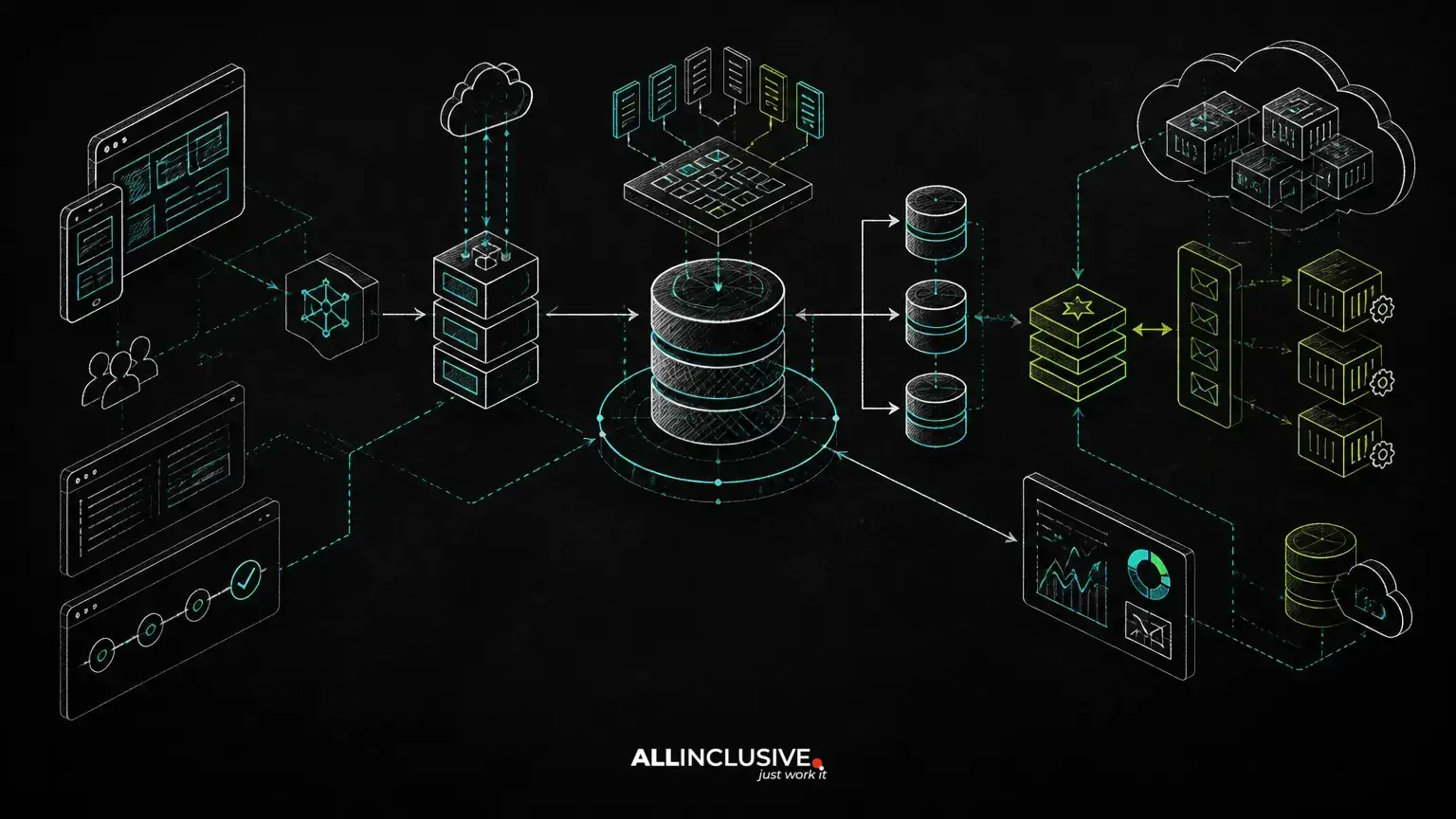
Not every operation belongs in the request-response cycle. Sending notifications, generating exports, processing media or synchronizing with an external system may be better handled by queued jobs. The API should then communicate whether work is complete, accepted for processing or failed.
Queued work needs operational design. Jobs may be retried, duplicated or processed out of order depending on the queue configuration and failure conditions. Jobs should therefore be safe to retry where possible, record meaningful failure information and avoid relying on temporary request state.
Caching can reduce repeated work, but it introduces invalidation and consistency decisions. Cache stable, expensive reads when the business can tolerate the chosen freshness model. Do not use caching to conceal inefficient queries or unclear data ownership. Define what invalidates cached data and how stale values affect the user workflow.
Test the contract and the business rules
Laravel API testing should cover more than whether a route returns a successful status code. Feature tests can verify authentication, authorization, validation, response structures and important workflows through the HTTP boundary. Unit or focused application tests can exercise complex business rules without requiring every scenario to run through a full request.
Useful coverage often includes:
- Valid and invalid payloads
- Access by different roles, organizations or tenants
- State transitions and conflict conditions
- Pagination and filtering behavior
- Retries and duplicate requests
- Queued side effects and failed jobs
- External service failures and webhook verification
Contract tests are especially valuable when multiple teams or products consume the API. They can detect accidental changes to field names, types, required values or error formats before deployment reaches consumers.
Tests should support maintainability rather than become a brittle collection of implementation assumptions. Verify observable behavior and important business guarantees, while allowing internal classes and query strategies to evolve.
Plan deployment and observability early
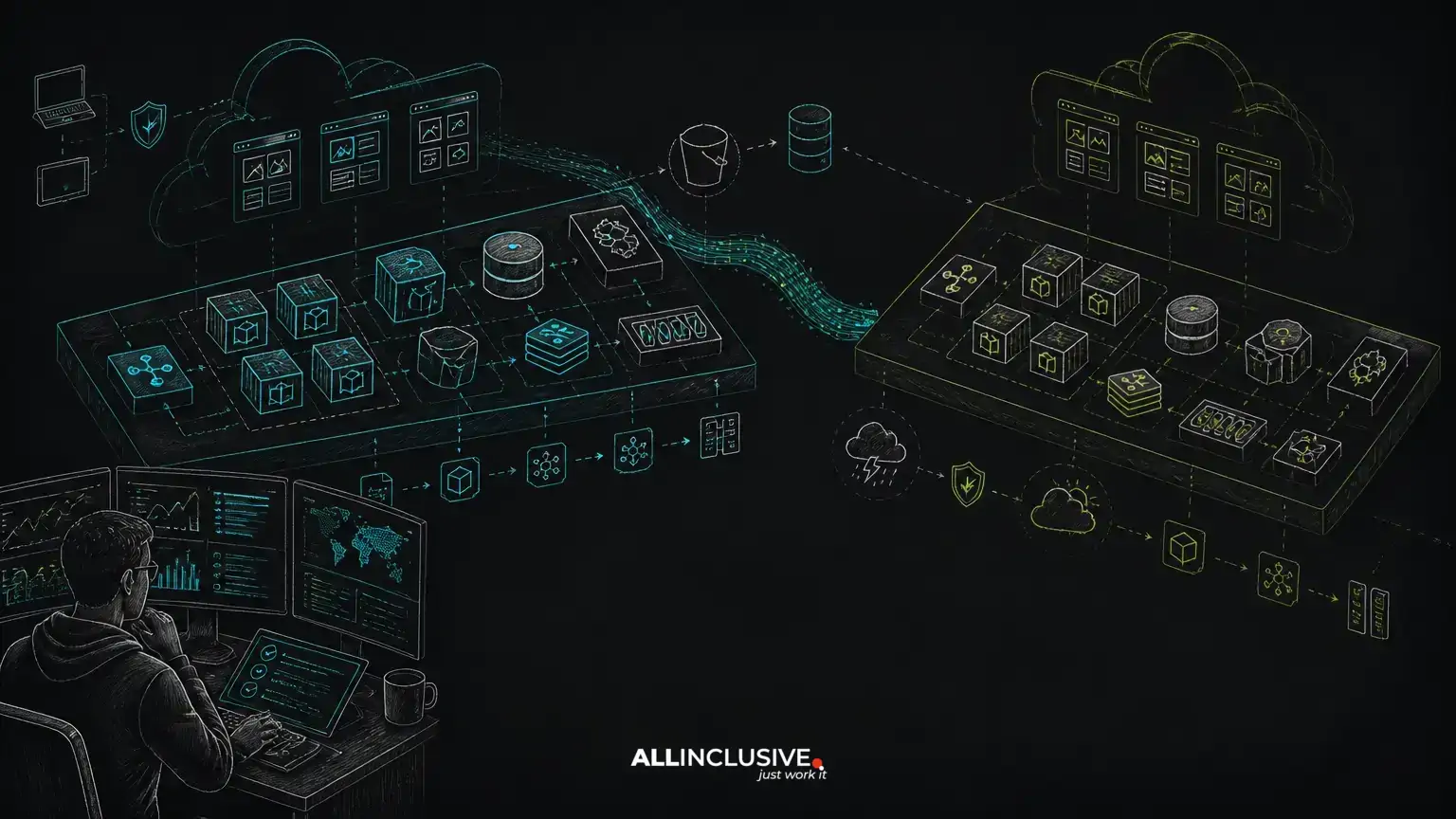
An API is only reliable if its team can operate it. Deployment planning should cover environment configuration, database migrations, queue workers, scheduled tasks, cache behavior, storage and rollback procedures.
Database migrations should be compatible with the application versions that may run during a rolling deployment. For larger changes, expand-and-contract techniques can reduce the risk of deploying code that expects a schema the previous version cannot use.
Operational visibility should include structured logs, request correlation, error tracking and metrics appropriate to the system. Track signals such as error rates, latency, queue failures, database pressure and external dependency failures. These signals help distinguish a code defect from a capacity issue or a failing integration.
Deployment automation reduces manual variation, but automation should not hide risky changes. Review migration behavior, configuration changes and rollback limitations as part of the release process.
Keep upgrades and maintenance manageable
Laravel APIs accumulate risk when framework upgrades, dependency updates and schema changes are postponed. A maintainable codebase uses clear boundaries, automated tests and documented operational assumptions so upgrades can be evaluated rather than feared.
Regular maintenance may include reviewing deprecated dependencies, checking queue behavior, tightening authorization rules, removing unused endpoints, analyzing slow queries and updating API documentation. Security patches and framework upgrades should be assessed against the application’s dependencies and deployment process instead of applied blindly or ignored indefinitely.
Custom software benefits from the same discipline as a public platform: explicit ownership, clear change control and an understanding of which contracts other systems rely on. If an existing Laravel application has become difficult to change, the appropriate path may be stabilization, targeted refactoring, migration or a carefully scoped rebuild—not automatically a rewrite.
A practical Laravel API development checklist
- Map the domain workflows and ownership rules before designing routes.
- Define resource representations, validation, errors and pagination as an explicit contract.
- Keep controllers thin and place business decisions in testable application services or domain components.
- Use database constraints and transactions for data integrity.
- Choose authentication based on client types and trust boundaries.
- Enforce authorization for every protected read and write operation.
- Design retry, idempotency and queue behavior for side-effecting actions.
- Test both HTTP behavior and underlying business rules.
- Document deployment, migrations, workers, configuration and rollback limits.
- Monitor the API and schedule maintenance before operational debt becomes a delivery constraint.
When Laravel is a strong API choice
Laravel is a practical foundation when a team needs a productive PHP application framework with established conventions for routing, validation, authentication, queues, database access and testing. Its value is highest when those capabilities support a well-defined product architecture rather than substitute for one.
The framework should be evaluated alongside domain complexity, integration requirements, team expertise, hosting constraints and long-term ownership. If you are comparing backend approaches for a product, the trade-offs discussed in Laravel vs Node.js and Laravel vs Django can provide useful decision criteria.
For teams planning a custom application, Allinclusive development services can support architecture, implementation and ongoing engineering decisions. API work also benefits from a maintenance plan that covers upgrades, security review and operational issues; see support and maintenance for that broader ownership perspective.
The central principle is straightforward: design the API as a durable product interface, not as a thin serialization layer. Clear contracts, deliberate data modeling, secure access, testable business logic and observable operations give other products a dependable foundation to build on.