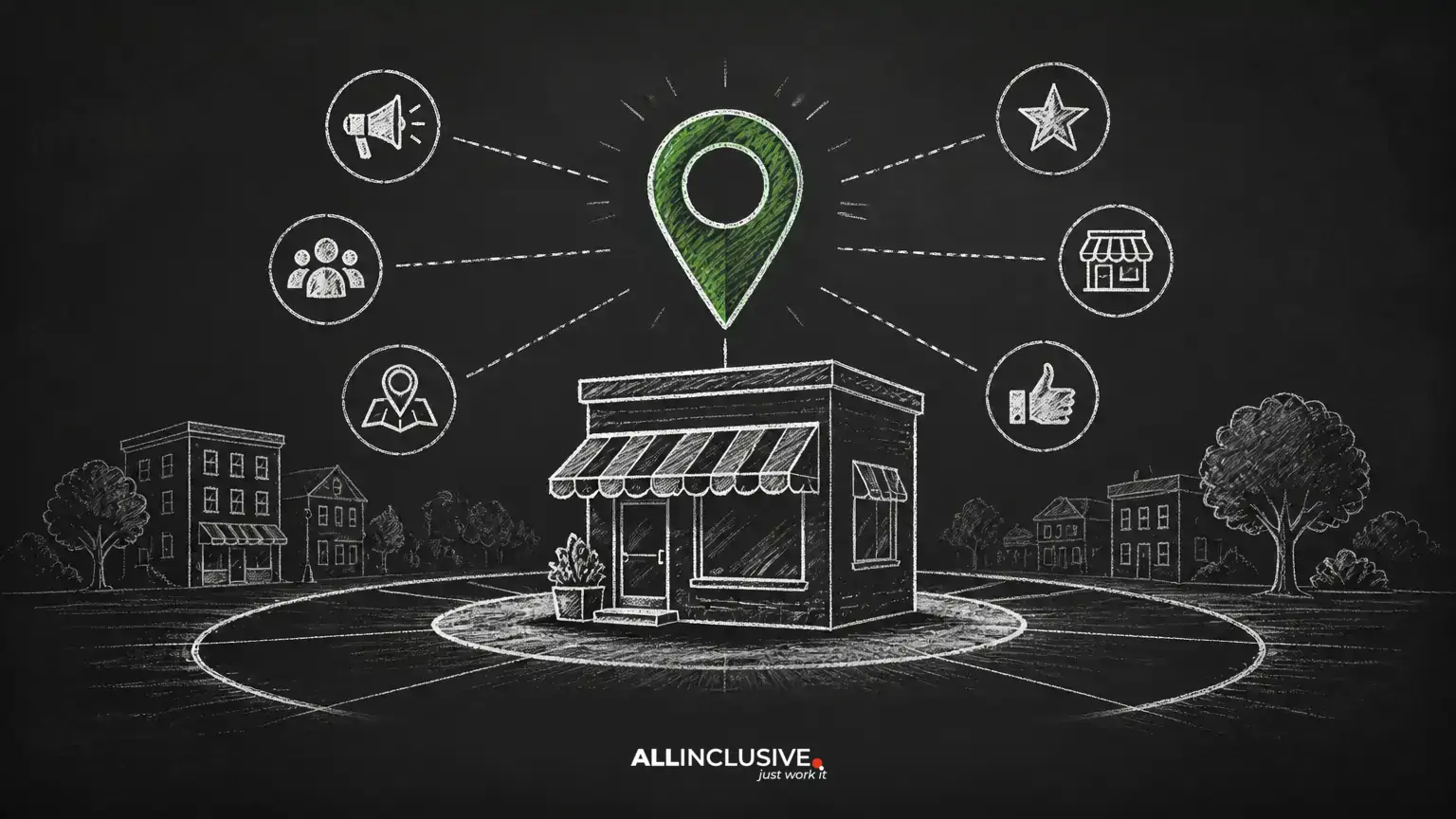
Local SEO does not require a large advertising budget to be useful. For many small businesses, the strongest gains come from making the information customers rely on accurate, complete, and easy to act on. That means clarifying where you serve, what you offer, when you are available, and why a customer should trust you.
A sensible local SEO program also avoids treating every tactic as equally important. Start with the basics that affect customer confidence and search relevance, then improve the areas where your business has a genuine advantage.
What affordable local SEO should accomplish
Local SEO helps a business become more visible when people search for a product or service in a particular area. Visibility alone is not the objective. A useful strategy should help qualified searchers:
- Confirm that your business serves their location.
- Understand your products, services, prices, or process.
- Evaluate trust signals such as reviews and clear business information.
- Contact, visit, or request an appointment with minimal friction.
Before making changes, define the action that matters most. Depending on the business, that may be a phone call, form submission, store visit, booking, quote request, or purchase. This keeps local SEO connected to business outcomes rather than vanity metrics.
1. Establish one accurate source of business information
Review every public place where customers may find your business name, address, phone number, hours, website, and service details. Correct discrepancies on your website, business profiles, major directories, social pages, and relevant industry listings.
Consistency does not mean every profile must use identical wording. It does mean the core facts should agree. Pay special attention after a move, phone-number change, rebrand, change in opening hours, or expansion into a new service area.
Create a simple internal record containing the approved business name, address format, phone number, hours, website URL, service area, and holiday-hour process. This reduces future errors when staff update listings.
2. Complete and maintain your business profile
A business profile is often a customer’s first interaction with a local company. Complete every relevant field honestly, select the category that best describes the primary business, and explain services in plain language. Do not add locations, services, or attributes that the business does not genuinely provide.
Use current photographs that help customers recognize the business and understand what to expect. Depending on the company, useful images may include the storefront, interior, team, completed work, products, facilities, or access and parking information. Replace outdated images when the premises, branding, or services change.
Check the profile periodically rather than treating setup as a one-time task. Confirm hours, contact details, service information, appointment links, and customer-facing updates. Platform interfaces and eligibility rules can change, so verify current requirements before making a major profile decision.
3. Build a review process customers can actually follow
Reviews can help prospective customers assess a local business, but requesting them should be transparent and respectful. Ask customers after a genuine interaction, provide a direct route to the relevant review page, and make clear that honest feedback is welcome.
Do not offer rewards for positive reviews, pressure customers to change their opinion, or ask only selected customers to review if that would create a misleading picture. Follow the rules of each platform and applicable consumer-protection requirements.
Make the request easy to complete. A short email or message can include:
- A thank-you for the customer’s business.
- A brief invitation to share honest feedback.
- A direct review link.
- A contact route for resolving a private service issue.
Respond to reviews with specific, professional language. Thank customers for useful details, address concerns without exposing private information, and avoid argumentative replies. Responses are also visible to future customers, so write for the next reader as well as the original reviewer.
4. Create location and service pages with a real purpose
A local website should make relevance clear without repeating a city name unnaturally. Build pages around genuine customer needs: a core service, a meaningful service area, a location, or a question that requires a detailed answer.
A useful service-area page might explain which neighborhoods are served, how scheduling works, what the service includes, common limitations, and how to request help. A location page can cover accessibility, parking, nearby service details, and what customers should expect. Avoid creating dozens of near-identical pages that change only the place name. Thin or duplicated pages rarely help users and can weaken the site’s overall quality.
Include evidence that the business operates in the area where appropriate, such as locally relevant examples, team knowledge, project context, or clear service boundaries. Keep claims precise and update pages when coverage changes.
5. Make contact and conversion information prominent
Local search visitors often have a practical need and limited patience. Put the primary contact method where it is easy to find on mobile and desktop. For a service business, this may be a phone number and quote form. For a storefront, it may be directions, opening hours, and parking information. For an appointment-based business, it may be booking instructions.
Use a consistent contact page and consider adding relevant contact details to the header or footer. Make sure phone numbers are clickable on mobile, forms explain what happens after submission, and important information is not hidden inside an image that search engines or assistive technologies may struggle to interpret.
6. Publish answers to local customers’ real questions
Affordable content is usually more effective when it comes from customer conversations rather than a generic publishing schedule. Ask staff to record recurring questions, objections, preparation requirements, service limitations, pricing factors, and maintenance advice.
Turn those questions into concise pages, guides, or FAQs. Answer directly first, then add the context a customer needs to decide what to do next. For example, a home-service company might explain how to prepare for an appointment; a professional practice might describe what a first visit involves; a retailer might explain availability, pickup, or returns.
Review content for accuracy before publishing. Do not use FAQ markup merely to decorate a page, and do not mark up content that is not visibly available to users. Search features are not guaranteed, so prioritize clear answers over markup as a shortcut.
7. Earn local mentions through genuine participation
Relevant local references can support discovery and credibility when they reflect real relationships. Consider partnerships with complementary businesses, professional associations, local events, community organizations, suppliers, or educational initiatives. The goal should be useful participation, not buying artificial links.
If an organization mentions your business, provide accurate details and a helpful destination page. Do not sponsor an activity solely to demand a search-engine benefit, and avoid schemes that require manipulative anchor text or mass directory placement. A genuine local relationship can be valuable even when it does not produce a followed link.
8. Improve technical foundations before adding more content
Check whether important pages can be crawled, indexed, and used comfortably on mobile devices. Review page titles, headings, internal links, image alternatives, loading behavior, broken links, redirects, and secure connections. Make sure each important page has a clear purpose and can be reached through the site’s navigation.
Use descriptive internal links to connect related services, locations, contact pages, and educational resources. This helps visitors continue their research and gives search engines context about the site’s structure. For broader technical and organic search planning, see Allinclusive SEO services.
9. Measure actions, not just rankings
Local results can vary by searcher, device, location, competition, and query wording. A single manual ranking check is therefore an unreliable measure of progress. Track a balanced set of signals instead:
- Calls, form submissions, bookings, quote requests, or purchases.
- Visits to key service and location pages.
- Interactions with business-profile contact features.
- Review volume and recurring customer themes.
- Search impressions and clicks for relevant queries, where reliable data is available.
Compare performance over a meaningful period and annotate major changes such as new hours, a move, a website redesign, seasonal demand, or a service launch. Use the findings to improve customer experience, not to chase every fluctuation.
10. Use a manageable local SEO schedule
A small business does not need an elaborate workflow. A monthly schedule can be enough:
- Verify business details, hours, and contact paths.
- Review new customer feedback and respond appropriately.
- Inspect the main profile and website for outdated information.
- Publish or improve one genuinely useful customer-facing resource.
- Review conversions and choose one priority for the next cycle.
Quarterly, review service coverage, important competitors, site performance, local partnerships, and pages that attract visits without generating inquiries. Concentrate effort where the evidence shows a customer or business problem.
Common mistakes to avoid
- Creating duplicate pages for every nearby town without unique value.
- Adding keywords to business names or profiles when they are not part of the real name.
- Buying reviews, links, or directory placements that create misleading signals.
- Leaving old hours, closed locations, or discontinued services online.
- Publishing generic articles that do not answer a local customer question.
- Measuring success only by rank position instead of qualified actions.
Conclusion
Affordable local SEO is mainly a discipline of accuracy, usefulness, and follow-through. Keep business information dependable, make profiles and pages helpful, earn trust through honest customer feedback, and measure the actions that support the business. Small, consistent improvements can create a stronger local presence than a large collection of poorly maintained tactics. Explore the Allinclusive local SEO resource for broader guidance on building a durable local search program.